A groundbreaking long-term study conducted at Stanford’s Jasper Ridge Biological Preserve, located approximately 45 miles south of San Francisco, has revealed a profound ecological truth: even infrequent visits by apex predators like mountain lions can orchestrate significant and far-reaching transformations within an ecosystem. This research challenges the long-held notion that such dramatic ecological shifts are confined to vast wilderness areas, demonstrating that these intricate processes, known as trophic cascades, can manifest even in relatively small, suburban-adjacent natural reserves.
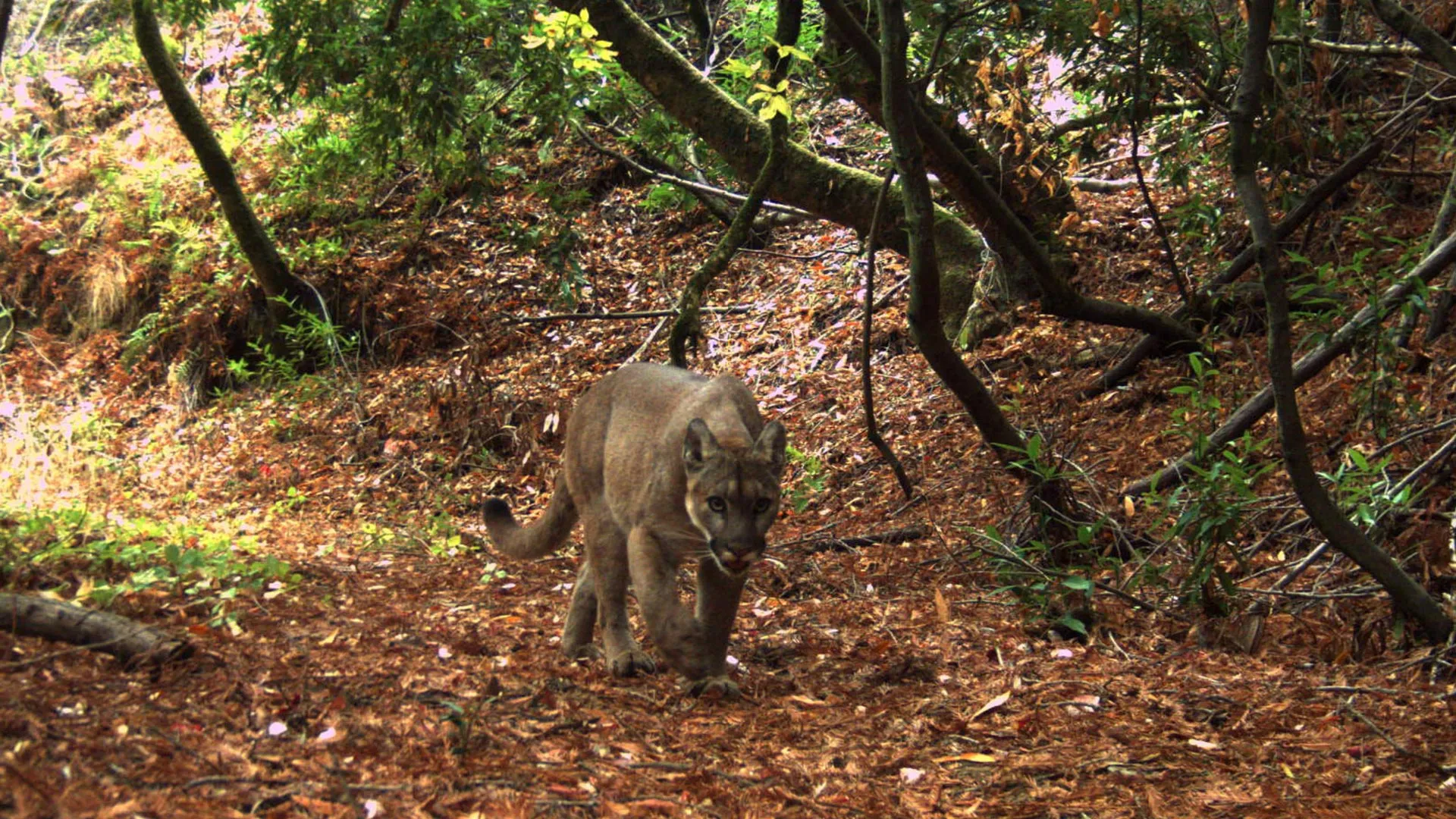
The study, published in the esteemed journal Ecology and Evolution, meticulously tracked the behavior of wildlife and the health of vegetation at Jasper Ridge Biological Preserve (also known by its indigenous Ohlone name, ‘Ootchamin ‘Ooyakma) between 2015 and 2020. During this five-year period, researchers observed a marked increase in the frequency of mountain lion ( Puma concolor ) appearances, as documented by motion-activated trail cameras. This surge in apex predator presence coincided with a demonstrable decline in the activity levels of deer, a primary prey species, when compared to earlier years when mountain lions were seldom, if ever, detected.
The implications of this shift at the top of the food chain extended well beyond the direct predator-prey relationship. Vegetation surveys conducted by the research team yielded compelling evidence of a revitalized plant community. Specifically, woody plants that are typically subject to significant grazing and damage by deer, such as young oak saplings, exhibited clear signs of recovery and robust growth. This suggests that the mere presence, or the perceived threat, of mountain lions was sufficient to alter deer foraging patterns, thereby affording vulnerable vegetation a much-needed respite.
The Ripple Effect: Unpacking Trophic Cascades
This phenomenon is a classic example of a trophic cascade, an ecological process where changes at the highest level of the food chain propagate downwards, influencing multiple subsequent levels. While such cascades are well-documented in expansive natural landscapes, such as the reintroduction of wolves in Yellowstone National Park, this new research firmly establishes their relevance in smaller, more fragmented ecological patches.
Chinmay Sonawane, the study’s lead author and a doctoral candidate in biology at Stanford University, emphasized the significance of these findings. "In the past, small preserves like Jasper Ridge have often been dismissed for holding very little ecological value," Sonawane stated. "But this study shows that when these small preserves are connected to large wilderness like the Santa Cruz Mountains, you can still see magnificent ecological phenomena like trophic cascades. They are not just things that happen in places like Yellowstone far away from the city and people. They can happen in these places that are quite small and more urban as well."
The research team meticulously analyzed data from two primary sources: the aforementioned motion-activated trail cameras and detailed vegetation surveys. This multi-pronged approach allowed them to identify not one, but two distinct types of trophic cascades at play within the preserve.
The Ecology of Fear: Predator Influence on Behavior
The most striking cascade involved the intricate relationship between mountain lions, deer, and the broader plant community – a phenomenon often referred to as a "tri-trophic cascade." As mountain lion activity increased, the researchers also noted a concurrent decrease in the observed presence of mid-level predators, specifically coyotes and bobcats. The prevailing hypothesis among the researchers is that these smaller predators may have altered their territorial ranges or daily activity patterns to minimize encounters with the larger, more dominant mountain lions. This behavioral shift, driven by the perceived threat of a top predator, is a cornerstone of what scientists term the "ecology of fear."
The "ecology of fear" describes how the mere presence of a top predator can profoundly influence the behavior of other species, even in the absence of direct predation. Animals modify their movements, their foraging strategies, and their periods of activity based on the perceived risk, creating a cascade of indirect effects throughout the ecosystem.
In this specific instance, the reduced presence of coyotes and bobcats appeared to benefit another mesopredator: the fox. The study observed an increase in fox activity, potentially leading to a subsequent decrease in the populations or activity of their primary prey species, rabbits. This illustrates the complex web of interactions, where the influence of a single apex predator can ripple through multiple predator-prey dynamics.
It is important to acknowledge, as the researchers themselves note, that some of the observed lower-level impacts, particularly those concerning vegetation, foxes, and rabbits, might also be influenced by other environmental variables. Changes in local weather patterns, such as shifts in fog intensity or temperature fluctuations, could theoretically play a role in shaping these populations. However, the correlation between increased mountain lion activity and the observed changes in deer, coyote, and bobcat behavior was deemed significantly more robust.
The Unseen Value of Small Preserves
These findings carry significant weight in discussions about conservation strategy and land management. They underscore the crucial ecological importance of both apex predators and the preservation of even small, seemingly isolated protected areas. Data from conservation organizations indicate that a substantial majority of protected areas in the United States – approximately 82% – are smaller than five square kilometers (roughly two square miles). As urban and suburban development continues to encroach upon natural habitats, these smaller preserves, often nestled within or bordering developed areas, are poised to play an increasingly vital role in sustaining wildlife and diverse plant communities.
Rodolfo Dirzo, a co-author of the study and a distinguished professor of biology at Stanford, highlighted this point. "Maintaining sites where there is an entire community of animals, from predators to prey to the prey’s resource base, is very important," Dirzo stated. "When one piece is missing – and it’s typically the top predators that require larger areas and are more sensitive to human impact – we will no longer have fully functioning ecosystems."
Investigating the Mountain Lion’s Return
A compelling question that arises from this research is the reason behind the increased mountain lion presence at Jasper Ridge. The exact drivers remain a subject of ongoing investigation, but the research team has put forth several plausible theories. One prominent hypothesis is that the preserve may offer a relatively safe haven for female mountain lions to raise their young. During the study period, trail camera footage indeed captured images of a mother mountain lion accompanied by her kittens, lending support to this idea.
It is critical to understand that mountain lions are not permanent residents of Jasper Ridge. Their natural territorial ranges in the Santa Cruz Mountains are extensive, typically spanning between 20 and 170 square kilometers (approximately 8 to 66 square miles). Jasper Ridge, by comparison, is considerably too small to sustain a resident mountain lion population. Their presence is therefore likely transient, representing individuals utilizing the area as part of their broader movements.
Coexistence: Mountain Lions and Humans
While occasional mountain lion sightings in suburban and urban fringes can generate public concern and media attention, these animals are generally adept at avoiding human contact. Elizabeth Hadly, the senior author of the study and an emerita professor of biology at Stanford, noted that mountain lions are primarily nocturnal, meaning their peak activity hours typically do not overlap with human presence.
"Pumas are afraid of our smell and our sounds; they don’t like to see us moving," Hadly explained. "Pumas use all of their senses to avoid humans." This inherent wariness contributes to their ability to navigate landscapes increasingly shaped by human activity.
However, it is a stark reality that humans remain the most significant threat to mountain lion populations. Fatalities occur primarily through hunting and vehicle collisions. This dynamic leads Hadly to a poignant observation: "Clearly, we exert our own ecology of fear. Humans are the ultimate predator on almost every landscape." This statement underscores the profound impact humanity has on the natural world, often shaping the very behavior of the species we share it with.
The research at Jasper Ridge Biological Preserve offers a vital reminder of the interconnectedness of ecological systems. It highlights that even the subtle influence of a top predator, appearing only occasionally, can initiate a cascade of changes that benefit the entire ecosystem, from the smallest sapling to the largest feline. This underscores the imperative to protect not only vast wilderness areas but also the smaller, often overlooked, natural spaces that can serve as critical linkages within a larger ecological network, ensuring the resilience and vitality of our natural world. The study received crucial support from the National Science Foundation, enabling this in-depth exploration of ecological dynamics.