The integration of artificial intelligence into the pharmaceutical industry has reached a critical inflection point, as a new collaborative analysis from the Tufts Center for the Study of Drug Development (CSDD) and clinical trial platform provider Medable quantifies the financial impact of agentic AI in oncology research. The study reveals that deploying a Clinical Monitoring Agent can yield a staggering 82x return on investment (ROI) for phase 3 clinical trials and a 64x ROI for phase 2 trials. In terms of expected net present value (eNPV), these operational efficiencies translate into approximately $21 million in added value for phase 3 studies and $7.5 million for phase 2, marking a significant milestone in the objective valuation of AI-enabled drug development tools.
This analysis arrives at a moment when the enterprise software landscape is shifting from simple generative AI chatbots to sophisticated "agentic" workflows capable of executing multi-step tasks. While industries ranging from software development to logistics have rapidly adopted these tools, the highly regulated and data-intensive sector of clinical trials has remained cautious. The findings from Tufts and Medable provide the hard data that industry leaders have long sought to justify the integration of AI into their core operations.
The Evolution of AI in Clinical Trials: A Timeline of Progress
To understand the gravity of these findings, one must look at the recent evolution of clinical technology. Over the past three years, the industry has transitioned from pilot-phase exploration to systematic integration.
In 2024, the primary focus among biopharmaceutical sponsors was the proof-of-concept phase, testing whether AI could reliably interpret clinical data without introducing bias or error. By early 2025, the narrative shifted toward “cycle time reduction,” with industry reports suggesting that AI/ML use cases could shave significant time off the trial-execution lifecycle. A 2025 Tufts CSDD study identified an average 18% reduction in cycle times across 36 distinct AI use cases, particularly in the areas of patient monitoring and enrollment assessment.
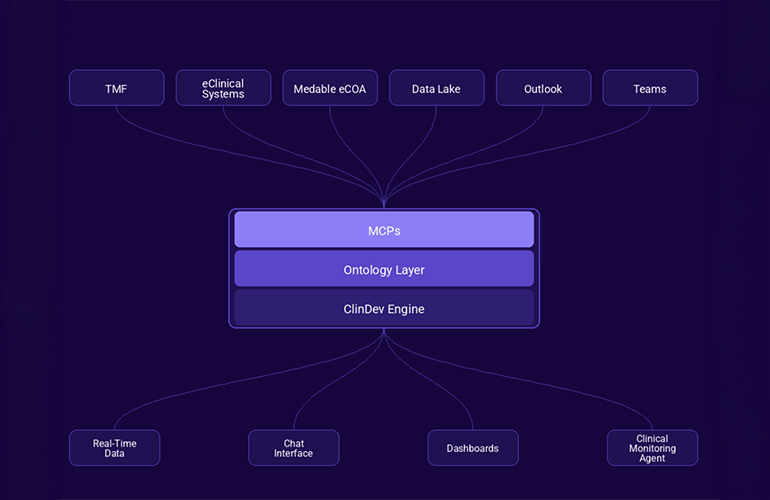
Now, in the latter half of 2026, the focus has moved to the “agentic” model. Unlike static software, these agents are designed to navigate complex enterprise systems, identify data discrepancies, and propose actionable interventions. The recent collaboration between Tufts and Medable serves as the first major attempt to translate these operational gains into the language of finance, providing a clear map for sponsors seeking to maximize the value of their portfolios.
Quantifying the Value Proposition
The methodology behind the Tufts-Medable analysis was rigorous, focusing on the complex, data-heavy environment of oncology trials. According to Ken Getz, executive director of Tufts CSDD, the study was designed specifically to bridge the gap between anecdotal success stories and verifiable financial outcomes.
"We have known for some time that companies have been piloting AI enablement tools, but what they have often been lacking is any kind of quantification of the actual ROI," Getz noted. By applying a standard eNPV model to the efficiencies gained through Medable’s monitoring agent, the researchers were able to demonstrate that the value scales significantly as the size of a sponsor’s portfolio grows.
For a sponsor with 20 active clinical indications, the model projects an incremental portfolio eNPV of up to $226 million across phase 2 and 3 studies. This figure jumps to $565 million for larger portfolios managing 50 indications. These numbers are derived from the assumption that the agent consistently reduces the burden of manual data monitoring, allowing for faster site intervention and higher data quality throughout the life of the trial.
The Technical Infrastructure: How Agents Operate
The implementation of these agents is not a "plug-and-play" scenario. Medable’s architecture utilizes a series of prebuilt connectors—numbering approximately 40—that link the agent to essential clinical systems such as Electronic Data Capture (EDC) platforms like Medidata Rave and Oracle InForm, as well as Clinical Trial Management Systems (CTMS) and safety databases like Oracle Argus.

However, Dr. Pamela Tenaerts, Chief Medical Officer at Medable, emphasizes that customization remains essential. "A lot of those agents still need about 20% tweaking, because systems are different and it has to be configured," she explained. This customization ensures the agent aligns with the specific protocol requirements of a trial, allowing it to "wrangle" millions of data points per protocol—a necessity given that phase 3 trials now process an average of 5.9 million data points, a six-fold increase since 2012.
In practice, the agent acts as a force multiplier for the Clinical Research Associate (CRA). By monitoring cross-site trends, the agent can identify issues that might otherwise remain buried in the noise. For instance, the agent can detect a site that has a statistically unusual pattern of adverse-event reporting or missing concomitant medication data. Instead of requiring a human to manually review thousands of records, the agent flags these specific discrepancies, drafts a query for the site, and updates the Trial Master File (TMF), effectively moving the CRA from a data-entry role to a strategic oversight role.
Addressing the High Failure Rate in Oncology
The industry’s urgency to adopt these tools is rooted in the persistent, high failure rate of oncology drug candidates. Research published in the Journal of Medicinal Chemistry highlights that small-molecule cancer drugs have maintained a 95% failure rate from phase 1 through phase 3 for nearly three decades. Even within phase 3, where the barrier to entry is higher, the success rate for oncology trials registered between 2007 and 2023 was only 43.4%.
AI agents offer a potential remedy to the “validation bottleneck” by identifying design flaws or site performance issues in real-time. By spotting issues earlier—such as a failure to meet screening criteria or a trend in protocol deviations—the agent allows the study team to pivot or correct course before the data becomes compromised. As Getz points out, this allows human staff to focus on the "major decisions of importance," such as whether to modify a study design or issue an amendment, rather than being bogged down by the mundane, tactical monitoring tasks.
The Future of Human-Agent Collaboration
Despite the excitement surrounding autonomous technology, the current consensus among industry experts is that full autonomy is not yet the standard. Most agents, including Medable’s, operate under a “recommend-and-review” framework.

"The agent doesn’t suspend the CRA from thinking," Dr. Tenaerts noted. "The CRA still needs to be there." This sentiment is echoed by peers in the industry, such as Venu Mallarapu of eClinical Solutions, who notes that while assistive AI is becoming widespread, fully autonomous agents that make high-stakes decisions without human oversight are not yet in production.
This measured approach acknowledges a critical concern: the "bottleneck shift." If an AI agent dramatically increases the speed of query generation, it may simply push the burden of resolution onto the sites, which are already resource-constrained. Therefore, the successful deployment of AI in clinical trials is not merely about installing new software, but about re-engineering the entire ecosystem of clinical research to handle the increased velocity of information.
Broader Implications and Industry Outlook
The Tufts-Medable analysis provides a compelling argument for the economic viability of AI agents in clinical research. As the industry faces mounting pressure to deliver life-saving oncology therapies more efficiently, the transition from manual, human-centric monitoring to AI-augmented, high-throughput systems appears inevitable.
However, the ultimate success of these tools will depend on two factors: the ability to standardize configuration across diverse clinical systems and the willingness of organizations to invest in the human capital necessary to manage these new, agent-driven workflows. As sponsors continue to integrate these agents, the industry will likely see a shift in the role of the CRA, who will evolve into an "AI-augmented professional," capable of managing larger, more complex trials with greater precision than previously possible.
The data confirms that the return on investment is substantial, but the real value may lie in the ability to salvage trials that might have otherwise failed, ultimately bringing innovative treatments to patients with greater speed and reliability. As the adoption of these agents moves from early-phase pilots to industry-wide standards, the 2026 findings from Tufts and Medable will likely be viewed as the definitive proof point that catalyzed the next generation of clinical research.