For nearly a century, the composition of the universe has remained one of modern physics’ most enduring and profound mysteries. While glowing stars, vast gas clouds, and visible galaxies account for a mere fraction of the cosmos, scientists understand that roughly 85 percent of all matter is composed of an invisible, elusive substance known as dark matter. Its presence is revealed exclusively through its massive gravitational scaffolding, binding galaxies together and shaping the large-scale structure of the universe. Yet, despite decades of exhaustive global experimentation, no direct detection of a dark matter particle has ever been recorded.
That narrative of perpetual elusiveness may have taken a critical turn. A newly released analysis from the international LUX-ZEPLIN (LZ) dark matter experiment has uncovered an exceptionally rare and intriguing particle interaction. Recorded deep beneath the earth in a highly shielded environment, the anomalous event has thus far defied straightforward explanation from known background signals produced by ordinary matter.
While the scientific collaboration remains rigorously cautious—emphasizing that the finding falls well short of the strict statistical thresholds required for a formal discovery—researchers acknowledge that it stands as the most compelling potential dark matter signal reported by the LZ apparatus to date. The breakthrough results were unveiled during a premier scientific presentation at the 2026 TeV Particle Astrophysics conference in Japan, accompanied by a forthcoming manuscript slated for submission to Physical Review Letters and archiving on arXiv.
The Hunt in the Deep: Inside the LZ Detector
Operating nearly one mile beneath the surface at the Sanford Underground Research Facility (SURF) in Lead, South Dakota, the LZ experiment represents a monumental feat of modern engineering and international scientific cooperation. The project unites approximately 250 distinguished scientists and engineers hailing from 39 premier academic and research institutions across the globe. Managed primarily by the U.S. Department of Energy’s Lawrence Berkeley National Laboratory (Berkeley Lab), the experiment is specifically optimized to peer into the subatomic shadows of the universe.
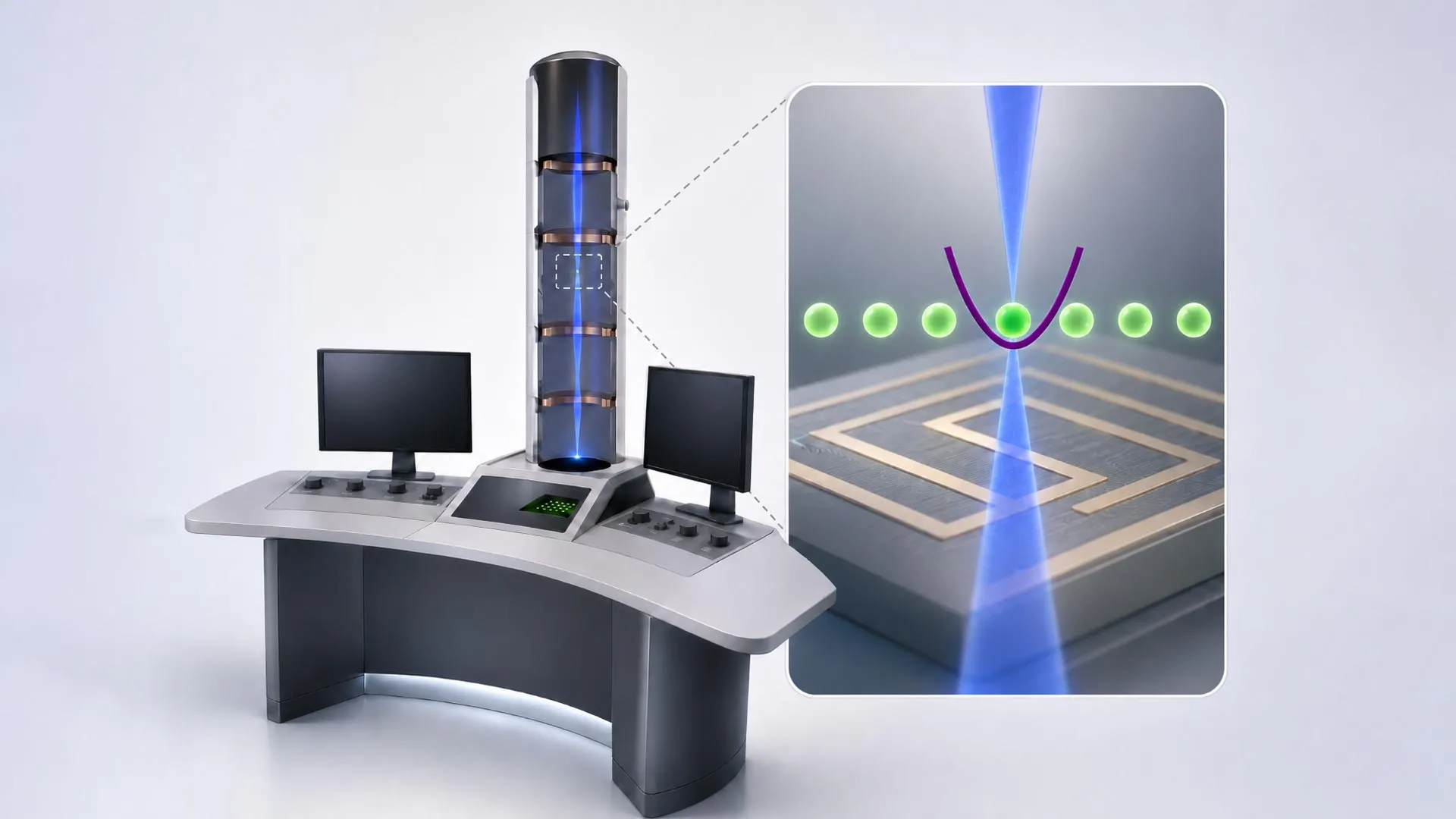
At the very core of the massive detector system sits an ultra-pure vat containing 10 metric tonnes of liquid xenon. Xenon is chosen for its dense atomic nucleus and exceptional scintillation properties, making it an ideal medium for capturing the faint signatures of hypothetical particles known as WIMPs, or Weakly Interacting Massive Particles. For decades, WIMPs have remained leading theoretical candidates to explain the physical nature of dark matter. Because these particles theoretically interact with ordinary matter only through gravity and the weak nuclear force, designing an instrument capable of registering their minute impacts requires unprecedented technological sensitivity alongside absolute isolation from surface radiation.
Expanding the Search Parameters
The LZ collaboration systematically processes its experimental data in discrete batches to ensure rigorous peer review and cross-verification among its global member institutions. For this latest milestone analysis, researchers meticulously parsed 220 live days of operational observations harvested between March 2023 and April 2024.
In previous iterations of data mining, the collaboration focused its computational power on hunting for ultra-faint signatures linked to the most baseline, canonical models of WIMP interactions. However, for this recent study, the analytical scope was significantly broadened. Scientists expanded their search algorithms to cast a wider net, scanning for a diverse spectrum of possible WIMP interactions capable of transferring substantially higher amounts of energy into the liquid xenon core.
This methodological pivot proved pivotal. The LZ architecture is exquisitely sensitive to these higher-energy deposition events, while its sophisticated internal veto systems and shielding layers are engineered to rigorously weed out false positives driven by mundane particle interactions.
"This was a detailed study in a region we hadn’t explored within this dataset, and we spent months of additional effort to understand all the possible causes of background events," noted Sam Eriksen, a senior research associate at the University of Bristol in the United Kingdom and lead author of the newly released study. "We understand our detector and the backgrounds so well that even a single outstanding event, like the one we found, is important. We expect dark matter events to be extremely rare, so only a handful could mark the first detection of WIMP dark matter."
Anatomy of an Outlier: Interpreting the Signal
Should future observations confirm that the unusual signal was indeed birthed by dark matter, the underlying physical characteristics of the particle can be inferred with reasonable precision. Theoretical modeling suggests that the responsible WIMP would likely possess a mass scaling to at least 200 gigaelectronvolts per speed of light squared (GeV/c²). In practical terms, such a particle would be more than 200 times heavier than a standard subatomic proton.
Furthermore, identifying a particle of this mass range and energy profile would point toward specialized, non-standard interaction dynamics between dark matter and baryonic (ordinary) matter, stretching far beyond the simplest theoretical frameworks traditionally favored by astrophysicists.
Despite the profound excitement rippling through the particle physics community, project leaders are deliberately tempering expectations. Within the rigid standards of modern empirical physics, a claim of discovery requires achieving a "5-sigma" level of statistical significance—a threshold mathematically guaranteeing that the probability of the signal being a statistical fluke or background noise is less than roughly one in 3.5 million.
By contrast, the current LZ finding sits firmly at a 2.6-sigma statistical significance. According to lead researchers, this equates to approximately a 0.5 percent probability that the anomalous event could be randomly generated by known background noise sources, such as trace radioactive isotopes or cosmic remnants. While this percentage is low enough to demand serious scientific attention, it is far too high to declare a definitive discovery.
"We’re very intrigued to see this event in the data, in the region where we expect dark matter to show up and the competing backgrounds are very low," remarked Rick Gaitskell, a professor at Brown University and the official spokesperson for the LZ collaboration. "With only one event, we don’t want to get ahead of ourselves. We are not claiming to have seen dark matter. But we have seen something interesting that we want to share with the scientific community for their input."
Shielding Against the Noise: How LZ Eliminates False Positives
The fundamental challenge of direct dark matter detection lies in separating the genuine, ghost-like whispers of the cosmos from the overwhelming cacophony of terrestrial radiation. Ordinary matter constantly produces particle interactions that mimic the flashes of light—produced via scintillation and ionization—that scientists expect to see when a WIMP strikes a xenon nucleus.
To combat this, the LZ experiment employs a multi-tiered defense strategy. The primary defense is geographical: locating the detector nearly a mile underground uses the massive overburden of surrounding rock at SURF to naturally filter out the vast majority of cosmic-ray muons bombarding Earth’s surface from space. To neutralize secondary radiation, such as stray neutrons emanating from cavern walls, the central xenon vessel is swaddled in a massive tank of ultra-pure water and supplementary outer particle veto detectors.
Even with these physical barriers, trace amounts of radioactivity inevitably persist within construction materials or the xenon itself. Researchers neutralize these remaining hazards using ultra-clean manufacturing protocols and advanced computational pulse-shape discrimination techniques. These algorithms analyze the exact temporal and spatial characteristics of every detected flash of light, allowing scientists to reliably discard events that fail to match the unique kinematic fingerprint of a dark matter collision.
It is precisely this exhaustive elimination process that makes the latest outlier so uniquely compelling. Typically, when researchers investigate an anomalous signal deeper, standard background explanations quickly emerge to account for the discrepancy.
"Outlier events in the data are not unexpected, but they usually stand out as a background of some kind when you look at them deeper," explained Aaron Manalaysay, a senior physicist at Berkeley Lab and the chair of the LZ Institutional Board. "This is the first example in any experiment I’ve worked on of an outlier that appears valid in every way. Of course, we’re still twisting our brains trying to think if there’s a rare background mechanism we could’ve missed, but it’s thrilling to wonder if this could be the first hint of a dark-matter observation."
The Road Ahead: Statistics and Future Observations
As the scientific community digests the implications of the 2.6-sigma event, the immediate path forward for the LZ collaboration is clear: gathering more data.
Because dark matter interactions are theorized to be extraordinarily infrequent, confirming whether the isolated signal represents a genuine cosmological breakthrough or merely a fascinating statistical anomaly will depend entirely on accumulated exposure time. As the LZ detector continues its uninterrupted data-gathering campaign at SURF, researchers will systematically analyze subsequent batches of observations. If the signal is a random fluctuation, it will remain an isolated curiosity while background levels normalize. Conversely, if additional, similar signals accumulate in the same energy window, the statistical significance will rapidly climb toward the coveted 5-sigma discovery threshold.
Having already assembled the largest and most sensitive dataset in the history of direct dark matter searches, the LZ collaboration is uniquely positioned to answer these questions in the coming years.
Global Investment in Fundamental Physics
The pursuit of dark matter through the LZ experiment represents a truly global scientific enterprise, sustained by major international funding agencies and collaborative institutional networks. Primary financial and operational backing is provided by the U.S. Department of Energy’s Office of Science (Office of High Energy and Nuclear Physics) alongside the National Energy Research Scientific Computing Center (NERSC).
Critical financial support and technical contributions are also drawn from international partners, including the Science and Technology Facilities Council (STFC) of the United Kingdom, the Portuguese Foundation for Science and Technology (FCT), the Swiss National Science Foundation (SNSF), the Australian Research Council Centre of Excellence for Dark Matter Particle Physics, and the Institute for Basic Science (IBS) in South Korea.
In total, 39 premier higher education and advanced research institutions have pooled their intellectual and physical resources into the initiative, working in close cooperation with the Sanford Underground Research Facility staff.
While the definitive particle nature of dark matter remains obscured behind a veil of cosmic mystery, the latest data release from the LUX-ZEPLIN experiment marks a significant milestone in modern physics. Whether this single, unexplained event in the depths of South Dakota ultimately transforms into the discovery of a century or remains a tantalizing footnote in the history of science, it underscores the relentless ingenuity driving humanity’s quest to decode the fundamental architecture of the universe.