A multi-institutional research team, led by scientists at Yale University, has successfully decoded the molecular architecture of a biological mechanism in mammals that prevents sperm from successfully fertilizing an egg. This breakthrough, which centers on the interaction between a specific antibody and reproductive proteins, provides a foundational understanding of how natural biological barriers can impede conception. By mapping these interactions at a near-atomic level, the study provides a dual-purpose roadmap for the future of reproductive medicine: it offers hope for new treatments for couples struggling with immune-related infertility and presents a viable target for the development of next-generation, non-hormonal contraceptives.
The findings, recently published in the journal Proceedings of the National Academy of Sciences (PNAS), represent a significant leap forward in reproductive biology. The research identifies how the antibody OBF13 disrupts the essential "handshake" between sperm and egg, a process that has remained partially obscured by mystery despite decades of observation. Led by Steven Tang, an assistant professor of molecular biophysics and biochemistry at Yale, the study bridges the gap between basic structural biology and clinical application.
The Molecular Lock and Key: IZUMO1 and JUNO
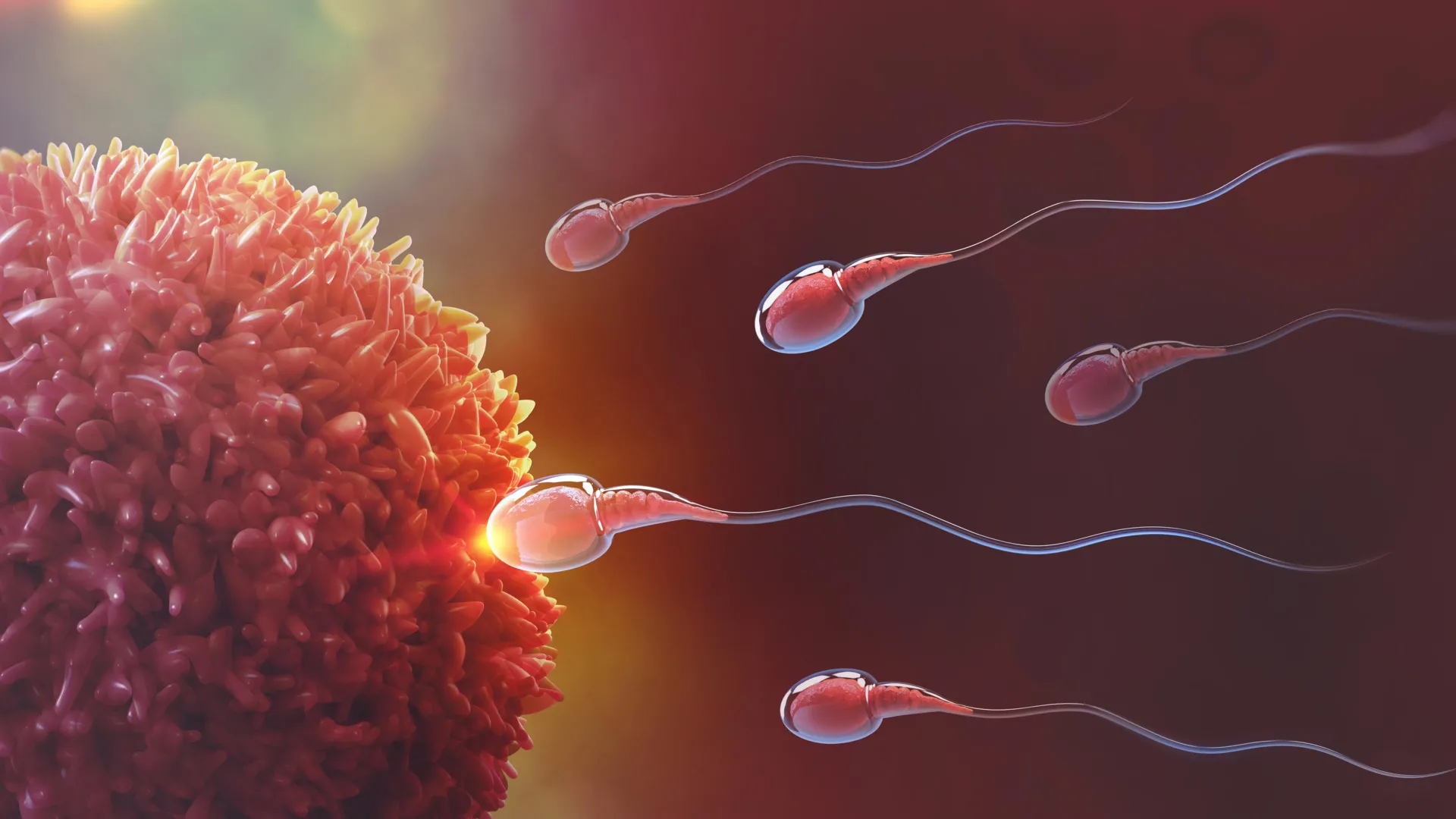
To understand the significance of the Yale-led discovery, one must first look at the standard mechanics of mammalian fertilization. For a sperm cell to fertilize an oocyte (egg), it must first recognize, adhere to, and then fuse with the egg’s membrane. This process is governed by a specific pairing of proteins: IZUMO1 on the sperm cell and JUNO on the egg.
Named after the Izumo-taisha shrine in Japan, which is dedicated to marriage, the IZUMO1 protein was first identified in 2005. Its counterpart, the JUNO receptor, named after the Roman goddess of fertility and marriage, was discovered nearly a decade later in 2014. Together, they function as a molecular lock and key. Without their precise interaction, the fusion of genetic material cannot occur, rendering fertilization impossible.
The Yale research focuses on how this interaction is sabotaged. In some individuals, the body produces anti-sperm antibodies (ASAs). These antibodies can view sperm as foreign invaders, attacking them and preventing them from reaching or binding to the egg. One such antibody, OBF13, has been known to the scientific community for 40 years, but the exact structural "how" of its interference remained a missing piece of the reproductive puzzle until now.
Historical Context and the Discovery of OBF13
The journey toward this discovery began four decades ago at Osaka University in Japan. Researchers there first isolated OBF13, a naturally occurring monoclonal antibody found in rodent models that demonstrated a potent ability to inhibit fertilization. While researchers could see the result—the failure of the sperm to bind to the egg—the technology of the 20th century was insufficient to visualize the microscopic battle occurring at the protein level.
For forty years, OBF13 served as a curious tool in reproductive laboratories, used to induce infertility in experimental settings without a clear understanding of its structural binding site. The current study, led by Steven Tang in collaboration with first author Yonggang Lu and co-author Masahito Ikawa of Osaka University, utilized modern high-resolution imaging to finally solve this 40-year-old cold case.
Methodology: X-Ray Crystallography and the SLAC Accelerator
The research team employed X-ray crystallography to determine the three-dimensional structure of the IZUMO1 protein while it was bound to the OBF13 antibody. This process involves freezing the protein complex into a crystalline form and then bombarding it with high-energy X-rays. The way the X-rays bounce off the atoms in the crystal allows scientists to map the precise location of every atom within the molecule.
To achieve the necessary resolution, the team utilized the SLAC National Accelerator Laboratory in California. Supported by the U.S. Department of Energy, the SLAC facility provides the high-intensity light sources required to visualize complex biological structures. Through this analysis, the researchers discovered that OBF13 does not just "block" the sperm; it reconfigures the interface.
Specifically, the study revealed that OBF13 attaches to IZUMO1 in a manner that physically prevents the protein from fitting into the JUNO receptor. Furthermore, the team identified a "high-affinity" variant of the OBF13 antibody. This variant bonds even more tightly to the sperm protein, acting as a highly potent inhibitor that effectively "shuts down" the fertilization potential of the sperm cell.
Identifying Key Binding Sites on the JUNO Receptor
Beyond the antibody itself, the Yale-led team investigated the JUNO receptor on the egg. They identified specific amino acid sites that are critical for the binding of IZUMO1. This is a crucial discovery for infertility research. By understanding the exact coordinates where the sperm and egg meet, scientists can now theorize ways to bypass interference.
The researchers found that even in the presence of OBF13 or its high-affinity variants, certain modifications or targeted treatments at these amino acid sites could potentially restore the ability of the sperm and egg to bind. This opens the door for "immuno-infertility" treatments where doctors might be able to shield the IZUMO1-JUNO interaction from a patient’s own overactive immune system.
Supporting Data: The Impact of Infertility and the Contraceptive Gap
The implications of this research are underscored by current reproductive health statistics. In the United States, infertility is a widespread challenge, affecting approximately 9% of men and 11% of women of reproductive age. According to data from the Centers for Disease Control and Prevention (CDC), a significant portion of these cases are classified as "unexplained infertility." Experts believe that a subset of these cases is caused by immune system malfunctions where anti-sperm antibodies, similar to OBF13, are present in either the male or female reproductive tracts.
On the other side of the spectrum is the need for improved contraception. While hormonal birth control has been the standard for decades, it is often associated with side effects ranging from mood changes and weight gain to increased risks of blood clots. There is a significant global demand for non-hormonal alternatives.
The Yale study provides a blueprint for "immuno-contraception." By designing a small-molecule drug or a synthetic antibody that mimics the action of OBF13, scientists could develop a contraceptive that is highly specific to the reproductive process, potentially offering a method for both men and women that does not interfere with the body’s endocrine system.
Chronology of Major Milestones in Sperm-Egg Fusion Research
The timeline of this field highlights the steady progression of scientific understanding:
- 1984: OBF13 antibody is first discovered and isolated at Osaka University, proving that antibodies can block fertilization.
- 2005: The IZUMO1 protein is identified on sperm cells, providing the first half of the "fusion" equation.
- 2014: The JUNO receptor is identified on egg cells, completing the molecular "lock and key" model.
- 2024: The Yale-led team publishes the first anti-sperm antibody-antigen complex structure, revealing exactly how OBF13 thwarts the IZUMO1-JUNO connection.
Analysis of Implications: A New Era for Reproductive Science
The discovery of the OBF13-IZUMO1 complex structure marks the beginning of what Steven Tang describes as a new avenue for drug discovery. "We provide high-resolution information that will open avenues for discovering IZUMO1 regulators, guide antibody and small-molecule inhibitor design, and support drug screening for contraceptive development," Tang stated.
For the pharmaceutical industry, this research provides a tangible target. Historically, developing male contraceptives has been difficult because of the sheer volume of sperm produced daily. However, targeting the IZUMO1 protein—the final step before fusion—offers a more efficient bottleneck. If the "key" (IZUMO1) is covered by a synthetic version of OBF13, it doesn’t matter how many sperm are present; none will be able to "unlock" the egg.
Conversely, for fertility clinics, this research may lead to new diagnostic tests. Currently, testing for anti-sperm antibodies is often generalized. With the specific amino acid sites now identified, clinicians could eventually test for specific types of interference, leading to more personalized and effective IVF (in-vitro fertilization) protocols.
Funding and Institutional Support
The multi-year effort was supported by a diverse array of international and domestic organizations, reflecting the global importance of reproductive research. Key funders included:
- The National Institutes of Health (NIH): Providing the foundational support for molecular biochemistry research.
- The David Sokal Innovation Award of the Male Contraception Initiative: Specifically targeting the development of new options for male reproductive health.
- The Japan Society for the Promotion of Science (JSPS) and the Japan Agency for Medical Research and Development (AMED): Supporting the long-standing collaboration with Osaka University.
- The Takeda Science Foundation: Contributing to the biochemical analysis and protein modeling.
The use of the SLAC National Accelerator Laboratory further highlights the intersection of physics and biology, showing how high-energy particle research is essential for solving human health crises.
Conclusion
The Yale-led study effectively transitions the OBF13 antibody from a laboratory curiosity into a master key for reproductive technology. By providing the first high-resolution look at an anti-sperm antibody-antigen complex, the research team has moved beyond observing the "what" of infertility to understanding the "how." As scientists move toward human trials and drug development, the structural map provided by Tang, Lu, and Ikawa will likely serve as the primary reference for a new generation of reproductive interventions, balancing the scales between those seeking to start a family and those seeking more effective ways to plan one.