In a significant advancement for aerospace engineering, researchers at the Massachusetts Institute of Technology (MIT) have successfully demonstrated a unified propulsion architecture that merges the high-thrust capabilities of chemical rockets with the high-efficiency performance of electric thrusters. This hybrid approach, detailed in a recent study published in the Journal of Propulsion and Power, utilizes a single "green" propellant to power both systems, effectively eliminating the need for redundant hardware and separate fuel tanks. The development addresses one of the most persistent bottlenecks in small satellite design: the trade-off between rapid maneuverability and long-term fuel economy.
For decades, spacecraft designers have been forced to choose between two distinct propulsion philosophies. Chemical propulsion provides the massive bursts of energy required for rapid orbit changes, collision avoidance, and planetary insertion but consumes fuel at a rate that limits the duration of a mission. Conversely, electric propulsion—specifically electrospray technology—offers extraordinary fuel efficiency, allowing for months or years of continuous operation, albeit at very low thrust levels. By identifying a propellant capable of serving both masters, the MIT team has paved the way for a new generation of "agile" small satellites capable of complex, multi-stage missions that were previously the sole domain of much larger, more expensive spacecraft.
The Evolution of Small Satellite Propulsion
The rise of the "NewSpace" era has seen a dramatic shift toward CubeSats—miniaturized satellites that are often no larger than a shoebox. While these platforms have democratized access to space, their utility has been hampered by physical constraints. Traditional propulsion systems are often too bulky, heavy, or dangerous for secondary payloads sharing a ride with primary missions.
Historically, most small satellites have relied on hydrazine-based chemical systems. While effective, hydrazine is a highly toxic and corrosive monopropellant that requires stringent safety protocols, specialized handling equipment, and heavy shielding. These requirements add significant costs and weight to a mission. In response, the U.S. Air Force Research Laboratory (AFRL) developed the Advanced SpaceCraft Energetic Non-Toxic (ASCENT) propellant. Originally known as AF-M315E, ASCENT is a hydroxylammonium nitrate-based ionic liquid that is significantly safer to handle and offers higher performance than hydrazine.
The MIT research, led by Amelia Bruno, a former postdoc in MIT’s Department of Aeronautics and Astronautics (AeroAstro), and Paulo Lozano, the Miguel Alemán Velasco Professor of Aeronautics and Astronautics, pivots on the discovery that ASCENT is not only a superior chemical fuel but also an ideal candidate for electric electrospray thrusters.
A Technical Breakdown of Dual-Mode Architecture
The core of the MIT innovation lies in the "dual-mode" capability. In a standard configuration, a satellite might carry a chemical engine for the initial climb to its target orbit and a separate electric engine for station-keeping (maintaining its position against atmospheric drag). This requires two sets of tanks, valves, and plumbing, which consumes a large portion of the satellite’s internal volume.
The MIT system simplifies this by using a shared reservoir of ASCENT. For high-thrust maneuvers, the propellant is fed into a chemical thruster where a catalyst triggers an exothermic reaction, releasing gas at high pressure to create thrust. For high-efficiency maneuvers, the same liquid is fed to an electrospray thruster.
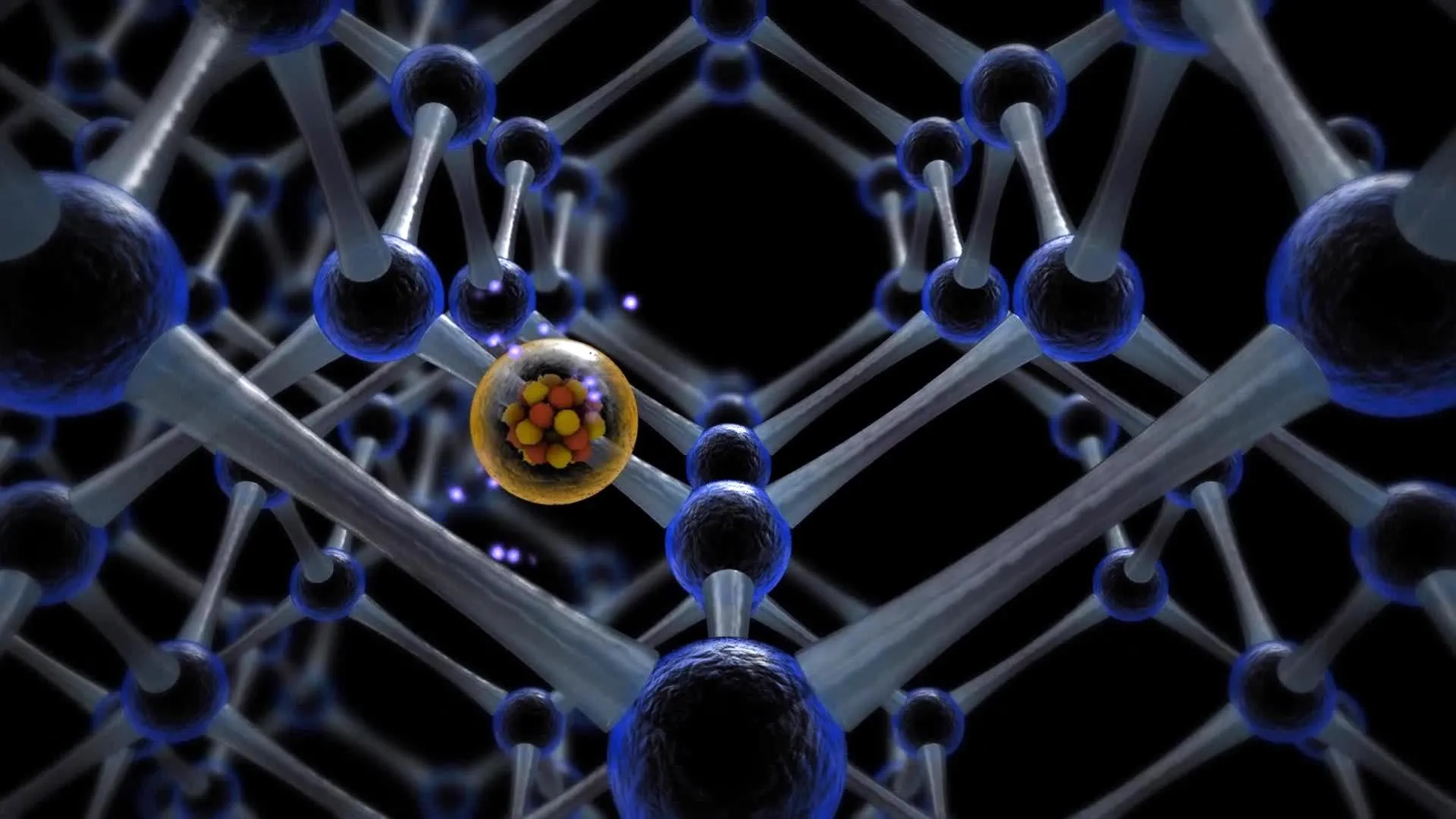
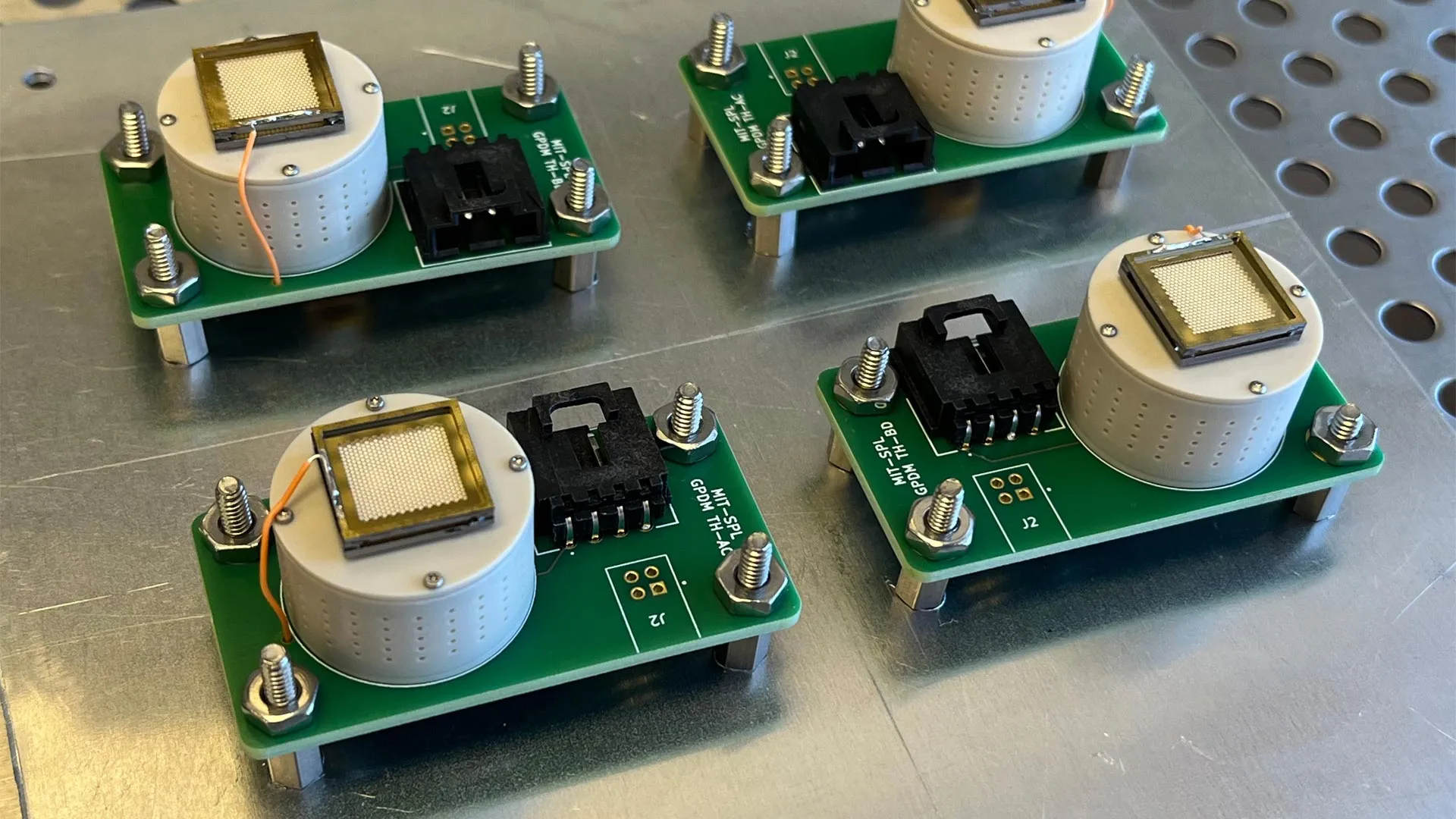
Electrospray thrusters are micro-fabricated devices, often smaller than a thumbnail. They operate by applying an electric field to the ionic liquid. This field pulls ions to the tips of microscopic emitters, where they are accelerated and expelled at extremely high velocities. Because the exhaust velocity of an electric thruster is far higher than that of a chemical rocket, it can produce the same "delta-v" (change in velocity) using a fraction of the propellant mass.
"If you can have chemical and electrical propulsion in one small package, it’s the best of both worlds," Bruno noted. "This opens the door for small satellites to do even more science, more observations, and more interesting missions, all on a smaller and cheaper platform."
Experimental Validation and Performance Metrics
To prove that a chemical propellant could function in an electric thruster without degrading the hardware or losing efficiency, the MIT team conducted rigorous laboratory testing. The researchers utilized a specialized facility equipped with a magnetic levitation (MagLev) platform inside a high-vacuum chamber. This setup allows for the measurement of infinitesimal thrust levels by observing the rotation and movement of a test CubeSat in a frictionless environment.
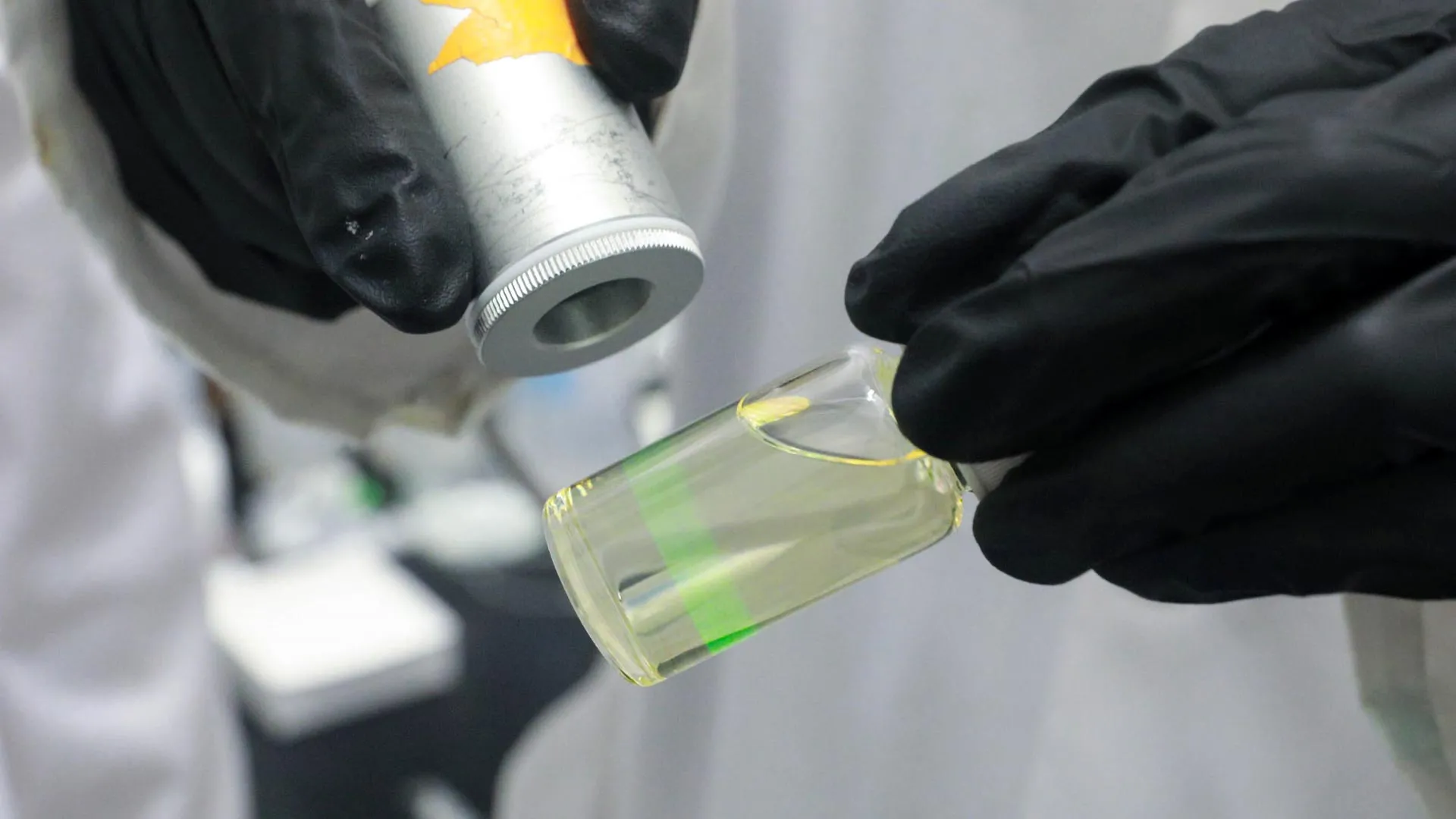
During the experiments, the team tested electrospray thrusters powered by ASCENT for periods of up to 100 hours. The liquid, which has a viscosity similar to baby oil, proved remarkably stable. Unlike many other liquids, ionic liquids like ASCENT do not evaporate in the vacuum of space, making them ideal for long-duration missions.
The data revealed that ASCENT’s performance in an electric mode was comparable to traditional, dedicated electric propellants. By varying the voltage supplied to the thrusters, the researchers were able to precisely control the torque and thrust, demonstrating that the system could handle the delicate adjustments needed for pointing a telescope or aligning a communication antenna.
Chronology of Development and Upcoming Milestones
The journey toward dual-mode propulsion has been a multi-year effort involving collaboration between academia and government agencies:
- 2010s: The U.S. Air Force develops ASCENT as a "green" alternative to hydrazine, primarily for chemical thrusters.
- 2019: NASA’s Green Propellant Infusion Mission (GPIM) successfully demonstrates ASCENT’s viability as a chemical fuel in orbit.
- 2021-2023: MIT’s AeroAstro lab begins investigating the electrical properties of ASCENT, theorizing its use in electrospray systems.
- Early 2024: Publication of the MIT study confirming that ASCENT can successfully power electrospray thrusters with high efficiency.
- November 2024 (Scheduled): Launch of the NASA Green Propulsion Dual Mode (GPDM) mission.
The GPDM mission represents the critical "flight heritage" phase of the technology. A briefcase-sized CubeSat will be equipped with one chemical thruster and four electrospray thrusters, all drawing from a single tank. This will be the first time a shared-tank, dual-mode system is tested in the actual environment of space.
Broader Implications for Space Exploration and Earth Observation
The successful integration of these two propulsion types has profound implications for both commercial and scientific space endeavors.
1. Deep Space Exploration:
Currently, CubeSats are largely confined to Earth’s orbit because they lack the fuel capacity to reach other planets. With a dual-mode system, a small satellite could use efficient electric propulsion to slowly cruise to Mars or the asteroid belt over several months. Once it arrives, it could switch to chemical propulsion to quickly maneuver around an asteroid or enter a specific orbit around a moon. Professor Paulo Lozano highlighted this flexibility, stating, "You could have a lot more flexibility to do a lot more things."
2. Satellite Constellation Management:
Companies operating large constellations of satellites for internet or weather monitoring often need to move assets quickly to cover specific geographic areas. A dual-mode system allows for "rapid deployment" via chemical thrust during emergencies (such as tracking a developing hurricane) while using electric thrust for day-to-day station-keeping, thereby extending the operational life of the satellite.
3. Space Debris Mitigation:
The ability to perform high-thrust maneuvers is essential for avoiding collisions with orbital debris. Simultaneously, the efficiency of electric propulsion ensures that the satellite retains enough fuel at the end of its life to perform a de-orbit burn, preventing it from becoming debris itself.
4. Cost Reduction:
By reducing the complexity of the propulsion system and utilizing a non-toxic fuel, the costs associated with satellite manufacturing and launch-pad processing are significantly lowered. This makes space more accessible for universities, small startups, and developing nations.
Analysis of Future Challenges
While the laboratory results are promising, several challenges remain. The long-term interaction between the chemical components of ASCENT and the delicate electrodes of the electrospray thrusters must be monitored. Over thousands of hours, the accumulation of residue could potentially "clog" the microscopic emitters. The upcoming NASA mission will be instrumental in determining the durability of the system under the thermal cycles and radiation of space.
Furthermore, the power management systems for CubeSats must be optimized to handle the high-voltage requirements of electrospray thrusters while maintaining the thermal stability required for chemical catalysts.
The MIT research represents a paradigm shift in how engineers view spacecraft resources. By treating propellant as a versatile medium rather than a single-purpose fuel, the team has unlocked a level of operational agility that was previously impossible for small-scale platforms. As the GPDM mission nears its launch date, the aerospace community is watching closely, anticipating a new era where small satellites possess the "muscle" of a rocket and the "finesse" of an electric engine.