Scientists have uncovered a remarkable variety of marine life hidden deep beneath the waters off Western Australia’s Nyinggulu (Ningaloo) coast, including evidence of giant squid and several species that may be unknown to science. The groundbreaking discoveries, detailed in a recent study published in the journal Environmental DNA, were made possible by the innovative use of environmental DNA (eDNA) analysis, a technique that allows researchers to detect species from genetic material shed into the water. This advanced methodology is revolutionizing our understanding of the planet’s most remote and least-explored habitats.
A Voyage into the Abyss: Unveiling the Secrets of the Cape Range and Cloates Canyons
The expedition, a collaborative effort led by Curtin University and the Western Australian Museum, focused on the largely uncharted Cape Range and Cloates submarine canyons. These geological formations lie approximately 1,200 kilometers north of Perth, plunging into the depths of the Indian Ocean. Aboard the Schmidt Ocean Institute’s state-of-the-art research vessel, the R/V Falkor, researchers embarked on a mission to sample these extreme environments, reaching depths of up to 4,510 meters. Over the course of the expedition, more than 1,000 samples were meticulously collected, offering an unprecedented glimpse into the biodiversity of these abyssal realms.
Unlike traditional methods that rely on direct observation through cameras or the capture of specimens, this study employed eDNA. This revolutionary approach involves analyzing trace amounts of genetic material – skin cells, mucus, waste products – that marine organisms naturally release into the surrounding seawater. By sequencing these minute fragments of DNA, scientists can construct a detailed profile of the species present in an ecosystem without ever needing to see them directly. This non-invasive technique is particularly crucial for studying elusive, deep-sea creatures that are difficult to observe or capture using conventional survey methods.
Echoes of Giants and Unseen Wonders: Key Findings from the Deep
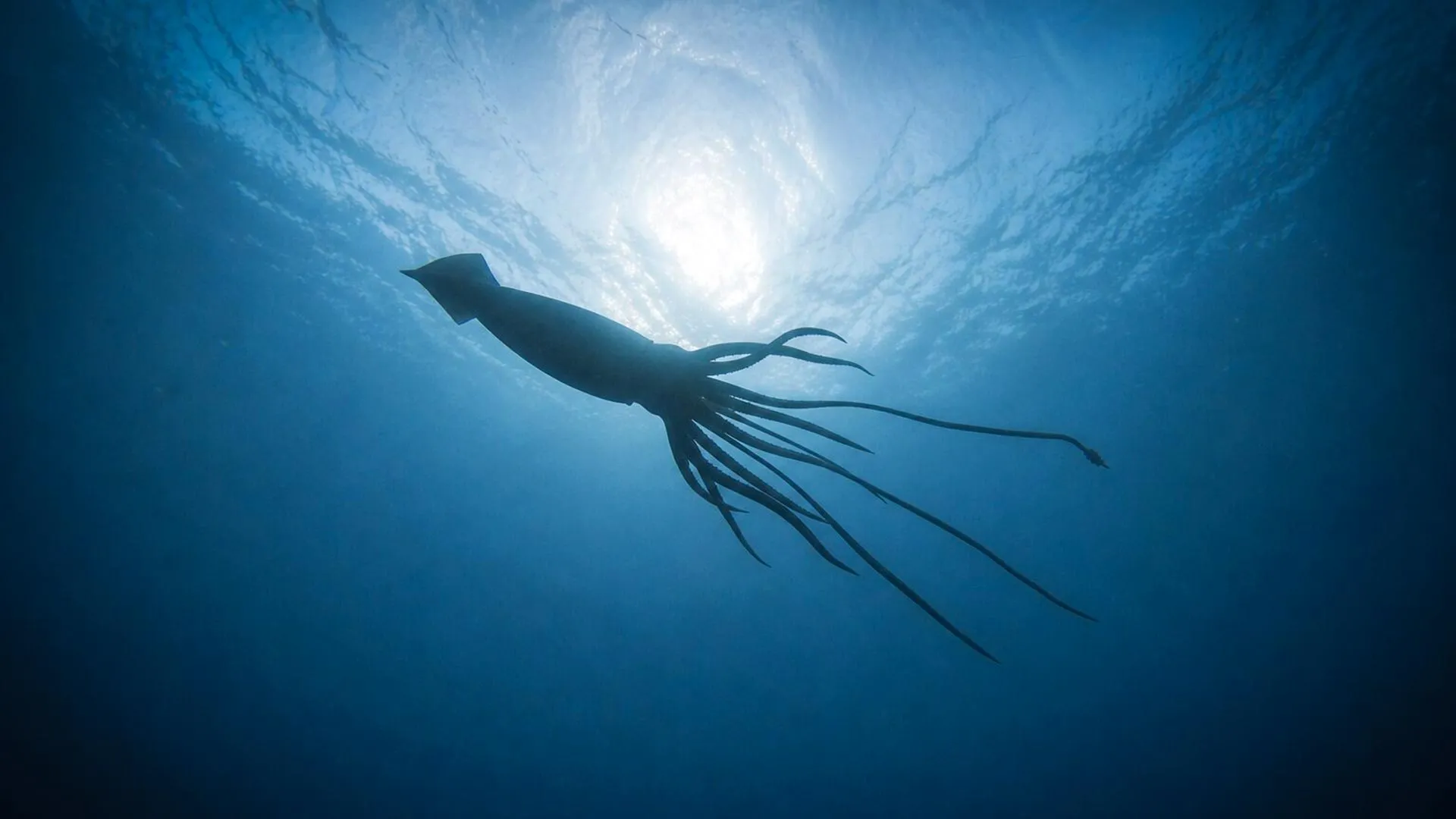
Among the most sensational findings from the eDNA analysis was the detection of the elusive giant squid, Architeuthis dux. Evidence of this legendary cephalopod was found in six separate samples collected from both the Cape Range and Cloates canyons. The presence of giant squid, creatures of myth and fascination, underscores the rich and often hidden biodiversity of these deep-sea environments.
The study also identified other significant deep-diving whale species, including the pygmy sperm whale (Kogia breviceps) and Cuvier’s beaked whale (Ziphius cavirostris). These large marine mammals undertake extensive dives into the deep ocean in search of food, and their genetic signatures within the water column provide vital information about their presence and habitat use in these remote canyons.
Giant squid are among the ocean’s most enigmatic inhabitants. These colossal invertebrates can reach lengths of 10 to 13 meters – longer than a standard school bus – and weigh between 150 and 275 kilograms. Their most striking feature is their immense eyes, the largest in the animal kingdom, which can measure up to 30 centimeters in diameter, comparable to the size of a large pizza. The detection of Architeuthis dux in these waters is particularly noteworthy. Dr. Lisa Kirkendale, Head of Aquatic Zoology at the WA Museum and Curator of Molluscs, stated that there have been only two previous records of giant squid in Western Australia, with no confirmed sightings or specimens collected for over 25 years. "This is the first record of a giant squid detected off Western Australia’s coast using eDNA protocols and the northernmost record of A. dux in the eastern Indian Ocean," Dr. Kirkendale remarked, highlighting the significance of this eDNA-based discovery.
In total, the comprehensive eDNA analysis identified an impressive 226 species, spanning 11 major animal groups. This diverse array included various species of squid, marine mammals, cnidarians (like corals and jellyfish), echinoderms (such as starfish and sea urchins), and a fascinating collection of unusual deep-sea fish.
A Realm of Novelty: Species New to Western Australian Waters and Potentially New to Science
The study also revealed the presence of dozens of species that had never been previously recorded in Western Australian waters. Among these novel detections were the sleeper shark (Somniosus sp.), a large, slow-moving shark found in deep, cold waters; the faceless cusk eel (Typhlonus nasus), a deep-sea fish characterized by its lack of visible eyes; and the slender snaggletooth (Rhadinesthes decimus), a predatory fish known for its formidable dentition.
Lead author Dr. Georgia Nester, who conducted this research as part of her PhD studies at Curtin University and is now with the Minderoo OceanOmics Centre at The University of Western Australia, emphasized the vastness of our current knowledge gap regarding Australia’s deep-sea environments. "Finding evidence of a giant squid really captures people’s imagination, but it’s just one part of a much bigger picture," Dr. Nester explained. "We found a large number of species that don’t neatly match anything currently recorded, which doesn’t automatically mean they’re new to science, but it strongly suggests there is a vast amount of deep-sea biodiversity we’re only just beginning to uncover." This observation points towards the possibility of new scientific descriptions arising from this research.
The Transformative Power of eDNA in Ocean Exploration
The eDNA methodology employed in this study represents a paradigm shift in how marine biodiversity is assessed, particularly in challenging deep-sea environments. Dr. Nester elaborated on the practical advantages of this technique. "These canyons are incredibly rich ecosystems and, until now, they’ve been largely unexplored because of the difficulty of working at such extreme depths," she said. "With eDNA, a single water sample can tell us about hundreds of species at once. That means we can dramatically expand our understanding of deep-water environments in a way that simply hasn’t been possible before."
To ensure the accuracy and robustness of the eDNA findings, the research team integrated their genetic analyses with physical specimens collected by the remotely operated vehicle (ROV) SuBastian. Water samples were collected across a broad depth range, from the ocean surface down to over 4 kilometers. The genetic data derived from these water samples were then cross-referenced with genetic reference material from physical specimens. Taxonomists at the WA Museum played a crucial role in identifying these collected specimens, which have now been permanently accessioned into the museum’s Collection and Research Facility, serving as a vital resource for future scientific endeavors.
"The WA Museum contributed expert identification of specimens from the expedition, supporting the development of a local curated genetic reference that strengthened the eDNA analyses," Dr. Kirkendale affirmed. This synergistic approach, combining cutting-edge molecular techniques with traditional taxonomic expertise, ensures a high degree of confidence in the study’s findings and builds a foundational genetic library for the region.
Dr. Nester further highlighted that eDNA is exceptionally valuable for detecting species that are fragile, move rapidly, or are otherwise elusive, often evading the reach of traditional nets and underwater cameras. This capability is a game-changer for documenting biodiversity in dynamic and challenging marine habitats.
Unveiling Stratified Ecosystems: A Tapestry of Life Across Depths
The research also provided compelling evidence of significant ecological stratification, demonstrating how marine life changes dramatically with increasing ocean depth. Even within neighboring canyons, distinct ecosystems and unique biological communities were identified, underscoring the complexity and fine-scale variations in deep-sea environments. This suggests that each canyon may harbor its own specialized set of species adapted to specific conditions.
Associate Professor Zoe Richards, Senior Author from Curtin’s School of Molecular and Life Sciences, emphasized the broader implications of this technology for conservation and management. "Deep-sea ecosystems are vast, remote, and expensive to study, yet they face growing pressure from climate change, fishing, and resource extraction," Associate Professor Richards stated. "Environmental DNA gives us a scalable, non-invasive way to build baseline knowledge of what lives there, which is essential for informed management and conservation. You can’t protect what you don’t know exists."
The sheer volume of discoveries, including the detection of megafauna like the giant squid, serves as a powerful reminder of how much remains unknown about the marine life inhabiting the Indian Ocean. Associate Professor Richards added, "The sheer number of discoveries, including megafauna, makes it clear that we still have so much to learn about what marine life lives in the Indian Ocean."
Towards Informed Conservation: The Role of Biodiversity Knowledge
Gaining a more comprehensive understanding of deep-sea biodiversity is crucial for effective marine conservation strategies. Dr. Nester believes that this knowledge can significantly enhance marine park planning, environmental monitoring programs, and long-term conservation efforts. "By combining eDNA with conventional deep-sea survey techniques, we can build a far more complete picture of biodiversity, revealing species, ecosystems, and ecological patterns that would otherwise remain hidden," she explained.
"This kind of information is critical for marine park planning and management, because it gives us a much clearer picture of what species are present and how communities are structured across depth," Dr. Nester continued. This detailed ecological mapping is vital for identifying areas of high biodiversity, sensitive habitats, and species with specific needs, all of which are essential for designing effective marine protected areas and implementing targeted conservation measures.
The fieldwork for this groundbreaking study was generously supported by the Schmidt Ocean Institute and the Western Australian Museum. The collaborative project involved a multidisciplinary team of researchers from Curtin University, The University of Western Australia (UWA), the Western Australian Museum, the Minderoo OceanOmics Centre at UWA, the University of Tasmania, and Research Connect Blue. This extensive collaboration highlights the global scientific effort required to tackle complex challenges in ocean exploration and conservation.
The study, titled "Environmental DNA Reveals Diverse and Depth-Stratified Biodiversity in East Indian Ocean Submarine Canyons," represents a significant advancement in our understanding of deep-sea ecosystems. It not only showcases the power of eDNA technology but also underscores the immense, largely undiscovered biodiversity that exists within the world’s oceans, emphasizing the urgent need for continued research and robust conservation efforts in these remote and vital environments. The findings from the Nyinggulu coast are a compelling testament to the hidden wonders that still await discovery beneath the waves.