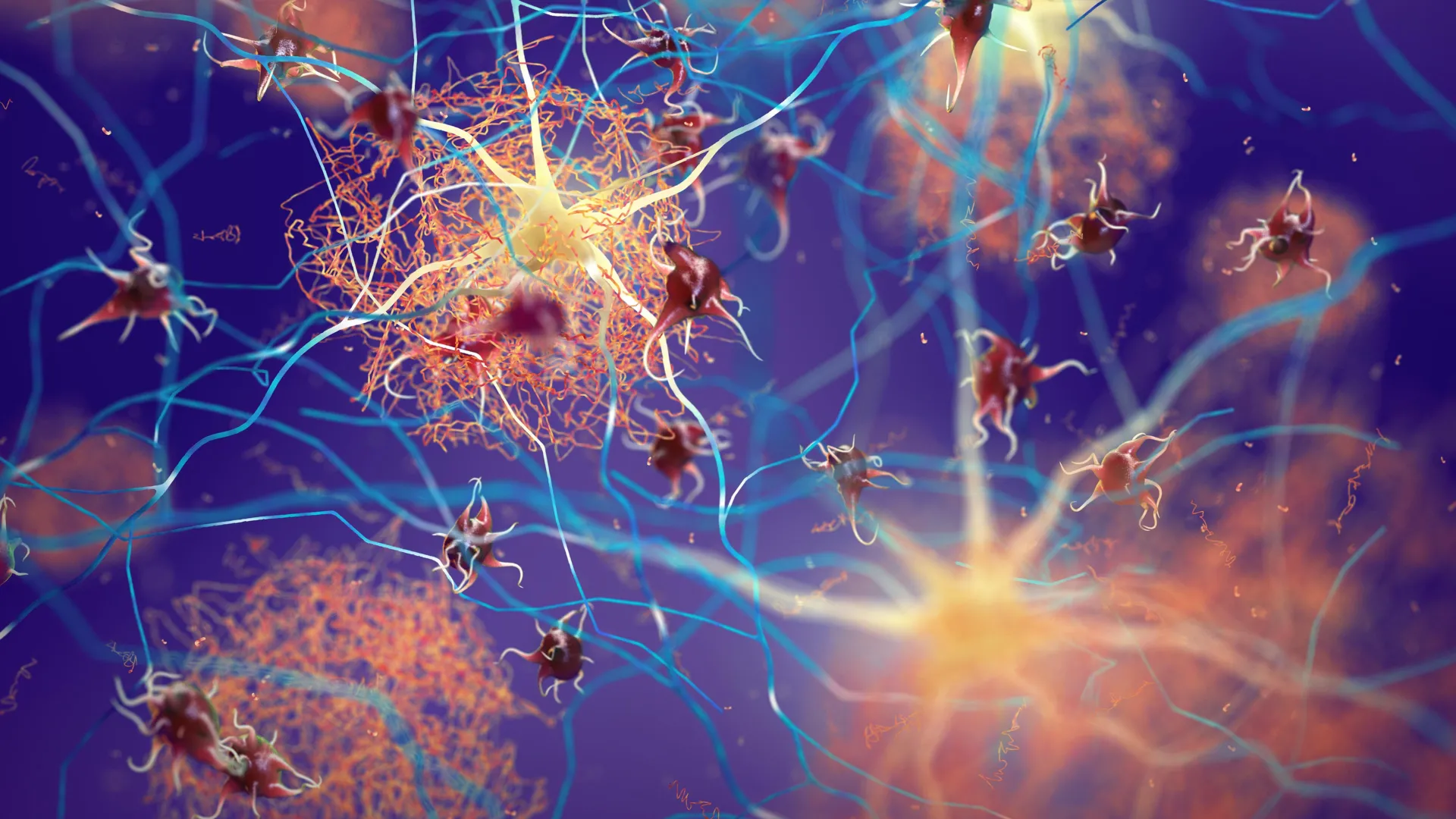
Scientists at the Baylor College of Medicine have announced a significant breakthrough in the understanding of neurodegenerative pathologies, identifying a cellular mechanism that could fundamentally alter the treatment landscape for Alzheimer’s and Parkinson’s diseases. The research, published in the peer-reviewed journal Nature Communications, posits that tubulin—a protein traditionally viewed as a structural building block—functions as a critical gatekeeper that prevents the formation of toxic protein aggregates. By interacting with the proteins Tau and alpha-synuclein, tubulin appears to redirect these molecules away from disease-causing pathways and toward productive cellular functions. This discovery offers a fresh perspective on the biological "tug-of-war" occurring within the brains of aging populations and suggests that boosting tubulin levels or activity could serve as a novel therapeutic strategy.
The Molecular Drivers of Neurodegeneration
Alzheimer’s disease and Parkinson’s disease are characterized by the progressive loss of neurons, a process long associated with the misfolding and clumping of specific proteins. In Alzheimer’s, the protein Tau forms neurofibrillary tangles that disrupt internal cell communication. In Parkinson’s, alpha-synuclein aggregates into Lewy bodies, which are hallmark indicators of the disease’s progression. While these proteins are often discussed in the context of their toxicity, they are not inherently harmful; in a healthy brain, they play vital roles in maintaining the structural integrity of neurons and facilitating the transport of essential nutrients and signals.
The challenge for modern medicine has been understanding why these proteins transition from "helpers" to "hazards." Tau and alpha-synuclein typically interact with tubulin to assist in the assembly and stabilization of microtubules. Microtubules function as the "railway tracks" of the neuron, ensuring that materials are moved efficiently from the cell body to the distant synapses. When these tracks break down, the neuron loses its structural stability and its ability to communicate, leading to the cognitive and motor declines observed in patients.
The Baylor Study: A New Role for Tubulin
The research team, led by Dr. Lathan Lucas and Dr. Allan Ferreon at Baylor College of Medicine, sought to investigate the environment in which these proteins interact. They focused on "condensates," which are tiny, liquid-like droplets within the cell where proteins concentrate to perform specific tasks. These droplets are formed through a process known as liquid-liquid phase separation. While condensates allow for efficient chemical reactions, they also represent a high-risk zone: if the protein concentration becomes too high or the environment becomes unstable, the liquid droplets can solidify into the irreversible, toxic clumps associated with disease.
Historically, researchers have considered ways to prevent the formation of these droplets entirely. However, because these droplets are essential for healthy brain function, such an approach carries the risk of significant side effects. The Baylor team proposed a different hypothesis: rather than eliminating the droplets, could the proteins inside be "coaxed" into remaining productive?
The study’s findings suggest that tubulin is the key to this redirection. "When tubulin levels are low, as it has been found in Alzheimer’s disease, microtubules are less abundant and Tau and alpha-synuclein can form toxic aggregates," explained Dr. Lucas, a postdoctoral associate and first author of the study. "But when tubulin is present, Tau and alpha-synuclein shift away from harmful aggregates and instead promote the assembly of healthy microtubules."
The Troublemaker Analogy: Engaging the Proteins
To illustrate the complex molecular interaction, Dr. Lucas utilized a classroom analogy. He likened Tau and alpha-synuclein to "troublemaker kids" in a school setting. If these students are left in a classroom with no activities or supervision, they are likely to act out and cause disruption. However, if they are engaged in schoolwork, sports, or theater, their energy is channeled into productive outcomes.
In this scenario, the "classroom" is the cellular condensate, and the "schoolwork" is the interaction with tubulin. When tubulin is abundant, it provides Tau and alpha-synuclein with a "job" to do—building and maintaining microtubules. This engagement prevents them from "acting out" by sticking to one another and forming the rigid, pathological fibers that eventually kill the neuron. This shift in perspective moves tubulin from being a passive victim of neurodegeneration to an active protector of the brain’s molecular health.
Methodology and Technical Data
The researchers employed a multi-disciplinary approach to reach their conclusions, combining biochemical assays with high-resolution microscopy. This allowed them to observe the behavior of proteins in real-time at a near-atomic level. By using neuron-based assays, they were able to simulate the conditions of a human brain and monitor how varying concentrations of tubulin affected the aggregation rates of Tau and alpha-synuclein.
Key data from the study highlighted a direct correlation between tubulin depletion and the acceleration of protein clumping. In environments with high tubulin-to-protein ratios, the formation of solid aggregates was significantly delayed or entirely inhibited. Conversely, when tubulin was removed or its concentration lowered, the proteins rapidly transitioned from a liquid state to a solid, fibrillar state. These biophysical observations provide a clear mechanical explanation for why neurodegeneration often accelerates once the microtubule network begins to fail.
A Chronology of Neurodegenerative Research
The Baylor discovery arrives at a pivotal moment in the history of neurology. For decades, the "Amyloid Cascade Hypothesis" dominated Alzheimer’s research, focusing on the buildup of amyloid-beta plaques outside of neurons. However, the repeated failure of drugs designed to clear these plaques led the scientific community to look inward, toward the Tau protein and the internal mechanics of the neuron.
- 1980s-1990s: Identification of Tau and alpha-synuclein as primary components of tangles and Lewy bodies.
- 2000s: Focus on the "misfolding" of proteins and the development of antibodies to clear aggregates.
- 2010s: Discovery of liquid-liquid phase separation (LLPS) in cells, revealing how proteins form droplets.
- 2020s: Shift toward "functional proteostasis," focusing on maintaining the healthy roles of proteins rather than just removing the bad ones.
The Baylor study represents the latest evolution in this timeline, suggesting that the most effective way to treat these diseases may be to reinforce the cell’s existing protective mechanisms rather than introducing external agents to "clean up" the damage after it has already occurred.
Implications for Future Therapeutics
The findings have profound implications for drug development. Current treatments for Alzheimer’s and Parkinson’s are largely symptomatic, meaning they treat the effects (such as memory loss or tremors) rather than the underlying cause. The Baylor team’s research points toward a "selective therapeutic strategy" that targets the tubulin pool.
If researchers can develop compounds that stabilize tubulin or increase its availability within neurons, they may be able to "quench" the toxicity of Tau and alpha-synuclein without disrupting the essential functions of cellular condensates. This approach is particularly attractive because it works with the cell’s natural biology.
"Boosting the tubulin pool, rather than blocking droplet formation, can curb toxic aggregation while preserving the healthy roles of Tau and alpha-synuclein," said Dr. Allan Ferreon, associate professor and co-corresponding author. This could lead to a new class of "chaperone-enhancing" drugs that keep the brain’s internal transportation system running smoothly even in the presence of disease-linked proteins.
Reactions and Broader Context
The scientific community has reacted with cautious optimism. While the study was conducted in a laboratory setting using assays and models, the fundamental nature of the interaction suggests it is a universal biological principle. Independent experts note that this research helps explain the "vicious cycle" of neurodegeneration: as neurons begin to fail, tubulin levels drop, which in turn causes more Tau and alpha-synuclein to aggregate, further damaging the neuron and leading to even lower tubulin levels.
From a global health perspective, the need for such breakthroughs is urgent. According to the World Health Organization, more than 55 million people worldwide are currently living with dementia, a number expected to rise to 139 million by 2050. Parkinson’s disease is also the fastest-growing neurological disorder in the world. The economic burden of these conditions is measured in trillions of dollars, not to mention the immeasurable human cost to families and caregivers.
Conclusion
The work of Dr. Lucas, Dr. Ferreon, and their colleagues at Baylor College of Medicine provides a sophisticated new model for how the brain defends itself against aging and disease. By identifying tubulin as an active participant in the prevention of protein aggregation, the study opens a new door for intervention. It suggests that the path to curing Alzheimer’s and Parkinson’s may not lie in fighting the "troublemakers" alone, but in ensuring they have the tools and environment necessary to remain productive members of the cellular community.
The study was supported by significant grants from the National Institute of Neurological Disorders and Stroke (NINDS-NIH), the Welch Foundation, and the National Institute of General Medical Sciences (NIGMS-NIH). As research moves toward potential clinical applications, the focus will likely shift to identifying small molecules that can safely modulate the tubulin-Tau-synuclein relationship in human patients, potentially turning the tide against some of the most devastating diseases of the modern era.