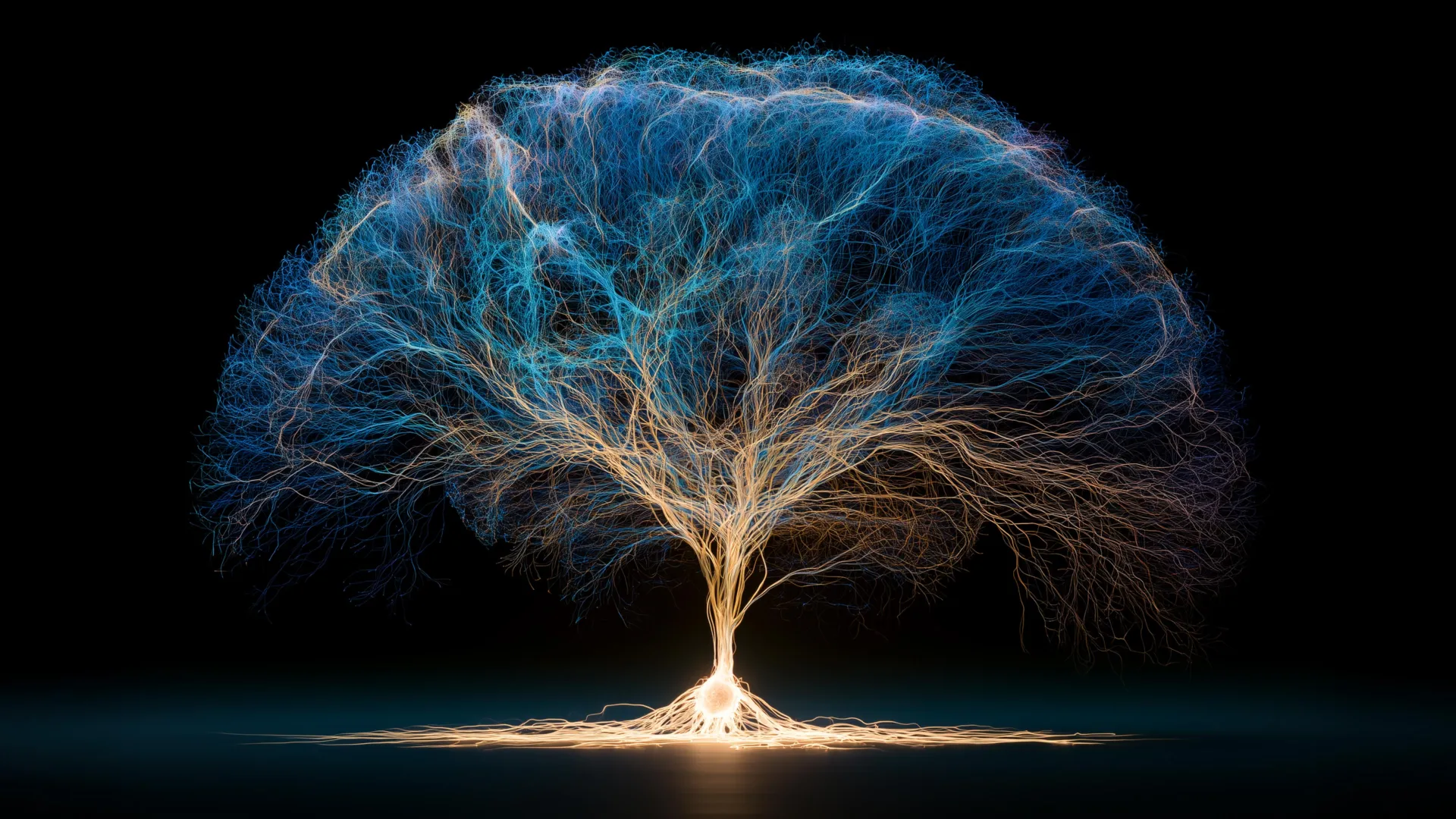
The human brain represents perhaps the most sophisticated biological architecture in the known universe, beginning its journey as a solitary fertilized egg and culminating in a network of approximately 170 billion cells. Of these, roughly 86 billion are neurons, while the remainder consists of various types of glial cells that support, protect, and facilitate neural communication. For decades, one of the most persistent mysteries in developmental neuroscience has been the mechanism by which these billions of cells navigate the vast, crowded landscape of the growing embryo to reach their precise destinations. New research from Cold Spring Harbor Laboratory (CSHL) suggests that the answer to this organizational miracle may be more elegant and mathematically grounded than previously assumed, relying on cellular lineage rather than just the traditional model of long-range chemical signaling.
The study, published recently in the journal Neuron, was led by Stan Kerstjens, a postdoctoral researcher in Professor Anthony Zador’s laboratory at CSHL, in collaboration with experts from Harvard University and ETH Zürich. Their findings propose a paradigm shift in how we understand the "GPS system" of the developing brain. By moving away from a purely chemical-based instruction set and toward a lineage-based model of "scalable positional information," the researchers have provided a new framework that could revolutionize fields ranging from regenerative medicine to the development of self-organizing artificial intelligence.
The Limits of Chemical Morphogens
To appreciate the significance of the CSHL study, one must first understand the prevailing theory of brain development. For the better part of the 20th century, scientists believed that cells determined their identity and location primarily through "morphogens"—signaling molecules that spread through the developing embryo. In this model, a source at one end of a tissue secretes a chemical that forms a concentration gradient. A cell "senses" the concentration of the chemical at its specific location; a high concentration might tell the cell to become a frontal lobe neuron, while a lower concentration signals it to become part of the hindbrain.
While this mechanism is effective in small, simple organisms or in the very early stages of embryonic development, it faces a significant scaling problem. As the brain grows from a few millimeters to the size of a grapefruit, the distances become too vast for simple diffusion to remain reliable. Chemical signals weaken as they travel, and in a rapidly expanding environment containing billions of cells, the "noise" of the environment would likely drown out the "signal."
"The only thing a cell ‘sees’ is itself and its neighbors," Kerstjens explains. "But its fate depends on where it sits. A cell in the wrong place becomes the wrong thing, and the brain doesn’t develop right. So, every cell must solve two questions: Where am I? And who do I need to become?" The CSHL team argues that relying solely on chemical gradients to answer these questions across a large-scale organ is biologically implausible.
The Lineage-Based Alternative: A Generational Map
The researchers propose that the brain organizes itself through a process analogous to the way human populations have historically spread across continents. Before the era of high-speed travel and digital communication, human settlement patterns were largely determined by ancestry. A family would settle in a valley, and their descendants would move into the neighboring hills or the next valley over. Over several generations, this created a large-scale geographic structure where people living near each other shared a common ancestry and cultural markers, all without the need for a central government or a nationwide map.
In the developing brain, a similar principle appears to be at play. When a progenitor cell (a "parent" cell) divides, its "daughter" cells tend to stay in the same general vicinity. As these cells continue to divide, they form a cluster of related cells. Kerstjens and his colleagues argue that cells inherit "positional information" from their ancestors. By knowing which lineage they belong to, cells can effectively determine their relative position within the larger structure of the brain.
This lineage-based model is inherently scalable. Unlike a chemical signal that fades over distance, the information encoded in a cell’s lineage is preserved through every division. This allows the brain to maintain precise organization even as it expands to contain billions of neurons.
Experimental Validation Across Species
To test this theory, the research team employed a multi-disciplinary approach combining mathematical modeling with biological observation. They first developed a theoretical framework to see if lineage alone could provide enough information to organize a complex structure. Their simulations showed that a lineage-based system could indeed generate the intricate patterns of cell types observed in nature.
Following the theoretical work, the researchers turned to gene expression data from developing mouse brains. They analyzed the transcriptomes—the complete set of RNA molecules—of individual cells to see if their genetic signatures correlated more closely with their physical location or their ancestral history. The data revealed a strong correlation between cellular lineage and spatial positioning, supporting the idea that a cell’s "family tree" serves as its primary map.
To ensure that this was not a quirk of mammalian development, the team validated their model using zebrafish, a common model organism in developmental biology. Zebrafish are transparent during their early stages, allowing researchers to track cell movement in real-time. The results in zebrafish mirrored those found in mice, suggesting that lineage-based organization is a fundamental principle of vertebrate brain development that has been conserved across millions of years of evolution.
Implications for Pathology and Oncology
While the CSHL study focuses on healthy brain development, its implications extend into the realm of disease, particularly oncology. Tumors are, in many ways, an example of development gone wrong. Like a developing brain, a tumor starts as a single cell and expands into a complex, though disorganized, mass.
If the principles of lineage-based organization apply to tumors, it could change how oncologists approach cancer treatment. Understanding how cancer cells inherit "positional information" could help researchers predict how a tumor will spread or how it might develop resistance to treatment. If a cell’s behavior is dictated by its lineage, then targeting the "progenitor" cells of a specific lineage within a tumor might be more effective than treating the tumor as a uniform mass of malignant cells.
Furthermore, this research offers insights into neurodevelopmental disorders such as autism and schizophrenia. If the brain’s "mapping system" is lineage-based, then small mutations in the progenitor cells could lead to significant "miswiring" in the final structure of the brain, even if the individual neurons themselves appear healthy.
Artificial Intelligence and Self-Replicating Systems
Beyond the biological sciences, the work of Kerstjens and Zador has caught the attention of the artificial intelligence community. Modern AI, particularly neural networks, is inspired by the structure of the human brain. However, current AI models are "designed" by human engineers or optimized through algorithms that require massive amounts of external data. They do not "grow" or "develop" in the way biological systems do.
As we move toward the goal of creating more autonomous, self-replicating, or self-organizing AI, the principles of lineage-based organization could prove invaluable. Imagine a robotic system or a software program that could build itself from a single "seed" of code. By using a lineage-based organizational principle, each "cell" of the AI could determine its function and position based on its inherited code, allowing for the creation of incredibly complex systems without the need for a top-down blueprint.
"The theory may also have relevance for future self-replicating AI systems," the researchers noted. Just as brain cells can inherit information across generations of cells, future AI models that pass information from one generation to the next could potentially rely on similar organizational principles to manage complexity and scale.
The Evolution of Intelligence
Perhaps the most profound aspect of this research is what it suggests about the nature of intelligence itself. The human brain is not just a collection of cells; it is a highly organized machine capable of abstract thought, emotion, and self-awareness. The fact that such a complex organ can emerge from a single cell using a relatively simple, lineage-based set of rules is a testament to the power of evolution.
"The brain somehow makes us intelligent," Kerstjens says. "How did it manage to accumulate this capability, not just over its developmental time, but over evolutionary time? This is one piece in that big puzzle."
By showing that the brain’s complexity arises from local interactions and ancestral history rather than a master plan or fragile chemical signals, the CSHL team has provided a new perspective on the "minimal requirements" for intelligence. It suggests that the capacity for complex organization is baked into the very process of cellular division.
Conclusion and Future Directions
The study from Cold Spring Harbor Laboratory represents a significant milestone in neuroscience. By proposing and validating a lineage-based model for brain development, the researchers have solved a long-standing problem of scale that chemical signaling models could not fully address.
The research community is now looking to build on these findings. Future studies will likely focus on the specific genetic markers that encode this "lineage information" and how these markers interact with local chemical signals. While the CSHL study suggests that lineage is a primary driver of organization, it is likely that chemical signals still play a role in fine-tuning the final structure, acting as a "secondary check" on the lineage-based map.
As scientists continue to peel back the layers of how the brain builds itself, we move closer to answering the fundamental questions of our existence. From the treatment of devastating brain diseases to the creation of the next generation of intelligent machines, the insights gained from a single cell’s journey to becoming a brain will continue to resonate across the scientific landscape for decades to come. The work of Kerstjens, Zador, and their colleagues serves as a reminder that in the face of staggering biological complexity, the most profound answers are often the most elegant.