Theoretical physicists at Brown University have unveiled a potential resolution to one of the most persistent and daunting paradoxes in modern science: the cosmological constant problem. By establishing a groundbreaking mathematical link between the large-scale structure of the universe and the behavior of electrons in condensed matter, the research team suggests that the "deadliest" discrepancy in physics—a gap of 120 orders of magnitude between theory and observation—may be solved through the lens of topology. The study, published in the prestigious journal Physical Review Letters, posits that the same mathematical protections that stabilize electrical conductance in specialized materials also prevent the energy of empty space from destabilizing the cosmos.
The Great Divergence: Understanding the Cosmological Constant Problem
The cosmological constant, denoted by the Greek letter Lambda (Λ), represents the energy density of space itself, often referred to as vacuum energy. In the standard model of cosmology, this constant is the primary candidate for "dark energy," the mysterious force driving the accelerated expansion of the universe. However, when physicists attempt to calculate the value of Lambda using the tools of quantum field theory (QFT), they encounter a catastrophic failure of prediction.
According to QFT, which governs the behavior of subatomic particles, "empty" space is never truly empty. Instead, it seethes with quantum fluctuations—virtual particles that blink in and out of existence. These fluctuations should contribute an immense amount of zero-point energy to the vacuum. When theorists calculate this energy, the resulting value for the cosmological constant is approximately $10^120$ times larger than what astronomers actually observe through telescopes. To put this in perspective, if the theoretical value were correct, the universe would have expanded so violently in its first fraction of a second that matter could never have clumped together to form stars, galaxies, or human beings.
This mismatch is frequently cited as the most significant gulf between theory and experiment in the history of science. For decades, physicists have struggled to find a mechanism that "cancels out" this excess energy without discarding the highly successful frameworks of quantum mechanics and general relativity.
A Chronology of the Cosmological Constant: From Blunder to Backbone
The history of the cosmological constant is a narrative of scientific reversal. Albert Einstein first introduced the term in 1917 as an addition to his field equations for general relativity. At the time, the prevailing scientific consensus was that the universe was static. Einstein’s equations, however, suggested a universe that must either expand or contract under the influence of gravity. To force the equations to describe a stable, unchanging cosmos, Einstein added the cosmological constant as a "repulsive" pressure to counterbalance gravity.
The necessity of the constant was short-lived. In 1929, Edwin Hubble provided observational evidence that distant galaxies are moving away from Earth, proving the universe is expanding. Confronted with this evidence, Einstein famously discarded the constant, reportedly calling it his "biggest blunder." For the next seventy years, most physicists assumed the value of the cosmological constant was exactly zero.
The narrative shifted again in 1998. Two independent teams of astronomers, studying Type Ia supernovae, discovered that the expansion of the universe was not slowing down under the weight of gravity, as previously thought, but was actually accelerating. This discovery, which earned the 2011 Nobel Prize in Physics, required the resurrection of Einstein’s cosmological constant. It appeared that Einstein’s "blunder" was, in fact, a fundamental component of the universe’s architecture, albeit with a value that was incredibly small but non-zero.
The Topological Breakthrough: Linking Gravity to Condensed Matter
The new research from Brown University, led by Professor Stephon Alexander and his colleagues Aaron Hui and Heliudson Bernardo, suggests that the solution to the Lambda problem lies in the Chern-Simons-Kodama (CSK) state, a proposed "ground state" for quantum gravity.
The team’s innovation was to recognize a mathematical isomorphism—a direct structural similarity—between the CSK state and the quantum Hall effect (QHE). The quantum Hall effect is a phenomenon observed in two-dimensional electron systems at extremely low temperatures and high magnetic fields. In these conditions, the Hall conductance of the material becomes "quantized," meaning it takes on specific, discrete values with incredible precision.
Crucially, these values in the QHE are "topologically protected." In mathematics, topology is the study of properties that remain unchanged even when a shape is deformed (such as a donut being stretched into a coffee mug). In the context of the quantum Hall effect, the topology of the electron system ensures that the conductance remains stable even if the material has impurities, defects, or temperature fluctuations.
"What we’ve shown is that if space-time has this non-trivial topology, then it resolves one of the deadliest problems of the cosmological constant," explained Stephon Alexander, a professor of physics at Brown and a former president of the National Society of Black Physicists. "All the quantum perturbations that should blow up the value of the cosmological constant are rendered inert by this topology, which keeps the constant’s value stable."
Supporting Data and Theoretical Mechanics
The researchers utilized a "canonical" approach to quantum gravity, a method rooted in the foundational work of 20th-century giants like Paul Dirac and Erwin Schrödinger. By applying this "old-fashioned" quantization to the geometry of space-time, they found that the cosmological constant behaves much like the quantized conductance in a Hall system.
In the quantum Hall effect, the transverse voltage does not increase linearly with the magnetic field. Instead, it moves in steps, creating plateaus where the value remains constant despite changes in the environment. The Brown team argues that the cosmological constant is similarly "locked" into a stable, small value by the underlying topological invariants of the CSK state.
This topological protection acts as a filter. While quantum field theory predicts a sea of high-energy fluctuations, the topological constraints of the CSK state prevent these fluctuations from contributing to the observed value of the cosmological constant. In essence, the "noise" of the quantum vacuum is mathematically forbidden from influencing the expansion rate of the universe in the way previous theories suggested.
Interdisciplinary Collaboration at the Brown Theoretical Physics Center
The breakthrough highlights the importance of interdisciplinary research in solving fundamental mysteries. The Brown Theoretical Physics Center (BTPC) was designed specifically to foster collaboration between disparate fields, such as cosmology and condensed matter physics.
Aaron Hui, a co-author and assistant professor at Brown, specializes in the study of topological phases of matter. His expertise in how topology governs the behavior of electrons provided the necessary bridge for Alexander’s cosmological theories.
"This is the beauty of the Brown Theoretical Physics Center," Alexander noted. "We want to be a place where there’s a mixing of lots of perspectives, and this is us practicing what we preach—a cosmologist working closely with a condensed matter theorist."
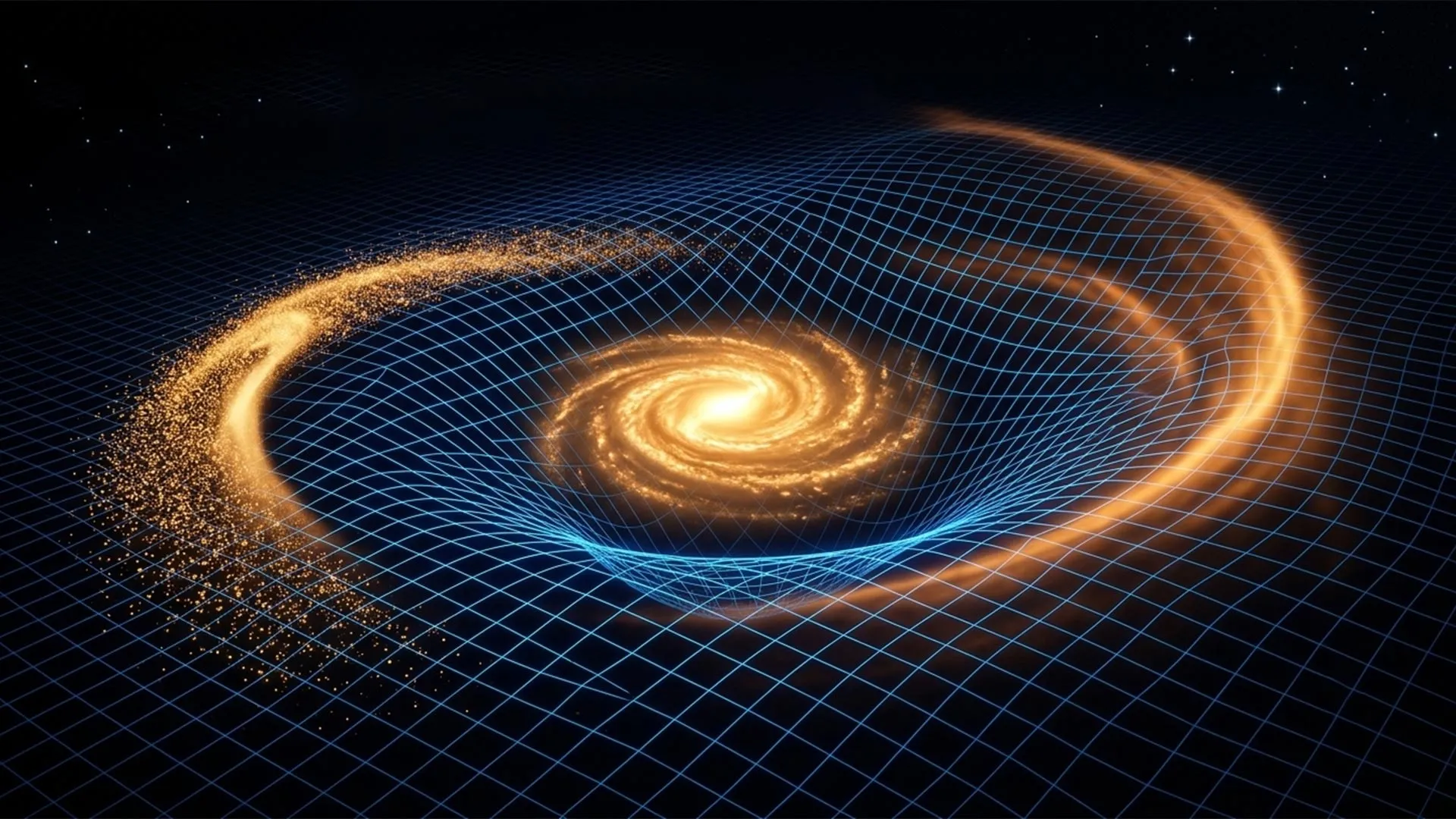
By treating the fabric of space-time as a physical system with properties analogous to a topological insulator or a quantum Hall liquid, the team was able to apply well-understood principles from the laboratory to the scale of the entire cosmos.
Implications for the Future of Quantum Gravity
While the proposal offers a compelling solution to the cosmological constant problem, the researchers acknowledge that it is a starting point rather than a final "Theory of Everything." The CSK state has historically been a subject of debate among theorists; while it provides a beautiful mathematical solution to certain problems, integrating it into a full, four-dimensional theory of gravity that includes all known matter remains a significant challenge.
However, the implications of this work are far-reaching. If the cosmological constant is indeed topologically protected, it suggests that the "fine-tuning" problem—the question of why the universe’s parameters are so perfectly suited for life—may have a structural, rather than accidental, explanation. It also provides a new avenue for testing quantum gravity theories. If the vacuum energy is quantized in a manner similar to the Hall effect, there may be subtle, detectable signatures of this quantization in the Cosmic Microwave Background (CMB) radiation or in future high-precision gravitational wave observations.
Expert Reactions and Broader Impact
The physics community has reacted with cautious optimism to the Brown proposal. Independent analysts suggest that the link to the quantum Hall effect provides a much-needed physical mechanism for "shielding" the cosmological constant from quantum fluctuations.
"The idea that the vacuum energy could be topologically ‘screened’ is a powerful one," says a theoretical physicist not involved in the study. "It shifts the conversation from ‘Why is the number so small?’ to ‘What is the underlying geometry that keeps it that way?’"
As the research moves forward, the team at Brown intends to expand their model to account for the dynamic nature of dark energy. They are currently investigating whether the "steps" or "plateaus" seen in the quantum Hall effect could explain why the expansion of the universe began to accelerate at a specific point in cosmic history.
Ultimately, this work reinforces the notion that the laws of physics are unified across scales. From the movement of electrons in a microscopic flake of material to the expansion of the trillion-galaxy-filled void, the mathematical language of topology appears to be a universal thread, potentially solving a century-old mystery and bringing science one step closer to understanding the true nature of the vacuum.