In a significant advancement for quantum information science, researchers at the University of Chicago Pritzker School of Molecular Engineering (PME) have unveiled a theoretical framework that simplifies the generation of complex entangled quantum states. This new method, which utilizes tools already prevalent in modern physics laboratories, addresses one of the primary hurdles in quantum technology: the difficulty of creating and maintaining specific, highly connected states between particles. Published in the prestigious journal Physical Review X, the study provides a blueprint for a new generation of ultra-precise sensors and offers a novel platform for exploring the fundamental nature of many-body physics.
Quantum entanglement, a phenomenon where the state of one particle becomes inextricably linked to another regardless of distance, is the cornerstone of the next technological revolution. While classical physics relies on independent bits of information, quantum systems leverage entanglement to perform computations and measurements with a level of sensitivity and speed that was previously deemed impossible. However, the engineering required to foster these delicate states has traditionally involved massive, high-precision experimental setups that are difficult to scale. The UChicago PME team’s proposal suggests that by rethinking existing "cavity quantum electrodynamics" (cavity QED) systems, scientists can achieve high-level entanglement with far less complexity.
The Evolution and Limitations of Cavity Quantum Electrodynamics
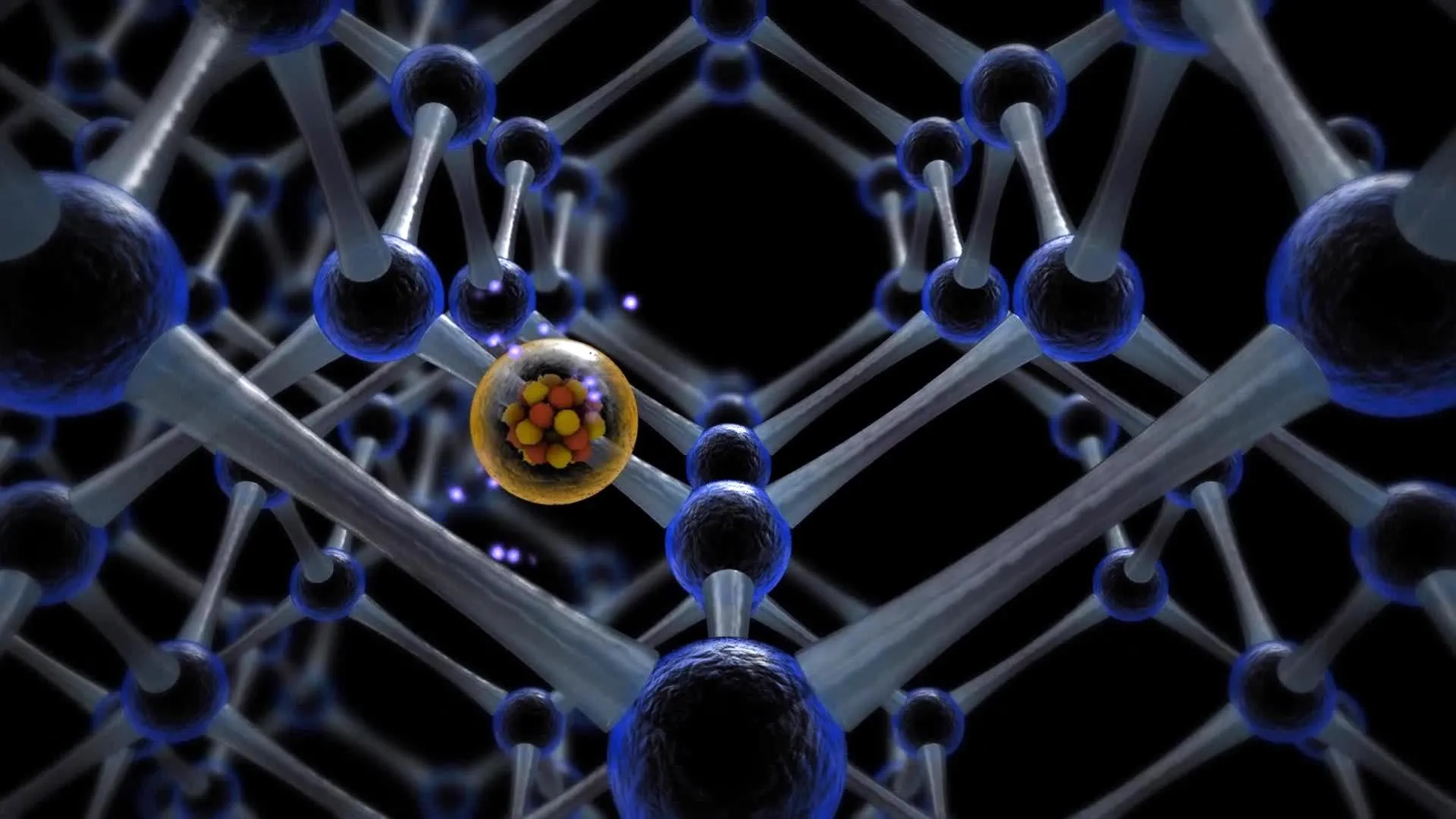
To understand the impact of this research, it is essential to examine the history and function of cavity QED. For decades, cavity QED has served as a foundational experimental platform for studying the interaction between light and matter. In a typical setup, atoms or other quantum emitters are trapped within an optical cavity—essentially a space between two highly reflective mirrors. When light is introduced into this cavity, it bounces back and forth, interacting repeatedly with the trapped particles.
This interaction allows for the transfer of information between the light (photons) and the atoms, theoretically allowing for the creation of entangled states. However, a persistent challenge in these systems has been the presence of excessive symmetry. In most standard configurations, every atom in the cavity interacts with the light in the exact same way. This uniformity, while useful for some basic experiments, acts as a bottleneck for more advanced applications. Because the atoms are indistinguishable from the perspective of the cavity light, the variety of quantum states they can form is severely limited.
"The challenge has always been that these systems have too much symmetry. All the atoms are talking to light in the same way," explained Aashish Clerk, a professor of molecular engineering at UChicago PME and the study’s senior author. This restriction has long prevented researchers from engineering the more "exotic" or structured entangled states required for advanced quantum computing and high-gradient sensing.
Breaking Symmetry: A Novel Approach to Energy Offsets
The UChicago PME research team, led by Clerk and postdoctoral researcher Anjun Chu, proposed a surprisingly simple modification to break this restrictive symmetry. Instead of treating all atoms as identical entities, the researchers suggest using external tools—such as additional lasers or magnetic fields—to shift the energy levels of specific groups of atoms.
In a standard cavity QED experiment, each atom possesses a ground state and an excited state, separated by a specific energy gap. The researchers’ method involves arranging the atoms into groups where each atom is paired with another that possesses an equal but opposite energy offset. While the primary laser continues to drive the entire system, these "energy shifts" ensure that different groups of atoms respond differently to the light.
This approach effectively "tunes" the system. By manipulating which atoms receive which energy shifts, scientists can direct the system toward specific, highly entangled configurations. The process is remarkably autonomous: once the lasers are calibrated and activated, the system naturally stabilizes into the desired quantum state.
"You turn these lasers on and wait, and at some point the system stabilizes into an interesting, highly entangled quantum state," said Anjun Chu, the study’s first author. "By simply adjusting the lasers, we can access kinds of entangled states that no one had thought about before."
Enhancing Quantum Sensing and Resilience to Noise
One of the most immediate applications of this theoretical breakthrough is in the realm of quantum sensing. Quantum sensors use entanglement to detect minute changes in physical properties, such as magnetic fields, gravitational waves, or temperature. While the theoretical sensitivity of these sensors is vast, they are notoriously fragile. Most entangled states are highly susceptible to "noise"—random environmental fluctuations that can collapse the quantum state and ruin the measurement.
The UChicago PME team demonstrated that their system could be configured to create a sensor that is both highly sensitive and uniquely robust. By dividing the atoms into two ensembles placed at different locations, the system can be used to measure field gradients—the difference in a field between two points.
Crucially, the entangled state generated by this method naturally rejects "common-mode noise." If a background magnetic field fluctuates across both locations simultaneously, the system ignores it. It only responds to the difference between the two locations. This allows for the detection of extremely faint signals even in "noisy" environments where traditional quantum sensors would fail.
"You’re able to do two things that are normally not compatible with one another: Use entanglement to build an exquisitely sensitive sensor but also have robustness to arbitrarily large amounts of noise," Clerk noted. This resilience is a game-changer for practical applications, potentially moving quantum sensors out of the shielded environment of a lab and into real-world settings like geological surveying or medical imaging.
Exploring Fundamental Physics: The AKLT State
Beyond practical sensing, the research opens new doors for theoretical and experimental physics. The team showed that their platform could be used to generate the AKLT (Affleck-Lieb-Tasaki-Aknayagi) state. First proposed in the late 1980s, the AKLT state is a seminal model in condensed matter physics used to describe the behavior of one-dimensional magnetic chains and topological phases of matter.
Generating an AKLT state in a controlled laboratory environment has been a long-standing goal for many physicists. It represents a complex form of "many-body" entanglement that provides insights into how collective quantum behaviors emerge from individual particle interactions. The fact that a relatively simple cavity QED setup can stabilize such a state suggests that the UChicago PME method could become a primary tool for studying quantum magnetism and topological materials. Furthermore, the AKLT state has been identified as a potential resource for measurement-based quantum computation, adding another layer of utility to the team’s findings.
Institutional Support and the Path to Experimental Validation
The research was supported by Q-NEXT, a U.S. Department of Energy (DOE) National Quantum Information Science Research Center. Led by Argonne National Laboratory, Q-NEXT is a collaborative effort involving several of the world’s leading research institutions and private sector partners, aimed at developing the next generation of quantum interconnects and sensors.
The involvement of Q-NEXT underscores the strategic importance of this work within the broader U.S. quantum strategy. By finding ways to use existing hardware more effectively, the research aligns with the national goal of achieving "quantum advantage" through efficient, scalable methods rather than relying solely on the development of entirely new, prohibitively expensive technologies.
While the current work is theoretical, the transition to experimental testing is already underway. The researchers are in active discussions with experimental groups to implement these energy-offset protocols in physical cavity QED systems. Because the method relies on common tools like lasers and magnetic coils, the barrier to entry for experimentalists is relatively low, suggesting that a physical demonstration could occur in the near future.
Analysis: Implications for the Quantum Industry
The broader implications of this study are twofold. First, it democratizes access to complex quantum states. By proving that sophisticated entanglement can be achieved using "minimal ingredients," the UChicago PME team has provided a roadmap for smaller research facilities to contribute to high-level quantum science without needing the resources of a multi-billion dollar tech giant.
Second, the study shifts the focus from "more hardware" to "better control." In the race to build quantum computers and sensors, much of the industry has focused on increasing the number of qubits or the power of lasers. This research suggests that the key to progress may instead lie in the clever manipulation of symmetry and energy landscapes within existing systems.
As the scientific community moves closer to the realization of a general-purpose quantum computer, intermediate steps—such as the specialized sensors and many-body simulations enabled by this research—will provide the necessary proofs of concept. The ability to generate resilience in the face of noise, as demonstrated by Clerk and his team, remains perhaps the most vital contribution toward making quantum technology a practical reality.
"The fact that such simple ingredients can generate such complex and useful quantum states gives us hope," Clerk concluded. "Even before we reach the dream of a general all-purpose quantum computer, we can already generate quantum states that let us do things we couldn’t do in a purely classical world."
The research marks a pivotal moment in the timeline of quantum information science, transitioning from the struggle to create entanglement to the sophisticated management of its properties for the benefit of science and industry alike.