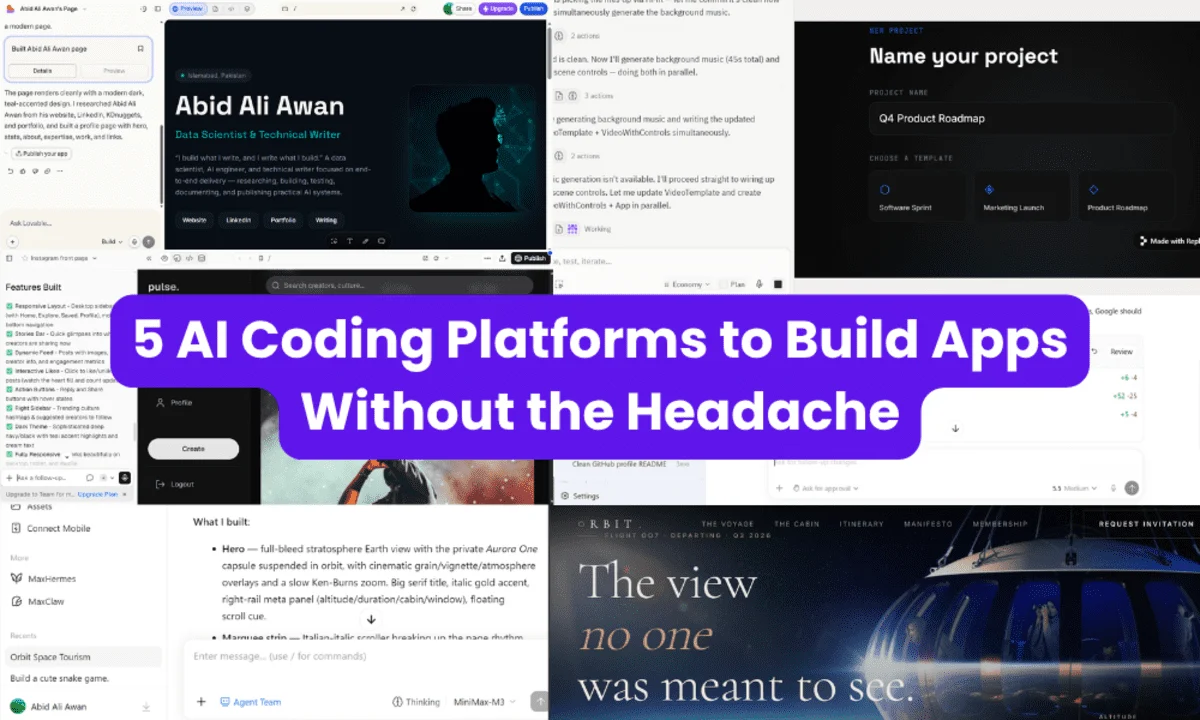
The aspiration to transform innovative ideas into functional applications has long been a formidable barrier for non-technical entrepreneurs, creators, and professionals. Traditionally, the journey from concept to product demanded extensive programming skills, a deep understanding of software architecture, and the arduous management of infrastructure – from setup and security to deployment, hosting, and scaling. Even with the advent of early AI coding assistants, which offered terminal-based code generation, users often found themselves mired in the technical complexities that still required significant expertise. This landscape is rapidly being reshaped by the emergence of sophisticated AI coding platforms, tools that transcend basic code generation to offer end-to-end application development capabilities. These platforms, while often representing a higher investment than rudimentary assistants, promise to significantly reduce friction, enabling users to articulate their visions in plain language and witness the rapid generation, testing, deployment, and even scaling of their applications. This transformative shift is not merely an incremental improvement but a fundamental redefinition of who can build, how they build, and the speed at which digital innovation can occur.
The Evolution of Software Creation: From Code to Agents
The journey towards accessible software development has seen several significant milestones, from the early days of high-level programming languages to the more recent proliferation of low-code and no-code platforms. Low-code platforms, by providing visual interfaces and pre-built components, allowed business users and citizen developers to construct applications with minimal manual coding. No-code solutions pushed this further, abstracting away code entirely for specific use cases like website building or workflow automation. However, these solutions often presented limitations in terms of customization, scalability, and the complexity of applications they could handle. The current generation of AI coding platforms represents the next logical leap, integrating advanced artificial intelligence, particularly large language models and agentic AI, to automate not just code generation but the entire development lifecycle. These "agentic" systems are capable of understanding complex, abstract prompts, breaking them down into actionable steps, interacting with development environments, generating and modifying code, performing tests, and even orchestrating deployment. This paradigm shift moves beyond mere assistance, empowering AI to act as a virtual co-developer or even a lead developer for simpler projects, thereby democratizing the traditionally exclusive realm of software engineering. Industry experts suggest this evolution is poised to dramatically increase the number of digital products entering the market, with a significant portion originating from non-traditional developer backgrounds. According to a recent report by Gartner, by 2025, 70% of new applications developed by enterprises will use low-code or no-code technologies, a trend heavily influenced by the integration of generative AI.
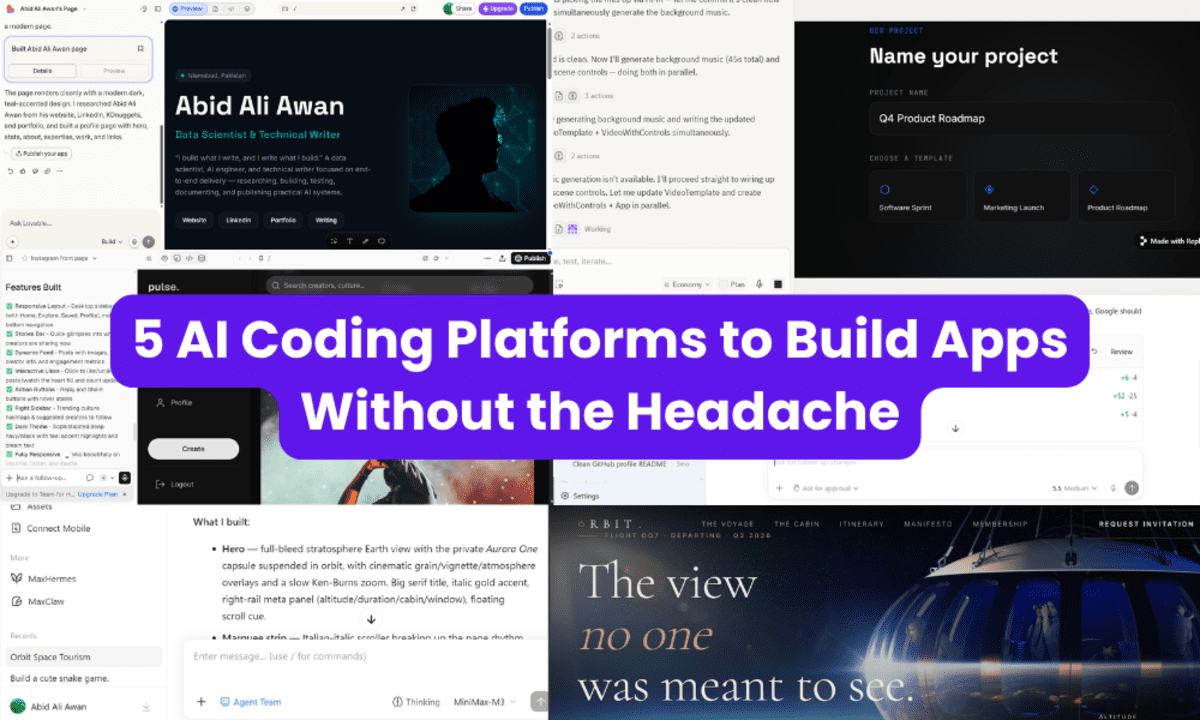
Democratizing Innovation: A Closer Look at Leading AI Coding Platforms
The market for AI coding platforms is diverse, offering solutions tailored to various skill levels and project requirements. Each platform leverages AI in unique ways to streamline the development process, ranging from intuitive interfaces for absolute beginners to powerful agentic tools for experienced developers seeking to accelerate their workflow.
Lovable: Streamlined Rapid Prototyping for Beginners
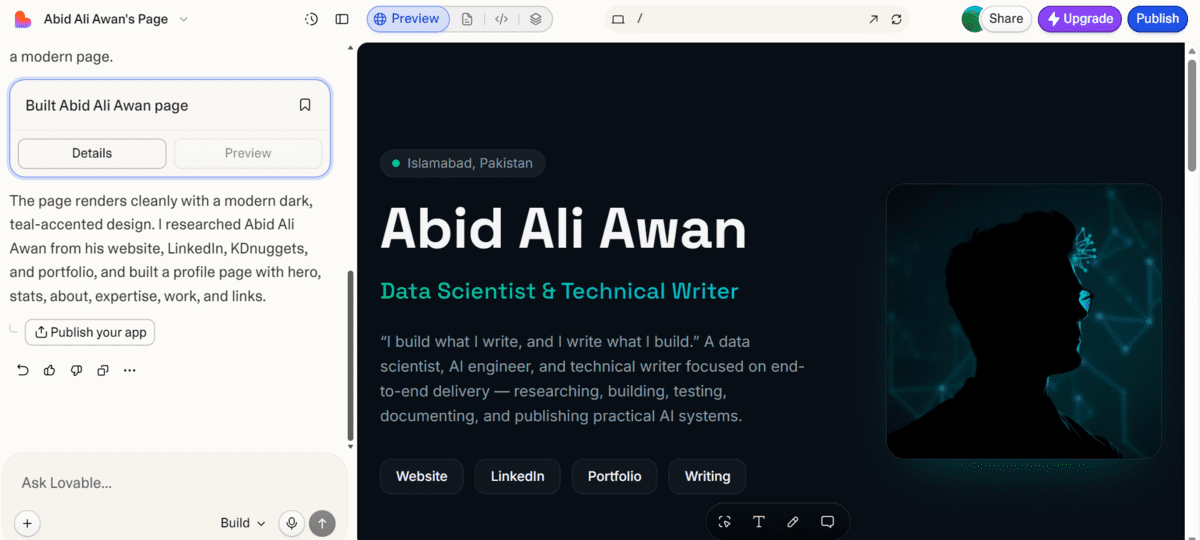
Lovable stands out as a highly accessible entry point for individuals with no prior programming experience, aiming to translate ideas into functional applications. Unlike traditional development, which typically begins with a blank code editor, Lovable adopts a conversational approach. Users describe their desired application in natural language, and the platform intelligently generates the foundational app structure, user interface (UI), and core functionalities. This iterative process allows users to see their ideas materialize in real-time. For instance, a user requesting a personal web page might find Lovable actively searching for relevant public information about them, proposing a layout, generating visual elements, and presenting a live preview. The ability to refine the design and functionality through subsequent prompts, requesting specific changes or improvements, makes the development process highly intuitive and iterative. Once satisfied, the integrated deployment mechanism allows for immediate publication, significantly reducing the technical overhead associated with hosting and server management. This makes Lovable particularly suitable for creating landing pages, administrative dashboards, internal tools, minimum viable products (MVPs), and other simple startup concepts, effectively eliminating the common setup, deployment, and hosting challenges that often deter non-technical founders. The platform’s integration with services like Supabase for backend needs and GitHub for version control, alongside support for custom domains, further enhances its utility, positioning it as a robust tool for rapid ideation and deployment. Lovable offers a free plan, with paid tiers typically commencing around $25 per month, making it an affordable option for early-stage projects.
v0 by Vercel: Crafting Polished Web Experiences
v0 by Vercel has rapidly gained traction for its ability to generate highly polished user interfaces and full-stack application components, particularly within the modern web development ecosystem. Its strength lies in its deep integration with Vercel’s infrastructure, known for its performance, scalability, and developer experience. Users can describe complex applications, such as an Instagram-style social media platform, and v0 will intelligently generate the necessary interfaces, page structures, individual components, and the core application flow. The platform’s output is often styled with a professional aesthetic from the outset, ensuring projects look production-ready from their initial iterations. The iterative refinement process, driven by follow-up prompts, allows for continuous design improvements and functional adjustments. A key advantage of v0 is its capability to suggest and integrate third-party services for more advanced functionalities. For instance, an application requiring user authentication might prompt for integration with Clerk, while data persistence could leverage Supabase, and e-commerce features might connect with various payment providers. This modular approach allows for the construction of sophisticated applications without requiring developers to build every component from scratch. While v0 is powerful for generating UIs and front-end logic, users should be mindful of its credit-based usage model on paid plans, which can quickly deplete with frequent large-scale generations or extensive revisions. Careful planning of prompts is therefore recommended to optimize usage. v0 offers a free tier, with Vercel Pro plans starting around $20 per month, providing a scalable solution for modern web applications.
Replit Agent: The Browser-Native Development Hub
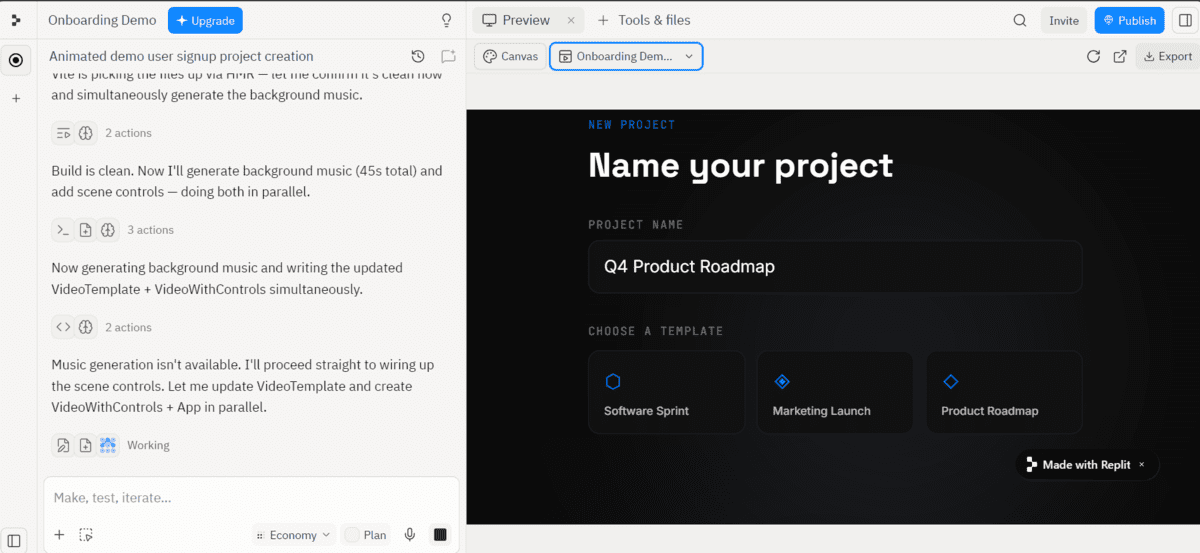
Replit has evolved from a popular browser-based integrated development environment (IDE) and hosting platform into a powerful agentic AI coding platform. For years, Replit has served a diverse user base, from students in coding competitions to experienced developers prototyping and deploying APIs (like FastAPI endpoints). The recent integration of "Replit Agent" has transformed it into a comprehensive AI-powered development workspace. Users can still manually write code within its familiar browser environment, but now they can also initiate entire app builds from a simple prompt, leveraging the agent’s capabilities. This hybrid approach positions Replit as a unique blend, offering the guided development experience of Lovable, the familiar code editing environment of VS Code, and the integrated deployment capabilities of a hosting platform. The agent can interpret an idea, generate the initial version of an application, allow users to inspect and modify the generated code, facilitate testing, assist in bug fixing, and ultimately publish the application – all within a single, unified workspace. Replit’s strength lies in its versatility, supporting a wide array of programming languages and frameworks, and offering built-in features like databases, version control, and monitoring. This makes it an excellent choice for developing full-stack applications, API projects, educational prototypes, and for learning by doing, providing more granular control than a purely no-code builder while eliminating the complex setup of a local development environment. Replit provides a free plan, with its Core plan costing approximately $20 per month when billed annually.

OpenAI Codex: Intelligent Codebase Interaction for Experts
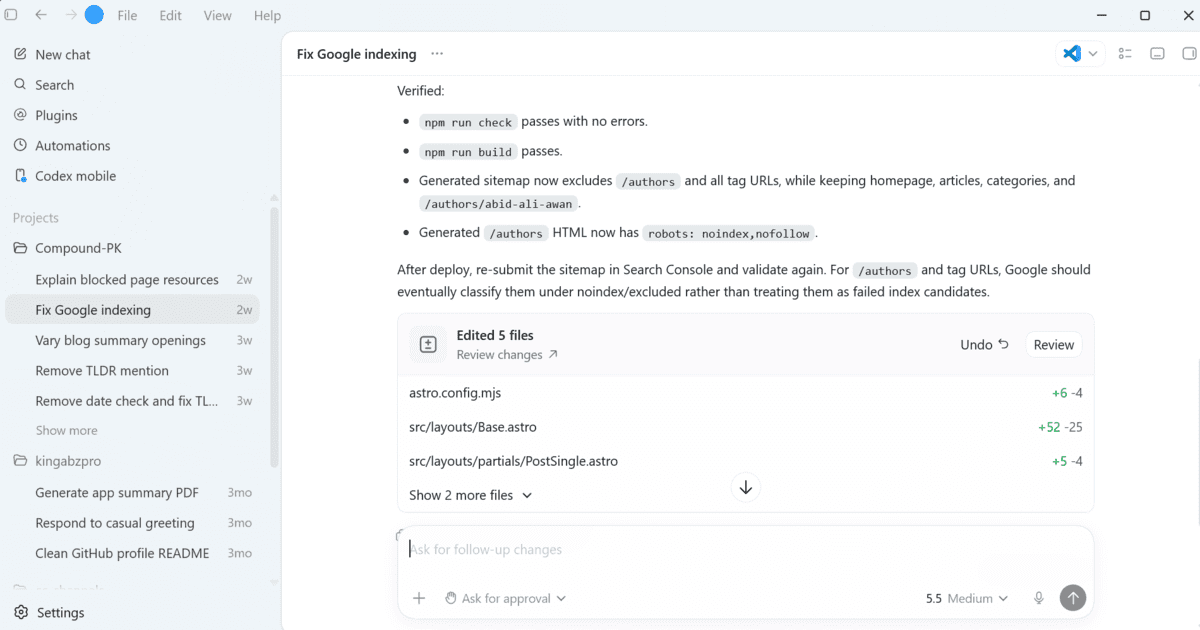
OpenAI Codex distinguishes itself from the app-building focus of Lovable and v0 by operating as a highly intelligent AI coding agent designed to interact deeply with existing codebases. It is less of a "build from scratch" platform and more of an "intelligent assistant" that can read, understand, edit, and debug complex software projects. Codex offers a tiered approach, catering to different levels of technical proficiency. For beginners, the web-based Codex interface within ChatGPT allows for browser-based interaction and direct connection to GitHub repositories, circumventing the need for local development environment setup. Intermediate users can benefit from the Codex desktop application, which provides a more graphical and user-friendly interface for managing coding agents and reviewing proposed changes in local projects. Experienced developers gain maximum flexibility through the VS Code extension and the Codex command-line interface (CLI), enabling seamless integration of Codex’s capabilities directly into their established coding workflows. Codex excels at tasks such as refactoring code, identifying and fixing bugs, generating unit tests, explaining complex code sections, and assisting with pull requests and code reviews. Its ability to comprehend and operate within existing project contexts makes it invaluable for maintaining, extending, and enhancing real-world software. While not designed for quick landing page generation, its strength lies in its analytical depth and its capacity to accelerate complex software development cycles. Access to Codex is typically included with various ChatGPT plans, leveraging OpenAI’s advanced language models.
MiniMax Code: Agile Development on Demand
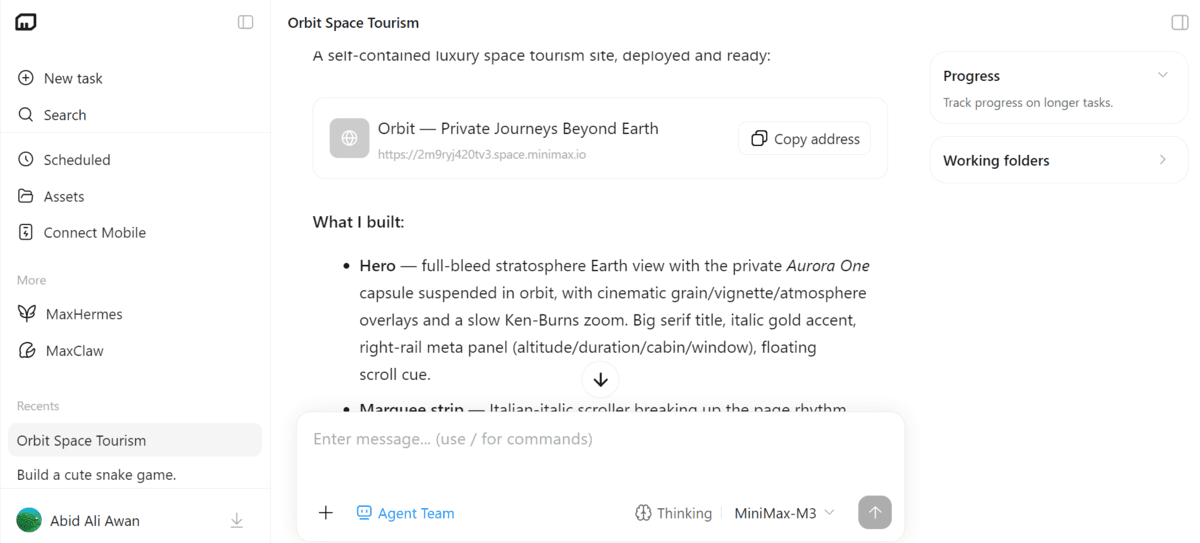
MiniMax Code is a relatively newer entrant to the AI coding platform landscape, quickly garnering attention for its speed, practicality, and dual web and desktop functionality. Operating directly from the browser, it allows users to commence development without the initial hurdle of a complicated local setup. Additionally, a dedicated desktop application provides flexibility for those who prefer working on local projects and directly editing files on their own machines. The platform has demonstrated a robust capability to quickly generate substantial first versions of applications, complete with polished layouts and well-structured project architectures. For example, a request for a "Space Tourism" website can result in a functionally sound and aesthetically pleasing initial build within a short timeframe. MiniMax Code strikes a balance between simplicity for novice users and sufficient power for more comprehensive coding workflows, offering multi-file editing, debugging tools, and a long-context coding model that can handle more intricate project details. This combination makes it an attractive option for users seeking a fast, cost-effective, and browser-friendly solution, with the potential to transition to a more traditional desktop development environment as project complexity increases. MiniMax Code typically operates on a token or credit-based pricing model, offering flexibility for different usage patterns.
Comparative Overview: Navigating the AI Development Landscape
The five platforms discussed—Lovable, v0 by Vercel, Replit Agent, OpenAI Codex, and MiniMax Code—each carve out distinct niches within the burgeoning AI-powered software development ecosystem. Their strategic differences in target audience, core capabilities, and deployment mechanisms provide a spectrum of choices for potential builders.
| Platform | Best For | Skill Level | Top Features | Deployment | Estimated Cost |
|---|---|---|---|---|---|
| Lovable | Landing pages, MVPs, dashboards, internal tools | Beginner | Plain English prompts, full-stack app generation, Supabase, GitHub sync, custom domains | Built-in publishing | Free plan; paid plans start around $25/month |
| v0 by Vercel | Polished UI, SaaS pages, modern web apps | Beginner to Intermediate | React/Next.js-style UI, full-stack app generation, previews, Vercel integration, third-party service connections | Vercel | Free plan; Vercel Pro starts around $20/month |
| Replit Agent | Full-stack apps, APIs, learning, prototypes | Beginner to Advanced | Browser IDE, Agent edits files, runs commands, built-in database, hosting, monitoring, multi-language support | Replit hosting | Free plan; Core around $20/month annually |
| OpenAI Codex | Existing codebases, bug fixes, serious coding tasks | Intermediate to Expert | ChatGPT web, desktop app, VS Code extension, CLI, GitHub, PRs, code review, deep code understanding | External deployment | Included with ChatGPT plans |
| MiniMax Code | Fast and affordable agentic coding | Beginner to Advanced | Browser app, desktop app, multi-file editing, debugging, long-context coding model, rapid initial generation | MiniMax hosting / external | Token plan and credit-based pricing |
For the absolute beginner, Lovable offers the most straightforward path from idea to deployed application, emphasizing simplicity and integrated publishing. Users prioritizing a highly polished, modern web aesthetic and seamless integration with a robust web development ecosystem will find v0 by Vercel an ideal choice, especially for React/Next.js-style interfaces. Replit Agent caters to a broader audience, from beginners learning to code to advanced developers seeking a comprehensive, browser-based environment for full-stack prototyping and deployment, offering more control over the generated code. OpenAI Codex is distinct in its focus, serving as a powerful assistant for those already engaged in software development, providing intelligent insights and automation for complex codebase interactions rather than initial app generation. Finally, MiniMax Code presents a compelling option for those seeking a balance of speed, affordability, and flexibility, with both web and desktop development capabilities for agile project initiation.
The Broader Implications of Agentic AI Development
The rise of agentic AI coding platforms carries profound implications for the technology industry, the economy, and the future of work.
- Democratization of Innovation: The most immediate impact is the significant lowering of the barrier to entry for app development. Non-technical founders can now bypass the traditional hurdles of hiring developers or learning to code, allowing them to rapidly prototype and launch their ideas. This could lead to an explosion of new startups, innovative products, and digitally-enabled services, fostering a more inclusive entrepreneurial landscape.
- Accelerated Development Cycles: For established businesses and even professional developers, these platforms offer unprecedented speed. The ability to generate functional code, UI components, and even entire application structures from natural language prompts drastically reduces development time and effort. This acceleration translates into faster time-to-market, quicker iteration cycles, and enhanced responsiveness to market demands.
- Shifting Skill Sets: While some fear job displacement, the more likely scenario is a transformation of developer roles. Routine coding tasks may be automated, but the demand for architects, system designers, AI prompt engineers, quality assurance specialists, and those who can understand, integrate, and customize AI-generated code will likely increase. The focus shifts from writing every line of code to orchestrating AI agents, debugging complex systems, and ensuring security and scalability.
- Economic Impact: The ability to create custom software more cheaply and quickly can stimulate economic growth across various sectors. Small and medium-sized enterprises (SMEs) can access bespoke solutions without prohibitive development costs, leading to increased efficiency and competitiveness. New business models built around AI-generated software could also emerge.
- Ethical and Security Considerations: As AI takes on more responsibility in code generation, new challenges arise. Ensuring the security, robustness, and ethical implications of AI-generated code becomes paramount. Questions regarding intellectual property for AI-generated assets, the potential for propagating biases embedded in training data, and the need for rigorous testing and auditing of AI-created applications will require careful consideration and regulatory frameworks.
Challenges and the Road Ahead
Despite their immense potential, AI coding platforms are not without their challenges. The complexity of highly customized or enterprise-grade applications may still require significant human intervention and specialized development. Vendor lock-in, the risk of becoming overly reliant on a specific platform’s ecosystem, is another consideration. Furthermore, while these tools are becoming increasingly sophisticated, the quality and efficiency of the generated code can still vary, necessitating human review and optimization. The ongoing evolution of these platforms will likely focus on enhancing their "agentic" capabilities, allowing them to perform more complex reasoning, integrate with a wider array of external services, and learn from user feedback to improve accuracy and relevance. The integration of advanced testing and debugging agents, coupled with more robust security features, will be critical for widespread adoption in sensitive environments. The future promises a collaborative development model where human creativity and problem-solving are augmented by intelligent AI agents, leading to an era of unparalleled digital creation.
Conclusion: A New Paradigm for Builders
The notion that platforms like Lovable, v0, and other AI app builders were mere novelties or limited to simple prototypes has been decisively debunked. These tools have matured into powerful, agentic AI coding platforms capable of leveraging diverse tools, integrating with third-party services, conducting self-correction, refining designs, and facilitating comprehensive application deployment. They represent a significant graduation from basic website generators to serious product-building tools, effectively democratizing access to software development. Whether one is a non-technical founder seeking an intuitive starting point with Lovable, an aspiring developer aiming for polished web interfaces with v0, a versatile builder looking for a browser-based coding and deployment hub with Replit Agent, a seasoned developer requiring an intelligent assistant for complex codebases with OpenAI Codex, or someone seeking an agile and affordable option with MiniMax Code – the choices are abundant and tailored. The overarching message is clear: the era of waiting to become a programmer to build digital products is receding. With the strategic application of these advanced AI coding platforms, innovators across all skill levels can transform their ideas into tangible, working applications with unprecedented speed, cost-efficiency, and significantly reduced technical overhead. This paradigm shift marks a pivotal moment in the history of software development, ushering in a future where the ability to conceive is increasingly synonymous with the ability to create.