A groundbreaking discovery on a tiny, isolated island in the Baltic Sea is compelling scientists to fundamentally reassess the complex relationship between prehistoric humans and wolves. The unearthing of wolf remains, dating back between 3,000 and 5,000 years on the Swedish island of Stora Karlsö, presents a puzzle that challenges long-held assumptions about early human-animal interactions. The island’s lack of native land mammals means these wolves could not have arrived naturally, leading researchers to the extraordinary conclusion that humans were responsible for their presence, likely transporting them across the water. This finding, detailed in a recent publication in the prestigious journal Proceedings of the National Academy of Sciences, suggests a level of intentional management and cohabitation with wolves that has rarely been considered in the archaeological record.
The collaborative research effort involved a distinguished team of scientists from institutions including the Francis Crick Institute, Stockholm University, the University of Aberdeen, and the University of East Anglia. Their meticulous analysis of skeletal remains and genetic material has painted a vivid picture of wolves living in close proximity to human settlements during the Neolithic and Bronze Ages, periods that bridge the later Stone Age and the dawn of metalworking. This era predates the development of complex civilizations as we understand them today, making the implications for our understanding of early human ingenuity and social structures even more profound.
The Enigma of the Island Wolves: A Journey Across the Sea
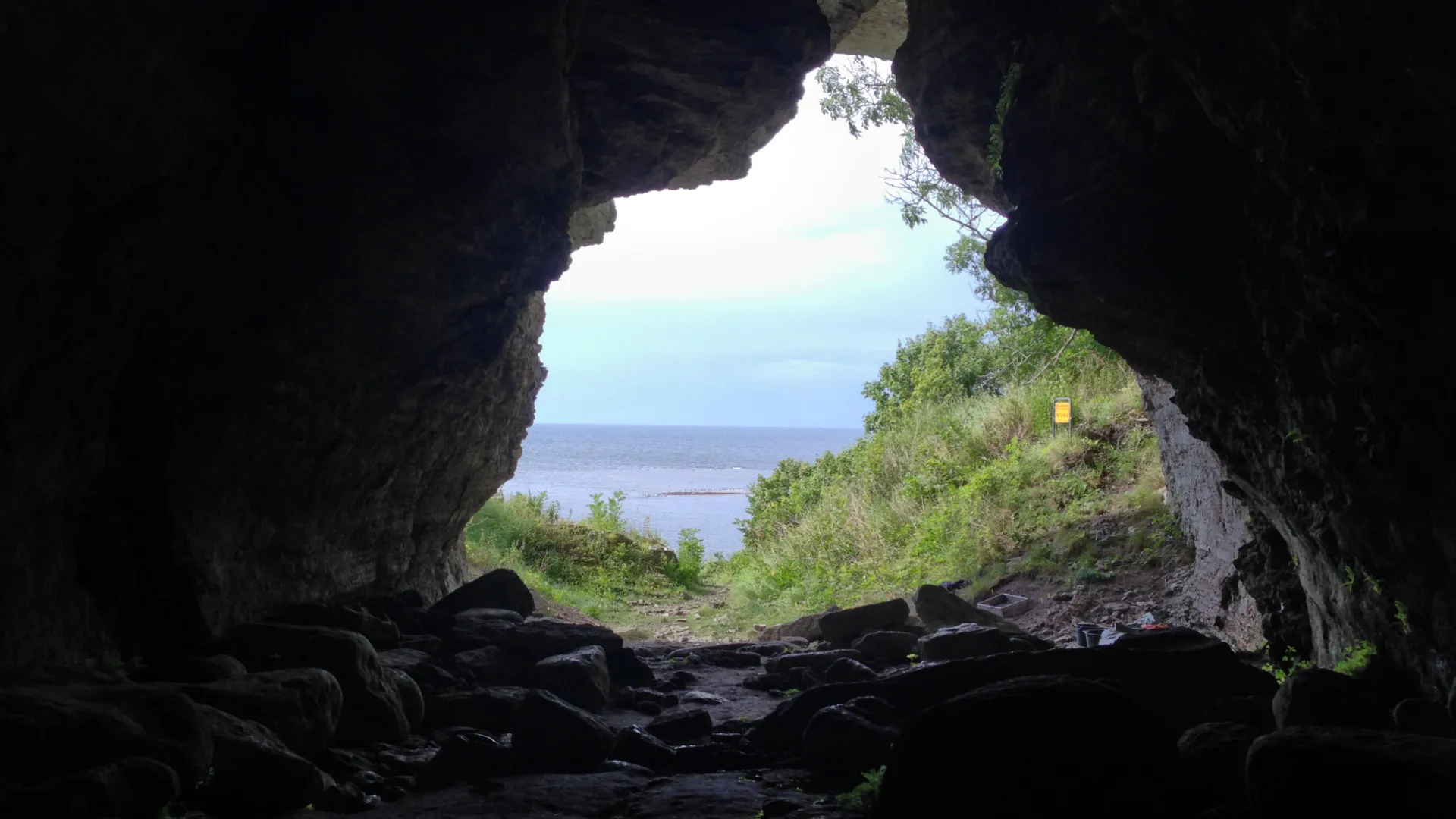
The archaeological site where the wolf remains were discovered is Stora Färvar cave, a location that served as a crucial hub for seal hunters and fishers for millennia. Stora Karlsö itself is a diminutive landmass, measuring a mere 2.5 square kilometers, notable for its complete absence of indigenous terrestrial mammals. This stark environmental reality is the cornerstone of the discovery’s significance. Wolves, as apex predators, are land-bound creatures that do not possess the natural means to traverse open expanses of saltwater. Their presence on Stora Karlsö, therefore, is an undeniable testament to human agency. The prevailing scientific consensus points towards transportation by boat as the only plausible method of arrival for these animals.
This initial conclusion alone marked the discovery as highly unusual, hinting at a deliberate act of human intervention. However, as the research progressed, further analyses began to unveil an even more intricate and surprising narrative about the lives of these island wolves and their relationship with the human inhabitants.
Unveiling a Shared Existence: Dietary Clues and Physical Adaptations
The scientific investigation focused on the remains of two canids, a broad classification encompassing wolves, dogs, foxes, and their relatives. Rigorous genetic testing definitively identified both specimens as wolves, with no discernible traces of dog ancestry. This distinction is crucial, as it rules out the simpler explanation of early dog presence and instead focuses the inquiry on the complex dynamics with their wilder progenitors.
Despite being genetically wolves, these individuals exhibited several characteristics that are frequently associated with animals that have lived in close proximity to humans. A key piece of evidence emerged from isotope analysis, a sophisticated technique that allows researchers to reconstruct an animal’s diet by examining the chemical signatures left in its bones. The results indicated that these wolves consumed substantial quantities of marine protein, derived from seals and fish. This dietary profile remarkably mirrored that of the human populations who inhabited Stora Karlsö during the same period. The implication is potent: these wolves were likely being provisioned by humans, suggesting a level of reliance on human food sources.
Further morphological analysis revealed that the island wolves were smaller than their mainland counterparts, a common adaptation observed in populations that experience reduced nutritional stress or are subject to selective pressures, whether natural or human-induced. Moreover, one of the wolf specimens displayed unusually low genetic diversity. Genetic diversity refers to the breadth of genetic variation within an individual or a population, and low diversity can be indicative of several factors, including isolation, founder effects (where a new population is established by a small number of individuals), or the effects of selective breeding.
Dr. Linus Girdland-Flink of the University of Aberdeen, one of the lead authors of the study, emphasized the profound nature of these findings. "The discovery of these wolves on a remote island is completely unexpected," he stated. "Not only did they have ancestry indistinguishable from other Eurasian wolves, but they seemed to be living alongside humans, eating their food, and in a place they could have only have reached by boat. This paints a complex picture of the relationship between humans and wolves in the past."
Challenging the Narrative of Domestication: A New Paradigm
The implications of this discovery extend to the very foundations of how scientists have historically understood the path to dog domestication. For decades, the prevailing narrative has been that wolves gradually transformed into dogs through a protracted process of cohabitation with humans, adapting to human environments and behaviors. This "gradual evolution" model has been the dominant framework for interpreting the human-wolf relationship in prehistory.
However, the wolves of Stora Karlsö do not fit neatly into this established story. While the research team cannot definitively state the exact nature of the wolves’ relationship with humans—whether they were tame, actively held in captivity, or managed in a less formalized way—their presence on an inhabited island strongly suggests a deliberate and ongoing interaction.
Pontus Skoglund of the Ancient Genomics Laboratory at the Francis Crick Institute and senior author of the study, expressed his astonishment. "It was a complete surprise to see that it was a wolf and not a dog," he remarked. "This is a provocative case that raises the possibility that in certain environments, humans were able to keep wolves in their settlements, and found value in doing so." This "value" could have encompassed a range of benefits, from potential early forms of pest control to even symbolic or ceremonial purposes, though such interpretations remain speculative without further evidence.
Genetic Signatures of Human Influence
The genetic data provided further compelling evidence for human involvement in the lives of these wolves. Anders Bergström of the University of East Anglia, a co-lead author, highlighted the significance of the low genetic diversity observed in one of the wolves. "The genetic data is fascinating," Bergström explained. "We found that the wolf with the most complete genome had low genetic diversity, lower than any other ancient wolf we’ve seen. This is similar to what you see in isolated or bottlenecked populations, or in domesticated organisms. While we can’t rule out that these wolves had low genetic diversity for natural reasons, it suggests that humans were interacting with and managing wolves in ways we hadn’t previously considered."
A population bottleneck, characterized by a drastic reduction in population size, leads to a significant loss of genetic variation. While such events can occur naturally, they can also be a direct consequence of human management practices, including selective breeding or the deliberate restriction of breeding partners. The pattern observed in the Stora Karlsö wolves strongly suggests that human intervention played a role in shaping their genetic makeup.
A Wolf That May Have Received Care: Evidence of Compassion?
One of the most poignant discoveries within the study involved a Bronze Age wolf that exhibited severe damage to a limb bone. The nature of the injury was such that it would have undoubtedly impaired the animal’s ability to move efficiently and hunt for sustenance. Yet, the wolf survived for a significant period after sustaining this injury, long enough for the damage to leave a clear and indelible mark on its skeletal structure.
This observation has led researchers to propose that the animal may have received some form of care from the human inhabitants. Alternatively, its survival might indicate that it lived in circumstances where it was not entirely reliant on its own hunting prowess for survival, perhaps being provided with food or protected from the harsher realities of the wild. This hints at a level of empathy or pragmatic management that extends beyond mere exploitation.
A Multifaceted Approach: Synthesizing Osteology and Genomics
The success of this research hinges on the synergistic application of multiple scientific disciplines. The study masterfully combined osteology—the scientific study of bones—with cutting-edge genetic analysis. This integrated approach provided a depth of insight that neither method could have achieved in isolation. By examining the physical remains and deciphering the genetic code, scientists have been able to construct a more holistic and nuanced understanding of these ancient wolves.
Jan Storå, Professor of Osteoarchaeology at Stockholm University, underscored the power of this interdisciplinary approach. "The combination of data has revealed new and very unexpected perspectives on Stone Age and Bronze Age human-animal interactions in general and specifically concerning wolves and also dogs," Storå commented.
Broader Implications: A Spectrum of Human-Wolf Relationships
In conclusion, the findings from Stora Karlsö fundamentally broaden our understanding of the diverse ways in which humans and wolves interacted in prehistoric times. It suggests that the relationship was not a monolithic progression solely towards domestication but rather a spectrum of engagements. Some prehistoric communities, it appears, were capable of forging long-term, albeit perhaps not fully domesticated, relationships with wolves. These interactions may have involved careful management, provision of sustenance, and a degree of cohabitation, all of which contributed to the unique evolutionary trajectory of these island wolves.
This discovery opens a forgotten chapter in the long and intricate history of humans and wolves, hinting at experiments in coexistence and interspecies relationships that, while not leading to the familiar dogs of today, reveal a far more complex and perhaps even compassionate side to our ancient ancestors’ engagement with the natural world. The implications for understanding the origins of animal domestication and the cognitive abilities of early humans are profound, suggesting that the seeds of human-animal partnership may have been sown in far more varied and unexpected environments than previously imagined. The wolves of Stora Karlsö stand as silent witnesses to a forgotten era of interspecies collaboration, challenging us to rethink the very definition of our relationship with the animal kingdom.