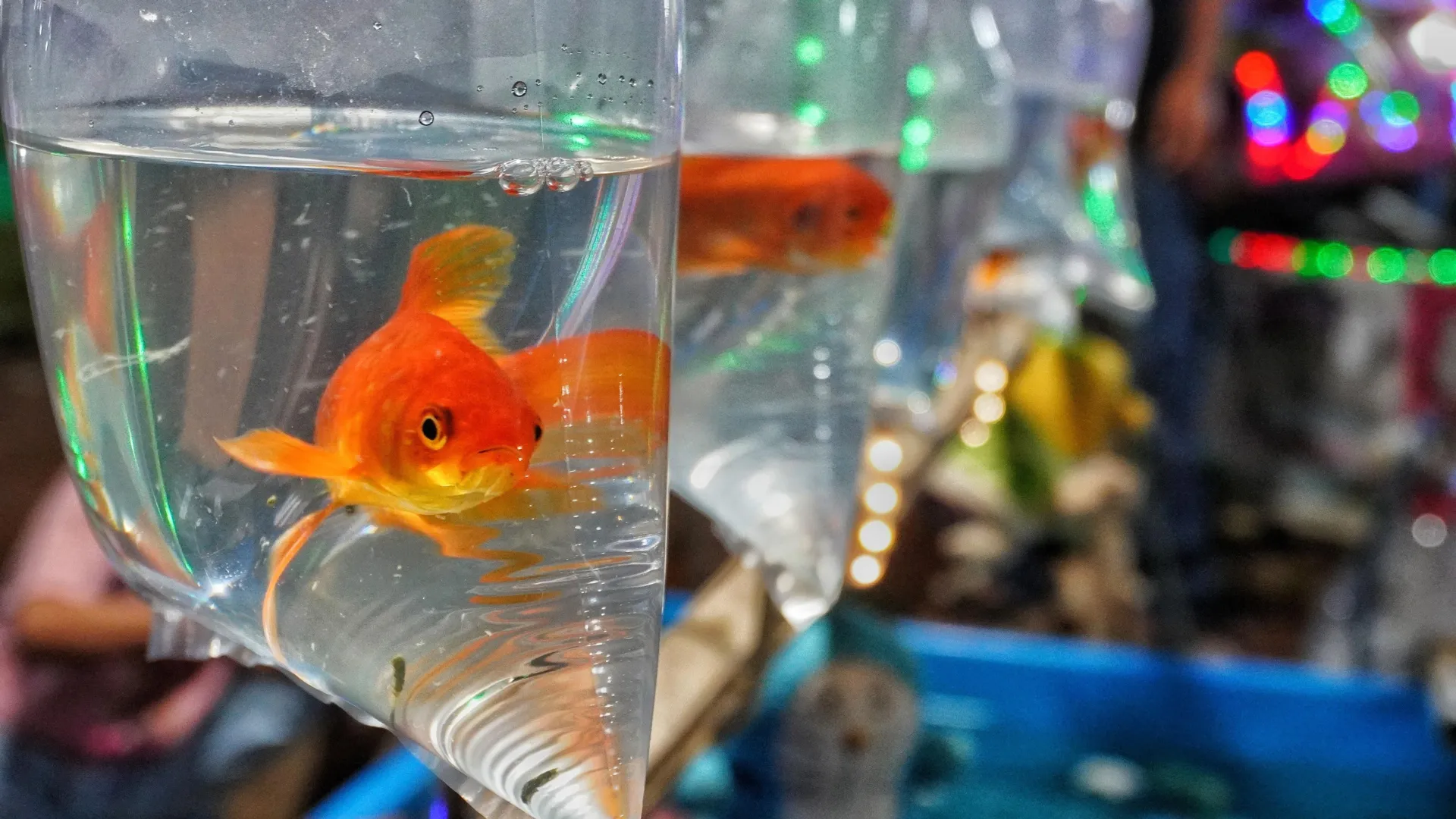
A groundbreaking study, published in the esteemed Journal of Animal Ecology, reveals a stark reality for one of the world’s most beloved aquatic pets: the common goldfish. Researchers from The University of Toledo and the University of Missouri have presented compelling experimental evidence demonstrating that when these seemingly harmless aquarium inhabitants are released or escape into natural freshwater environments, they can instigate profound and damaging alterations to entire lake ecosystems. This research serves as a critical public service announcement, underscoring the significant ecological threat posed by what many consider a benign household companion.
The implications of this study are far-reaching, directly impacting pet owners, environmental policymakers, and natural resource managers alike. The findings dismantle any perception of releasing a goldfish into the wild as a benevolent act, instead highlighting it as a potential catalyst for ecological degradation.
The Unforeseen Ecological Footprint of the Common Goldfish
Dr. William Hintz, associate professor in The University of Toledo’s Department of Environmental Sciences and Lake Erie Center and lead investigator of the study, emphasized the urgency of disseminating this information. "It is critically important to inform the public that their pets can become pests that will harm freshwater ecosystems," Dr. Hintz stated. "The evidence is now clear — releasing a goldfish into the wild might be seen as an act of kindness, but it can turn into a major ecological threat."
The research team meticulously designed and implemented a series of large-scale outdoor freshwater mesocosms, sophisticated experimental enclosures engineered to accurately replicate the complex dynamics of natural lakes. Within these controlled environments, scientists introduced goldfish (Carassius auratus) and rigorously observed their cascading effects on distinct lake types over extended periods.
The study focused on two prevalent freshwater conditions: nutrient-poor (oligotrophic) waters, characterized by low nutrient levels and clear water, and nutrient-rich (eutrophic) waters, which typically exhibit higher nutrient concentrations and can be prone to algal blooms. Astonishingly, goldfish demonstrated the capacity to induce substantial ecological disruption in both scenarios.
Goldfish as Agents of Ecological Transformation
The experimental setup allowed researchers to isolate the specific impacts of goldfish, differentiating them from the general effects of increased fish biomass. This was achieved through the use of both additive and substitutive experimental designs. In an additive design, goldfish were introduced alongside existing fish populations, while in a substitutive design, goldfish replaced a portion of the existing fish community. This rigorous methodology ensured that observed changes could be definitively attributed to the presence of goldfish, rather than simply an increase in the overall number of fish.
The analysis revealed a critical distinction: while some alterations in aquatic vegetation were correlated with the total abundance of fish, the most severe and pervasive ecological damage was unequivocally linked to the direct presence of goldfish. This points to a unique and detrimental influence exerted by this specific invasive species.
A particularly alarming finding was the documentation of what scientists term a "regime shift." This phenomenon represents a critical tipping point where an ecosystem undergoes a rapid and fundamental reorganization, often transitioning into a degraded and less resilient state. Once such a regime shift occurs, the process of ecological restoration becomes exceedingly difficult and prohibitively expensive, often requiring decades of intensive management and significant financial investment.
The Unfolding Timeline of Goldfish Invasion
The problem of invasive goldfish is not a nascent one, but rather a growing concern fueled by the global ornamental fish trade. Goldfish are among the most widely distributed ornamental fish species worldwide, with the pet trade facilitating the movement of aquatic species across continents at unprecedented rates. This global connectivity has unfortunately created numerous pathways for accidental introductions into natural ecosystems.
When goldfish are released into ponds, rivers, or lakes, whether intentionally or through accidental escape during events like flooding, they possess a remarkable ability to establish invasive populations. Their rapid reproduction rates and adaptability allow them to spread quickly, outcompeting native species for resources and altering habitat structure.
Dr. Rick Relyea, a professor in the University of Missouri College of Agriculture, Food and Natural Resources, director of Mizzou’s Johnny Morris Institute of Fisheries, Wetlands and Aquatic Systems, and a co-author of the study, elaborated on the behavioral and physiological traits that contribute to their invasiveness. "If goldfish are released into the wild, they rapidly grow into very large fish that stir up lake sediments, consume large numbers of prey and compete with native fish," Dr. Relyea explained. This physical disturbance of sediments can resuspend nutrients, further exacerbating eutrophication, and cloud the water, reducing light penetration for submerged aquatic vegetation. Their voracious appetite for both plant matter and invertebrates also disrupts food webs.
Supporting Data: Quantifying the Impact
While the original press release did not include specific quantitative data points within the bulleted list, the study’s methodology and broader implications allow for a discussion of the types of data that would have been collected and analyzed. Researchers would have meticulously measured parameters such as:
- Water Clarity: Assessed using Secchi disks or turbidity meters, measuring how deeply light can penetrate the water. Goldfish, by stirring up sediments, significantly reduce water clarity.
- Nutrient Levels: Quantifying concentrations of phosphorus and nitrogen. Goldfish waste and sediment disturbance contribute to increased nutrient loads.
- Phytoplankton Biomass: Measured as chlorophyll-a concentration. Increased nutrients often lead to algal blooms, a hallmark of eutrophic conditions.
- Submerged Aquatic Vegetation (SAV) Cover: Estimated through surveys and photographic analysis, indicating the extent of plant life on the lakebed. Goldfish consume SAV, and reduced water clarity further inhibits its growth.
- Invertebrate Community Structure: Quantifying the abundance and diversity of zooplankton and benthic invertebrates. Goldfish are opportunistic feeders and can decimate populations of native invertebrates, impacting the food source for native fish.
- Fish Community Composition: Monitoring the abundance and health of native fish species. Invasive goldfish can outcompete native fish for food and habitat.
- Goldfish Size and Condition: Documenting the growth rates and overall health of the introduced goldfish, demonstrating their success in establishing populations.
The study’s finding of a "regime shift" implies that these quantifiable metrics would have shown a dramatic and potentially irreversible change in the ecosystem’s state, moving from a clear-water, vegetated system to a turbid, algae-dominated system, or from a balanced invertebrate community to one dominated by less desirable species.
Official Responses and Proactive Measures
In light of these alarming findings, conservation organizations and governmental agencies are increasingly prioritizing goldfish as a species of concern. The researchers are advocating for a proactive approach to invasive species management, focusing on prevention, early detection, and rapid response strategies.
"Natural resource agencies need to treat goldfish as a high-priority invasive species," the authors stated. This means shifting resources and attention towards preventing their introduction in the first place, and developing robust monitoring programs to identify and address any emerging populations before they become entrenched.
The study’s authors are also calling for a significant enhancement of public awareness campaigns. Educating pet owners about the ecological consequences of releasing aquarium animals into natural waterways is paramount. Many individuals remain unaware of the harm they can cause, viewing it as a simple act of freeing an unwanted pet.
Alternatives for unwanted goldfish are being widely promoted. These include returning the fish to a reputable pet store that may be able to rehome them, finding a new aquarium enthusiast willing to adopt the pet, or contacting local wildlife authorities or aquatic invasive species programs for guidance on responsible rehoming or disposal. These options provide humane solutions for pet owners while mitigating the risk of ecological damage.
Broader Implications for Freshwater Ecosystems
The implications of this research extend beyond the immediate threat posed by goldfish. It serves as a potent reminder of the interconnectedness of ecosystems and the unintended consequences of human actions. The ease with which ornamental fish can be transported globally, coupled with their adaptability and reproductive potential, makes them a significant vector for biological invasions.
This study provides robust scientific backing for policies aimed at regulating the pet trade, enhancing biosecurity measures at ports of entry, and investing in research that identifies potential invasive species before they become widespread problems. The concept of a "regime shift" is particularly concerning, as it highlights the potential for long-term, irreversible damage to vital freshwater resources that support biodiversity, provide recreational opportunities, and contribute to human well-being.
The success of the goldfish in disrupting these experimental lake ecosystems underscores the vulnerability of even seemingly robust natural environments to the introduction of non-native species. As climate change continues to stress aquatic ecosystems, their ability to withstand the added pressure of invasive species like goldfish becomes even more critical.
Conclusion: A Call to Responsible Pet Ownership
The study, formally titled "Invasive goldfish trigger a regime shift in experimental lake ecosystems of varying trophic state," was a collaborative effort involving Dr. William Hintz from The University of Toledo, Hannah Barrett, and Dr. Rick Relyea from the University of Missouri. Their meticulous work, conducted using state-of-the-art mesocosms that mirrored real-world lake conditions across different trophic states, has provided an undeniable scientific foundation for understanding the ecological threat of invasive goldfish.
The findings serve as a stark warning: the seemingly innocuous goldfish, when liberated from its aquarium confines, can transform into a formidable ecological disruptor, capable of fundamentally altering and degrading freshwater habitats. This research compels a reevaluation of our responsibilities as pet owners and underscores the urgent need for comprehensive public education and robust preventative measures to safeguard our precious aquatic ecosystems. The future health of our lakes and rivers may well depend on heeding this critical scientific insight.