Scientists have uncovered a previously unknown mechanism by which sea anemones defend themselves against viral invaders, a discovery that dramatically expands our understanding of the evolutionary diversity of animal immune systems. This novel defense hinges on a protein that bears a striking resemblance to a cornerstone of human antiviral immunity, yet performs the precise opposite function, paradoxically protecting the animal by suppressing its own immune response under normal conditions. The findings, published in the prestigious journal Nature Ecology & Evolution, suggest that the animal kingdom has evolved multiple, distinct strategies for combating viral infections, moving beyond the long-held notion of a single, inherited ancestral antiviral system.
This groundbreaking research was spearheaded by PhD candidate Ton Sharoni and Professor Yehu Moran from the Department of Ecology, Evolution and Behavior at the Hebrew University of Jerusalem, in close collaboration with a team from the University of North Carolina at Charlotte. Their work challenges a fundamental tenet in immunology: the idea that vertebrates and other animal groups share a common, conserved core antiviral defense system inherited from a distant common ancestor. Instead, the study points towards convergent evolution, where different lineages independently developed sophisticated solutions to the perennial threat of viral pathogens.
An Ancient Lineage Offers Unexpected Insights into Immunity
Viruses, microscopic entities capable of hijacking cellular machinery for their replication, have exerted relentless selective pressure on life forms throughout evolutionary history. In humans and other vertebrates, a critical component of the innate immune response to viral infection involves a protein known as MAVS (Mitochondrial Antiviral Signaling protein). Upon detecting viral components, MAVS acts as a crucial signaling hub, initiating a cascade of events that mobilizes the immune system to neutralize the threat. Understanding the evolutionary origins and conservation of such vital defense mechanisms is paramount to comprehending the intricate tapestry of life.
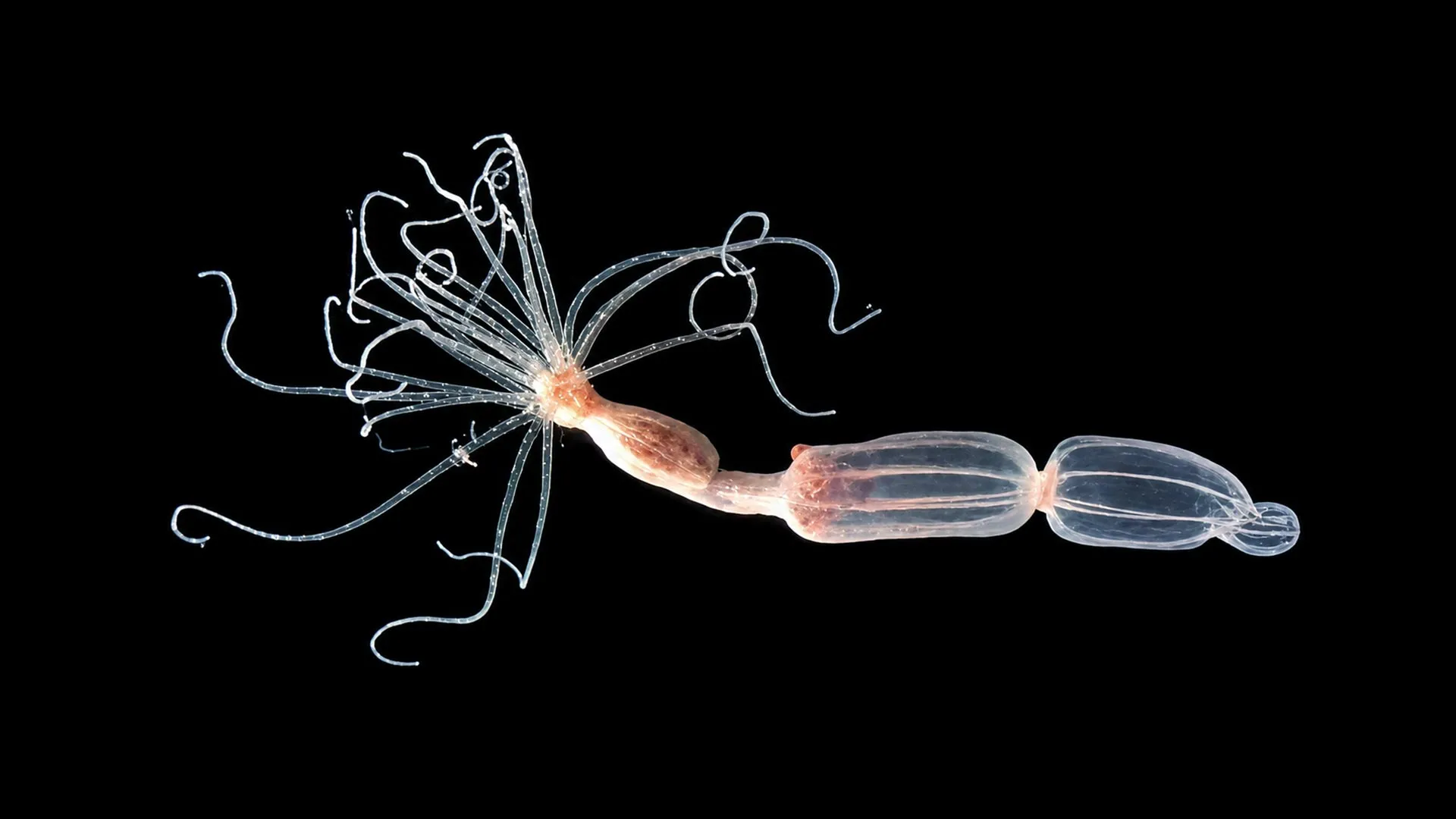
To delve into the deep evolutionary past of antiviral immunity, the researchers turned their attention to sea anemones. These cnidarians, belonging to a lineage that diverged from the evolutionary path leading to humans over 600 million years ago, represent a fascinating window into the early development of animal complexity. As close relatives of corals and jellyfish, sea anemones possess a relatively simple yet effective immune system that can shed light on the foundational principles of animal defense mechanisms that predated the development of more complex organ systems.
During their intensive investigation, the research team identified a novel protein within sea anemones. This protein, provisionally named CARDIB (CARD Inhibitor Binding protein), initially presented a puzzling profile. Its molecular structure bore a remarkable similarity to human MAVS, leading the scientists to hypothesize that it might play a comparable role in antiviral defense. However, this initial assumption was swiftly and dramatically overturned by experimental data.
The Counterintuitive Role of CARDIB: Protection Through Suppression
"Everything about CARDIB’s structure and initial characterization suggested it should function as an activator of antiviral defenses, mirroring MAVS in humans," explained Professor Yehu Moran, the senior author on the study. "To our astonishment, we discovered that it operates on an entirely opposite principle. Rather than triggering an immune response, CARDIB functions as a potent suppressor of these very defenses under normal physiological conditions."
This paradoxical finding immediately sparked a critical question: why would an organism evolve a mechanism that actively dampens its own immune system, a system typically understood as needing to be robust and readily activated to combat infection?
To address this enigma, the scientists employed sophisticated CRISPR-Cas9 gene editing technology to precisely remove the CARDIB gene from sea anemone populations. These genetically modified anemones were then deliberately exposed to various viral pathogens. The results were both surprising and illuminating. Anemones lacking functional CARDIB exhibited a significantly heightened susceptibility to viral infections. Viruses replicated at accelerated rates within their tissues, and crucially, the animals were unable to mount an effective antiviral response. Their overall ability to combat infection plummeted, highlighting the indispensable, albeit indirect, role of CARDIB.
"The experimental outcomes were profoundly counterintuitive," stated Ton Sharoni, the lead PhD candidate. "We observed that while CARDIB acts like a brake on the immune system in its basal state, this very braking mechanism is, in fact, essential for enabling the animal to mount a robust and timely antiviral response when it truly counts."
The experiments collectively demonstrated that sea anemones utilize an antiviral pathway that, at a functional level, is fundamentally distinct from that of humans, despite the presence of structurally similar molecular components. This suggests that evolution has found more than one route to achieve the crucial goal of viral resistance.
Validation in a Natural Environment: Beyond the Lab
Recognizing the importance of assessing these findings within a more ecologically relevant context, the researchers extended their investigation beyond the controlled confines of laboratory aquaria. Genetically modified sea anemones, both those lacking CARDIB and their unmodified counterparts, were carefully introduced into outdoor marine mesocosms. These mesocosms were designed to replicate natural estuarine environments, complete with the complex microbial communities and diverse viral loads characteristic of their native habitats, specifically in South Carolina.
The impact of CARDIB’s absence became strikingly apparent within days of their introduction into this more challenging milieu. Sea anemones genetically engineered to be deficient in CARDIB and related antiviral regulatory genes accumulated significantly higher viral loads compared to the control group of unmodified anemones. Furthermore, the researchers observed that certain immune genes, which appeared to play only a modest role in laboratory-based assays, demonstrated a clear and pronounced importance in conferring protection under these natural environmental conditions.
"This experiment provided unequivocal evidence that the pathway we identified is not merely a laboratory artifact," Professor Moran emphasized. "It is an integral component of their survival strategy, playing a vital role in enabling these animals to effectively contend with the constant barrage of viral challenges they encounter in their natural marine ecosystems."
A Spectrum of Evolutionary Solutions to Viral Threats
The implications of this research extend far beyond the biology of sea anemones. The findings strongly suggest that the evolutionary process has not converged on a single, universally optimal antiviral strategy. Instead, different branches of the animal kingdom may have independently devised and refined distinct molecular systems for recognizing viral threats and orchestrating defense mechanisms. This implies a far greater degree of plasticity and creativity in the evolution of immune systems than was previously appreciated.
"Both humans and sea anemones face the persistent threat of viral infections, but this research compellingly illustrates that evolution can assemble and organize the necessary defenses in fundamentally divergent ways," Professor Moran elaborated. "It opens up exciting avenues for exploring how other ancient lineages and diverse animal groups have tackled this universal challenge."
This study also underscores the critical importance of expanding the scope of scientific inquiry beyond commonly studied model organisms. By investigating ancient and evolutionarily distinct creatures like sea anemones, scientists can uncover hidden evolutionary innovations and developmental pathways that might be lost or significantly altered in more recently evolved species. Such explorations are vital for building a comprehensive and nuanced picture of the biological world.
As scientific exploration continues to plumb the depths of biological diversity, discoveries such as this one serve as powerful reminders that evolution has repeatedly engineered ingenious and often unexpected solutions to some of life’s most fundamental and persistent challenges, including the perpetual arms race against viral adversaries. The complex interplay between organism and virus continues to drive innovation across the tree of life, revealing a remarkable breadth of biological ingenuity.