Scientists have uncovered an unexpected source of food in the deep ocean that could fundamentally alter our understanding of marine ecosystems and Earth’s carbon cycle. A groundbreaking study originating from the University of Southern Denmark (SDU) reveals that the seemingly barren deep sea may, in fact, be a surprisingly fertile ground for microbial life, challenging long-held assumptions about nutrient scarcity at extreme depths.
Marine Snow: A Hidden Pantry at Kilometer Depths
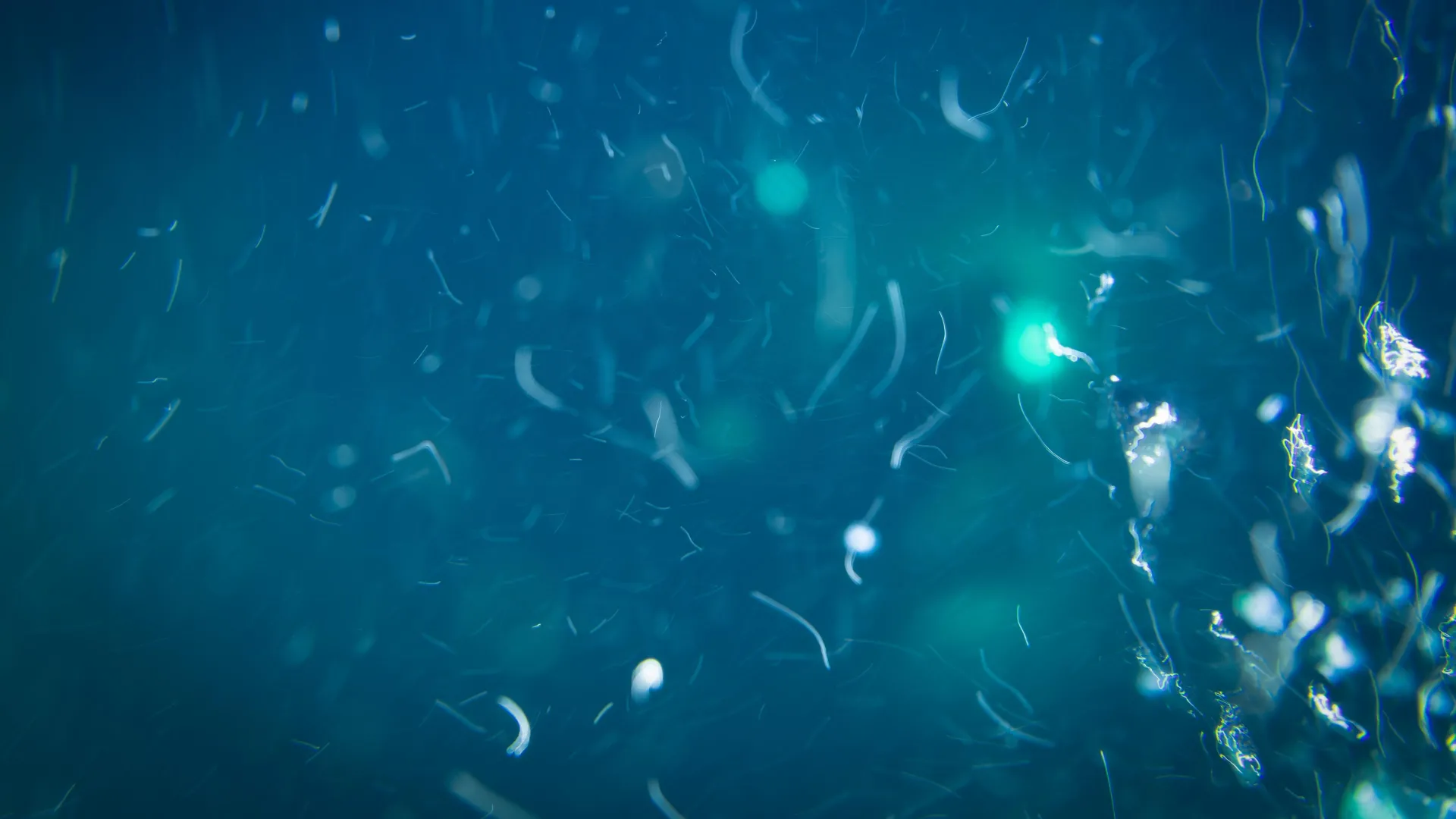
For decades, marine snow – the continuous shower of organic detritus descending from the upper ocean – has been viewed primarily as a carbon conveyor belt, transporting organic matter to the deep sea floor where it would eventually be sequestered in sediments. However, the new research, published in the prestigious journal Science Advances, demonstrates a dynamic process previously overlooked: the deep ocean’s immense hydrostatic pressure actively forces dissolved nutrients out of these sinking particles, creating an immediate and accessible food source for microbes inhabiting the water column.
The study, titled "Hydrostatic pressure induces strong leakage of dissolved organic matter from ‘marine snow’ particles," employed a sophisticated laboratory simulation to replicate the extreme conditions of the deep ocean. Researchers meticulously recreated marine snow using diatoms, microscopic algae that naturally aggregate and sink. These artificial particles were then subjected to pressures equivalent to depths of 2 to 6 kilometers (approximately 1.2 to 3.7 miles).
"The pressure acts almost like a giant juicer," explained lead author Peter Stief, a biologist and Associate Professor at SDU’s research centers Nordcee and Danish Center for Hadal Research. "It squeezes dissolved organic compounds out of the particles, and microbes can use them immediately." This "juicing" effect is attributed to the physical compression of the sinking particles under immense pressure, forcing out soluble organic matter that would otherwise remain locked within.
The findings are staggering. The SDU team estimates that sinking marine snow can lose as much as 50% of its original carbon content and between 58% and 63% of its original nitrogen content during its descent through the deep sea. This means a substantial portion of the organic material intended for the seafloor is instead becoming readily available to the microbial communities suspended in the water column.
A Shift in Carbon Cycle Understanding
This discovery carries profound implications for our understanding of Earth’s carbon cycle, particularly concerning the ocean’s role as a carbon sink. Traditionally, a significant portion of the carbon transported by marine snow was assumed to be permanently stored in deep-sea sediments. This long-term burial process is crucial for regulating atmospheric CO2 levels and has been responsible for the formation of fossil fuels over geological timescales.
However, if a substantial amount of carbon is released into the water column before reaching the seafloor, the efficiency of this long-term carbon sequestration may be significantly lower than previously estimated. The released dissolved organic carbon (DOC) can remain suspended in deep ocean waters for hundreds or even thousands of years. While this DOC can eventually be returned to the surface ocean and subsequently the atmosphere through ocean circulation, its storage duration is far shorter than that of carbon locked away in sediments.
"This process affects how much carbon the ocean can store and for how long," Professor Stief stated. "It’s relevant for understanding climate processes and for improving future models." The implications for climate modeling are particularly significant. Current models may need to be recalibrated to account for this newly identified pathway of carbon release and storage, potentially altering projections of future atmospheric CO2 concentrations and the ocean’s capacity to mitigate climate change.
The contrast between these two carbon storage mechanisms is stark. Carbon buried in seafloor sediments can remain sequestered for millions of years, contributing to the long-term geological carbon reservoir. This is the process that formed much of the oil and natural gas extracted today. Conversely, carbon released as DOC in the deep ocean has a much more dynamic fate, participating in shorter-term biogeochemical cycles.
Laboratory Rigor: Simulating the Abyss
The research team’s methodology involved a sophisticated approach to recreate the challenging deep-sea environment. They focused on diatoms, a common type of phytoplankton that forms the base of many marine food webs. When these microscopic algae die, they clump together with other organic matter to form marine snow.
To simulate the sinking process and the effect of pressure, the researchers developed specialized rotating pressure tanks. These tanks were designed to keep the marine snow particles suspended, preventing them from settling and allowing for precise measurements of nutrient leakage under controlled pressure conditions mimicking depths of 2 to 6 kilometers. This innovative setup enabled the team to quantify the release of carbon and nitrogen with unprecedented accuracy.
The experiments revealed that the leaked material primarily consisted of proteins and carbohydrates. These are readily digestible compounds, offering an immediate and easily accessible energy source for the free-living microbes that populate the deep ocean. This finding directly addresses the long-standing question of how microbial life thrives in what was perceived as a nutrient-poor environment.
Microbial Renaissance: Rapid Response to Nutrient Influx
The impact of this pressure-induced nutrient release on deep-sea microbial communities was striking. The study observed a remarkable and rapid response: within a mere two days of the simulated nutrient influx, bacterial abundance in the surrounding seawater increased by a factor of 30. Concurrently, respiration rates – a measure of metabolic activity – rose dramatically.
These findings provide compelling evidence that the dissolved organic matter liberated from marine snow under pressure serves as a vital and rapid energy source for deep-sea microbes. This dynamic nutrient availability challenges the notion of a perpetually starved deep-sea ecosystem and suggests a more interconnected and responsive microbial food web.
Furthermore, the leakage pattern was observed across multiple species of diatoms, indicating that this mechanism is likely a widespread phenomenon throughout the world’s oceans, not an isolated occurrence. This universality suggests that the deep ocean’s microbial communities are far more dynamic and responsive to seasonal and regional variations in surface productivity than previously understood.
From Lab to Ocean: The Next Frontier
Buoyed by their laboratory findings, the SDU research team is now preparing for the next phase of their investigation: translating these insights from controlled experiments to the real-world deep ocean. Their upcoming expedition, planned for the Arctic Ocean aboard the German research vessel Polarstern, will focus on detecting molecular "fingerprints" of this pressure-driven leakage process in both surface and deep waters.
Confirming the presence of these signatures in natural oceanic environments would provide critical validation of their laboratory observations. Identifying specific biomarkers or chemical traces indicative of pressure-induced DOC release would solidify the understanding that this phenomenon plays a significant role in nutrient cycling within the global ocean.
The research team also includes Jutta Niggemann, Margot Bligh, Hagen Buck-Wiese, Urban Wünsch, Michael Steinke, Jan-Hendrik Hehemann, and Ronnie N. Glud. Their work was generously supported by the Danish National Research Foundation, the European Union’s Horizon 2020 Research and Innovation program, and the Independent Research Fund Denmark, underscoring the international significance and collaborative nature of this pioneering research.
The implications of this discovery extend beyond academic curiosity. A more accurate understanding of the deep ocean’s carbon storage capacity and its role in the global carbon cycle is crucial for developing effective strategies to address climate change. By revealing a more dynamic and responsive deep-sea environment, this research opens new avenues for exploring the intricate connections between the ocean, its microbial inhabitants, and the Earth’s climate system. The deep ocean, once perceived as a vast, inert repository, is emerging as a far more active and complex participant in the planet’s ongoing biogeochemical processes.