Leaf through a textbook, watch a wellness influencer or listen in at the gym, and it can feel as though the human body has already been mapped to exhaustion. Every muscle named, every nerve traced. Everything understood and readily available. Most people recognize at least a few anatomical terms – "traps," "glutes," "biceps." After centuries of dissection, microscopy, and medical imaging, it seems reasonable to assume the work is done. Surely anatomy, as a discipline, must be complete? It isn’t. Not even close.
The enduring perception of anatomical completeness stems from landmark historical texts that, for their time, represented monumental achievements in codifying human structure. Andreas Vesalius’s "De Humani Corporis Fabrica," published in 1543, was a watershed moment. This groundbreaking work, the first comprehensive anatomy book based on direct, empirical observation of human dissection, challenged centuries of entrenched dogma. Vesalius famously corrected numerous errors inherited from ancient physicians like Galen, who had relied on animal dissections and hearsay. By meticulously detailing the human form through his own dissections, Vesalius established anatomy as a rigorous, evidence-based science, fundamentally reshaping medical understanding. His detailed illustrations, many of which remain remarkably accurate, cemented an image of a precisely understood biological machine.
Three hundred years later, Henry Gray’s "Gray’s Anatomy: Descriptive and Surgical," first published in 1858, further reinforced this impression of a fully cataloged and organized human body. This immensely popular textbook became a cornerstone of medical education, presenting a systematic and accessible overview of anatomy that appeared to leave little to the imagination. Its comprehensive nature and widespread adoption fostered a sense of finality, suggesting that the intricate tapestry of human anatomy had been comprehensively woven and documented.
However, the seemingly definitive nature of these influential textbooks creates a misleading sense of certainty. They often present the human body as a stable, universal, and universally agreed-upon entity. In reality, the process of anatomical discovery has been far from linear or exhaustive, and the "standard" human form depicted in these texts is a simplification, an idealized model rather than a precise reflection of biological diversity.
The Illusion of Anatomical Certainty: Historical Context and Limitations
The early foundations of topographical anatomy – the meticulous mapping of structures in their spatial relationships – were laid under extraordinarily challenging and often ethically fraught circumstances. The acquisition of cadavers, essential for dissection and study, was heavily reliant on the illicit activities of "resurrectionists," or body snatchers. These individuals, operating primarily in the 18th and 19th centuries, exhumed recently buried bodies. Their targets were disproportionately the poor, the institutionalized, and those lacking the financial means or family support to adequately guard their graves. These bodies were then sold to anatomists, who, despite the grim origins, used them to advance scientific knowledge.
The working conditions for these early anatomists were fraught with limitations. Poor lighting, the frequent dissection of malnourished or diseased bodies, and the inevitable post-mortem changes that altered tissue planes all presented significant obstacles. Crucially, sample sizes were often small and opportunistic, dictated by the availability of bodies. Demographic information was scarce, with inferences often drawn solely from visual appearance. Furthermore, the bodies of women, while sometimes dissected, were rarely formally reported or included in the developing anatomical canon, leading to significant gender-based blind spots.
It was within these restrictive and socially stratified conditions that anatomists produced the observations that formed the bedrock of classical anatomical topography. The anatomical "norm" that emerged was therefore constructed from a narrow and unrepresentative sample of the population. This is not to diminish the extraordinary technical skill, meticulous observation, and dedication of these early anatomists. Their ability to glean insights from such challenging circumstances was remarkable. However, the very conditions under which they worked inevitably shaped their perceptions, influencing what they saw and, perhaps more importantly, what they missed.
A Dormant Period and the Renaissance of Anatomical Inquiry
This historical reliance on limited samples and the subsequent codification of anatomical knowledge led to a period of relative stagnation in anatomical investigation for much of the 20th century. By the 1960s, the publication rate of cadaveric studies had significantly declined worldwide. The prevailing assumption was that the human body had been thoroughly mapped. Medical education, while continuing, largely focused on imparting established knowledge rather than generating new anatomical observations. This apparent stability masked a deeper issue: much of the existing knowledge had been inherited and accepted rather than continually tested and re-evaluated.

The tide began to turn with advancements in imaging technologies, a renewed interest in cadaveric research, and a growing awareness of the pervasive nature of anatomical variation. Improved imaging techniques, such as high-resolution MRI and CT scans, allow for non-invasive visualization of internal structures with unprecedented detail. This has enabled researchers to study living individuals and identify variations that were previously only apparent through dissection. Coupled with a resurgence in dedicated cadaveric dissection programs, these developments have triggered a renaissance in anatomical study. Structures once overlooked, poorly described, or considered anomalies are now being systematically re-examined and cataloged. Far from being a finished discipline, anatomy is actively rediscovering the vast incompleteness of its map of the human body.
Beyond the "Standard" Human Body: Embracing Variability
One of the most significant paradigm shifts in modern anatomy has been the widespread recognition that anatomical variation is not the exception, but the rule. While textbooks continue to present a "typical" or "standard" body for teaching purposes, the reality of human anatomy exists along a complex spectrum.
Human anatomical variation occurs across multiple dimensions simultaneously. Significant differences exist between males and females, influenced by hormonal factors and developmental pathways. The body undergoes continuous change throughout the lifespan, from fetal development through childhood, adolescence, adulthood, and senescence, with anatomical structures adapting and altering over time. Furthermore, genetic inheritance and environmental factors shape the anatomy of different populations, leading to observable demographic variations.
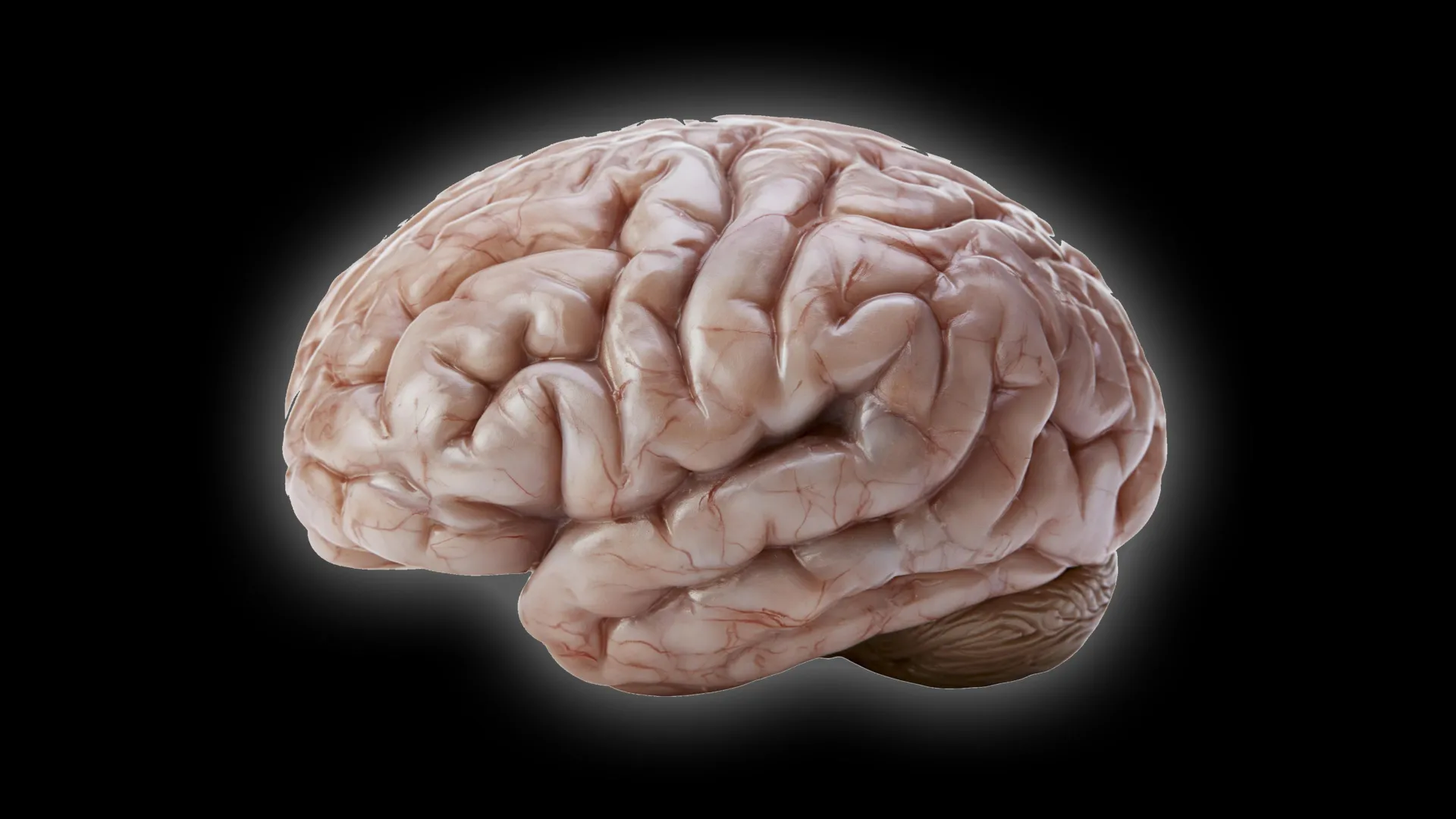
Beyond these broad patterns lies immense individual variation. Blood vessels may take divergent routes, muscles can be absent or present in duplicated forms, and even the intricate folding patterns of the brain, which dictate cognitive function, differ from person to person. Consequently, the "standard" anatomy depicted in textbooks should be understood not as a universal blueprint, but as a simplified reference point within a vast biological range. This conceptualization is crucial for accurate medical practice.
Implications of Anatomical Diversity in Modern Medicine
The recognition of anatomical diversity has profound implications that extend far beyond the operating theater. Subtle differences in the arrangement of nerves, the branching of blood vessels, and the alignment of joints can significantly alter how diseases manifest, influence the interpretation of medical imaging, and shape an individual’s patterns of movement and susceptibility to injury.
For instance, minor variations in joint alignment can increase the risk of conditions such as osteoarthritis. Similarly, differences in vascular anatomy can influence an individual’s predisposition to strokes or aneurysms. Understanding this anatomical diversity is therefore not merely an academic pursuit; it is central to accurate diagnosis, effective surgical planning, the interpretation of complex medical scans, the development of biomechanical models, and the fundamental study of disease itself.
The ongoing exploration of the human body continues to yield new and surprising anatomical insights. Structures that were previously unrecognized or poorly understood are being brought to light. Examples include the discovery of previously unappreciated lymphatic vessels surrounding the brain, which play a critical role in the central nervous system’s immune response, and the identification of overlooked ligaments in the knee that contribute to its stability. Familiar tissues are being understood in entirely new ways, and the detailed map of the human body is continuously being revised and refined.
Empowering Individuals Through Anatomical Literacy
In an era of increasing focus on personal health and well-being, a greater public understanding of their own bodies is paramount. Enhanced anatomical literacy empowers individuals to advocate more effectively for their health, engage more confidently with healthcare providers, and make informed decisions about their medical care. However, it is essential to remember that the canonical anatomy presented in textbooks, while invaluable as a teaching model, is a simplification. It is not a perfect, one-size-fits-all representation of biological reality. The more closely we scrutinize the human body, the more we appreciate the vast complexity and the ever-present potential for further discovery. The frontier of anatomical knowledge is not a closed book, but a dynamic and evolving field, promising continued revelations about the intricate marvel that is the human form.