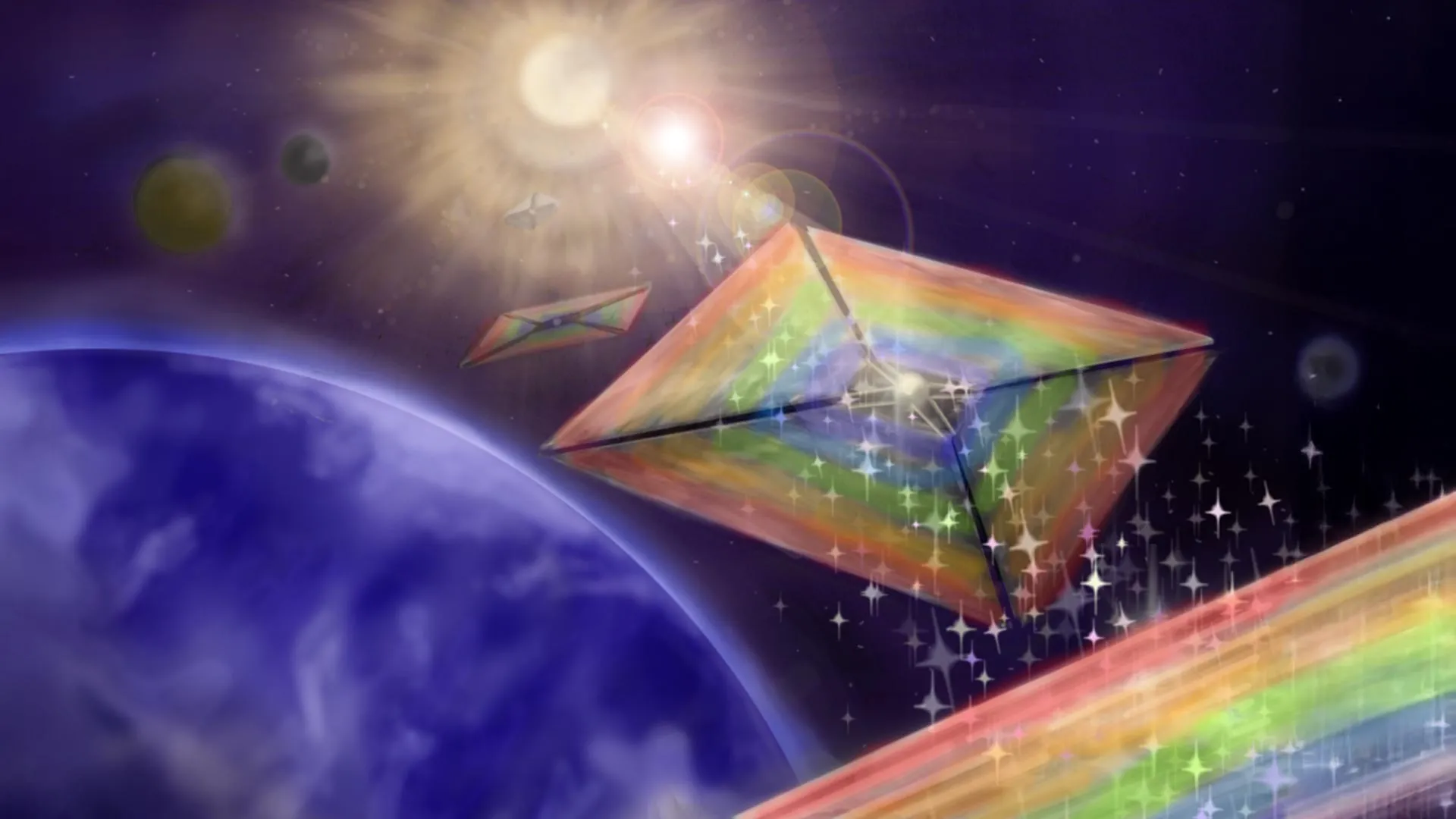
The pursuit of interstellar travel has long captured the imagination of scientists and science fiction enthusiasts alike, but practical engineering demands solutions that transcend the physical limitations of chemical rockets. To bridge the incomprehensible distances separating our solar system from even the nearest neighboring stars, humanity will need to harness propulsion technologies operating on entirely different physical principles. Among the most mathematically viable concepts is the laser-driven solar sail: an ultra-thin, highly reflective structure propelled through the cosmos by the continuous momentum of intense light beams. However, a recent theoretical study published on the arXiv preprint server by researchers Chao Shen and Jiaze Li of the Harbin Institute of Technology suggests that achieving these monumental velocities may introduce an unexpected and formidable adversary: a photonic drag effect born of the very light meant to push the spacecraft forward.
For decades, aerospace engineers and astrophysicists have conceptualized solar sails as the most promising avenue for reaching relativistic speeds—velocities constituting a significant fraction of the speed of light. Chemical propulsion systems, which rely on the explosive combustion of propellants, are fundamentally constrained by the Tsiolkovsky rocket equation, requiring exponentially more fuel to accelerate payloads to higher speeds. In contrast, laser-driven lightsails decouple the energy source from the spacecraft itself. By stationing immensely powerful laser arrays within the solar system—perhaps on the Moon or in high Earth orbit—and aiming them at a distant, featherlight reflective sheet, continuous momentum can be transferred to the vessel over extended periods.
The mechanics of this photon-based propulsion rely on the fundamental properties of light. Photons, despite having no rest mass, carry momentum proportional to their energy. When light strikes a surface, that momentum is transferred to the object. Shen and Li’s research meticulously categorizes the forces exerted by photons hitting an idealized solar sail into three distinct components. The primary and most robust contribution stems from incident light, representing the raw forward momentum of the incoming photons crashing into the sail’s surface. The secondary component is specular reflection, which accounts for the additional momentum imparted when those photons bounce cleanly and perfectly off the mirror-like material. The third and weakest contribution is diffuse scattering, which occurs when a fraction of the photons are temporarily absorbed by the sail’s material and subsequently reemitted in random, isotropic directions.
Under terrestrial conditions and at relatively low velocities, all three of these radiative mechanisms cooperate to push the spacecraft forward, steadily increasing its kinetic energy. Yet, as Shen and Li’s mathematical models demonstrate, this harmonious acceleration hits a profound physical wall once the lightsail begins traversing space at velocities approaching a substantial fraction of the speed of light. The idyllic vision of smooth, uninterrupted acceleration breaks down under the unforgiving weight of relativistic physics.
The first major hurdle encountered by a high-speed lightsail is the classic Doppler effect. As the spacecraft races away from the Earth-based laser array at velocities exceeding tens of thousands of kilometers per second, the light waves catching up to it undergo a stretching phenomenon. From the frame of reference of the moving sail, the frequency of the incoming laser light steadily decreases. Because a photon’s energy and momentum are directly tied to its frequency—described by Planck’s relation—this redshift diminishes the energy density and momentum transfer of the incoming beam. Consequently, all three radiative components—incident light, specular reflection, and diffuse scattering—produce progressively less thrust. Continued acceleration becomes exponentially less efficient, requiring the ground-based lasers to work drastically harder just to maintain linear gains in the probe’s velocity.
The physical complications deepen dramatically once the lightsail breaches approximately 75 percent of the speed of light. At these extreme relativistic velocities, a phenomenon known as relativistic light aberration comes into play, fundamentally altering the directional dynamics of the system. From the perspective of a stationary observer in the solar system, diffusely scattered light—which normally radiates haphazardly or backward—begins to be beamed forward in the direction of the spacecraft’s travel due to the relativistic transformation of angles.
Because physical law dictates that every action must have an equal and opposite reaction, this forward-directed radiation pressure produces a counter-force pushing backward against the spacecraft. Therefore, once the sail passes roughly 75 percent of the speed of light, diffuse scattering transitions from a negligible positive contributor into a genuine aerodynamic-style drag force. While the sheer power of the primary laser beam ensures that the net total force remains positive and the craft continues to accelerate, the efficiency of the propulsion system drops precipitously. The energy penalty imposed by this relativistic drag means that missions targeting distant exoplanets within tight timelines will require significantly more laser power than previously calculated.
Crucially, the theoretical framework constructed by Shen and Li focuses strictly on radiative dynamics, deliberately omitting a host of real-world environmental and material challenges that any actual interstellar probe would inevitably face. For instance, the Harbin Institute of Technology study does not account for non-radiative effects, such as the destructive physical collisions and frictional drag caused by interstellar gas, dust grains, and stray hydrogen atoms drifting through the interstellar medium. At relativistic speeds, striking even a microscopic grain of dust at high velocity could vaporize a portion of the sail or impart destabilizing torque to the vessel.
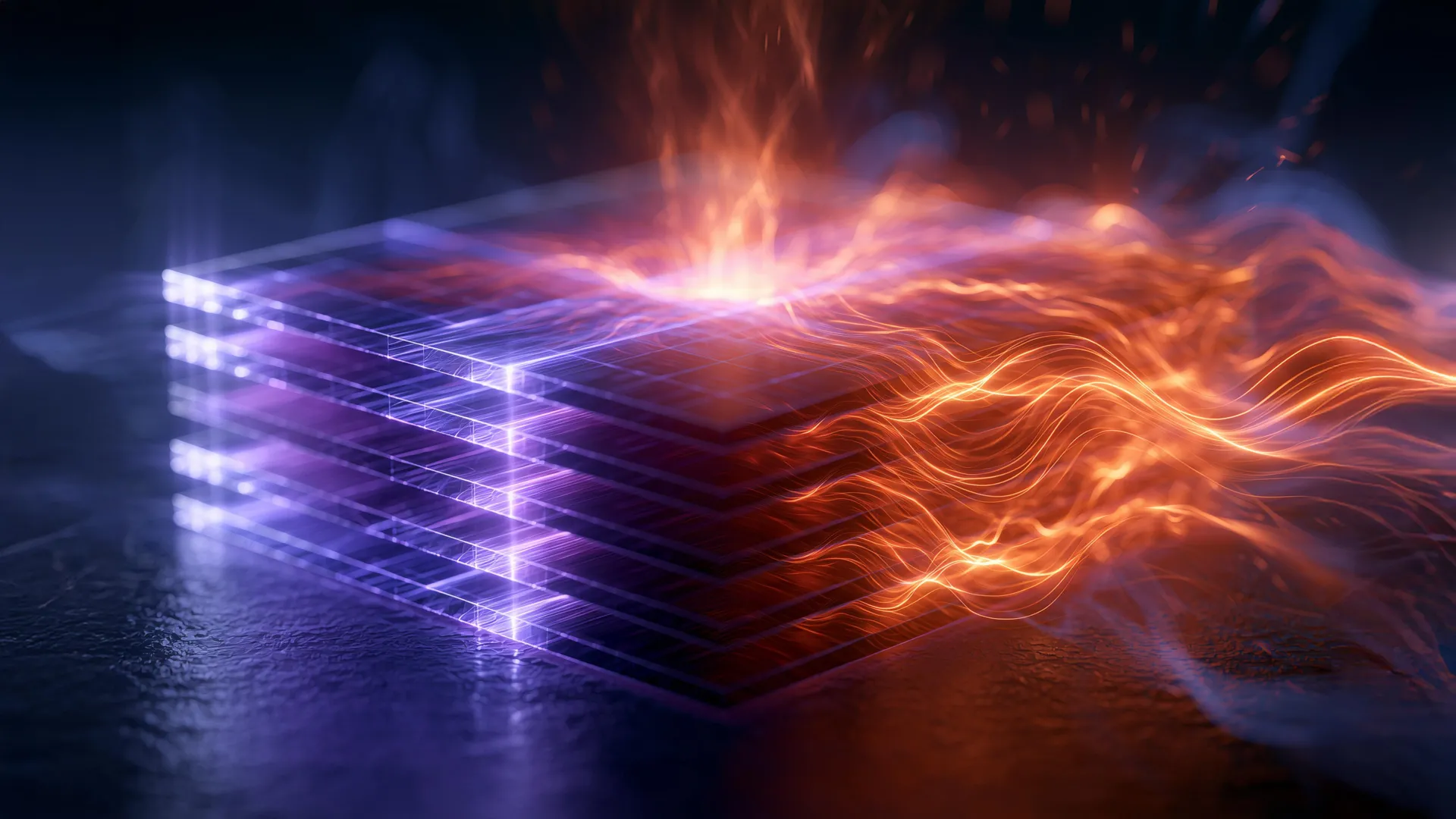
Furthermore, the study abstracts away the severe thermal limitations that real materials would encounter. Exposing a thin, reflective membrane to an intense, multi-gigawatt laser beam over a prolonged acceleration phase generates immense thermal stress. Without miraculous heat-dissipation mechanisms, the sail would rapidly overheat, warp, or melt entirely long before reaching the 75-percent light-speed threshold. The researchers also simplified their calculations by modeling the lightsail as a mathematically ideal mirror, whereas actual spacecraft would demand highly engineered, complex metamaterials.
Despite these daunting omissions, materials scientists and aerospace engineers are already actively investigating advanced metamaterials and photonic crystals designed to interact selectively with specific laser wavelengths. In principle, future iterations of these advanced materials might be engineered to turn relativistic aberration effects to the mission’s advantage. Speculative designs could harness these angular shifts to automatically correct the sail’s orientation, providing a passive stabilization mechanism that keeps the fragile spacecraft precisely centered within the guiding laser beam without requiring heavy, complex mechanical steering systems.
The path toward a fully operational interstellar solar sail remains long, theoretical, and fraught with engineering trials. Crossing the interstellar void introduces an array of complex physical phenomena, including the localized curvature of spacetime and gravitational influences from passing celestial bodies—all of which were deliberately stripped away from Shen and Li’s idealized model to isolate the core optical mechanics.
Nevertheless, unpacking these high-speed relativistic effects represents an indispensable milestone in determining how humanity might one day bridge the cosmic gulf between star systems. As theoretical frameworks mature and experimental physics catches up with aspiration, researchers emphasize that understanding every subtle, counterintuitive force acting upon a high-speed probe is mandatory. If and when humanity finally launches its first exploratory mission toward another star, mission planners will require an exhaustive, flawless accounting of every photon, every drag coefficient, and every relativistic nuance to ensure the vessel reaches its destination intact.