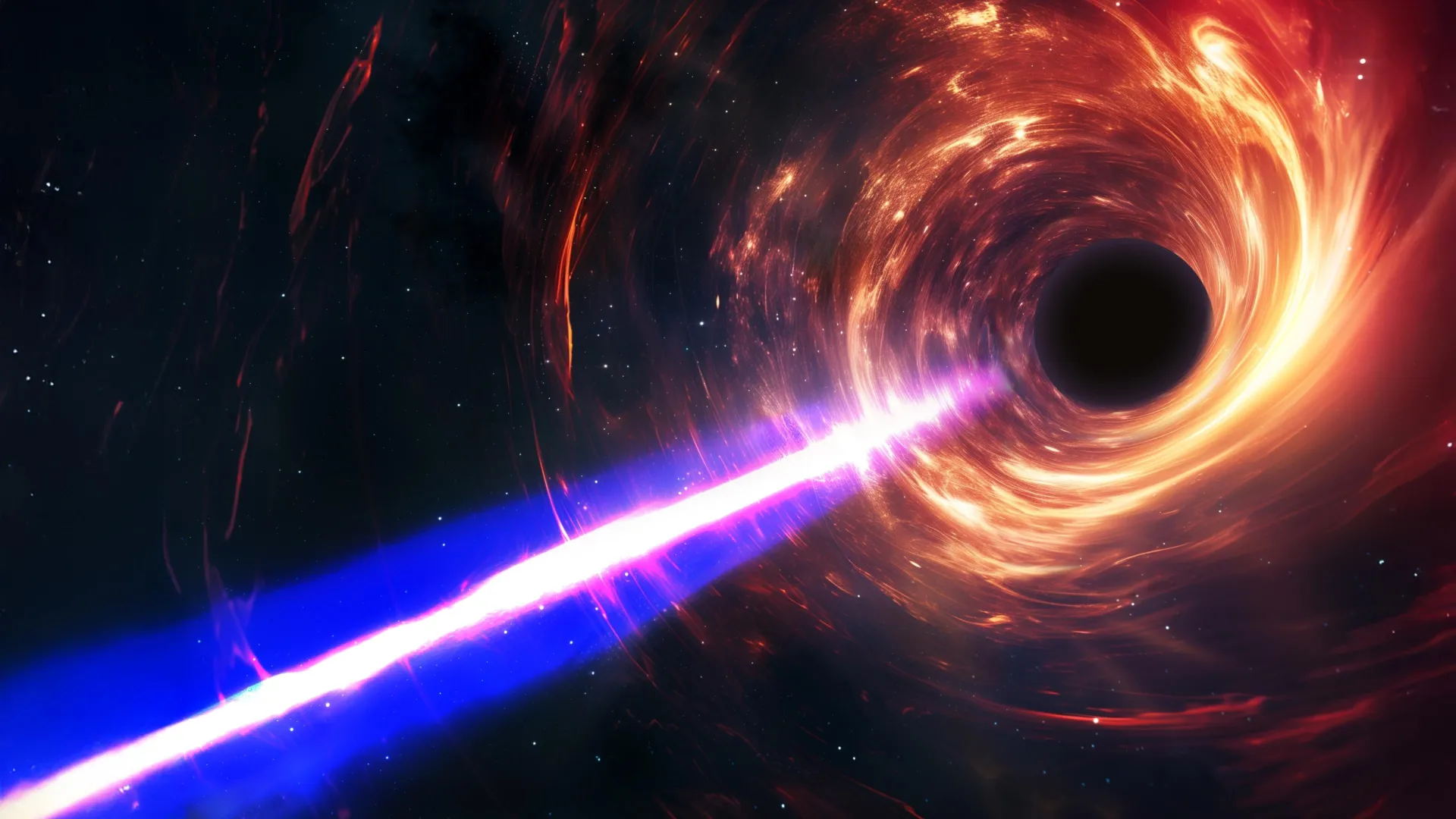
An international consortium of astronomers, co-led by researchers from the Institute for Advanced Study (IAS) and Curtin University, has announced the identification of what appears to be a universal physical law governing the generation of powerful cosmic jets in black holes. Published in the journal Nature Astronomy, the breakthrough research demonstrates that black holes across vastly different scales launch these massive particle streams at the exact same critical threshold during their feeding cycles. This foundational rule applies universally, bridging the gap between stellar-mass black holes, which weigh roughly ten times our sun, and supermassive black holes containing millions or billions of solar masses.
The research initiative was spearheaded by Andrew Mummery, a Martin A. and Helen Chooljian Member in the School of Natural Sciences at the IAS in Princeton, New Jersey, alongside Adelle Goodwin, a Forrest Research Foundation Fellow at Curtin University’s International Centre of Radio Astronomy Research (ICRAR) in Western Australia. By combining decades of theoretical models with multi-wavelength observational data gathered from facilities across the United States, Australia, India, South Africa, and space-based observatories, the team successfully solved a long-standing mystery regarding the erratic timing of black hole eruptions.
The Violent Mechanics of Tidal Disruption Events
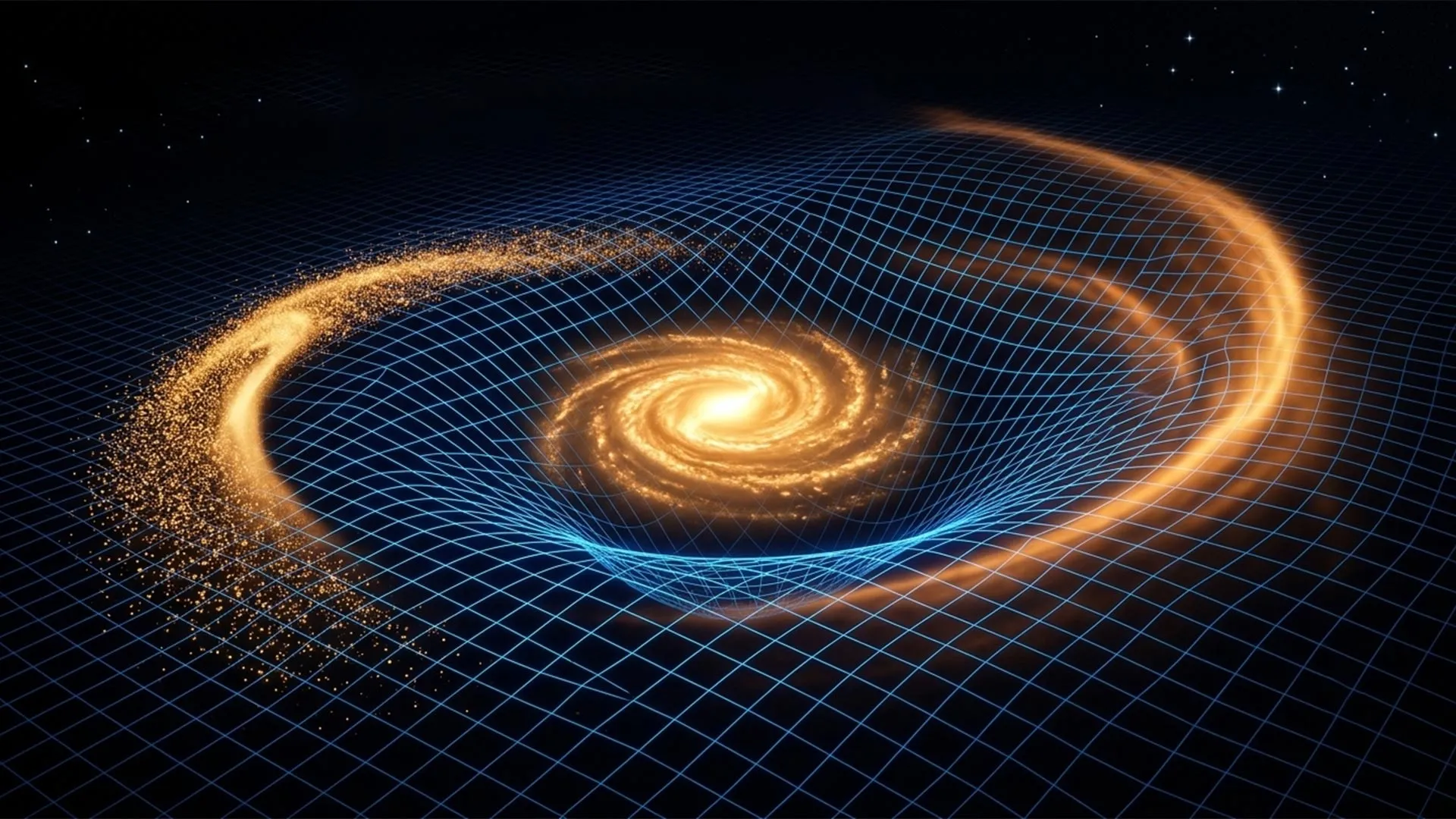
To decode the erratic behavior of these cosmic phenomena, the research team focused heavily on tidal disruption events (TDEs). These violent astronomical occurrences happen when an unwary star strays too close to the gravitational well of a supermassive black hole. The immense tidal forces exerted by the black hole stretch and ultimately shred the stellar body apart, transforming a stable star into a chaotic, elongated stream of gas and plasma.
This catastrophic interaction provides astrophysicists with a rare, accelerated window into black hole physics. While supermassive black holes typically evolve over thousands or millions of years—making real-time observation nearly impossible—a tidal disruption event forces a massive amount of stellar material into the black hole over a compressed timeframe of mere months or years.
Despite their popular depiction as cosmic vacuum cleaners that quietly tidy up their galactic neighborhoods, black holes are exceptionally messy eaters. When a supermassive black hole consumes a shredded star, it cannot swallow the entire mass simultaneously. A fraction of the stellar debris spirals inward toward the event horizon, while a significant portion is violently expelled back into deep space through colossal magnetic and hydrodynamic outflows. These enormous cosmic burps release tremendous amounts of energy, injecting heavy elements into the interstellar medium and fundamentally shaping the evolutionary trajectory of their host galaxies.
A Breakthrough Born Over Casual Conversation
The pivotal realization behind the study did not emerge from a massive supercomputer simulation or a multi-million-dollar laboratory, but rather from an informal scientific exchange. During an international astrophysics conference held in Madrid, Spain, Andrew Mummery and Adelle Goodwin found themselves discussing persistent anomalies in black hole data over drinks at a local establishment.
As they compared notes on stellar-mass systems—which astronomers can study with relative ease because their evolutionary cycles unfold over days or weeks—they realized that the mathematical thresholds governing jet ejections in smaller black holes might share a direct correlation with the sluggish, massive cousins residing at the centers of distant galaxies. Returning to their respective institutions, the researchers set out to test this hypothesis by analyzing a comprehensive sample of observed tidal disruption events.
The team initially compiled a dataset of twenty distinct tidal disruption events captured across multiple regions of the electromagnetic spectrum, including optical light, ultraviolet emissions, X-rays, and radio waves. Through rigorous data filtering and quality control, they narrowed the cohort down to ten high-confidence events. For these specific targets, the researchers possessed sufficient observational resolution to accurately calculate both the instantaneous feeding rate of the black hole and the precise chronological timing of its associated radio outflows.
Two Distinct Phases of Jet Formation
The subsequent data analysis revealed a remarkably consistent two-phase pattern of jet production. According to the study, black holes can form and launch powerful particle jets during two entirely separate periods of the feeding cycle.
The first phase occurs immediately following the stellar destruction, while the black hole is gorging itself on material at an exceptionally high, near-maximal rate. However, it was the second phase that captured the researchers’ attention. A second wave of jets consistently appeared much later in the timeline—anywhere from hundreds to thousands of days after the initial stellar shredding event.
At this delayed stage, the black hole’s accretion, or feeding rate, drops significantly to approximately two percent of its Eddington limit. The Eddington limit represents the theoretical threshold where the outward radiation pressure generated by the intense heat of the infalling gas precisely balances the inward gravitational pull of the black hole.
Remarkably, this exact two-percent threshold was already well-documented as the trigger point for jet formation in stellar-mass black holes residing within our own Milky Way galaxy. By confirming that supermassive black holes obey this identical two-percent rule, the research team demonstrated that the fundamental engine driving relativistic jets operates independently of mass, scaling uniformly across orders of magnitude from stellar weights to galactic giants.
Implications for Future Astronomical Research
Beyond its theoretical value in advancing our understanding of general relativity and plasma physics, the discovery holds immense practical utility for the broader astronomical community. Observing relativistic jets requires precious, highly competitive telescope time. Because the timing of these ejections was previously unpredictable, observatories frequently spent valuable hours monitoring dormant systems where little to no activity occurred.
By establishing a clear, mathematically sound predictor for when a black hole will undergo a delayed eruption, astronomers can now optimize scheduling for ground- and space-based telescopes. Researchers will be able to target specific windows of opportunity, maximizing scientific output while minimizing wasted observation time.
This predictive capability will become increasingly critical with the advent of next-generation astronomical facilities. Chief among these is the Square Kilometre Array (SKA) radio telescope project, currently under construction in South Africa and Australia, which is slated to begin gathering scientific data around 2028. The SKA, alongside existing multi-messenger astronomy networks, will rely heavily on targeted observation strategies to capture fleeting cosmic events.
As the scientific community digests these findings, the research opens new pathways for exploring the lifecycle of galaxies and the hidden mechanics of the universe’s most extreme objects. By bridging the gap between stellar-mass and supermassive systems, Mummery, Goodwin, and their international colleagues have provided a universal yardstick for deciphering the behavior of cosmic engines that have fascinated humanity for generations.