The rapid expansion of artificial intelligence applications has brought a recurring architectural challenge to the forefront of software engineering: how to seamlessly connect foundational models with disparate external tools, databases, and enterprise data sources without resorting to fragmented, custom-built API integrations. For developers and AI researchers, the Model Context Protocol (MCP) has emerged as a definitive solution to this friction. While the acronym is frequently cited alongside modern AI agents, automated coding assistants, and complex tool-use workflows, a comprehensive understanding of its underlying architecture, client-server mechanics, and operational deployment remains essential for technical practitioners aiming to scale production-grade AI infrastructure.
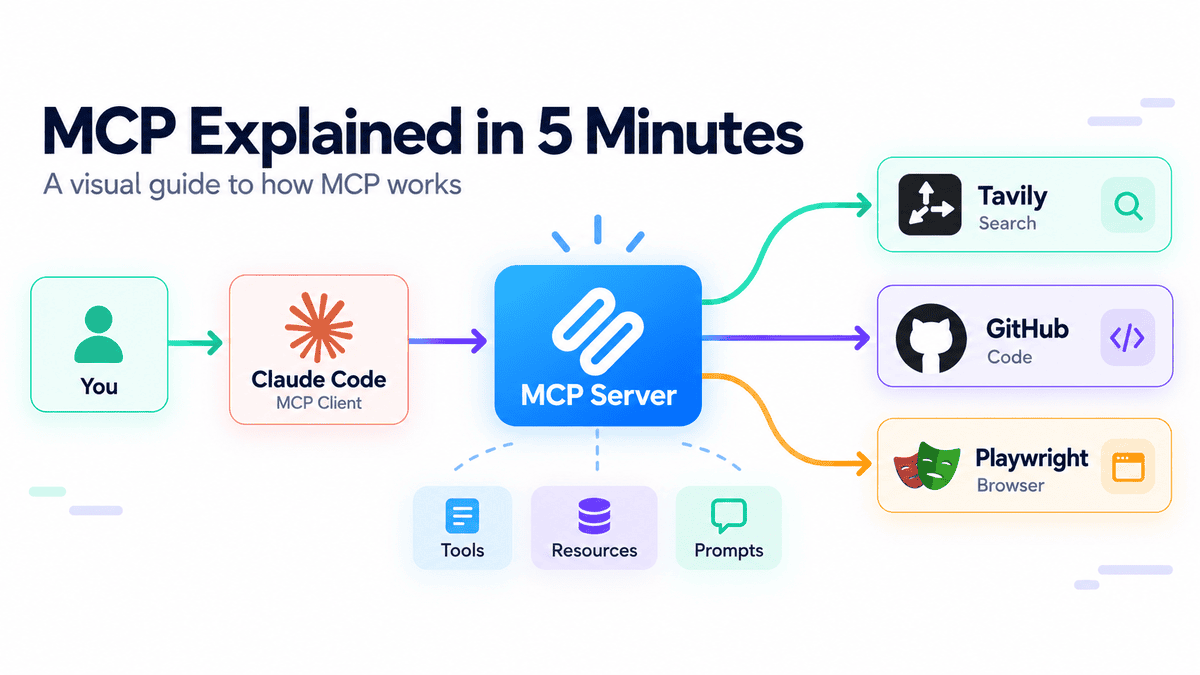
At its core, MCP operates as a standardized communication layer between an AI application and the external utilities it requires to execute complex tasks. Historically, empowering a large language model (LLM) to interact with a specific database, software repository, or web browser necessitated custom-engineered middleware for every single integration. This approach created significant technical debt, slowed development cycles, and fractured the software ecosystem. MCP addresses this fragmentation by introducing a unified interface. Rather than writing distinct connective tissue for every service, an AI application connects to an MCP server, dynamically discovers the tools and resources available, and executes commands through a uniform protocol.
Understanding the Architecture: Hosts, Clients, and Servers
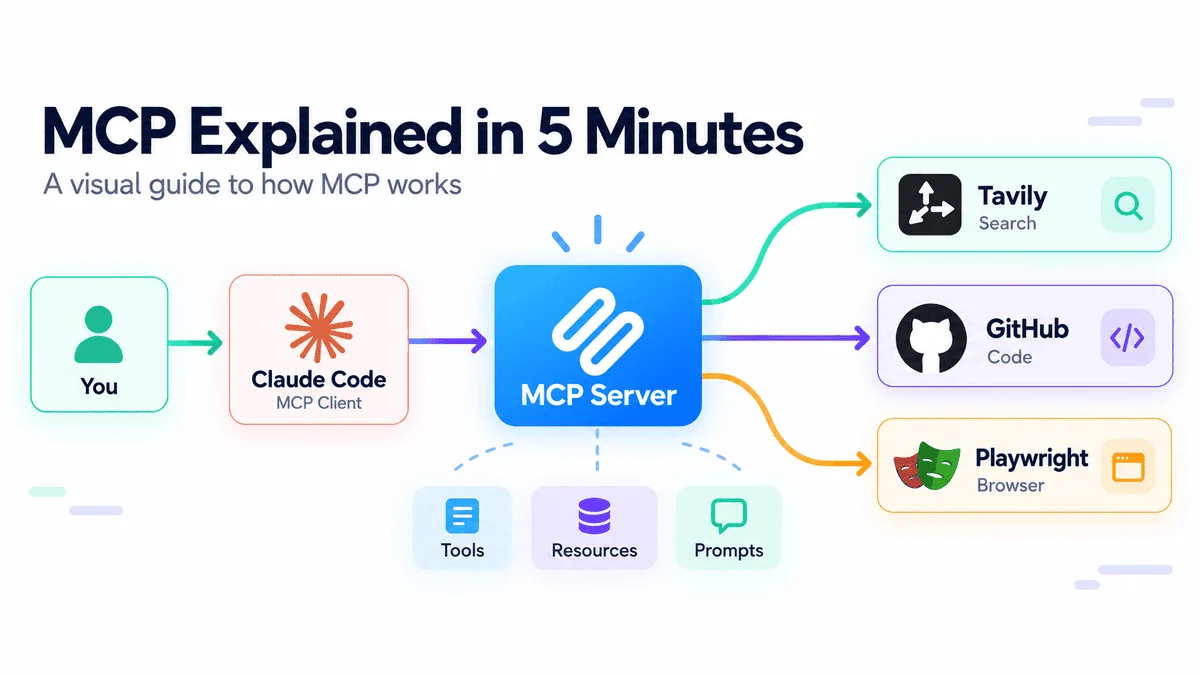
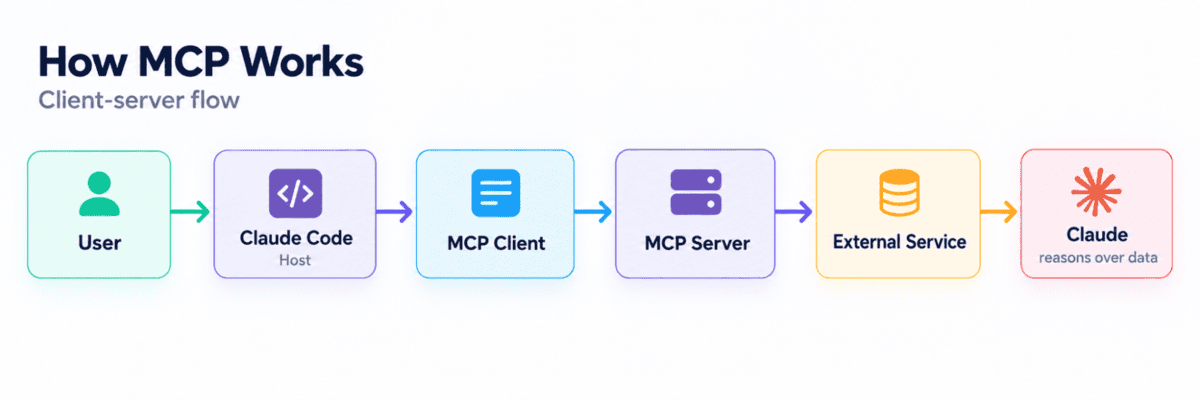
To fully grasp how MCP functions within a production environment, engineers must examine its underlying client-server topology. The architecture is built upon four primary components: the host, the MCP client, the MCP server, and the transport layer.
The host is the primary AI application interface—such as Claude Code or a custom agentic framework—within which an MCP client operates. This client maintains persistent or session-based communication channels with one or more MCP servers. The servers themselves act as lightweight wrappers around external services, databases, or APIs, exposing specific capabilities to the client. Crucially, MCP does not perform the cognitive reasoning required to solve a problem. The underlying language model retains full responsibility for determining when a specific tool is necessary, interpreting the user’s intent, selecting the appropriate utility from the exposed registry, and synthesizing the resulting data into a coherent response.
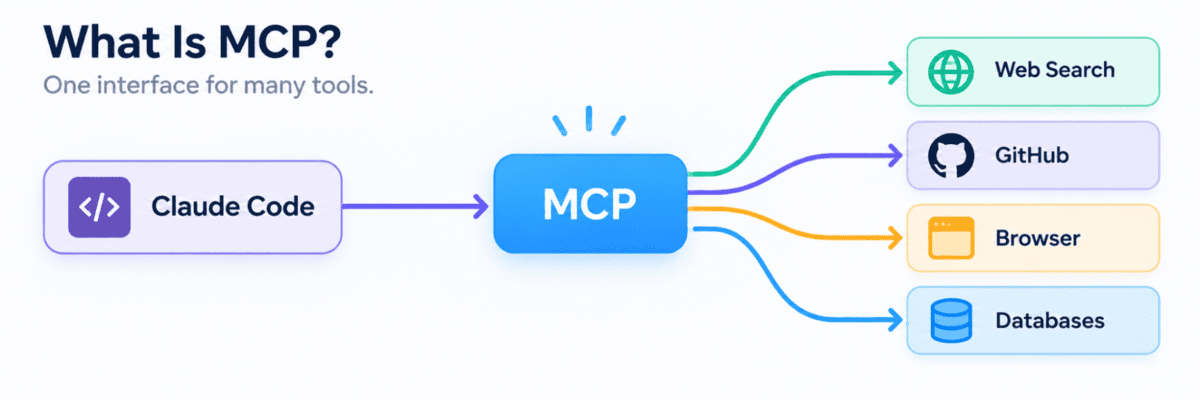
An MCP server typically exposes three primary capabilities to the connected client: tools, resources, and prompts. Among these, tools represent the most dynamic capability for agentic workflows, enabling language models to transcend passive text generation and actively execute operations within external environments. Resources provide read-only context, such as files or database records, while prompts offer pre-defined templates that guide user interactions.
Operationalizing MCP: Practical Implementations in Development Environments
The practical utility of the Model Context Protocol becomes apparent when implemented within developer toolchains. Modern development environments have rapidly adopted native support for MCP configuration, allowing engineers to augment AI coding assistants with specialized external capabilities within minutes.
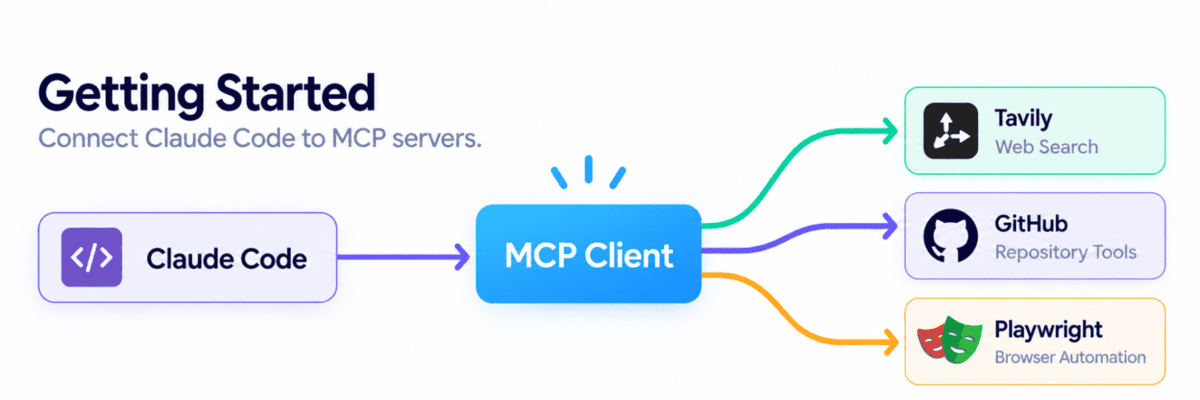
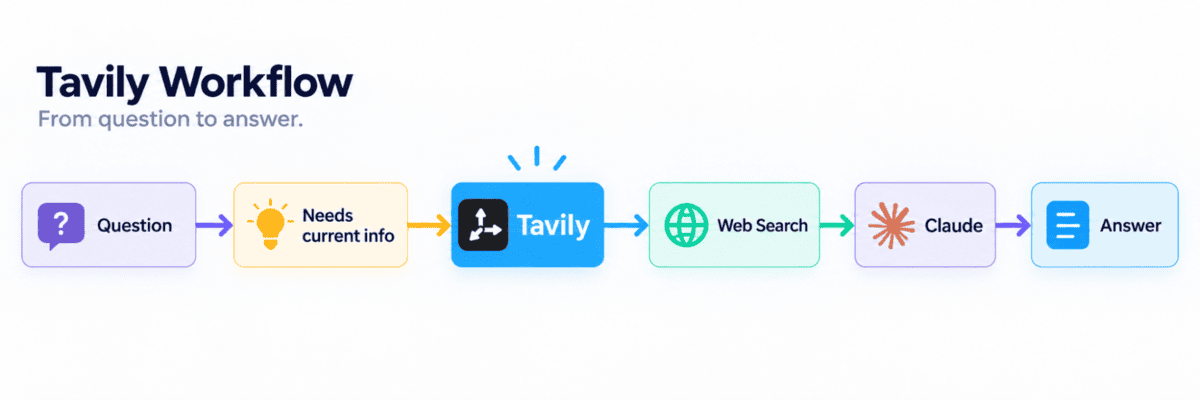
Consider the integration of live web-search capabilities via Tavily, a service designed to bridge the temporal gaps inherent in static language models. By adding a remote Tavily MCP server to an environment like Claude Code, the assistant gains immediate access to live web crawling, content extraction, and real-time research tools. When a developer prompts the model to investigate the latest software release notes or architectural changes in a framework such as vLLM, the AI autonomously queries the Tavily MCP server, retrieves the current documentation, and formats a summary without requiring manual web navigation or custom API polling by the developer.
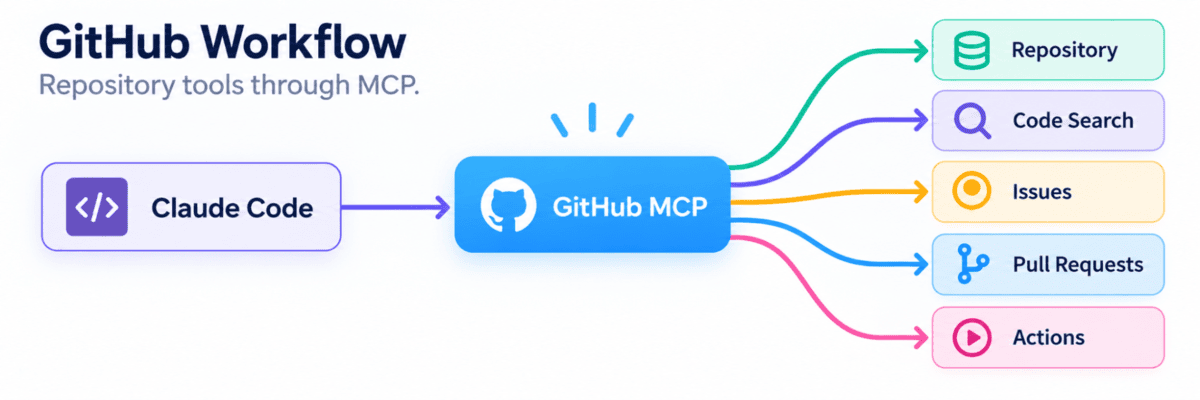
Similarly, repository management workflows have been fundamentally altered through the official GitHub MCP server. By provisioning an MCP connection authenticated via a scoped Personal Access Token (PAT), developers enable AI agents to interact directly with version control systems. The assistant can review active pull requests, identify potential software bugs, suggest missing unit tests, and evaluate open repository issues. Rather than manually copying code snippets, error logs, and issue descriptions into a chat interface, the AI retrieves the necessary contextual data dynamically through the protocol, streamlining code review and maintenance pipelines.
Beyond text and APIs, browser automation frameworks like Playwright have been successfully integrated into the MCP ecosystem. By deploying a Playwright MCP server, engineers can instruct AI agents to open local web applications, navigate user interfaces, fill out form fields, and execute end-to-end testing protocols. The Playwright server translates webpage DOM structures into accessibility snapshots, providing the language model with a structured, machine-readable representation of the user interface required to execute complex web interactions.
Recent Protocol Evolutions and the Stateless Architecture
The ongoing maturation of the Model Context Protocol is underscored by recent architectural updates introduced in the latest protocol specifications. A significant evolution in recent protocol releases is the transition of the protocol core toward a stateless architecture.
In earlier iterations, maintaining active sessions between clients and specific servers introduced scaling bottlenecks, particularly when deploying distributed AI agents across cloud-native infrastructure. Under the updated specifications, individual requests encapsulate the necessary metadata required for processing, eliminating the dependency on persistent server-side session states. This architectural shift dramatically simplifies the deployment of remote MCP servers across auto-scaling cloud environments, load balancers, and serverless compute platforms.
Furthermore, recent protocol enhancements have focused heavily on security hardening, granular permission management, and optimized data serialization. These updates address critical enterprise concerns regarding data governance, ensuring that AI agents operating within corporate networks adhere strictly to least-privilege access principles when interacting with sensitive databases and internal developer tools.
Broader Implications for Enterprise AI Integration
The widespread adoption of the Model Context Protocol marks a critical maturation phase in the deployment of artificial intelligence. By decoupling the reasoning capabilities of foundational models from the implementation details of external tools, MCP provides a sustainable blueprint for software architecture.
For enterprise organizations, standardizing on protocols like MCP reduces the friction of integrating legacy databases, proprietary microservices, and third-party SaaS platforms into emerging AI workflows. As AI agents transition from experimental chatbots to autonomous operational assistants capable of executing multi-step business logic, robust, secure, and standardized integration layers will remain foundational. The progression from custom, brittle API glue to a universal context protocol signals a broader industry shift toward interoperable, modular, and scalable artificial intelligence infrastructure.