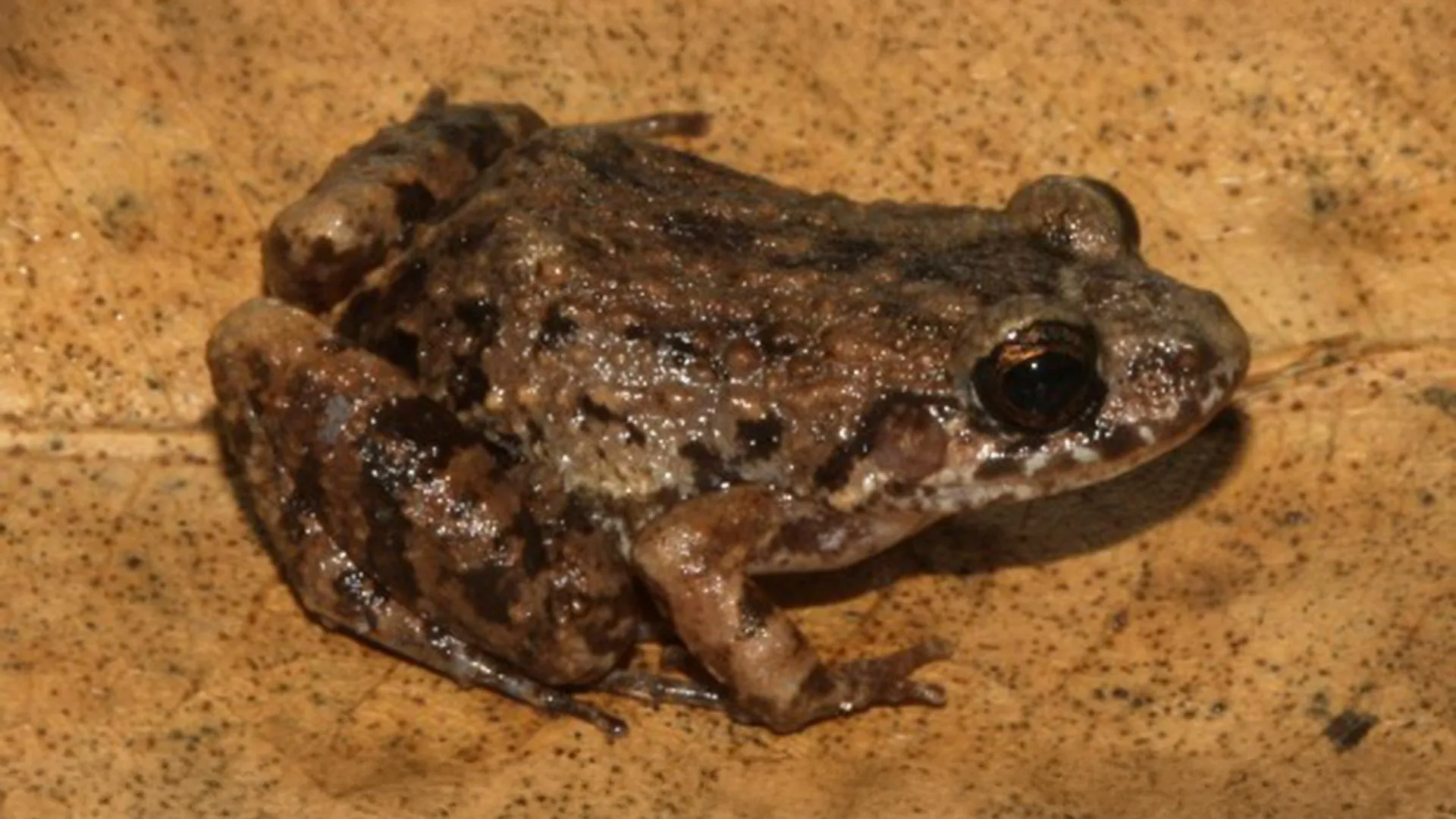
In the dense, seasonally inundated forests of the Upper Juruá River region in western Acre, Brazil, a scientific discovery has shed light on the immense, often invisible, biological richness of the Amazon Basin. Researchers have formally identified a previously unknown frog species, Adenomera varcena, which has managed to evade scientific classification until now. This discovery, published in the journal Ichthyology & Herpetology, serves as a poignant reminder that the Amazon’s biodiversity is far more complex than current records suggest, particularly regarding "cryptic diversity"—a phenomenon where distinct species maintain nearly identical outward appearances.
The research team, led by Célio F. B. Haddad of São Paulo State University (UNESP) and Thiago R. Carvalho of the Federal University of Minas Gerais (UFMG), utilized a rigorous, multi-faceted approach to distinguish Adenomera varcena from its closest relatives. By integrating DNA sequencing, acoustic analysis of mating calls, and detailed morphological examinations of specimens, the team confirmed that this population represents a distinct evolutionary lineage. The study was supported by the Center for Research on Biodiversity Dynamics and Climate Change (CBioClima), a Research, Innovation, and Dissemination Center (RIDC) funded by the São Paulo Research Foundation (FAPESP).
A Chronology of Discovery and Field Expeditions
The path to identifying Adenomera varcena began with extensive field expeditions in the remote western Acre region. Between 2017 and 2022, the research team conducted systematic surveys of forest fragments near the Moa and Crôa rivers, in the vicinity of Cruzeiro do Sul. This region, characterized by its complex topography and varied forest types, has long been a focal point for researchers interested in the transitional biodiversity between the Andean foothills and the Amazon lowlands.
Initially, specimens collected in the field appeared to align with known species of the genus Adenomera. However, the team noted subtle inconsistencies in the acoustic recordings captured during the breeding season. The standard practice in herpetology—comparing morphology, genetics, and bioacoustics—became the catalyst for the formal description. Upon returning to the laboratory, the scientists compared the DNA data of the new specimens against a vast library of existing records. The genetic divergence, coupled with the unique rhythmic signature of the frog’s mating call, provided irrefutable evidence of a separate species. The nomenclature, varcena, pays homage to the specific Amazonian floodplain forests, or "várzea," where these amphibians thrive.
Morphological Distinctions and Ecological Anomalies
One of the most compelling aspects of the Adenomera varcena discovery is its ecological niche. The genus Adenomera has historically been associated with terra firme or dryland forests. The discovery of Adenomera varcena in a seasonally flooded environment suggests that the genus has undergone an evolutionary shift to exploit aquatic-adjacent habitats, a behavior previously undocumented in this group.
From a morphological standpoint, identifying the species required a keen eye for minute details. While it shares the general body shape and coloration patterns typical of the Adenomera genus, researchers identified a specific diagnostic feature: the absence of a dark spot on the underside of the forearm. This physical marker, while seemingly minor, acts as a critical taxonomic indicator when combined with the species’ acoustic profile. The mating call of Adenomera varcena is characterized by a short, low-rhythm pulse that differs significantly from the more rapid or prolonged calls of its closest relatives. This acoustic isolation is a primary driver of speciation, as it prevents interbreeding between populations that might otherwise occupy adjacent territories.
The Challenge of Cryptic Diversity in the Amazon
The identification of Adenomera varcena is far from an isolated event; it is part of a broader realization within the scientific community regarding the prevalence of cryptic diversity. Cryptic species are groups of individual organisms that are morphologically indistinguishable but are genetically and reproductively isolated. As taxonomic tools—particularly genomic sequencing—have become more accessible, the number of "hidden" species discovered in the Amazon has surged.
For conservation biologists, this discovery highlights a significant gap in our current understanding. If two species look identical but have different habitat requirements, traditional survey methods may fail to capture the reality of their population status. This is particularly dangerous in the Amazon, where habitat loss occurs at an accelerated rate. If a species is not formally recognized, it cannot be included on the IUCN Red List of Threatened Species or protected under national environmental legislation. Consequently, there is a legitimate risk that species may face extinction before they are ever formally cataloged by the scientific community.
Climate Change and the Fragility of Floodplain Ecosystems
The long-term survival of Adenomera varcena remains a subject of concern, primarily due to its reliance on specific, seasonally flooded environments. The reproductive cycle of many amphibians is intricately tied to the timing and duration of annual floods. Climate change, which is projected to alter precipitation patterns and the intensity of river flooding in the Amazon, poses an existential threat to this species.
"Since we don’t yet know in detail the species’ ecological requirements and its natural history, it’s difficult to predict the impacts of climate change," says Thiago R. Carvalho. "Changes in flood dynamics may influence the species’ reproductive behavior, but the extent of this impact remains unknown. In a scenario of accelerated loss of natural areas, the formal description of a new species underscores the urgency of our work. Species may become locally extinct even before they are formally recognized."
The implication is that the varcena frog may be an "indicator species," reflecting the health of the floodplain ecosystem. If the seasonal pulse of the river changes—due to either deforestation affecting water retention or global climatic shifts—the reproductive window for this frog may narrow, leading to population declines that are currently invisible to monitoring programs.
The Imperative of Taxonomic Research
The discovery of Adenomera varcena was made possible through the collaboration of an international network of institutions, including the Federal University of Minas Gerais (UFMG), São Paulo State University (UNESP), the University of São Paulo (USP), the Federal University of Uberlândia (UFU), and the Pontifical Catholic University of Ecuador (PUCE-Quito). This collaborative effort underscores the global importance of cataloging the biodiversity of the Neotropics.
Célio F. B. Haddad emphasizes that the current pace of taxonomic research is struggling to keep up with the rate of environmental degradation. "Currently, the pace of ecosystem destruction outpaces the capacity of taxonomic studies to keep up," Haddad observes. "Consequently, species that haven’t yet been described are omitted from lists of threatened fauna and remain legally and environmentally vulnerable. Describing new species is a fundamental tool for their protection."
Beyond the practical necessity of conservation, the description of Adenomera varcena enriches our fundamental understanding of evolutionary biology. By mapping the lineage of Adenomera and identifying the various cryptic species within the group, scientists can better reconstruct the evolutionary history of Amazonian amphibians. This, in turn, provides a clearer picture of how species diversify and adapt to the unique environmental pressures of the Amazon Basin.
As researchers continue to analyze samples collected from the Juruá River and other regions, there is a strong expectation that further Adenomera lineages will be formally described. Each new entry into the scientific record serves as a vital piece of the puzzle, helping to build a more accurate map of global biodiversity. The case of Adenomera varcena serves as a sobering reminder: the Amazon is not merely a vast expanse of green; it is a repository of millions of years of evolution, much of which remains undiscovered and, therefore, unprotected in an era of unprecedented environmental change. The race to catalog this diversity is now, more than ever, a central component of global conservation strategy.