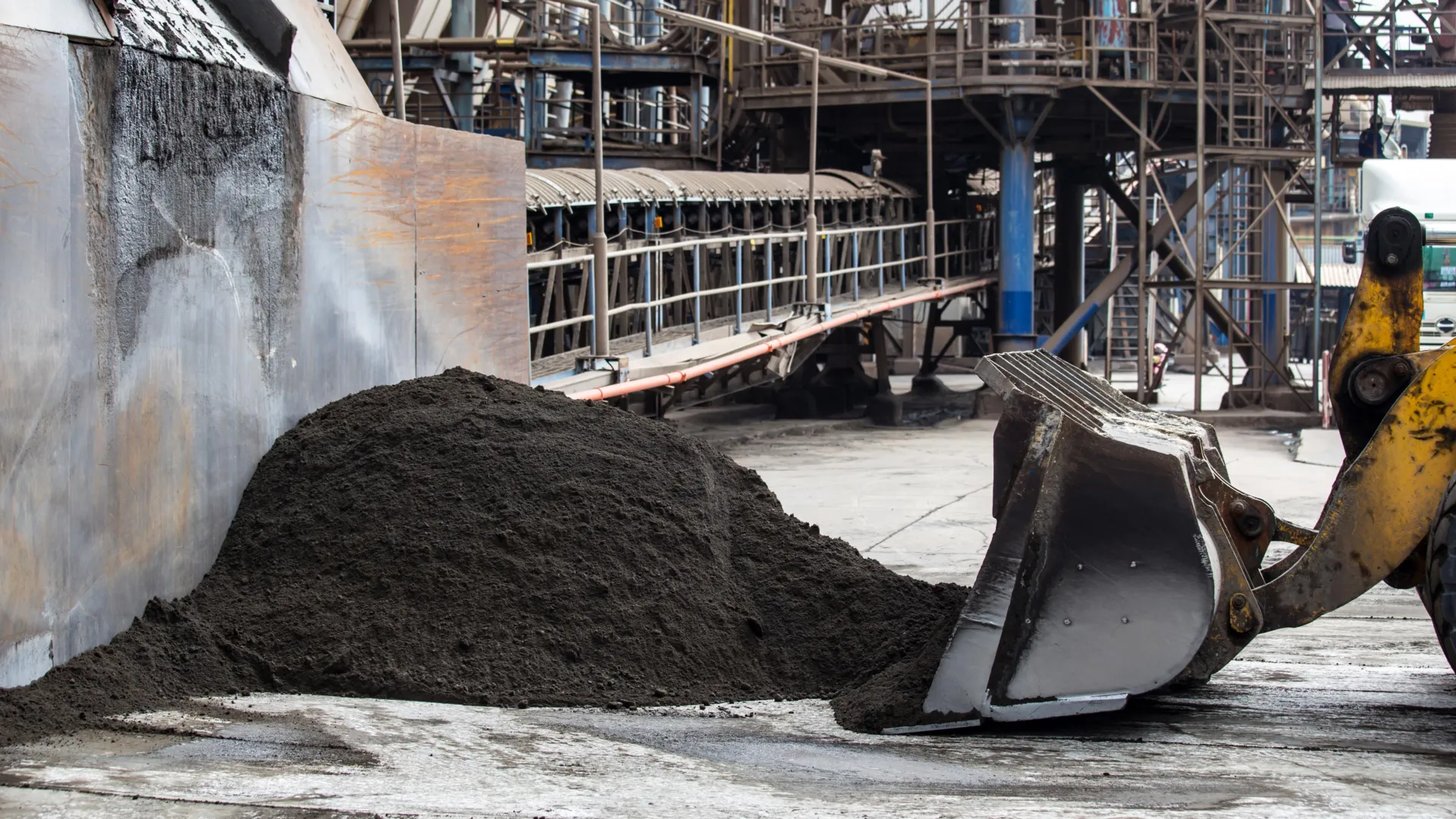
Industrial waste streams have long presented modern society with an intractable environmental paradox. Byproducts such as coal ash, red mud, and mine tailings are produced in staggering quantities worldwide, posing severe threats to local ecosystems, water tables, and public health through structural instability and toxic leaching. Yet, hidden within these powdery gray mounds and sludge-filled impoundments lies an overlooked economic and technological bonanza. These hazardous geological leftovers are densely packed with high-value commodities, including silica, rare earth elements, and a suite of critical minerals vital to the twenty-first-century economy.
To address this dual challenge of ecological hazard and resource scarcity, a multidisciplinary team of academic researchers has secured a landmark $3.3 million research grant from the National Science Foundation. Funded through the highly competitive Growing Convergence Research program, the five-year, two-phase investigative initiative seeks to harness biological strategies observed in nature—specifically those utilized by diatoms, sea sponges, and select plants—to recover these precious resources. By mimicking natural mineral-harvesting mechanisms, the scientific team hopes to bypass the energy-intensive, environmentally damaging chemical processes that have historically hindered industrial recycling.
The ambitious project represents a profound shift in how humanity approaches circular economies, waste management, and raw material acquisition. Rather than simply extracting isolated minerals, the research initiative aims for a total-utilization paradigm: breaking down complex industrial residues, harvesting strategic elements, and transforming the residual material into commercially viable, high-performance products.
A Multidisciplinary Research Coalition
The five-year endeavor is anchored by Worcester Polytechnic Institute, which serves as the administrative and intellectual hub for the grant. Mingjiang Tao, an associate professor in the WPI Department of Civil, Environmental, and Architectural Engineering, has been appointed as the lead principal investigator, steering the overarching coordination and strategic direction of the multi-institutional effort.
Tao is joined by a powerhouse of academic leadership, including WPI professors Carrick Eggleston and Yan Wang, who are serving as co-principal investigators. The project’s sprawling network extends far beyond Worcester, Massachusetts, incorporating specialized researchers, laboratories, and doctoral candidates from George Mason University, the University of California San Diego, the University of Massachusetts Amherst, and the University at Buffalo.
This unprecedented cross-institutional collaboration brings together a diverse mosaic of academic disciplines. Geochemists, materials scientists, metallurgists, civil engineers, computational chemists, and artificial intelligence specialists are working in concert. The fusion of biology and heavy industry is rarely attempted on this scale, requiring a delicate balance between molecular biology and large-scale industrial metallurgy.
The Anatomy of Industrial Waste and the Mineral Goldmine
To understand the urgency and magnitude of the project, one must examine the sheer volume of silicon-rich waste generated globally. Silicon-derived materials form the literal backbone of modern infrastructure and technology. They are indispensable in the production of concrete, glass, ceramics, advanced semiconductors, and high-temperature silicones. However, manufacturing virgin silicon materials is notoriously punishing on the environment. It demands astronomical temperatures, massive inputs of electrical energy, and aggressive chemical processing that generates significant greenhouse gas emissions.
Concurrently, heavy industries churn out hundreds of millions of tons of silicon-bearing waste annually. Coal ash residue from power generation, red mud from aluminum refining, mine tailings from hard-rock extraction, fragmented concrete debris, post-consumer waste glass, and metallurgical slag are generated at rates that outstrip traditional recycling capacities. For decades, the path of least resistance for these materials has been disposal. Consequently, vast quantities end up permanently consigned to landfills, settling ponds, structural impoundments, and towering surface waste piles.
This disposal model represents a staggering economic and strategic inefficiency. Advanced chemical assays have revealed that these waste piles are extraordinarily rich in silicon, rare earth elements (REEs), and other critical minerals. Among these, rare earth elements—such as neodymium, dysprosium, and yttrium—alongside specialized critical minerals like lithium, cobalt, and germanium, are the non-negotiable building blocks of the modern tech ecosystem. They are mandatory for manufacturing smartphones, electric vehicle motors, wind turbine generators, advanced defense guidance systems, and aerospace components.
The economic implications are monumental. According to recent academic estimates highlighted by industry analysts, U.S. coal ash landfills alone harbor approximately 11 million tons of trapped rare earth elements. Based on prevailing market valuations, this localized treasure trove is worth an estimated $8.4 billion. To put that figure in perspective, it is nearly eight times the volume of the nation’s current raw domestic mineral reserves. By failing to recover these elements, industrial economies are effectively burying multi-billion-dollar assets while simultaneously degrading local environments.
Taking Cues from Evolutionary Biology
Faced with the prohibitive energy costs and environmental degradation associated with traditional mining and mineral extraction, the research team decided to look away from conventional metallurgical textbooks and toward the natural world. Evolution, over hundreds of millions of years, has solved complex materials science problems with astonishing elegance and minimal energy expenditure.
Certain marine organisms and terrestrial plants have mastered the art of manipulating minerals under ambient, benign conditions. Diatoms—microscopic single-celled algae—and marine sea sponges routinely extract dissolved silicic acid from aquatic environments, utilizing organic molecules and intricate protein scaffolds to orchestrate the precipitation of complex, highly ordered silica structures. Similarly, specific plants absorb and deposit silica within their cellular matrices to enhance structural rigidity and deter herbivores.
The WPI-led research team hypothesizes that these natural blueprints can be reverse-engineered and scaled for industrial applications. By isolating the specific biomolecules and organic scaffolds responsible for biosilicification, the scientists aim to develop low-energy biochemical methods for dissolving and dismantling the stubborn silicate bonds found in industrial residues.
The primary objective is twofold. First, breaking the silicon matrix will liberate the trapped rare earth elements and critical minerals, allowing them to be selectively separated and harvested without resorting to the caustic acids and extreme heat typically employed in conventional hydrometallurgy. Second, the liberated silica itself will not be discarded as a secondary waste stream; rather, it will be chemically directed and repolymerized into useful, high-grade commercial products.
Artificial Intelligence and Advanced Computational Modeling
Accelerating the discovery of effective biomolecules and optimizing complex biochemical reactions across heterogeneous waste streams is a formidable task. Traditional trial-and-error laboratory experimentation is far too slow to meet the urgent demands of climate change and mineral security. To bridge this gap, the project places heavy emphasis on advanced computational modeling and artificial intelligence.
The research coalition is deploying machine learning algorithms to map, predict, and design specialized biomolecules capable of interacting efficiently with silicon-rich waste matrices. By simulating molecular interactions on quantum and atomic scales, AI tools can rapidly screen thousands of potential bio-catalytic pathways. This computational power allows the team to pinpoint the most promising biological strategies for mineral recovery and materials manufacturing in a fraction of the time required by conventional empirical research.
Division of Labor and Core Research Thrusts
The five-year timeline of the grant is structured around distinct, highly specialized research thrusts managed by the core leadership team.
Mingjiang Tao oversees the entire programmatic framework while driving direct investigations into biosilicification and bio-enabled metallurgy. His work focuses on understanding how biological agents can be harnessed to unlock rare earth elements from the refractory matrices of silicon-heavy wastes.
Meanwhile, Carrick Eggleston directs the geochemistry component of the initiative. Eggleston’s laboratory is tasked with mapping, understanding, and rigorously optimizing the complex chemical reaction pathways involved in breaking down and subsequently rebuilding silicate materials. His team is analyzing the precise kinetics of silicate dissolution, repolymerization, carbonation, glass formation, and advanced silicone synthesis, ensuring that the biochemical methods developed in the lab can be reliably translated to real-world industrial materials.
Yan Wang brings his extensive expertise in sustainable manufacturing and materials recycling to the forefront. As the developer of pioneering methods in battery recycling, Wang leads the engineering push to scale up the bio-derived extraction techniques. His group focuses on ensuring that the recovered rare earth elements and critical minerals meet the strict purity and performance standards required by modern high-tech manufacturers.
Economic Feasibility and Commercial Implications
Beyond laboratory breakthroughs, the ultimate success of the initiative hinges on economic viability. The research team is systematically evaluating whether these bio-inspired technologies can be scaled practically and cost-effectively for heavy industrial adoption.
If the technology achieves commercial viability, the ramifications for global manufacturing and environmental policy will be profound. The successful conversion of industrial waste into marketable commodities would fundamentally alter corporate balance sheets, turning environmental liabilities into profitable revenue centers.
Furthermore, widespread implementation would drastically reduce the world’s reliance on virgin mining operations, which are frequently associated with habitat destruction, massive carbon footprints, and severe water pollution. By securing domestic supplies of rare earth elements and critical minerals through urban and industrial mining, nations can insulate their high-tech and defense manufacturing sectors from volatile geopolitical supply chain disruptions.
Educational Integration and the Future Ecosystem
Education and workforce development are woven into the very fabric of the $3.3 million grant. Throughout the five-year lifecycle of the project, undergraduate and graduate students at WPI and partner institutions will be integrated directly into the research workflow. Through immersive STEM experiences, the next generation of scientists and engineers will gain hands-on exposure to convergence research, working at the dynamic intersection of biotechnology, materials science, geochemistry, and artificial intelligence.
Ultimately, the initiative aspires to lay the groundwork for a broader, bioengineered silicon-based materials ecosystem. By forging active bridges between academic researchers, industrial stakeholders, environmental policymakers, and future innovators, the project seeks to establish a sustainable, closed-loop paradigm for global manufacturing. As the research progresses through its phases, it stands as a testament to the power of looking to nature for solutions to humanity’s most complex industrial challenges.