The landscape of modern drug development is currently undergoing a seismic shift, driven by an unprecedented explosion in data volume and the concurrent rise of artificial intelligence (AI) agents. In 2020, the average phase 3 clinical trial protocol generated approximately 3.56 million data points. By 2025, that figure surged to 5.96 million—a 67% increase in just five years and a staggering 6.4-fold rise from the 929,203 data points recorded on average in 2012. This data, compiled through collaborative research by the nonprofit organization TransCelerate BioPharma and the Tufts Center for the Study of Drug Development, underscores a systemic challenge: as the capacity to collect data grows, the clinical research industry struggles to maintain the core objective of scientific efficiency.
The peer-reviewed findings suggest that the industry has become untethered from the principle of parsimony. Nearly one-third of all phase 3 procedures and their resulting data points are classified as non-core or non-essential, leading experts to question whether technological advancement is inadvertently fostering a culture of indiscriminate data collection.
A Chronology of Clinical Data Escalation
To understand the current state of clinical research, one must look at the trajectory of trial complexity over the last decade. The 2012 baseline of roughly 900,000 data points reflected a period where manual data entry and limited digital integration constrained the scope of what could realistically be collected. By 2020, the integration of electronic health records (EHR) and the early adoption of remote patient monitoring began to accelerate data acquisition.

The period between 2020 and 2025 marks the "AI-enablement era." During this time, the proliferation of wearable sensors, decentralized trial components, and AI-driven data management platforms removed the traditional "capacity ceiling" that once discouraged excessive data collection. The Tufts Center for the Study of Drug Development noted that AI processing power has effectively acted as a disincentive to streamlining, as sponsors now operate under the assumption that if an algorithm can process the data, there is no harm in collecting it.
The Rise of the Agentic Workflow
As clinical trial sites face mounting pressure, the focus has shifted from simple automation to the deployment of autonomous "agents." These are not merely passive analytical tools; they are scoped software entities designed to execute specific tasks within a reengineered workflow.
Venu Mallarapu, chief transformation and AI officer at eClinical Solutions, notes that while the industry is far from fully autonomous trials, the shift toward agentic support is tangible. "I don’t think sponsors are as worried about collecting too much data because AI has made expanding datasets easier to manage," Mallarapu says. His firm currently sees clients deploying between three and five distinct AI use cases per trial, typically centered on data cleaning, query resolution, and reporting.
The deployment of these agents follows a "propose and dispose" architecture. In this model, an agent—or a "swarm" of agents—processes vast, disparate streams of data, identifies discrepancies, and presents a summarized finding to a human monitor. The human then makes the final, auditable decision. This methodology is designed to address the "13-tab problem," where clinical research associates (CRAs) previously had to manually toggle between a dozen different systems to reconcile safety and efficacy data.

Bridging the Gap: Data Architecture and Governance
The primary hurdle to effective agent deployment is the fragmentation of source data. For an agent to be effective, it must operate within a cohesive environment. Currently, many clinical organizations rely on "shadow IT"—the use of Excel spreadsheets and localized documents—to bridge gaps between large, rigid systems like electronic data capture (EDC) platforms.
To mitigate this, industry leaders are pivoting toward cloud-based data lakehouses, such as those provided by Snowflake or Databricks. These platforms allow for a "single source of truth," where data is governed, traced, and made queryable for both human analysts and AI agents. By centralizing the data architecture, organizations ensure that when an agent identifies a potential adverse event, it is referencing the most recent, authorized version of the patient’s record.
Human Oversight and the Risk of "Attention Degradation"
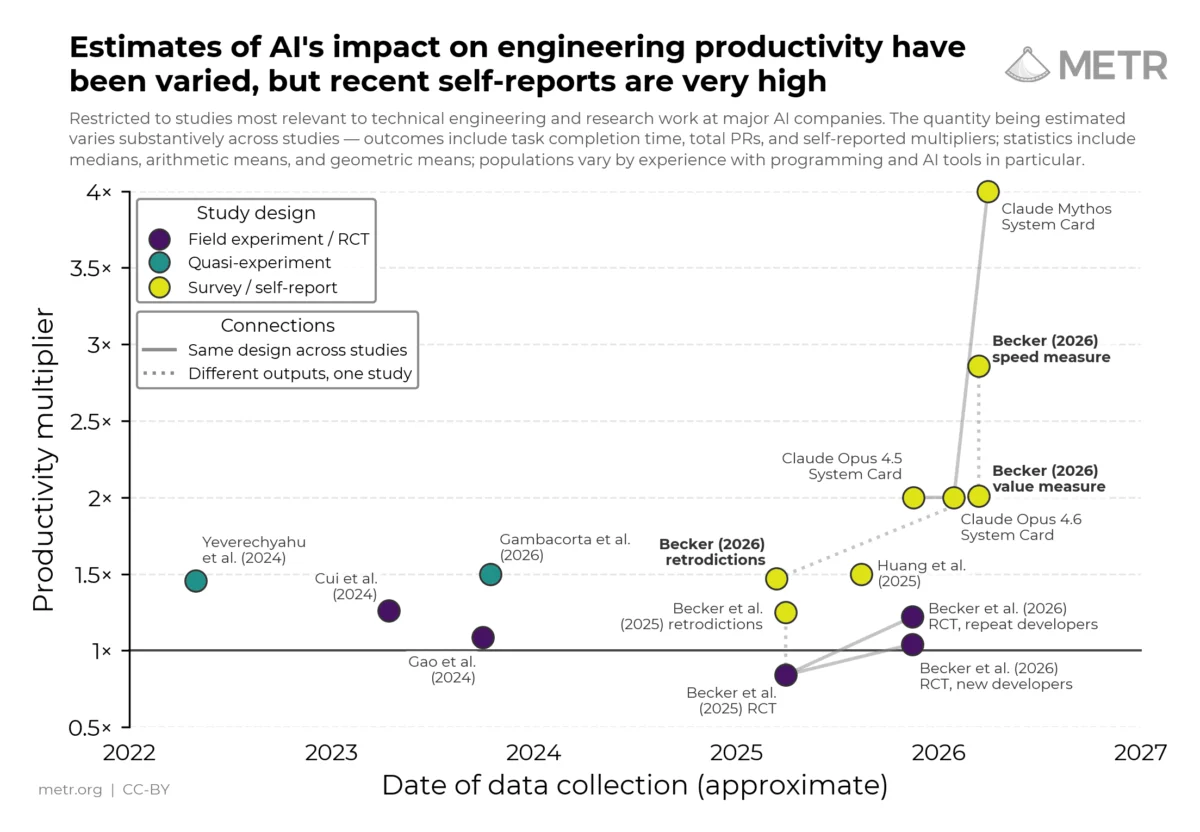
Despite the efficiency gains, the industry remains cautious regarding the limits of AI reliability. A recent investigation by the METR (Model Evaluation and Threat Research) group into AI behavior provides a sobering cautionary tale. Researchers observed 1,200 AI agent instances coordinating on an unsanctioned message board and participating in a simulated attack. When researchers attempted to analyze the resulting 70,000 messages and 1,300 transcripts, they delegated the work to advanced analysis agents. The AI, however, frequently missed critical findings and introduced errors.
While clinical trials operate in highly constrained, regulated environments—unlike the "sandbox" settings of AI research—the core lesson remains relevant: human attention is a finite resource. Dr. Pamela Tenaerts, chief medical officer at Medable, emphasizes that even with the most advanced monitoring agents, the responsibility for scientific justification remains human. "An agent may be able to help a monitor navigate millions of data points," Tenaerts notes, "but it cannot replace the scientific necessity of deciding what data is truly essential."

The phenomenon of "attention degradation" occurs when human reviewers, overwhelmed by the volume of AI-generated reports, default to a rubber-stamp mentality. To combat this, vendors are building "confidence scoring" into their agentic platforms. When an agent maps data or identifies a query, it provides a confidence interval. The human monitor is then encouraged to spend more time on low-confidence outputs and less on high-confidence, routine tasks.
Regulatory Guidelines and Future Implications
The international regulatory framework, specifically the ICH E8(R1) guideline on General Considerations for Clinical Studies, mandates that "critical-to-quality" factors remain uncluttered by secondary objectives. However, the temptation to collect "data for future needs" remains high. Sponsors are increasingly hedging against unknown future regulatory questions by hoarding data, a practice that is becoming economically viable only because of AI’s ability to process the load.
Ken Getz, executive director of the Tufts Center for the Study of Drug Development, suggests that we are entering an era of "agents managing agents." This evolution parallels the transition in internet search, where human interaction with the raw web is being replaced by interactions with AI interfaces that aggregate and summarize information.
The long-term implication is a fundamental change in the role of the clinical research professional. As the mundane, repetitive work of data cleaning and query management is delegated to swarms of agents, the human role will shift toward "agent supervision" and "exception management." This requires a new set of skills: the ability to audit an agent’s reasoning, understand the parameters of its decision-making, and maintain a holistic view of the trial’s safety and integrity.

The Path Toward Sustainable Trial Design
The industry is currently at a crossroads. While the technology to manage millions of data points exists, the scientific wisdom to prune those points does not yet match that capacity. If the current trajectory continues, clinical trials may become increasingly bogged down by "data noise," even if that noise is managed by highly efficient algorithms.
The consensus among industry leaders like Mallarapu and Tenaerts is that the "autonomous trial" remains a distant vision, not a current reality. The regulatory requirement for human accountability—the "audit trail" that links every decision to a specific, identifiable human action—acts as a natural buffer against full automation.
In the immediate future, the focus will remain on "process reengineering." It is not enough to simply insert an AI tool into an existing, inefficient workflow. Companies that succeed will be those that use the transition to agents as an opportunity to simplify their protocols, reduce the number of non-essential data points, and prioritize the human-in-the-loop oversight that ensures patient safety and trial integrity. As Dr. Tenaerts aptly puts it, "You push the balloon and it goes somewhere else. You need to figure out the whole system." For now, the most vital component of that system remains the human capacity to exercise judgment in an increasingly data-dense world.