For over thirty years, the global scientific community has operated under a monolithic paradigm regarding the pathogenesis of Alzheimer’s disease, funneling billions of dollars into therapies designed to clear a specific protein fragment known as amyloid beta. While this focus has led to the development of breakthrough monoclonal antibodies like lecanemab and donanemab, the clinical results have remained incremental rather than transformative. Now, a growing body of research, spearheaded by biochemist Jevgenij Raskatov at the University of California, Santa Cruz, suggests that the field may have inadvertently ignored a critical culprit: a smaller, closely related peptide long dismissed as an inert byproduct of cellular metabolism.
This overlooked molecule, known as P3, is now being scrutinized as a potential, and perhaps potent, driver of neurodegeneration. In a recent commentary published in the journal ChemBioChem, Raskatov argues that the scientific community’s historical refusal to investigate P3—based on unverified assumptions of its harmlessness—has created a blind spot that may explain the frustratingly slow progress in treating the world’s most prevalent neurodegenerative condition.
The Historical Monopoly of the Amyloid Cascade Hypothesis
To understand the magnitude of this potential paradigm shift, one must first consider the dominance of the "Amyloid Cascade Hypothesis." Since the late 1980s, the hypothesis that the accumulation of amyloid beta (Aβ) peptides in the brain is the primary cause of Alzheimer’s has guided the vast majority of drug development.
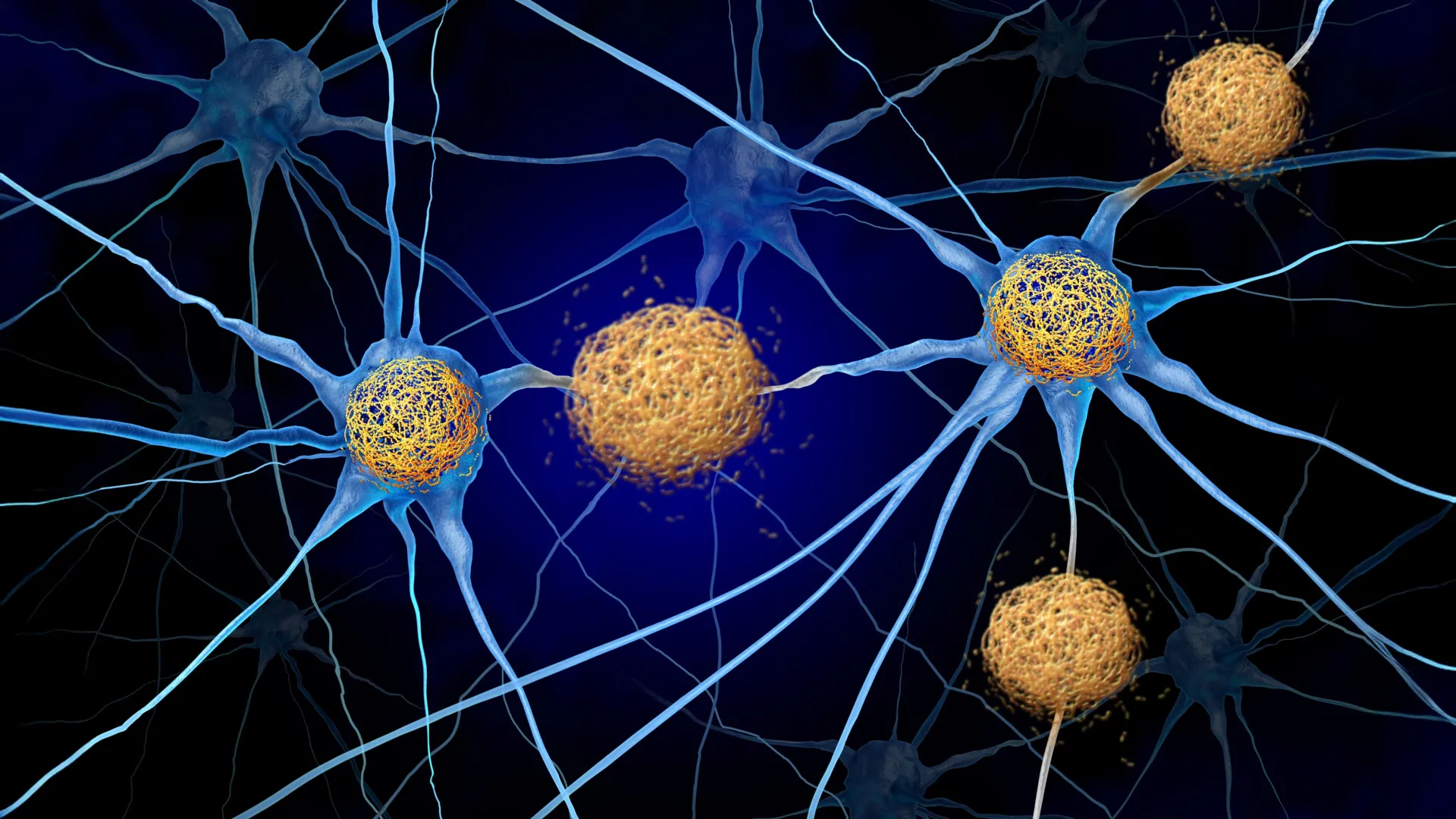
The mechanism is well-documented: the Amyloid Precursor Protein (APP), which is embedded in the membranes of neurons, is cleaved by two enzymes, beta-secretase and gamma-secretase. This process releases Aβ peptides, most notably Aβ40 and Aβ42. The latter, consisting of 42 amino acids, is particularly prone to misfolding and aggregating into the characteristic "plaques" that define Alzheimer’s pathology. With more than 400 clinical trials targeting this pathway, the failure of many candidates—or their limited efficacy—has prompted a wave of introspection among neuroscientists.
P3: From Biological Bystander to Potential Pathogen
P3 is the result of a different cleavage pathway involving the same precursor protein. When APP is processed first by alpha-secretase and subsequently by gamma-secretase, the resulting peptide is P3. For decades, the consensus in biochemistry textbooks and literature was that P3 was a soluble, harmless peptide that did not aggregate and, therefore, posed no threat to neural integrity.
Raskatov’s laboratory, through a series of rigorous experiments conducted over the last five years, has systematically dismantled this assumption. The team’s findings demonstrate that P3 is not only capable of forming amyloid-like fibrils—the threadlike structures associated with brain damage—but that it does so with surprising speed. In certain laboratory conditions, P3 aggregates more rapidly than its more famous counterpart, Aβ42.
Furthermore, the team has gathered evidence suggesting that P3 exhibits its own form of neurotoxicity. While it may be less potent than Aβ in a vacuum, its interactions with Aβ—specifically, the way it may facilitate or accelerate the clumping of Aβ—suggests a synergistic relationship that could be critical to the disease’s progression. Raskatov has proposed reclassifying P3 as "Amyloid Alpha" (Aα) to reflect its capacity for aggregation and its biological proximity to the amyloid beta family.
A Chronology of Neglect and Re-evaluation
The story of P3 is a cautionary tale regarding the dangers of scientific consensus.
- 1990s-2010s: P3 is largely categorized as a benign product of the alpha-secretase pathway. Research efforts are almost exclusively diverted toward inhibiting the beta-secretase pathway to stop Aβ production.
- 2019-2023: The Raskatov lab publishes a series of three foundational studies in high-impact biochemical journals, providing the first structural and functional evidence that P3 forms toxic aggregates.
- 2024: Independent validation emerges. Research groups in the United Kingdom begin to confirm the aggregation properties of P3, prompting a wider re-examination of the role of non-Aβ peptides in neurodegenerative pathways.
- Present Day: The scientific discourse begins to shift, with calls for more comprehensive studies on the interplay between various amyloid peptides rather than a narrow focus on a single target.
The significance of this correction is magnified by the discovery that even recent academic literature has mistakenly cited Raskatov’s own work as proof of P3’s harmlessness. This "grand confusion," as Raskatov describes it, highlights how institutional inertia can lead researchers to misinterpret data to fit established models, even when the evidence points elsewhere.
The Economic and Clinical Burden
The urgency of this re-evaluation is underscored by the staggering human and economic costs of Alzheimer’s. With approximately 35 million people currently living with the disease worldwide, and that number projected to double by 2050, the annual financial burden has already exceeded $800 billion.
Current treatments, while a step forward, are palliative or offer only modest delays in cognitive decline. Cholinesterase inhibitors and NMDA receptor antagonists treat symptoms rather than the underlying disease mechanism. Even the newest monoclonal antibody therapies, while successful in clearing amyloid plaques, are associated with significant side effects, including ARIA (amyloid-related imaging abnormalities), which can involve brain swelling or hemorrhages. If P3 is indeed a contributor to the disease process, current therapies that clear Aβ while leaving P3-related aggregates untouched may be fighting only half the battle.
Implications for Future Drug Discovery
The inclusion of P3 as a potential therapeutic target could fundamentally alter the landscape of drug development. If the disease is driven by a complex cocktail of interacting peptides, the next generation of Alzheimer’s drugs may need to be "multi-targeted" or specifically designed to inhibit the aggregation of P3 in addition to Aβ.
David Teplow, an emeritus professor of neurology at UCLA and a widely respected figure in the field, has noted that this re-evaluation has "far-reaching consequences for both basic science and clinical research." By moving beyond the binary focus on amyloid beta, the research community may finally be opening the door to treatments that address the heterogeneous nature of Alzheimer’s.
The Path Forward
The transition from a single-target hypothesis to a more nuanced model of "amyloid synergy" will not happen overnight. The scientific community faces a significant hurdle: the need for longitudinal studies that track P3 levels in patients, rather than just in test tubes or animal models. Researchers must also develop specific biomarkers for P3 to determine if its presence correlates with disease severity or the rate of cognitive decline.
Moreover, the "confusion" identified by Raskatov regarding the interpretation of his own research serves as a reminder that the field of neurodegeneration is ripe for a rigorous audit. As global investment in dementia research continues to climb, the allocation of these resources must be guided by an open-minded approach that questions long-held assumptions.
The discovery that P3 may be a "hidden player" in Alzheimer’s does not negate the importance of amyloid beta; rather, it suggests that the disease is more complex than a single-target pathology. If the goal is to stop the progression of Alzheimer’s, researchers must account for every actor on the stage, even those that were previously ignored. As Raskatov suggests, the field is at a crossroads; by looking at the full spectrum of amyloid peptides, scientists may finally find the missing pieces to a puzzle that has remained unsolved for far too long. The road ahead remains long and demanding, but the recognition of P3 as a potential neurotoxic agent marks a significant departure from the status quo, offering a new, albeit challenging, avenue for hope in the fight against Alzheimer’s.