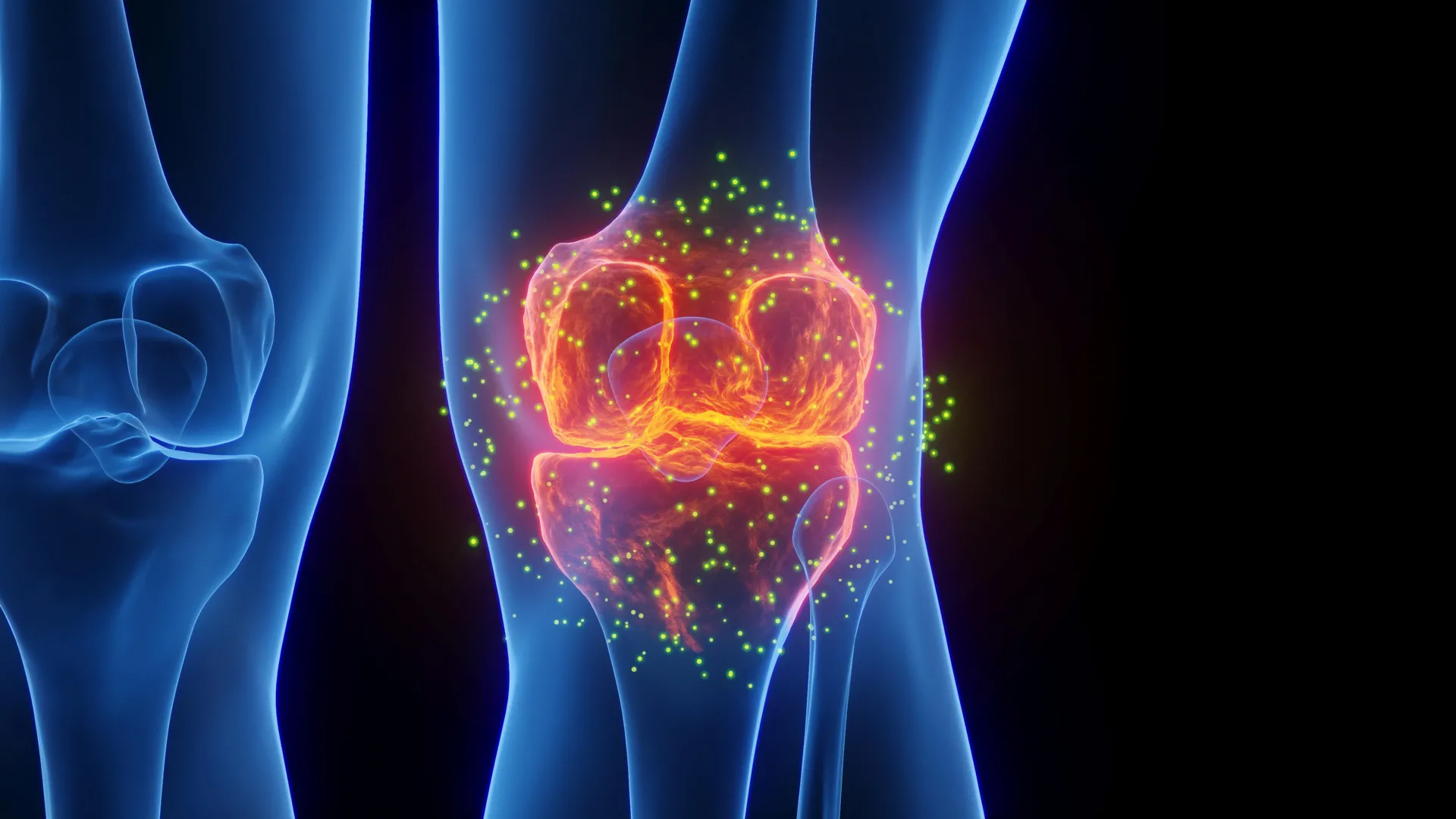
A novel therapeutic approach aimed at neutralizing a specific protein associated with biological aging has successfully regenerated lost knee cartilage in aged mice and entirely prevented the onset of osteoarthritis following severe joint trauma. Spearheaded by a collaborative team of researchers at Stanford Medicine, the peer-reviewed findings, published in the prestigious scientific journal Science, open an unprecedented avenue for regenerative medicine. Beyond murine models, the investigative team observed highly encouraging results when applying the treatment to human tissue samples procured during routine knee replacement procedures, pointing toward a future where degenerative joint conditions might be reversed non-surgically through local injections or oral pharmaceuticals.
The implications of this discovery are vast, particularly for healthcare systems burdened by the staggering economic and physical tolls of joint degeneration. Osteoarthritis stands as the single most prevalent form of arthritis, impacting approximately one in every five adults across the United States. Characterized by the progressive deterioration of joint cartilage, the condition precipitates severe chronic pain, joint stiffness, and debilitating swelling. Current economic evaluations estimate that the disease generates roughly $65 billion annually in direct healthcare expenditures in the United States alone. Despite this massive societal impact, contemporary medical interventions remain largely palliative, focusing heavily on pain management, physical therapy, and, in advanced presentations, invasive joint replacement surgery. Prior to this breakthrough, no clinically approved pharmacological agent possessed the capacity to actively slow, halt, or reverse the underlying pathological progression of cartilage loss.
Chronology of Discovery: From Muscle Stem Cells to Joint Regeneration
The trajectory leading to this breakthrough traces back several years within Stanford’s laboratory environments, marking a steady evolution in understanding how tissues degrade with age. In 2023, the same Stanford research team identified a novel category of proteins termed "gerozymes." These specialized enzymes become increasingly abundant as organisms age, actively driving the functional decline of diverse tissues throughout the body.
Initial investigations by the team focused heavily on age-related muscle weakness, specifically sarcopenia. Researchers determined that 15-PGDH, a primary gerozyme, plays a critical regulatory role in muscle tissue by breaking down prostaglandin E2, a signaling molecule vital for maintaining tissue health and stem cell function. When scientists administered pharmacological inhibitors to block 15-PGDH in older mice, the animals systematically gained muscle mass, strength, and endurance. Conversely, artificially upregulating the protein in young mice precipitated rapid muscle atrophy and weakness.
Buoyed by these successes in muscular tissue, the investigative team expanded their scope to determine whether the exact same biological mechanism governed the degradation of articular cartilage. By comparing cartilage samples harvested from young mice against those from aged counterparts, the researchers discovered that concentrations of the 15-PGDH protein approximately doubled as the animals aged. This foundational correlation provided the impetus to test whether inhibiting the gerozyme could structurally alter or reverse the aging trajectory of joints.
Experimental Methodology and Remarkable Regrowth Data
To evaluate the therapeutic efficacy of 15-PGDH inhibition, researchers deployed a small-molecule drug designed to specifically block the enzyme’s activity in older mice. The administration routes were bifurcated: some subjects received systemic injections into the abdomen, exposing their entire bodies to the therapeutic agent, while others received localized intra-articular injections directly into the knee joint.
The outcomes observed across both delivery methods exceeded initial expectations. Cartilage tissue that had thinned, degraded, and lost functionality as a natural consequence of aging demonstrated substantial structural recovery, growing noticeably thicker across the entire surface of the joint. Further histological and molecular analyses confirmed that the newly generated tissue was not fibrocartilage—the mechanically inferior, scar-like tissue typically produced by the body in failed healing attempts—but rather pristine hyaline cartilage, the smooth, specialized tissue required for frictionless joint movement.
"Cartilage regeneration to such an extent in aged mice took us by surprise," noted Dr. Nidhi Bhutani, associate professor of orthopedic surgery at Stanford Medicine and co-senior author of the study. "The effect was remarkable."
Dr. Helen Blau, professor of microbiology and immunology, director of the Baxter Laboratory for Stem Cell Biology, and co-senior author, emphasized the distinct biological pathways at play. "Millions of people suffer from joint pain and swelling as they age," Blau stated. "Until now, there has been no drug that directly treats the cause of cartilage loss. But this gerozyme inhibitor causes a dramatic regeneration of cartilage beyond that reported in response to any other drug or intervention."
Prevention of Post-Traumatic Osteoarthritis
In addition to reversing age-related degeneration, the research team investigated whether the therapy could successfully intercept the development of post-traumatic osteoarthritis. To simulate high-impact joint trauma, scientists utilized a murine model mimicking anterior cruciate ligament (ACL) tears—common sports-related injuries frequently sustained during activities involving sudden deceleration, abrupt pivoting, or high-impact jumping, such as soccer, basketball, and skiing.
Although human patients frequently undergo surgical reconstruction following an ACL rupture, epidemiological data indicates that approximately 50 percent of affected individuals inevitably develop osteoarthritis in the injured joint within a 15-year window.
In the Stanford study, mice subjected to the injury model were administered the 15-PGDH inhibitor twice weekly for a duration of four weeks. The therapeutic intervention yielded a profound protective effect: treated animals exhibited a significantly reduced likelihood of developing osteoarthritis. By contrast, untreated control subjects displayed 15-PGDH protein levels roughly twice as high as uninjured animals and progressed to full osteoarthritic degradation within four weeks. Furthermore, functional behavioral assessments revealed that treated mice walked with more normal gait patterns and bore substantially more weight on the recovering limb.
Cellular Reprogramming Without Stem Cell Intermediaries
A critical revelation of the research centers on the precise cellular mechanics driving this tissue restoration. In many biological systems, tissue regeneration relies heavily on stem or progenitor cells that multiply and subsequently differentiate into specialized cell types. However, detailed single-cell analysis revealed a fundamentally different paradigm operating within articular cartilage.
Rather than recruiting a dedicated population of stem cells, the existing mature cartilage-producing cells, known as chondrocytes, demonstrated an extraordinary capacity to shift their gene expression profiles and revert to a more youthful, functionally robust state.
In untreated older joints, chondrocytes exhibited heightened activation of genes associated with chronic inflammation and the pathological conversion of cartilage into bone. Following treatment with the 15-PGDH inhibitor, these detrimental cellular populations decreased sharply. Specifically, cells expressing markers of cartilage breakdown dropped from 8 percent to 3 percent, while populations linked to undesired fibrocartilage production fell from 16 percent to 8 percent. Concurrently, populations of chondrocytes dedicated to synthesizing hyaline cartilage and maintaining the extracellular matrix surged from 22 percent to 42 percent.
"This is a new way of regenerating adult tissue, and it has significant clinical promise for treating arthritis due to aging or injury," Dr. Blau explained. "We were looking for stem cells, but they are clearly not involved. It’s very exciting."
Dr. Bhutani echoed these sentiments regarding the therapeutic reach of targeting resident cells. "The mechanism is quite striking and really shifted our perspective about how tissue regeneration can occur," she noted. "It’s clear that a large pool of already existing cells in cartilage are changing their gene expression patterns. And by targeting these cells for regeneration, we may have an opportunity to have a bigger overall impact clinically."
Validation Through Human Tissue Samples
To bridge the gap between preclinical animal models and potential human applications, the researchers examined human articular cartilage tissue harvested from patients undergoing total knee replacement surgeries due to advanced osteoarthritis.
When exposed to the 15-PGDH inhibitor in laboratory cultures for a period of one week, the human tissue samples demonstrated a significant reduction in cartilage-degrading cells and downregulated activity in genes linked to structural breakdown and fibrocartilage synthesis. Crucially, the human samples began synthesizing new, functional articular cartilage, validating the translational viability of the mechanism.
Broader Impact and Future Clinical Trajectory
The prospect of translating these findings into mainstream clinical practice is already underway, accelerated by parallel drug development pipelines. Notably, an oral formulation of the 15-PGDH inhibitor has already cleared initial safety evaluations and is currently advancing through clinical trials for age-related muscle weakness.
Researchers are now laying the groundwork to initiate similar human clinical trials specifically tailored to evaluate cartilage regeneration and osteoarthritis intervention. If subsequent human trials prove successful, the medical landscape surrounding orthopedic care could undergo a profound transformation. Patients suffering from chronic joint degeneration could potentially avoid major surgical interventions such as total knee and hip replacements through the administration of targeted local injections or systemic oral therapeutics.
"Phase 1 clinical trials of a 15-PGDH inhibitor for muscle weakness have shown that it is safe and active in healthy volunteers," Dr. Blau remarked. "Our hope is that a similar trial will be launched soon to test its effect in cartilage regeneration. We are very excited about this potential breakthrough. Imagine regrowing existing cartilage and avoiding joint replacement."
Additional contributors to the published study include researchers from the Sanford Burnham Prebys Medical Discovery Institute in San Diego. The research was supported by grants from the National Institutes of Health, the Baxter Foundation for Stem Cell Biology, the Li Ka Shing Foundation, the Stanford Cardiovascular Institute, the Milky Way Research Foundation, the Canadian Institutes of Health Research, the Stanford Translational Research and Applied Medicine Pilot program, a GlaxoSmithKline Sir James Black Postdoctoral Fellowship, and a Stanford Dean’s Postdoctoral Fellowship.
Disclosures noted within the study indicate that Dr. Blau, Dr. Bhutani, and several co-authors are inventors on pending and issued Stanford University patent applications concerning 15-PGDH inhibition for cartilage repair and tissue rejuvenation, which have been licensed to Epirium Bio. Furthermore, Dr. Blau serves as a co-founder of Myoforte/Epirium and maintains equity and stock options in the enterprise, ensuring active industry collaboration as the therapeutic candidate moves toward formal clinical evaluation.