The accumulation of synthetic polymers in the global environment represents one of the most significant anthropogenic challenges of the 21st century. While conventional plastics have revolutionized industries ranging from healthcare to food distribution, their durability has become a double-edged sword. Most petroleum-based plastics are designed to resist chemical and biological degradation, leading to a persistence in the environment that spans centuries. As these materials fragment into microplastics and nanoplastics, they infiltrate every level of the trophic web, from deep-sea trenches to the human bloodstream. However, a groundbreaking study from the University of Konstanz, published in The ISME Journal, has provided a new perspective on how microbial life is evolving to address this crisis, centered on the identification of a unique, multi-functional enzyme.
The Emergence of the Plastisphere
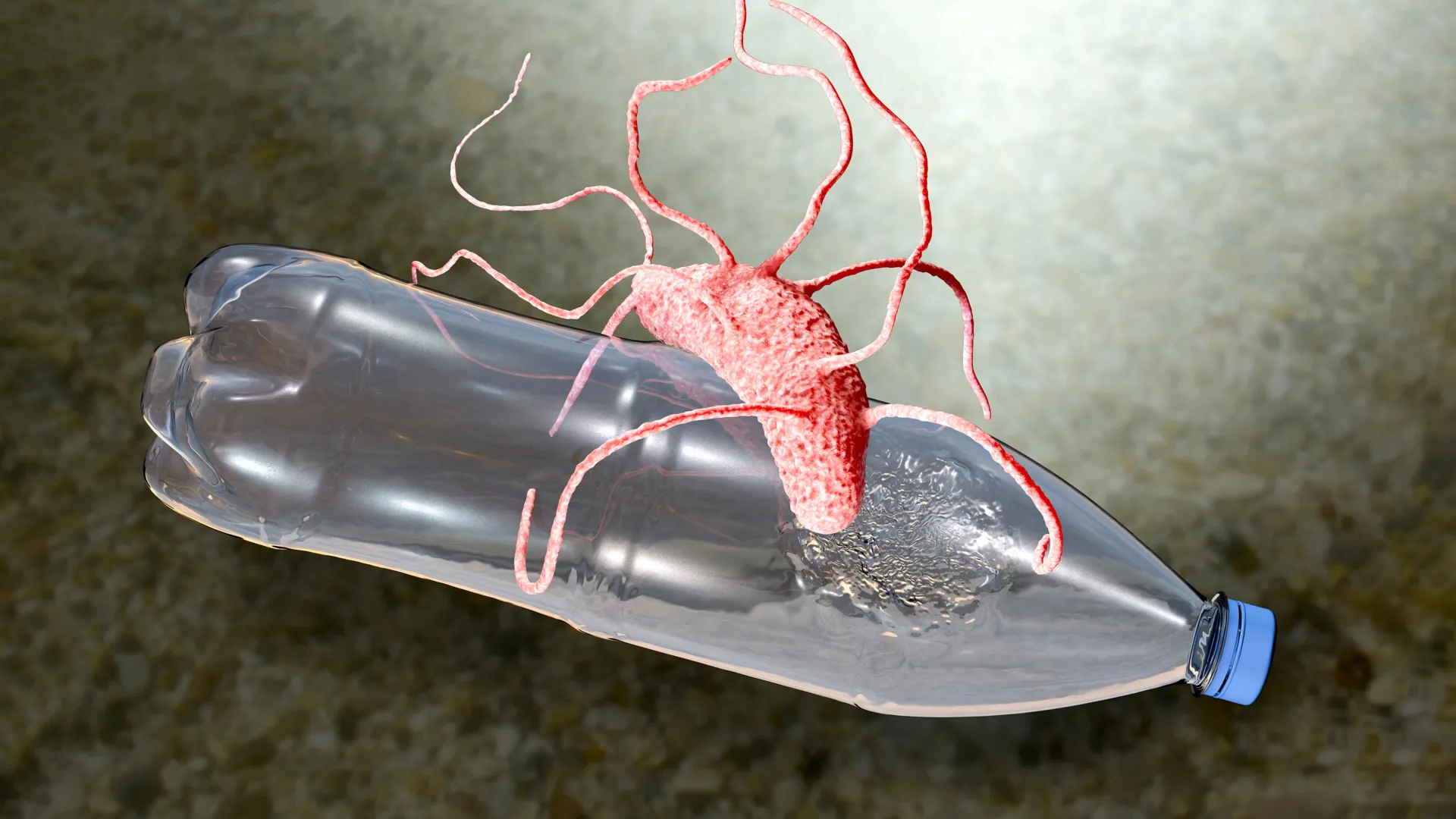
For decades, the scientific community has observed that plastic waste does not exist in a vacuum; it becomes a substrate for complex microbial communities. This ecosystem, dubbed the "plastisphere," serves as a dynamic interface where bacteria, fungi, and algae colonize synthetic surfaces. While these communities have long been studied for their role in surface degradation, the discovery by biologists Harry Lerner and David Schleheck provides a granular look at the precise biochemical mechanisms that allow specific bacteria to "consume" plastic.
The research team focused on long-chain aliphatic polyesters (LCAP), a class of biodegradable plastics engineered by chemist Stefan Mecking. Unlike traditional high-density polyethylene (HDPE), which is characterized by a stable, carbon-carbon backbone that is notoriously difficult for microorganisms to cleave, LCAPs feature ester bonds that are chemically susceptible to hydrolysis. By burying LCAP films in the humus layer of a botanical garden, the researchers simulated a natural, nutrient-rich environment where microbes are already adapted to breaking down complex natural polymers like cutin—the structural polyester found in plant cuticles.
Chronology of the Decomposition Experiment
The research timeline spanned over a year, during which the team monitored both the physical integrity of the buried films and the metabolic output of the surrounding soil microbes. The study followed a rigorous comparative methodology:
- Day 0: Deployment of LCAP films, cellulose, PHBV, PCL, and HDPE controls into forest soil.
- Day 80: The cellulose control samples reached near-complete degradation, confirming the high microbial activity of the soil environment.
- Day 250–330: The LCAP and other bioplastic samples reached complete degradation, leaving no detectable residue.
- Day 365: Final analysis of HDPE controls revealed virtually no structural change, underscoring the stark disparity between biodegradable polymers and traditional synthetics.
This timeline highlights a crucial bottleneck in environmental remediation: the rate at which microbial evolution can keep pace with industrial production. While the bacteria successfully metabolized the bioplastics in less than a year, the conventional plastics remained untouched, proving that nature’s "digestive system" is currently limited by the chemical architecture of our waste.
The Pac-Man Enzyme: Structure and Function
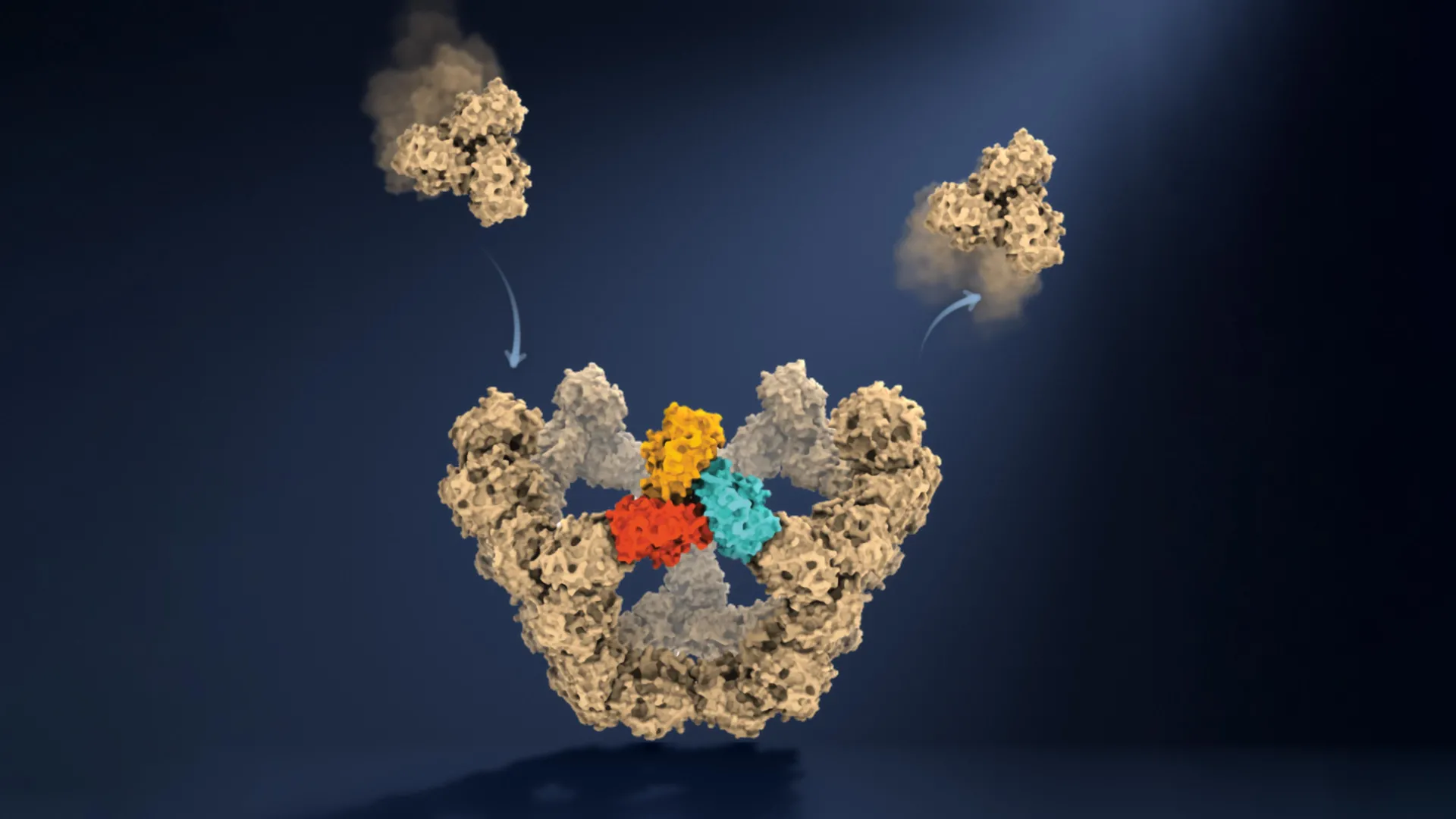
The most striking revelation of the study was the identification of a specific esterase enzyme, nicknamed "Pac-Man" due to its distinctively wide, cavernous active site. Using metagenomic sequencing, the team identified the gene responsible for this enzyme, which appeared in high concentrations in soil exposed to LCAPs.
The enzyme’s efficiency is attributed to its unique positioning. It is not merely secreted into the soil; it is anchored to the bacterial cell membrane by a lipid tail, while a secretion signal directs the protein outward. This "tethered" approach allows the bacterium to remain in intimate contact with the plastic surface. Electron microscopy revealed small, precise holes in the LCAP films that matched the exact dimensions of individual bacterial cells, suggesting that the bacteria "drill" into the material, effectively creating a localized, concentrated zone of enzymatic activity.
A Concerning Intersection: Antibiotic Resistance
The study’s most provocative finding involves the structural homology between the Pac-Man enzyme and beta-lactamases. Beta-lactamases are a critical class of enzymes in clinical medicine; they enable bacteria to neutralize penicillin and other beta-lactam antibiotics by cleaving the beta-lactam ring.
The fact that the Pac-Man enzyme can perform both the degradation of plastic esters and the destruction of antibiotics suggests a potential evolutionary trade-off. While the researchers caution that this lab-based finding does not definitively prove that plastic-eating bacteria are more likely to be antibiotic-resistant, it opens a critical area of investigation. If the expansion of the plastisphere provides an evolutionary pressure that selects for enzymes with these dual-function capabilities, the widespread introduction of biodegradable plastics could theoretically influence the prevalence of antibiotic-resistant genes in soil and water microbial communities.
Implications for Environmental Policy and Material Science
The findings from the University of Konstanz offer both hope and a warning to policymakers and materials engineers. The primary implication is that "bioplastic" is not a monolithic term. The efficacy of microbial degradation is entirely dependent on the presence of chemical "weak points" within the polymer chains.
Current waste management infrastructure often treats all plastics as equally recalcitrant, yet the data indicates that if the global industry shifted toward polymers with hydrolysable ester bonds, existing soil and aquatic microbial communities could potentially facilitate a circular economy. The researchers suggest that the "Pac-Man" discovery should serve as a blueprint for the future design of consumer plastics. If materials are engineered with specific, enzymatically accessible bonds, they could be "designed for degradation," significantly reducing the burden on terrestrial and marine ecosystems.
However, the team emphasizes that microorganisms are not a panacea for current pollution. The persistent nature of conventional plastics like HDPE remains a major hurdle. The research underscores that relying on natural degradation for existing, non-biodegradable trash is insufficient. Instead, the scientific community is advocating for a shift in material production, where the "chemical language" of the plastic is compatible with the "metabolic vocabulary" of the microbial world.
Broader Impact and Future Directions
The "plastisphere" is a relatively new frontier in microbiology, having existed only for a few decades—a blink of an eye in evolutionary terms. The rapid adaptation of soil bacteria to consume LCAPs demonstrates that microbial communities are far more resilient and flexible than previously assumed. This adaptability, however, carries the aforementioned risks regarding antibiotic resistance, a factor that must be included in future environmental impact assessments.
As scientists continue to decode the genetic makeup of the plastisphere, the focus is likely to shift toward bio-augmentation—the potential for utilizing specialized bacterial strains to accelerate the cleanup of landfill sites and contaminated aquatic zones. Yet, the consensus among experts, including the Konstanz team, is that the ultimate solution lies at the source. By aligning material science with the biological capabilities of the Earth’s smallest recyclers, humanity may be able to bridge the gap between industrial progress and ecological stability.
The Pac-Man enzyme represents more than just a discovery of a new biological mechanism; it is a signal that our synthetic waste is being integrated into the global metabolic cycle, albeit in ways we are only beginning to understand. Future research will likely focus on whether these enzymes can be optimized for industrial-scale composting or if they pose an unforeseen risk to public health through the promotion of antibiotic resistance. For now, the study provides a clear mandate: the future of plastic must be designed with the bacterium in mind.