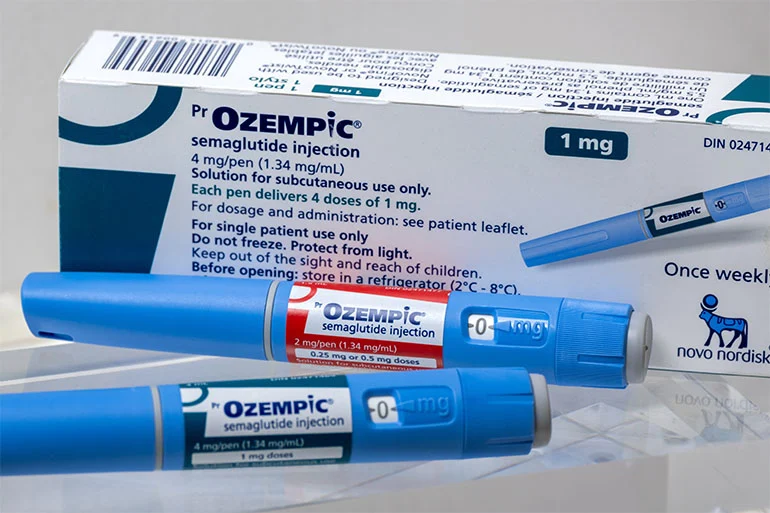
In a significant escalation of the ongoing battle over the burgeoning GLP-1 weight-loss drug market, pharmaceutical giant Novo Nordisk has initiated legal action against Hims & Hers Health, Inc., alleging patent infringement related to compounded versions of its blockbuster semaglutide medications, Wegovy and Ozempic. The lawsuit, filed on Monday, seeks a permanent injunction to prevent Hims & Hers from manufacturing and distributing these compounded drugs, underscoring Novo Nordisk’s resolute commitment to protecting its intellectual property and ensuring patient safety. This legal challenge follows a tumultuous period marked by fierce competition, regulatory scrutiny, and a brief, ill-fated collaboration between the two companies.
The immediate catalyst for the lawsuit was Hims & Hers’ recent announcement of a new compounded semaglutide pill, offered at a substantially lower price point than the brand-name alternatives. The online telehealth provider, known for its accessible treatments for conditions like erectile dysfunction and hair loss, touted the new oral formulation at an introductory price of $49 for the first month, rising to $99 per month thereafter. This pricing strategy positions Hims’ offering significantly below the typical retail cost of brand-name GLP-1s, and even cheaper than some other compounded versions available through platforms like TrumpRx, which lists Wegovy at $149 per month.
However, the rollout of Hims’ compounded pill quickly drew official attention. Just one day after its announcement, Mike Stuart, the top lawyer for the Department of Health and Human Services (HHS), publicly stated on X (formerly Twitter) that his office had referred Hims & Hers to the Justice Department. The referral cited potential violations of the Federal Food, Drug and Cosmetic (FD&C) Act, the primary federal law governing drug sales and safety in the United States. In a swift response, Hims & Hers posted on X that it would cease offering access to the treatment, seemingly bowing to regulatory pressure. Novo Nordisk’s lawsuit, filed shortly thereafter, adds another layer of legal and commercial complexity to the situation.
The Core of the Dispute: Patent Protection and Molecular Innovation
At the heart of Novo Nordisk’s legal challenge lies the protection of its patented semaglutide molecule. U.S. Patent No. 8,129,343 specifically safeguards the unique chemical structure of semaglutide, preventing any other entity from manufacturing this precise sequence of amino acids until its expiration in December 2031. Novo Nordisk’s lawsuit explicitly claims that Hims & Hers infringed upon this foundational patent by selling a pill containing semaglutide, regardless of its formulation method.
Beyond the active pharmaceutical ingredient itself, Novo Nordisk also holds proprietary technology crucial for the oral delivery of semaglutide. Semaglutide, a GLP-1 receptor agonist, is typically administered via injection. To enable an oral formulation, the drug must navigate the harsh acidic environment of the gastrointestinal tract without degradation by enzymes. Novo Nordisk achieved this with its patented sodium N-(8-[2-hydroxybenzoyl] amino) caprylate (SNAC) technology. SNAC works by creating a temporary, localized increase in pH, thereby neutralizing gastric acid and inhibiting pepsin activity. Critically, SNAC also induces a transient, non-covalent conformational change in the semaglutide molecule, allowing it to traverse the stomach lining and be absorbed into the bloodstream before enzymatic breakdown. This intricate mechanism is vital for the efficacy of oral semaglutide, as exemplified by Novo Nordisk’s Rybelsus.
Hims & Hers, in its attempt to offer an oral semaglutide pill without directly infringing on the SNAC patent, reportedly employed an alternative "liposomal technology." This method involves encasing the active drug ingredient in fatty bubbles, or liposomes, ostensibly to protect it from gastric degradation and facilitate absorption. However, Novo Nordisk’s lawsuit dismisses this approach as "untested and unproven." According to Novo Nordisk, if the liposomal technique is ineffective, the semaglutide would be digested before reaching the bloodstream, rendering the medicine inert and patients potentially "wasting their money." John F. Kuckelman, Senior Vice President, Group General Counsel, Global Legal, IP and Security at Novo Nordisk, articulated this concern, stating, "Hims & Hers is mass marketing unapproved knock-off versions of Wegovy and Ozempic that evade the FDA’s gold standard review process – that’s dangerous and deceptive to patients, and undermines the scientific innovation and regulatory rigor in place to ensure these treatments are safe and effective."
The Regulatory Minefield: Compounding and the FD&C Act
The controversy surrounding Hims’ compounded semaglutide pills highlights the complex regulatory landscape governing compounded drugs. Historically, compounding pharmacies have been allowed to create customized medications for individual patients when a commercially available drug is not suitable, for example, due to allergies or specific dosage requirements. However, this allowance typically operates under strict conditions and is not intended for mass production of drugs that are essentially copies of FDA-approved products.
A key "loophole" that many compounding pharmacies, including Hims & Hers, have exploited is the FDA’s official drug shortage list. When an FDA-approved drug is declared to be in short supply, compounding pharmacies are granted a temporary reprieve, allowing them to produce compounded versions to meet patient demand. Hims & Hers initially entered the GLP-1 market by selling compounded semaglutide injections in May 2023, leveraging the ongoing shortage of Wegovy and Ozempic.
However, the FDA officially declared the semaglutide shortage resolved in February 2024, providing a grace period for compounding pharmacies to cease production by April 22, 2024. This resolution effectively closed the legal window that had previously permitted the mass compounding of semaglutide. For Hims & Hers to launch a new compounded semaglutide pill in March 2024, particularly one using an unproven delivery method, after the shortage was officially resolved, raised significant red flags. Novo Nordisk argues that such a product, without the validated SNAC technology, constitutes a new and unapproved drug, falling squarely under the purview of the FD&C Act and requiring rigorous FDA review for safety and efficacy. This is precisely why the HHS’s Mike Stuart referred Hims & Hers to the Justice Department, setting the stage for potential federal enforcement actions.
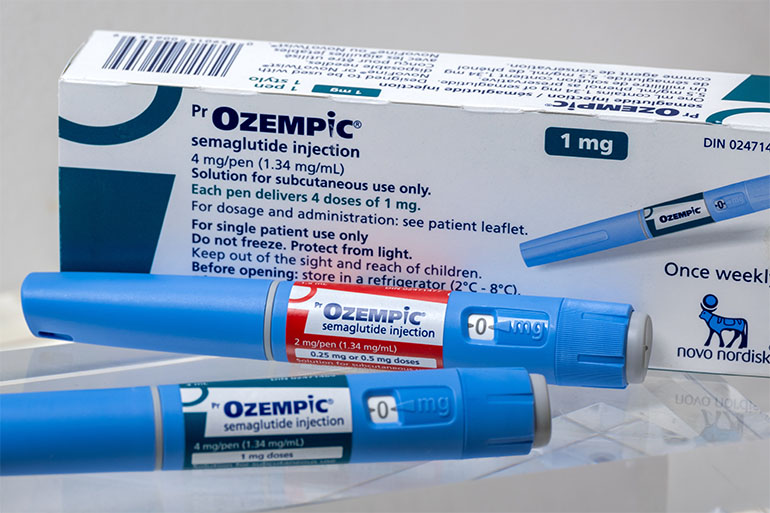
Novo Nordisk’s concerns extend beyond intellectual property to patient safety. The company has consistently warned that compounded versions of semaglutide may contain dangerous impurities or incorrect amounts of active ingredients. Its own testing, referenced in its legal statements, found that injectable semaglutide drugs compounded by pharmacies contained impurities of up to 86%. Such high levels of impurities could lead to unpredictable effects, reduced efficacy, or serious adverse reactions for patients. "We’ve taken legal action to protect the American public and our intellectual property and will continue to work with regulators, law enforcement, and other key stakeholders to ensure patients have access to FDA-approved, safe and effective medicines," Kuckelman emphasized.
A History of Tension and Brief Truce
The current lawsuit is not an isolated incident but the latest chapter in a protracted and often contentious relationship between Novo Nordisk and Hims & Hers. The timeline reveals a series of strategic maneuvers, public condemnations, and even a fleeting attempt at collaboration:
- May 2023: Hims & Hers announces its entry into the GLP-1 market, offering compounded semaglutide injections, leveraging the FDA’s shortage loophole. Ten days later, Novo Nordisk issues a public statement, without naming Hims & Hers directly, condemning compounded semaglutide drugs and signaling its intent to escalate legal actions to protect patients.
- February 2024: Hims & Hers airs a Super Bowl commercial advertising its semaglutide injections, a high-profile move to capture market share. The very next day, Novo Nordisk responds with a targeted print advertising campaign in The New York Times and USA Today, featuring a vial of compounded semaglutide and advising patients to "Check before you inject," implicitly questioning the safety of non-FDA-approved versions.
- April 2024: In a surprising turn, Novo Nordisk and Hims & Hers announce a "long-term collaboration" aimed at expanding affordable access to obesity care. The partnership allowed Hims & Hers members to access NovoCare Pharmacy, offering a bundled package of Wegovy and a Hims & Hers membership. Both companies expressed intentions to develop a roadmap for combining Novo Nordisk’s treatments with Hims & Hers’ ability to scale access to care.
- June 2024: The truce proves short-lived. Less than two months after its announcement, Novo Nordisk abruptly terminates the collaboration. The pharmaceutical giant publicly accused Hims & Hers of "illegally mass compounding their drugs under the false guise of personalization and using deceptive marketing," a clear indication of fundamental disagreements over business practices and regulatory compliance.
- November 2024: During its third-quarter earnings call, Hims & Hers announces that it is once again in discussions with Novo Nordisk to make brand-name Wegovy available through its online platform, suggesting a persistent desire for a legitimate partnership despite past acrimony.
- January 2025: Novo Nordisk officially launches its oral Wegovy pill (presumably Rybelsus or a new oral formulation of Wegovy), but Hims & Hers is conspicuously absent from the list of official partners, indicating that any renewed discussions did not materialize into a distribution agreement.
- March 2025 (Current Events): Hims & Hers announces its new compounded semaglutide pill, leading to the HHS referral, Hims’ withdrawal, and Novo Nordisk’s lawsuit.
This chronological narrative illustrates a pattern: Hims & Hers consistently pushes the boundaries of drug compounding and intellectual property, often met with swift and forceful resistance from Novo Nordisk, punctuated by a brief and ultimately failed attempt at mutual benefit.
Broader Implications: Innovation, Access, and the Future of GLP-1s
The lawsuit carries significant implications not just for Novo Nordisk and Hims & Hers, but for the entire pharmaceutical industry, the future of telehealth, and patients seeking affordable weight-loss solutions.
For Novo Nordisk: The company is defending a multi-billion-dollar franchise. Wegovy and Ozempic have become household names, driving substantial revenue growth for the Danish pharmaceutical giant. In 2023, Novo Nordisk reported sales of its GLP-1 diabetes and obesity drugs totaling approximately $18.5 billion, with Wegovy alone generating around $4.5 billion. Protecting the patents that underpin these drugs is paramount to sustaining innovation and recouping the enormous investments in research and development. A successful defense could deter other companies from attempting to create similar compounded versions, solidifying Novo Nordisk’s market dominance.
For Hims & Hers: The company’s business model relies on providing accessible, often lower-cost, generic or compounded versions of popular medications through its telehealth platform. Its foray into GLP-1s represents a strategic expansion into a highly lucrative market. If Novo Nordisk’s lawsuit prevails, it could severely curtail Hims & Hers’ ability to offer compounded GLP-1s, potentially impacting its growth trajectory and reputation as an affordable provider. The HHS referral to the Justice Department also signals a broader regulatory threat that could lead to significant fines or operational restrictions.
For the Compounding Pharmacy Industry: This case could set important precedents regarding the limits of pharmaceutical compounding, particularly when brand-name drugs are no longer in shortage. It may lead to increased scrutiny from regulatory bodies like the FDA and Justice Department, potentially tightening the rules around what constitutes legitimate compounding versus unauthorized mass production. The industry will be closely watching to understand the boundaries of intellectual property infringement in this context.
For Patients and the Market: The demand for GLP-1 drugs for weight loss and diabetes management is unprecedented. The global market for these drugs is projected to reach well over $100 billion in the coming years. High prices for brand-name drugs, often exceeding $1,000 per month without insurance, create a significant barrier to access for many. Companies like Hims & Hers attempt to fill this affordability gap, but their methods raise questions about safety, efficacy, and legal compliance. This lawsuit highlights the tension between pharmaceutical innovation (which relies on patent protection to fund R&D) and public access to affordable medications. Patients are left navigating a complex landscape where the promise of lower prices must be weighed against concerns about regulatory approval and drug quality.
The legal battle between Novo Nordisk and Hims & Hers is more than just a patent dispute; it is a microcosm of the larger challenges facing the pharmaceutical industry: how to balance the imperative of intellectual property protection with the growing demand for affordable healthcare, and how to ensure patient safety in an increasingly diverse and rapidly evolving market for prescription drugs. The outcome of this lawsuit will undoubtedly shape the future trajectory of the GLP-1 market and the role of compounding pharmacies within it.