

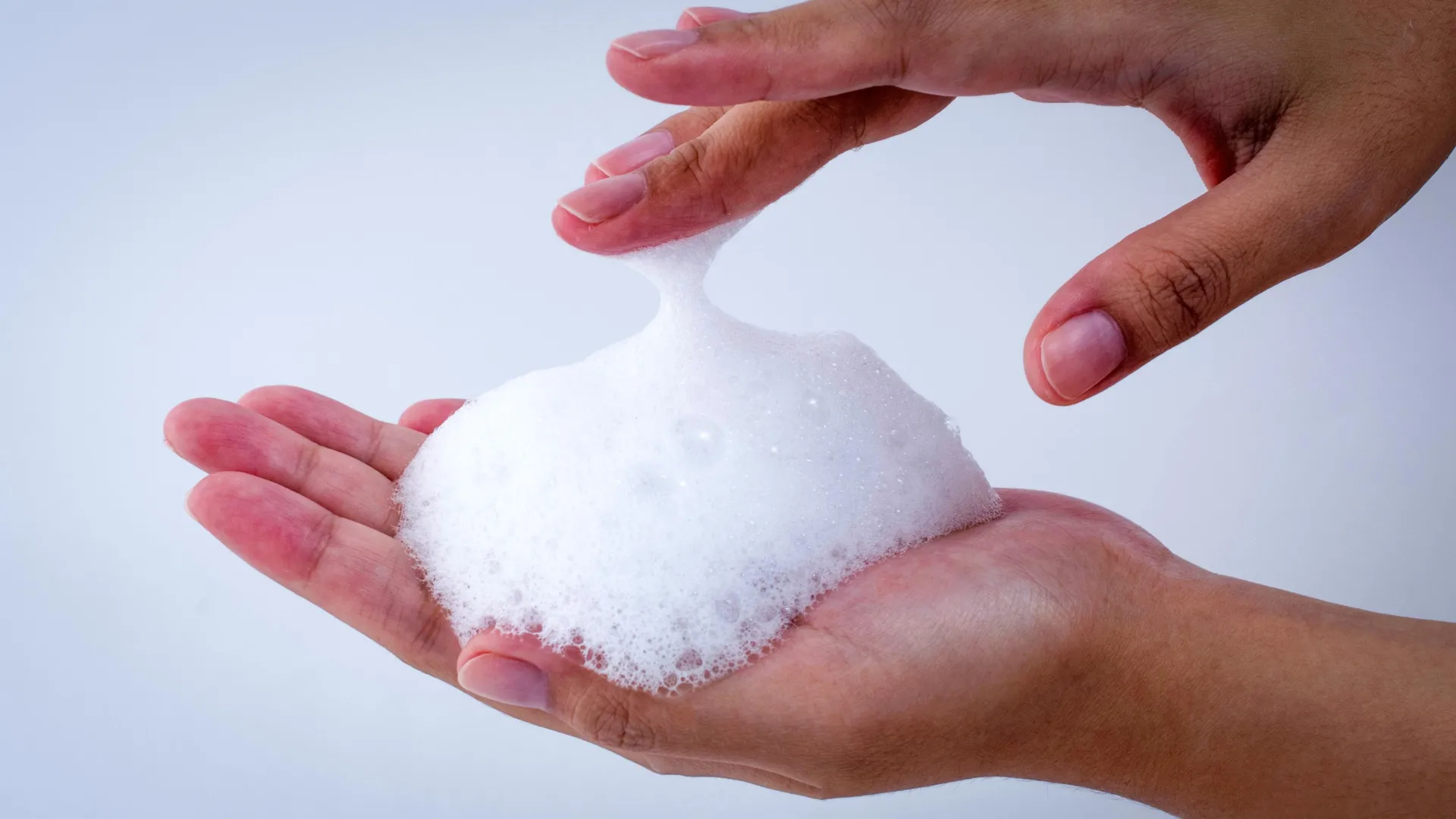
The common household experience of watching liquid seep out of a freshly sprayed cleaning foam or the head of a carbonated beverage has long hidden a scientific anomaly that has baffled physicists for decades. While the phenomenon of foam drainage—the process by which liquid travels through the complex network of bubbles—appears straightforward, the mathematical models used to predict it have been consistently inaccurate. Recent research led by Professor Rei Kurita at Tokyo Metropolitan University has finally identified the missing variable in this equation. By moving beyond static models and observing the internal movement of bubbles, the team discovered that foam drainage is not merely a matter of liquid flowing through a fixed structure but is instead governed by the pressure required to physically rearrange the bubbles themselves. This breakthrough, published following extensive experimental trials, provides a new framework for understanding soft matter and carries significant implications for industries ranging from fire safety to pharmaceuticals.
The Complex Architecture of Aqueous Foams
To understand why foam drainage has been such a persistent puzzle, one must first consider the unique structural properties of foams. A foam is a "soft material" composed of a high volume of gas trapped within a relatively small volume of liquid. This liquid forms a network of thin films and channels known as Plateau borders, named after the 19th-century Belgian physicist Joseph Plateau. These borders meet at junctions called vertices, creating a three-dimensional labyrinth through which liquid can move.
In industrial and scientific applications, the stability of this structure is paramount. In firefighting, for example, a foam must remain thick and liquid-rich to effectively smother a blaze. In the food industry, the texture of mousses and the longevity of beer heads depend on the foam’s ability to retain its liquid content. Despite these critical applications, scientists have struggled to explain why liquid begins to leak out of foams much sooner than theoretical physics suggests it should.
The Discrepancy: Theory Versus Reality
For years, the standard model for foam drainage was based on the concept of the "absorptive limit." This theory suggests that the drainage process is controlled by osmotic pressure—the energy change that occurs when bubbles are compressed and the surface area between the liquid and gas phases shifts. According to these traditional calculations, a foam must reach a certain critical height before the gravitational pull on the liquid overcomes the osmotic pressure holding it in place.
However, a massive gap existed between these calculations and real-world observations. When applying the standard osmotic pressure model, researchers found that a typical foam would theoretically need to be approximately one meter tall before any liquid began to drain from the bottom. In practical laboratory settings and everyday use, however, foams as short as 10 to 20 centimeters begin to leak almost immediately. This order-of-magnitude discrepancy suggested that the "absorptive limit" was either being calculated incorrectly or that a different physical force was at play entirely.
Chronology of the Tokyo Metropolitan University Study
The research team at Tokyo Metropolitan University, supported by the JSPS KAKENHI Grant Number 20H01874, set out to resolve this inconsistency through a series of controlled experiments. The project followed a structured timeline of observation, data collection, and theoretical refinement.
- Phase One: System Standardization: The team developed simple foam systems using various surfactants (substances that reduce surface tension). By varying the types of surfactants and the size of the bubbles, they created a diverse range of foams to ensure that their findings would be universal rather than specific to one chemical composition.
- Phase Two: Controlled Observation: The researchers placed these foams between two transparent, vertical plates. This setup allowed for high-resolution visual monitoring of the liquid’s movement and the structural integrity of the bubbles as gravity took effect.
- Phase Three: Data Correlation: The team measured the exact height at which liquid began to leak from the bottom of the foam across different liquid-to-gas ratios.
- Phase Four: Microscopic Analysis: Using high-speed video recording, the researchers zoomed in on the internal structure of the foam at the precise moment drainage commenced, looking for physical changes that traditional models had ignored.
Uncovering the Universal Pattern
As the team gathered data, a consistent and "universal" pattern emerged that challenged previous assumptions. They found that the height at which drainage begins is inversely proportional to the liquid content of the foam. This relationship held true regardless of the surfactant used or the initial size of the bubbles.
More importantly, the researchers calculated what they termed the "effective osmotic pressure"—the actual pressure observed during the experiments. They found that this value was significantly lower than the theoretical osmotic pressure predicted by surface tension and bubble size alone. This was the "smoking gun" that proved the old models were missing a fundamental mechanical process.
The Discovery of Yield Stress and Bubble Rearrangement
The breakthrough moment occurred during the analysis of the internal video footage. Traditional models treated the foam as a static "scaffold" through which liquid flowed like water through a pipe. However, Professor Kurita’s team observed that as liquid moved, it didn’t just pass through the channels; it exerted enough force to cause the bubbles themselves to shift, slide, and rearrange.
This led the researchers to identify "yield stress" as the true controlling factor of foam drainage. In physics, yield stress is the minimum amount of stress (pressure) required to make a material deform plastically or begin to flow. In the context of foam, the liquid cannot drain freely unless the pressure is high enough to overcome the structural resistance of the bubbles.
When the liquid content is high, the bubbles have more room to move, and the yield stress is lower, allowing for easier drainage. When the foam is "dry" (low liquid content), the bubbles are jammed together more tightly, creating higher yield stress and resisting drainage. By incorporating yield stress into their new mathematical model, the Tokyo Metropolitan University team was able to accurately predict the height at which various foams would begin to leak, finally closing the gap between theory and reality.
Scientific and Industrial Implications
The resolution of this puzzle is expected to have a ripple effect across several scientific disciplines and industrial sectors. Experts in rheology—the study of the flow of matter—suggest that this shift from a static to a dynamic understanding of foam structure is a paradigm shift.
Firefighting and Safety
In fire suppression, foam is used to create a barrier between fuel and oxygen. If the foam drains too quickly, the barrier thins and becomes ineffective. By understanding the yield stress of the bubble structure, chemical engineers can design firefighting foams with specific bubble geometries and surfactants that maximize yield stress, thereby keeping the liquid trapped within the foam for longer periods in high-heat environments.
Consumer Products and Food Science
The cosmetics and food industries rely heavily on foam stability. From shaving creams that must stay moist on the skin to whipped creams and aerated desserts that must maintain their volume, the ability to prevent "weeping" (drainage) is a key quality metric. This research provides manufacturers with a blueprint for creating more durable foams by manipulating the "effective osmotic pressure" through bubble size distribution.
Pharmaceutical Applications
Foams are increasingly used as vehicles for drug delivery, particularly for topical applications or in specialized medical procedures where a liquid might spread too thin. Ensuring that the active ingredients remain suspended within the foam structure until they reach the target site is essential for dosage accuracy.
Reactions from the Scientific Community
While formal peer reviews of the broader implications are ongoing, the initial reception of the Tokyo Metropolitan University study has been one of validation. Dr. Arisato Kawai, a researcher in soft matter physics (not involved in the study), noted that "the discrepancy between the 100-centimeter theoretical height and the 10-centimeter reality has been a nagging thorn in the side of foam rheology. By identifying bubble rearrangement as the culprit, Kurita’s team has reconciled a century of theory with modern observation."
Inferred industry reactions suggest a move toward new testing standards. Laboratory protocols that previously only measured surface tension may now begin to include yield stress testing for foam-based products to better predict shelf-life and performance.
A New Perspective on Soft Materials
The findings of Professor Rei Kurita and his team represent a significant step forward in the study of soft materials. By proving that foam is a dynamic system where the structure and the fluid are in a constant state of mutual influence, the research opens the door to new ways of manipulating matter at the microscopic level.
The study concludes that the "absorptive limit" of foam is not a fixed boundary defined by chemistry, but a flexible threshold defined by the mechanical movement of its parts. As scientists continue to explore the complexities of multi-phase systems, the Tokyo Metropolitan University study will likely serve as a foundational text for the next generation of materials science.
This research, supported by the Japanese government through JSPS KAKENHI, underscores the importance of fundamental physics in solving practical, real-world problems. As industries look to create more sustainable and efficient products, the humble bubble—and the way it moves—will remain at the center of innovation.















Leave a Reply