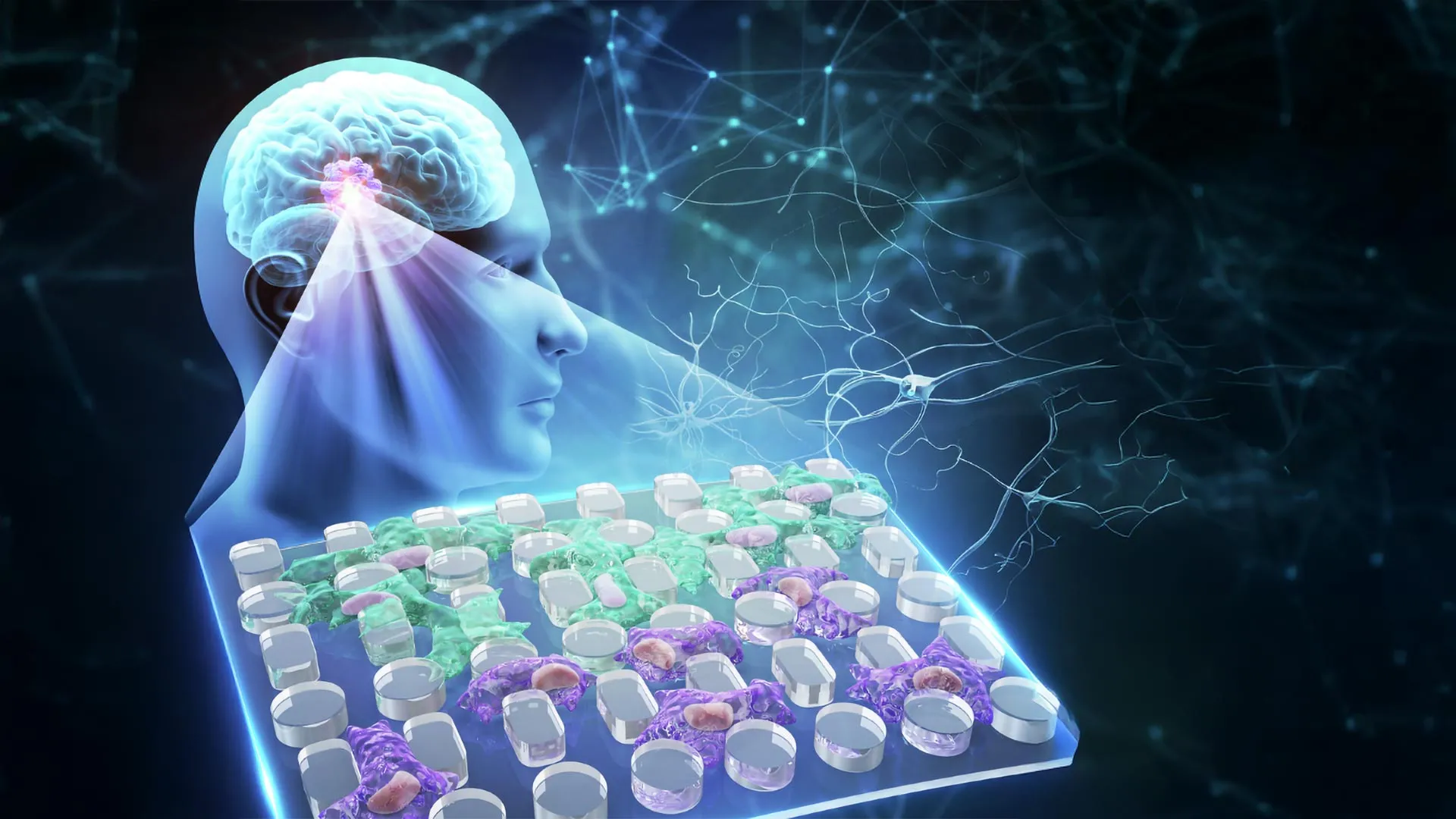
Researchers at Northwestern University have achieved a significant milestone in the field of neuromorphic engineering by developing printed artificial neurons capable of direct communication with biological brain cells. These flexible, low-cost electronic devices do not merely mimic the appearance of neural activity; they generate complex electrical signals that are functionally indistinguishable from those produced by living neurons. This compatibility allows the synthetic components to activate biological tissue, marking a transformative step toward the seamless integration of man-made electronics with the human nervous system.
The study, published on April 15 in the prestigious journal Nature Nanotechnology, details a breakthrough in materials science and bioelectronics. Led by Mark C. Hersam, the Walter P. Murphy Professor of Materials Science and Engineering at Northwestern’s McCormick School of Engineering, the research team utilized advanced printing techniques to create devices that replicate the "spiking" behavior of the brain. By successfully triggering responses in mouse brain slices, the team has demonstrated a level of biological integration that was previously considered a significant hurdle in the development of neuroprosthetics and brain-machine interfaces.
The Engineering of Synthetic Synaptic Complexity
The fundamental challenge in creating artificial neurons lies in the complexity of biological signals. Traditional silicon-based electronics operate on a binary logic—on or off—and are housed on rigid, two-dimensional chips. In contrast, biological neurons are three-dimensional, flexible, and capable of producing a vast array of signaling patterns, including single spikes, rhythmic bursts, and continuous firing.
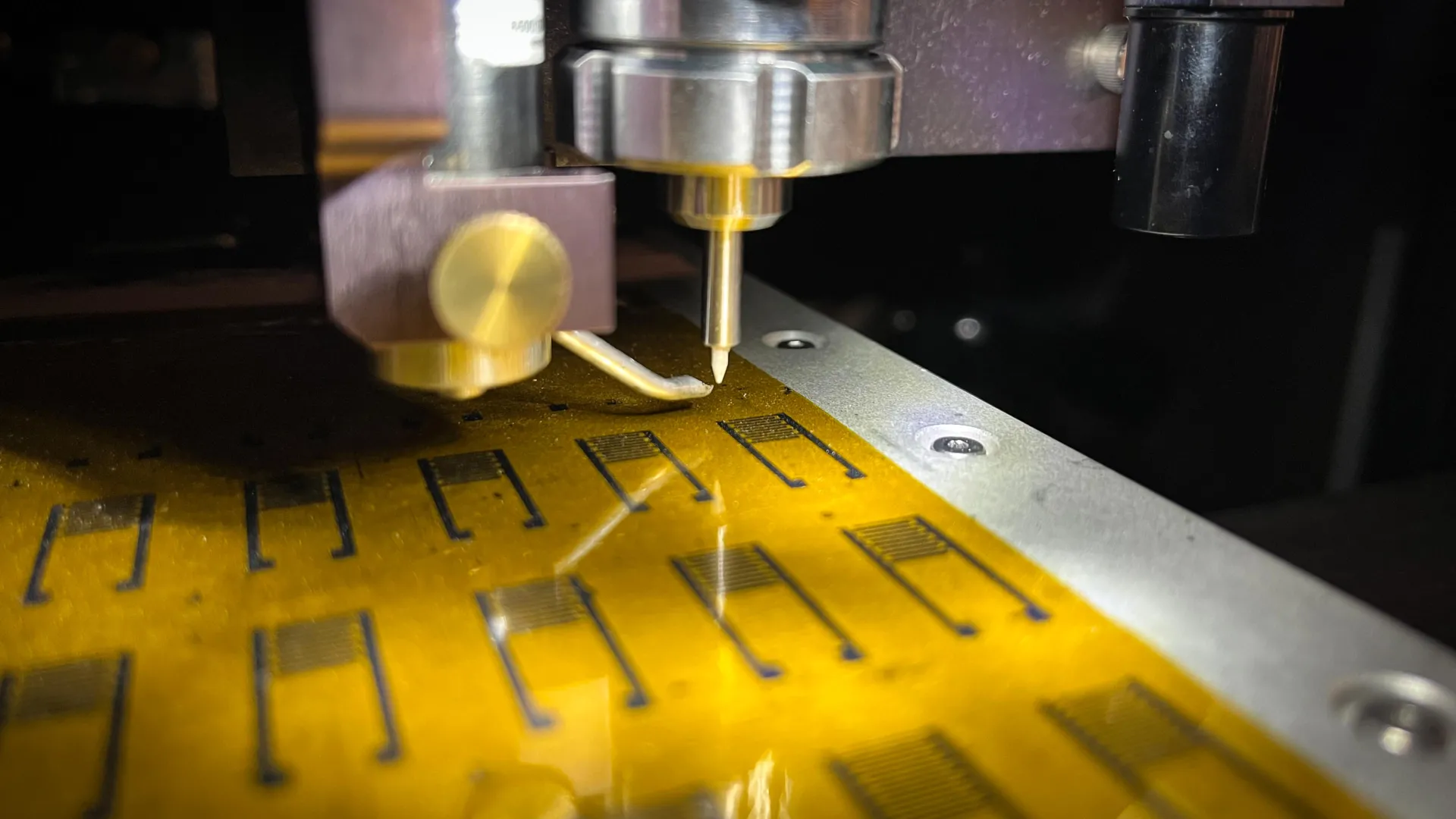
To replicate this behavior, the Northwestern team turned to two-dimensional materials: molybdenum disulfide (MoS2) and graphene. MoS2, a transition metal dichalcogenide, acts as a semiconductor at the nanoscale, while graphene serves as a highly efficient electrical conductor. These materials were processed into electronic "inks" and deposited onto flexible polymer surfaces using aerosol jet printing.
A key innovation in this study involved the strategic use of polymers within the ink. In previous iterations of printed electronics, polymers were often viewed as impurities that hindered electrical performance and were typically removed after the printing process. However, Hersam and his colleagues discovered that by only partially decomposing these polymers, they could create a "memristive" effect. When an electrical current is passed through the device, the remaining polymer undergoes further localized decomposition, forming a narrow conductive filament. This filament constricts the current, resulting in a sudden electrical discharge that mirrors the "all-or-nothing" firing of a biological neuron.
Bridging the Biological Divide: Experiments with Mouse Brain Tissue
The functional utility of these printed neurons was validated through a collaboration with Indira M. Raman, the Bill and Gayle Cook Professor of Neurobiology at Northwestern’s Weinberg College of Arts and Sciences. Raman’s team conducted experiments using ex vivo slices of a mouse cerebellum, a region of the brain responsible for motor control and sensory perception.
When the artificial neurons were connected to the mouse brain tissue, the synthetic signals successfully activated the biological circuits. The researchers noted that the timing, duration, and shape of the artificial spikes were within the precise temporal range required for biological recognition.
"Other labs have tried to make artificial neurons with organic materials, and they spiked too slowly," Hersam explained. "Or they used metal oxides, which are too fast. We are within a temporal range that was not previously demonstrated for artificial neurons." This "sweet spot" in signaling speed is critical; if an artificial signal is too fast or too slow, the biological neuron will fail to recognize it as a legitimate stimulus, rendering the interface useless.
Addressing the Energy Crisis in Artificial Intelligence
Beyond medical applications, this research addresses a growing crisis in the global technology sector: the massive energy consumption of modern artificial intelligence (AI). Current AI models, such as large language models and generative neural networks, are trained on massive datasets using traditional silicon hardware. This process is exceptionally resource-intensive.
According to Hersam, the brain is approximately five orders of magnitude more energy-efficient than a digital computer. While a human brain operates on about 20 watts of power—roughly the amount needed for a dim lightbulb—modern data centers require gigawatts of electricity.
"The world we live in today is dominated by artificial intelligence," Hersam stated. "The way you make AI smarter is by training it on more and more data. This data-intensive training leads to a massive power-consumption problem. Therefore, we have to come up with more efficient hardware to handle big data and AI."
The energy demand is so severe that tech giants are increasingly exploring dedicated nuclear power plants to fuel their data centers. Furthermore, the heat generated by these centers requires millions of gallons of water for cooling, placing a strain on local ecosystems and water supplies. By moving toward brain-inspired (neuromorphic) hardware, which uses fewer components to perform complex tasks, the industry could potentially scale AI capabilities without the catastrophic environmental footprint associated with current silicon architectures.
A Comparison of Architectures: Silicon vs. The Brain
The limitations of silicon stem from its rigidity. In a standard computer chip, billions of identical transistors are etched into a fixed pattern. Once manufactured, the hardware cannot change its physical structure to adapt to new information.
The brain operates on the principle of plasticity. It is a heterogeneous, three-dimensional network where connections (synapses) are constantly being formed, strengthened, or pruned based on experience. The Northwestern study attempts to bring this dynamism to electronics. Because the printed artificial neurons can produce complex, multi-order signaling patterns on their own, a single device can do the work that would require a large network of traditional transistors. This reduction in component count leads directly to lower energy consumption and a smaller physical footprint.
The additive manufacturing process used—aerosol jet printing—also offers a sustainable alternative to traditional semiconductor fabrication. Traditional "subtractive" manufacturing involves layering materials and then etching away what is not needed, creating significant chemical waste. Additive printing only places material where it is required, making the process both cost-effective and environmentally friendly.
Clinical and Industrial Implications
The successful interaction between synthetic neurons and living tissue opens several avenues for future medical treatments. Potential applications include:
- Neuroprosthetics: Implants that could restore sensory functions, such as hearing or vision, by translating external stimuli into electrical signals that the brain can understand.
- Motor Recovery: Devices that bypass damaged spinal cord sections to transmit signals from the brain directly to muscles or prosthetic limbs.
- Treatment of Neurological Disorders: Deep-brain stimulation devices that could more accurately mimic natural neural rhythms to treat conditions like Parkinson’s disease or epilepsy.
From an industrial standpoint, the ability to print these neurons on flexible substrates means they could be integrated into "smart" bandages, wearable health monitors, or even soft robotics. The flexibility of the materials ensures that they can conform to the irregular shapes of biological organs without causing the inflammation or scarring often associated with rigid silicon implants.
Chronology of Development and Future Outlook
The development of these printed neurons is the result of years of interdisciplinary research at Northwestern, supported by the National Science Foundation (NSF). The project co-led by Vinod K. Sangwan, a research associate professor, represents a culmination of work in two-dimensional materials and neuromorphic engineering.
The timeline for this technology suggests a transition from laboratory validation to prototype development over the next several years. While the current study focused on mouse brain tissue, the next phase of research will likely involve in vivo testing—monitoring how these artificial neurons perform within a living organism over extended periods.
Researchers will also need to address the long-term stability of the MoS2 and graphene "inks" within the saline-rich environment of the human body. Ensuring that the devices do not degrade or trigger an immune response remains a primary focus for the team as they move toward potential clinical trials.
The implications of this work extend far beyond the laboratory. As the limitations of Moore’s Law—the observation that the number of transistors on a microchip doubles about every two years—become more apparent, the shift toward neuromorphic computing appears inevitable. By looking to the brain as the ultimate blueprint for efficiency, the engineers at Northwestern have provided a roadmap for a future where technology and biology are no longer separate entities, but a single, integrated system capable of addressing the most pressing challenges in medicine and computing.