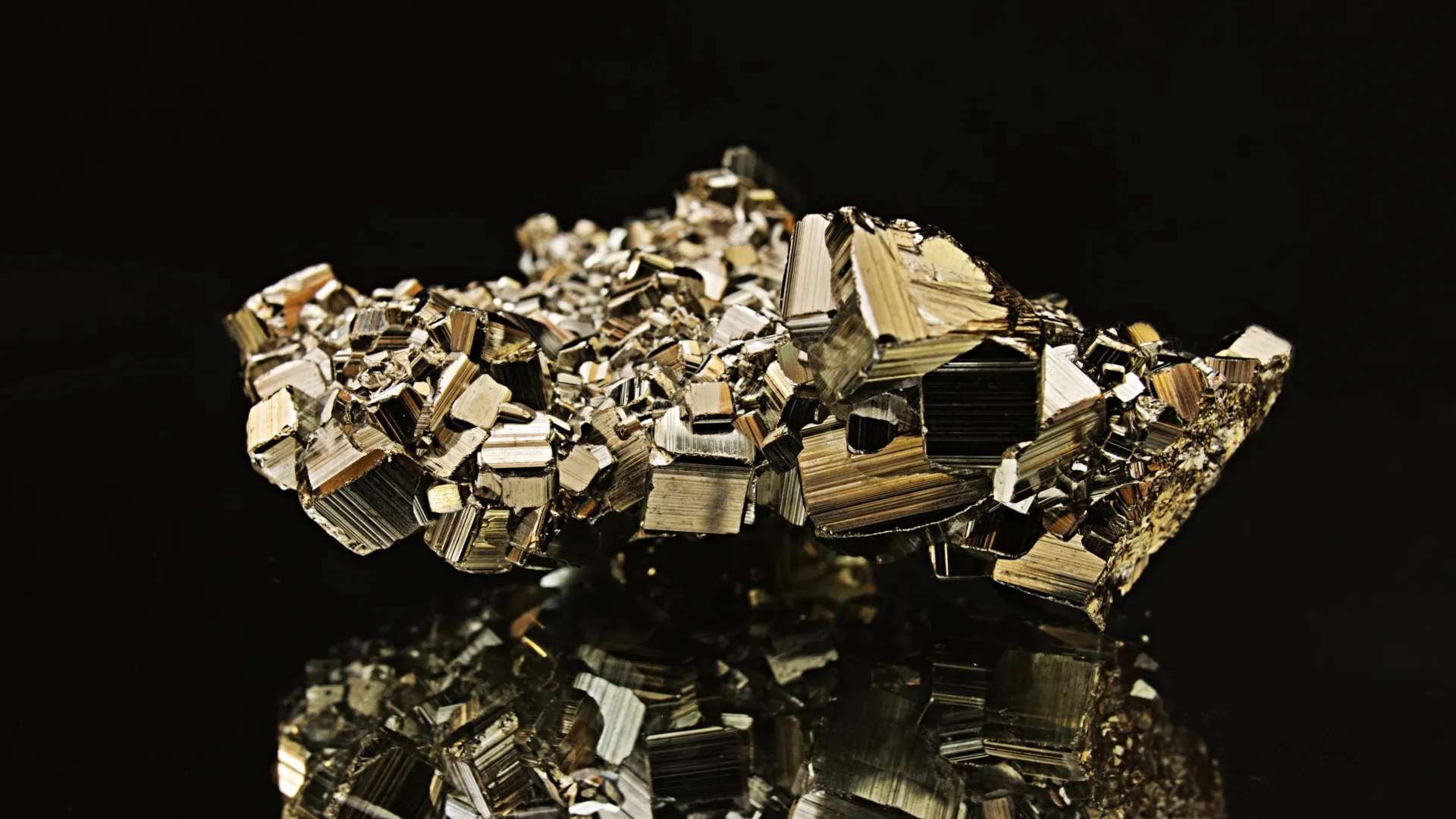
The global race to secure a steady supply of critical minerals has taken an unexpected turn following a groundbreaking discovery by a research team at West Virginia University. Scientists have identified significant concentrations of lithium within pyrite, a common iron sulfide mineral often referred to as "fool’s gold," located in the sedimentary rock formations of the Appalachian Basin. This finding, presented at the European Geosciences Union (EGU) General Assembly 2024, suggests that organic-rich shale could serve as a previously overlooked source of the "white gold" essential for the modern battery industry.
As the world pivots toward decarbonization, lithium has become one of the most sought-after elements on Earth. It is the primary component in lithium-ion batteries, which power the vast majority of consumer electronics, electric vehicles (EVs), and grid-scale energy storage systems. However, the traditional methods of lithium extraction—hard-rock mining and brine evaporation—carry significant environmental footprints and are concentrated in a handful of geographic regions. The revelation that lithium can be found in pyrite within ancient shale formations offers a potential pathway toward a more sustainable and domestically secure mineral supply chain.
The Chemistry and Volatility of a Critical Element
To understand the significance of the West Virginia University study, one must first consider the unique properties of lithium. As the lightest metal on the periodic table, lithium possesses a high electrochemical potential, making it an ideal medium for energy storage. Its ability to lose its outermost electron easily allows for the efficient flow of current within a battery cell.
However, this high reactivity is a double-edged sword. Lithium is highly unstable in its pure form; when exposed to air or water, it can ignite or undergo violent chemical reactions. This is why airlines and regulatory bodies maintain strict protocols regarding the transport of lithium-ion batteries. If a battery is damaged or subjected to extreme heat, it can enter a state of "thermal runaway," where the internal chemistry generates more heat than it can dissipate, leading to fires that are notoriously difficult to extinguish.
Despite these risks, the utility of lithium is unparalleled in the current technological landscape. In a lithium-ion battery, lithium ions move from the negative electrode (anode) to the positive electrode (cathode) during discharge and back again during charging. This reversible process is the backbone of the renewable energy transition, enabling the intermittent power generated by solar panels and wind turbines to be stored for use when the sun is not shining or the wind is not blowing.
A New Frontier in the Appalachian Basin
The research team, led by Shailee Bhattacharya, a sedimentary geochemist and doctoral student, and Professor Shikha Sharma at the IsoBioGeM Lab, focused their investigation on the Middle-Devonian shale of the Appalachian Basin. These rocks were formed approximately 380 million years ago during a period when much of the eastern United States was submerged under a shallow inland sea.
Shale is a fine-grained sedimentary rock characterized by its high organic content. Over millions of years, the accumulation of organic matter and minerals in oxygen-poor environments led to the formation of various sulfide minerals, including pyrite. While pyrite has long been dismissed as a nuisance or a byproduct of coal and gas extraction, the WVU team’s analysis of 15 samples revealed a startling anomaly: the pyrite crystals contained a measurable and significant amount of lithium.
"I am trying to understand how lithium and pyrite could be associated with one another," Bhattacharya stated during the presentation of the findings. She described the discovery as "unheard of," noting that geological literature has rarely, if ever, linked lithium—an alkali metal—with sulfur-rich minerals like pyrite. Traditionally, lithium is found in pegmatites (igneous rocks) or concentrated in salars (salt flats). The presence of lithium in a sulfide mineral suggests a complex geochemical interaction that science is only beginning to map.
The Global Lithium Supply Gap
The discovery comes at a critical juncture for the global economy. According to the International Energy Agency (IEA), the world could face a lithium shortage as early as 2025 if new production capacity does not come online. The demand for lithium is projected to grow by over 40 times by 2040, driven almost entirely by the adoption of electric vehicles.
Currently, the "Lithium Triangle"—comprising Argentina, Bolivia, and Chile—holds the world’s largest brine deposits, while Australia is the leading producer of lithium from hard-rock spodumene. China dominates the processing and refining stages of the supply chain. This geographic concentration has raised concerns among Western policymakers regarding energy security and the vulnerability of supply chains to geopolitical tensions.
In the United States, the Biden administration has invoked the Defense Production Act and implemented the Inflation Reduction Act (IRA) to incentivize domestic mining and processing of critical minerals. If the Appalachian shale formations prove to be a viable source of lithium, it could significantly bolster U.S. efforts to achieve mineral independence.
Chronology of the Lithium Rush and Recent Breakthroughs
The evolution of lithium as a strategic asset has moved rapidly over the last several decades:
- 1991: Sony commercializes the first lithium-ion battery, revolutionizing portable electronics.
- 2010s: The rise of Tesla and the global push for EVs move lithium from a niche industrial chemical to a critical strategic mineral.
- 2020-2022: Lithium prices skyrocket by over 400% as automakers scramble to secure long-term supply contracts.
- 2023: Geologists begin looking toward "unconventional" sources, including geothermal brines in the Salton Sea and volcanic clays in the McDermitt Caldera on the Nevada-Oregon border.
- 2024: The WVU study identifies lithium in pyrite, opening the door to recovering the metal from industrial waste and shale cuttings.
Environmental Implications and the Circular Economy
One of the most compelling aspects of the WVU research is the potential for "re-mining." The Appalachian Basin has been a hub for industrial activity—specifically coal mining and natural gas hydraulic fracturing—for over a century. These activities have produced vast quantities of waste material, such as mine tailings and drill cuttings.
Recovering lithium from these existing waste streams could provide a "double win" for the environment. First, it would reduce the need for new, large-scale open-pit mines, which often face stiff local opposition due to their impact on landscapes and water resources. Second, it would turn hazardous or unsightly industrial waste into a valuable resource, embodying the principles of a circular economy.
"We can talk about sustainable energy without using a lot of energy resources," Bhattacharya noted. By extracting lithium from materials that have already been brought to the surface by previous industrial operations, the carbon footprint associated with the "front end" of the battery supply chain could be dramatically lowered.
Technical Challenges and Future Outlook
Despite the excitement surrounding the discovery, experts caution that several hurdles remain before "fool’s gold" can be transformed into battery-grade lithium. The study was "well-specific," meaning the results were derived from a limited geographic area within the Appalachian Basin. It remains to be seen if the lithium-pyrite association is a regional fluke or a widespread geological phenomenon.
Furthermore, the metallurgical process for extracting lithium from pyrite has not yet been developed on a commercial scale. Pyrite is chemically distinct from the silicate minerals (like spodumene) usually targeted for lithium extraction. Developing a cost-effective and low-emission method to separate lithium from iron sulfide will require significant investment in chemical engineering and materials science.
However, the intersection of this discovery with emerging battery technologies is noteworthy. Researchers are currently developing lithium-sulfur batteries, which promise higher energy densities and lower costs than traditional lithium-ion designs. The fact that lithium and sulfur-rich pyrite are found together in nature may provide new insights into the chemical synergies that could be exploited in future battery architectures.
A Paradigm Shift in Geochemistry
The findings by the West Virginia University team challenge long-held assumptions in the field of geochemistry. For decades, the search for lithium was confined to specific geological "playbooks." This discovery suggests that the Earth’s crust may hold lithium in a variety of mineralogical hosts that have yet to be explored.
As the energy transition accelerates, the definition of a "resource" is being rewritten. What was once considered waste—the shale cuttings from a gas well or the tailings from a coal mine—may hold the key to the next generation of clean technology. The study by Bhattacharya and Sharma serves as a reminder that even in well-studied regions like the Appalachian Basin, there are still scientific mysteries that, once solved, could have a profound impact on the global economy and the health of the planet.
For now, the focus shifts to broader sampling and pilot-scale testing. If the presence of lithium in pyrite is confirmed across other shale basins, such as the Marcellus or the Permian, the global map of lithium production could be redrawn, placing the United States at the center of a new, more sustainable mineral revolution.