

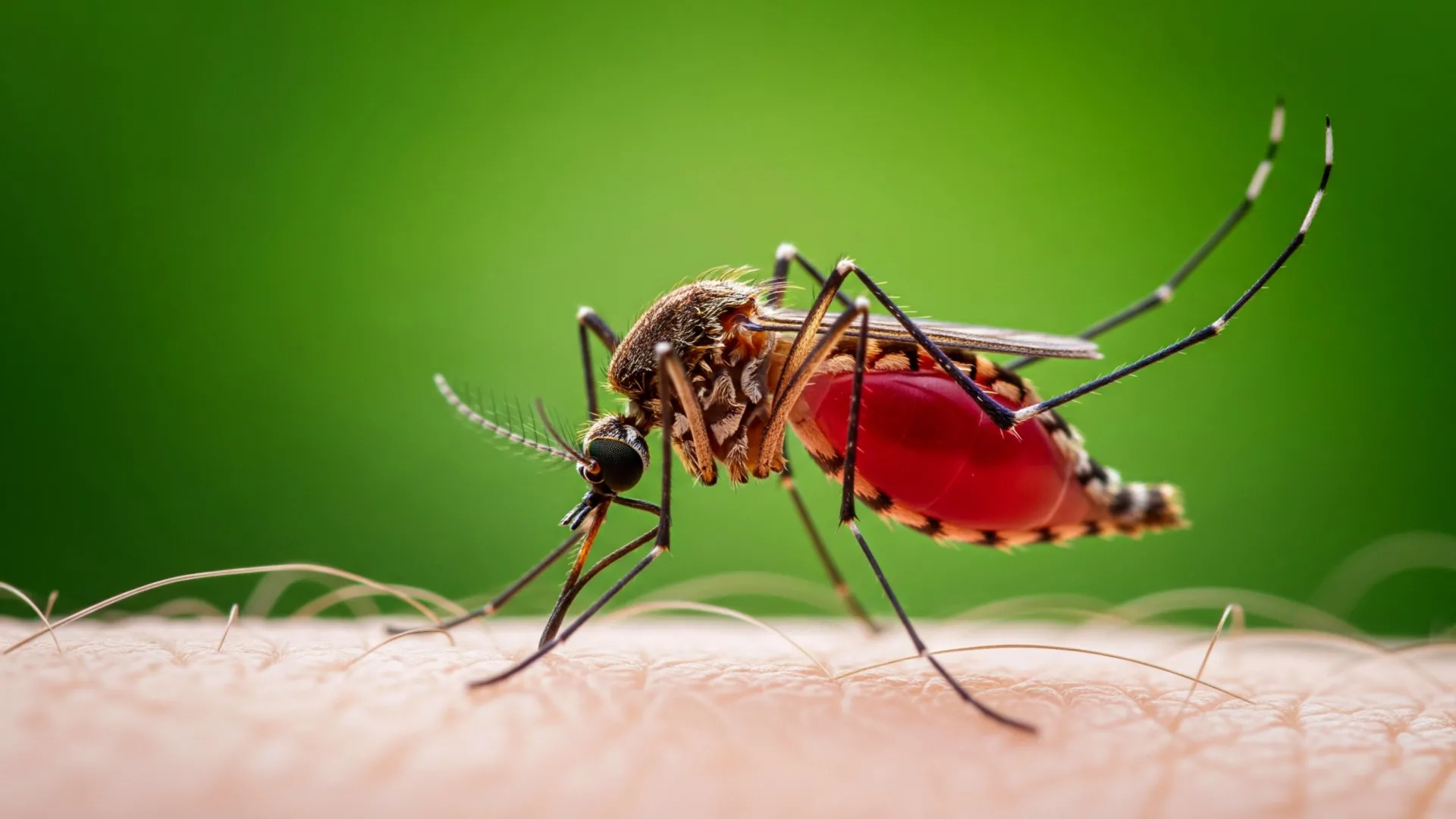
Every cell of the deadly malaria-causing parasite Plasmodium falciparum contains a tiny compartment packed with microscopic iron crystals. While the parasite is alive, these crystals are in constant motion. They whirl, bounce, and collide within their confined space like loose change shaking violently in a machine, moving so quickly and unpredictably that standard scientific tools have struggled to track them. When the parasite dies, however, the motion immediately stops. These iron crystals have long been a key focus for antimalarial drugs, yet their unusual movement has puzzled scientists since it was first observed. Now, researchers at the University of Utah have uncovered the mechanism behind this strange behavior, revealing that the crystals are driven by a chemical reaction remarkably similar to the one used to power rockets. This groundbreaking discovery could pave the way for novel malaria treatments and inspire significant advances in the field of microscopic robotic technology. The findings were published in the prestigious journal PNAS.
Unraveling the Mystery of Crystal Propulsion
For decades, the enigmatic movement of these iron crystals, known as hemozoin, within the malaria parasite has been a significant blind spot in parasitology. "People don’t talk about what they don’t understand, and because the motion of these crystals is so mysterious and bizarre, it’s been a blind spot for parasitology for decades," stated Paul Sigala, PhD, associate professor of biochemistry in the Spencer Fox Eccles School of Medicine (SFESOM) at the University of Utah, highlighting the long-standing scientific curiosity surrounding this phenomenon.
The research team, led by Dr. Sigala, identified that the crystals, composed of an iron-containing compound called heme, are propelled by the decomposition of hydrogen peroxide into water and oxygen. This reaction, a fundamental process in chemistry, releases a burst of energy that acts as the driving force behind the crystals’ ceaseless activity.
Rocket-Like Chemistry in a Biological System
The propulsion mechanism identified by the University of Utah team is a well-established principle in aerospace engineering. Hydrogen peroxide has been a staple rocket fuel, utilized for its efficient decomposition and the resulting thrust. However, its presence and function as a biological propulsion system within a living organism had never before been documented.
"This hydrogen peroxide decomposition has been used to power large-scale rockets," explained Erica Hastings, PhD, a postdoctoral fellow in biochemistry in the SFESOM and a lead author on the study. "But I don’t think it has ever been observed in biological systems."
Hydrogen peroxide is naturally present within the specialized compartment that houses the hemozoin crystals. The malaria parasite, Plasmodium falciparum, produces hydrogen peroxide as a byproduct of its metabolic processes. This readily available chemical and its inherent reactive properties made it a prime candidate for the energy source powering the crystal movement. Through rigorous experimentation, the researchers confirmed their hypothesis. They demonstrated that isolated crystals, when exposed to hydrogen peroxide outside of the parasite, exhibited similar spinning motions, validating the chemical reaction as the direct cause.
Further supporting evidence came from experiments conducted under controlled environmental conditions. When parasites were cultivated in low-oxygen environments, a condition known to reduce hydrogen peroxide production, the hemozoin crystals significantly slowed down, moving at approximately half their usual speed. This occurred even though the parasites themselves remained otherwise healthy, underscoring the critical role of hydrogen peroxide in sustaining crystal motility.
The Evolutionary Advantage: Why Crystal Motion Matters for Parasite Survival
The persistent dynamism of these hemozoin crystals is not merely a biological curiosity; it appears to confer significant survival advantages to the malaria parasite. Researchers propose two primary explanations for this crucial role.
One compelling theory centers on the management of hydrogen peroxide itself. Hydrogen peroxide is a highly reactive and potentially toxic molecule. The constant spinning and collision of the hemozoin crystals within their confined space may serve as a sophisticated mechanism for safely breaking down excess hydrogen peroxide. This process could mitigate the risk of cellular damage that would otherwise arise from harmful chemical reactions. By neutralizing this toxic byproduct, the parasite effectively shields its internal machinery from self-inflicted harm.
Dr. Sigala offered another potential benefit of the crystal’s perpetual motion. He suggests that the movement may prevent the hemozoin crystals from aggregating or clumping together. Hemozoin crystals form as a way for the parasite to detoxify heme, a toxic byproduct of hemoglobin digestion, by converting it into inert crystals. If these crystals were to clump, their surface area available for processing additional heme would be drastically reduced. This would, in turn, limit the parasite’s capacity to store heme and potentially hinder its overall metabolic efficiency. By maintaining a state of constant motion, the parasite ensures that its hemozoin crystals remain dispersed and optimally functional for heme detoxification.
Implications for Novel Therapeutics and Nanotechnology
The discovery of self-propelled metallic nanoparticles within a biological system opens up a wealth of possibilities, both in the realm of medicine and advanced technology. The researchers posit that these spinning hemozoin crystals represent the first known example of such a phenomenon in nature, and they suspect that similar mechanisms might be at play in other biological contexts yet to be explored.
Revolutionizing Malaria Treatment Strategies
The unique propulsion mechanism of hemozoin crystals presents an exceptionally attractive target for the development of new antimalarial drugs. Because this chemical process is specific to the parasite and does not exist in human cells, drugs designed to interfere with it are less likely to cause harmful side effects in patients.
"We think that the breakdown of hydrogen peroxide likely makes an important contribution to reducing cellular stress," Dr. Sigala explained. "If there are ways to block the chemistry at the crystal surface, that alone might be sufficient to kill parasites."
Dr. Hastings further elaborated on the therapeutic potential: "If we target a drug to an area that’s very different from human cells, then it’s probably not going to have extreme side effects. If we can define how this parasite is different from our bodies, it gives us access to new directions for medications." This approach aligns with the modern pharmaceutical paradigm of seeking highly selective drug targets to maximize efficacy and minimize toxicity.
Inspiring the Future of Nanotechnology
Beyond medical applications, the findings have significant implications for the field of nanotechnology, particularly in the design of microscopic robots. The concept of self-propelling nanoparticles, as demonstrated by the hemozoin crystals, offers valuable insights for engineers developing advanced nano-engineered systems.
"Nano-engineered self-propelling particles can be used for a variety of industrial and drug delivery applications, and we think there are potential insights that will come from these results," Dr. Sigala noted. The ability of these biological nanoparticles to generate their own motive force within a confined environment could inspire the development of more efficient and autonomous microscopic robots for applications ranging from targeted drug delivery within the human body to complex industrial processes.
A Deeper Dive into the Research and its Context
The journey to this discovery involved meticulous observation and sophisticated experimentation. The Plasmodium falciparum parasite, a single-celled organism responsible for the most severe form of malaria, infects red blood cells. Within these infected cells, the parasite digests hemoglobin to obtain essential amino acids. This digestion process releases large quantities of heme, a toxic molecule that must be neutralized. The parasite’s solution is to crystallize this heme into an inert pigment called hemozoin, commonly referred to as malaria pigment.
Historically, the presence of hemozoin crystals has been a hallmark of malaria infection. Antimalarial drugs have often targeted the parasite’s ability to digest hemoglobin or its processes of heme detoxification. However, the dynamic nature of these crystals, a phenomenon largely overlooked due to its perplexing behavior, remained an enigma until now.
The research team employed advanced microscopy techniques and biochemical assays to meticulously dissect the process. By manipulating the parasite’s environment, particularly oxygen levels, and observing the subsequent changes in crystal movement, they were able to isolate the causal relationship between hydrogen peroxide and crystal propulsion. The confirmation of this mechanism through in-vitro experiments with isolated crystals further solidified their findings.
Broader Scientific and Medical Significance
The publication of "Chemical propulsion of hemozoin crystal motion in malaria parasites" in PNAS signifies a major advancement in our understanding of parasitic biology and has garnered attention from researchers across disciplines. The National Institutes of Health (NIH), through several grant numbers including R35GM133764, R21AI185746, R35GM14749, and T32AI055434, provided crucial funding for this research, underscoring its perceived importance. Additional support from the Utah Center for Iron & Heme Disorders (grant number U54DK110858), the Price College of Engineering at the University of Utah, and the 3i Initiative at University of Utah Health further facilitated this pioneering work.
This discovery not only offers a fresh perspective on a long-standing biological puzzle but also presents a tangible path forward for combating a disease that continues to claim hundreds of thousands of lives annually. The World Health Organization (WHO) reported approximately 249 million malaria cases and 608,000 malaria deaths in 2022, with children under five years of age accounting for 95% of cases and 96% of deaths in the WHO African Region. Therefore, the development of novel, effective, and safe treatments is of paramount global health importance.
The insights gained from studying these microscopic spinning crystals could lead to a new generation of antimalarial drugs that exploit this unique parasitic vulnerability. Simultaneously, the inspiration drawn for nanotechnology could accelerate the development of innovative microscopic devices with far-reaching applications. The scientific community will undoubtedly be watching closely as this research unfolds, anticipating the transformative impact it may have on human health and technological advancement.















Leave a Reply