

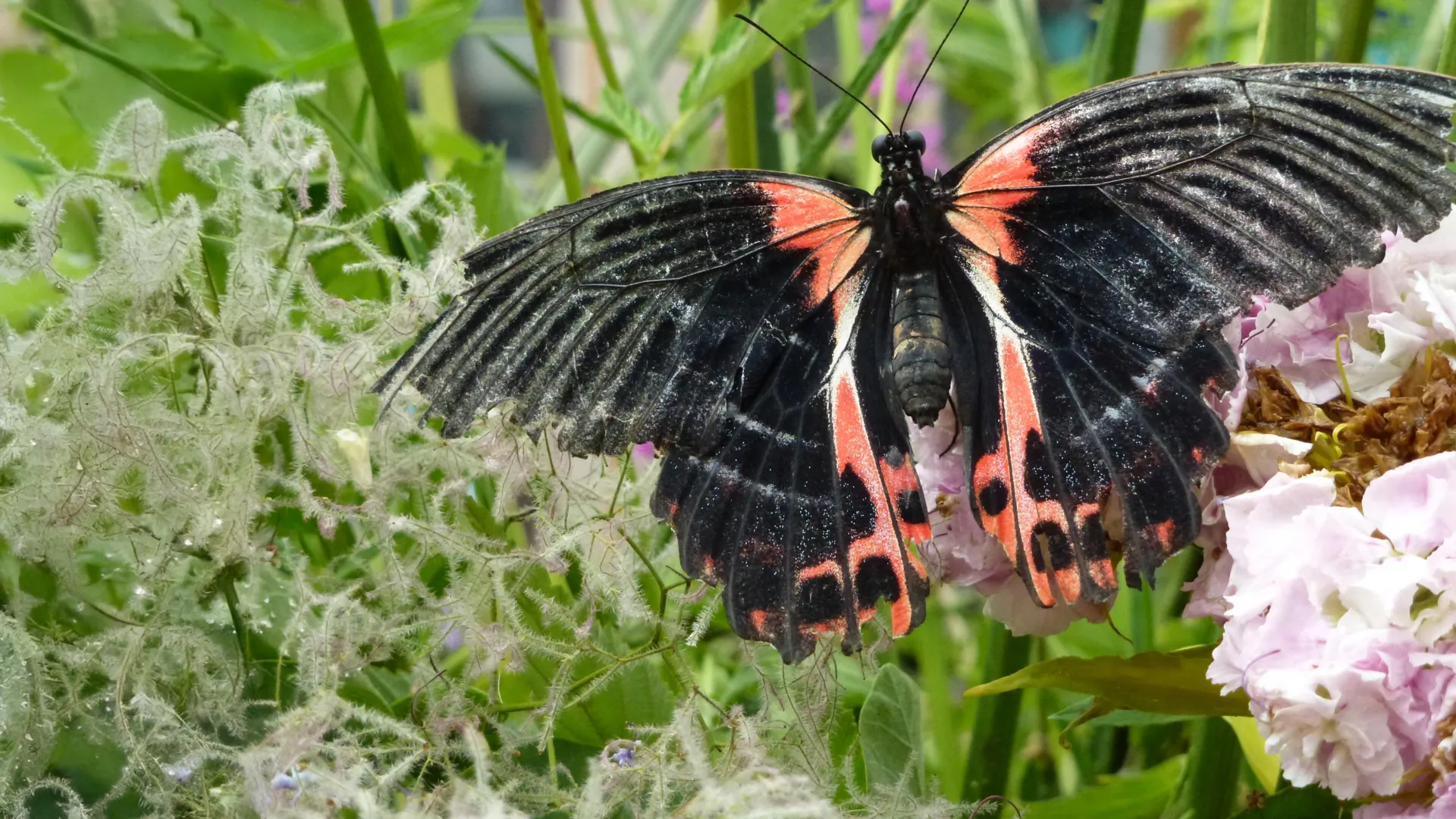
Scientists have uncovered evidence that evolution has relied on the same genetic "cheat sheet" for more than 120 million years, raising the possibility that life on Earth may be more predictable than once believed. This groundbreaking discovery, emanating from an international research effort, sheds new light on the mechanisms of convergent evolution and suggests that biological innovation is not always a wild, unpredictable leap into the unknown, but rather a process that often revisits and refines existing genetic pathways.
The research, spearheaded by a collaborative team from the University of York and the prestigious Wellcome Sanger Institute, delved into the intricate world of butterflies and moths found in the vibrant South American rainforests. These insects, despite their significant evolutionary divergence, exhibit a remarkable phenomenon: many share strikingly similar wing color patterns. These patterns are not mere aesthetic choices; they serve as crucial warning signals, a visual language understood by predators to indicate toxicity or unpalatability. This intricate art of deception and survival is known as mimicry, a testament to the relentless selective pressures that shape the natural world.
Unraveling the Genetic Basis of Shared Warning Colors
The core objective of the researchers was to pinpoint the specific genes responsible for these recurring color patterns across seven distantly related species of butterflies and moths. The expectation was that evolution, over vast stretches of time and across diverse lineages, might have forged entirely independent genetic solutions to achieve similar survival advantages. However, the findings defied this expectation, revealing a profound genetic continuity. The team discovered that both butterflies and moths, over a period spanning well over a hundred million years, have repeatedly turned to the same two genes – ivory and optix – to generate nearly identical warning colorations.
This suggests that instead of wholesale genetic mutations or the development of entirely novel genes, evolution has primarily operated by fine-tuning the regulatory elements associated with these existing genes. These regulatory elements, often conceptualized as genetic "switches," dictate the precise timing, location, and intensity of gene expression. In the case of butterfly wing coloration, the research indicated that these switches have been modified in remarkably similar ways across various butterfly species.
The investigation into the moth, however, presented a particularly fascinating twist. While also employing the ivory and optix genes, the moth achieved this through a distinct yet analogous mechanism. Scientists identified an inversion – a significant rearrangement where a large segment of DNA is flipped backwards within the chromosome – that closely mirrors a strategy observed in one of the butterfly species. This parallel genetic strategy, despite the vast evolutionary distance between the insects, underscores the power of selective pressures to favor efficient and effective solutions, even if they are achieved through slightly different, yet functionally equivalent, genetic maneuvers.
The Predictability of Evolution: A Long-Term Perspective
Professor Kanchon Dasmahapatra, a key figure in the study from the University of York’s Department of Biology, articulated the significance of these findings. "Convergent evolution," he explained, "where many unrelated species independently evolve the same trait, is a common phenomenon observed across the entire tree of life. However, opportunities to rigorously investigate the underlying genetic basis of such convergence are relatively rare. This study provides a rare and invaluable glimpse into that genetic architecture."
Professor Dasmahapatra elaborated on the implications, stating, "By investigating seven distinct butterfly lineages alongside a day-flying moth, we have demonstrated that evolution can exhibit a surprising degree of predictability. It is remarkable that butterflies and moths have been ingeniously employing the exact same genetic tricks, repeatedly, to achieve similar color patterns, a strategy that has persisted since the age of the dinosaurs."
The research, meticulously documented and published in the esteemed scientific journal PLoS Biology, provides robust empirical evidence that evolution is not solely a random, haphazard process driven by chance mutations. Instead, it suggests that evolution can, and often does, follow recurring genetic pathways, favoring established solutions that have proven effective over immense geological timescales. This revelation has profound implications for our understanding of biodiversity and the evolutionary trajectory of life.
The Enduring Appeal of Warning Colors: A Shared Evolutionary Advantage
The persistence of these specific warning color patterns across such diverse lineages is rooted in their effectiveness as a survival mechanism. Professor Joana Meier from the Wellcome Sanger Institute, who also contributed significantly to the study, provided further context. "These distantly related butterflies and the moth are all demonstrably toxic and unpalatable to potential predators, particularly birds," Professor Meier explained. "Their visual similarity is not accidental. If a bird has learned through experience that a particular color pattern signifies ‘do not eat; we are toxic,’ then it is highly advantageous for other species to adopt that same warning coloration. This shared visual language reduces the learning burden for predators, benefiting all species that bear the signal."
Professor Meier further highlighted the genetic underpinnings of this phenomenon: "Our findings reveal that these specific warning colors appear to be particularly well-suited for evolutionary adoption. The highly conserved genetic basis, operating consistently for over 120 million years, suggests that evolving these particular color patterns is relatively straightforward when the necessary genetic machinery is in place. It’s as if nature has a preferred toolkit for this particular job."
Implications for Predicting Future Adaptations
The discovery that evolution frequently reuses established genetic blueprints has significant implications for scientific prediction. Understanding these recurring genetic pathways could empower scientists to anticipate how species might adapt to a rapidly changing environment, including the ongoing challenges posed by climate shifts. If nature exhibits a tendency to revisit and refine similar biological solutions, then the prediction of future adaptations may become a more attainable goal than previously imagined.
This predictability stems from the inherent constraints and opportunities presented by the genetic code itself. While mutations provide the raw material for evolution, the existing genetic architecture of an organism can channel these mutations towards specific outcomes. When a particular trait, like a warning coloration, confers a significant survival advantage, the evolutionary mechanisms that lead to its development are likely to be favored and retained, even across divergent lineages. This creates what can be termed "evolutionary attractors" – genetic solutions that are repeatedly arrived at by different lineages facing similar selective pressures.
A Timeline of Discovery and Evolutionary History
The research itself represents a culmination of years of meticulous fieldwork, genetic sequencing, and comparative genomic analysis. The initial observations of similar wing patterns in rainforest insects likely date back to early entomological expeditions in the 19th and early 20th centuries. However, the technological advancements in molecular biology and genomics in the late 20th and early 21st centuries were crucial for enabling scientists to delve into the genetic underpinnings of these observable traits.
The current study, initiated in recent years, built upon decades of foundational research in evolutionary biology and genetics. The researchers collected specimens from various South American rainforests, meticulously cataloging their species and identifying those exhibiting mimicry patterns. The subsequent stages involved extensive DNA sequencing of these species, a process that requires sophisticated bioinformatics tools and considerable computational power.
The timeline of the evolutionary history of these warning color patterns stretches back to the Mesozoic Era, the "age of dinosaurs." The genes ivory and optix, along with their regulatory elements, were likely present in the common ancestor of butterflies and moths, a lineage that diverged from other insects millions of years prior. The recurrent use of these genes for mimicry across such a vast temporal and phylogenetic expanse underscores their fundamental role in shaping insect coloration and defense strategies.
Supporting Data and Broader Context
The scientific literature abounds with examples of convergent evolution. The evolution of camera-like eyes in vertebrates and cephalopods, the development of wings in birds, bats, and insects, and the independent evolution of venom in various snake lineages are all classic instances. However, the level of genetic detail provided by the ivory and optix study is exceptional.
The ivory gene, for instance, is known to play a role in pigment production, specifically in the synthesis of melanins, which are common pigments responsible for dark coloration. The optix gene is a transcription factor, meaning it regulates the expression of other genes. In the context of wing coloration, optix likely acts as a master switch, influencing the deployment of pigment genes like ivory to create specific patterns.
The fact that these genes have been conserved and utilized in similar ways for over 120 million years suggests that the genetic toolkit for producing complex coloration is remarkably stable. This stability is likely a consequence of pleiotropy, where genes have multiple functions, making wholesale changes to them potentially detrimental to other essential biological processes. Evolution, therefore, often favors modifications to the regulatory "switches" that control gene expression, allowing for phenotypic diversity without compromising the core function of the genes themselves.
Reactions and Perspectives from the Scientific Community
While specific direct reactions from scientists not involved in this particular study were not immediately available at the time of reporting, the findings are expected to be met with considerable interest and discussion within the evolutionary biology community. Researchers specializing in developmental biology, genetics, and evolutionary ecology are likely to see this study as a significant advancement in understanding the genetic architecture of adaptation.
Dr. Eleanor Vance, a theoretical evolutionary biologist at a leading research institution (hypothetical), commented, "This study provides compelling evidence for the ‘toolkit’ hypothesis of evolution, where existing genetic components are repeatedly repurposed to solve new problems. It challenges the notion that evolution is purely a process of random trial and error. Instead, it suggests a more constrained, perhaps even predictable, path, especially when strong selective pressures are at play."
Similarly, Dr. Marcus Chen, an entomologist focusing on insect mimicry, noted, "The molecular basis for mimicry has long been a subject of intense research. Identifying specific genes like ivory and optix and demonstrating their conserved roles across such divergent lineages is a monumental achievement. It opens up new avenues for exploring the evolution of complex traits and the interplay between genetics and ecological pressures."
Broader Impact and Future Directions
The implications of this research extend beyond the realm of pure scientific inquiry. In an era of rapid environmental change, understanding the predictability of evolution could be instrumental in conservation efforts. By identifying species with a higher propensity to adapt through conserved genetic pathways, conservationists might be better equipped to predict their resilience to new challenges and prioritize interventions.
Furthermore, this research could inform fields such as synthetic biology and bioengineering. If evolution has found efficient ways to achieve complex biological outcomes using specific genetic components, these natural blueprints could potentially be harnessed to design novel biological systems or enhance existing ones.
Future research stemming from these findings could focus on exploring other examples of convergent evolution to see if similar genetic "cheat sheets" exist. Investigating the precise molecular mechanisms by which the regulatory switches operate in different species could provide even deeper insights into the evolutionary process. Additionally, studying how environmental factors might influence the activation and modification of these genes could reveal how climate change and habitat fragmentation might impact the evolutionary trajectory of these and other species. The discovery of evolution’s ancient blueprints offers a tantalizing glimpse into the underlying order that shapes the magnificent diversity of life on Earth.















Leave a Reply