

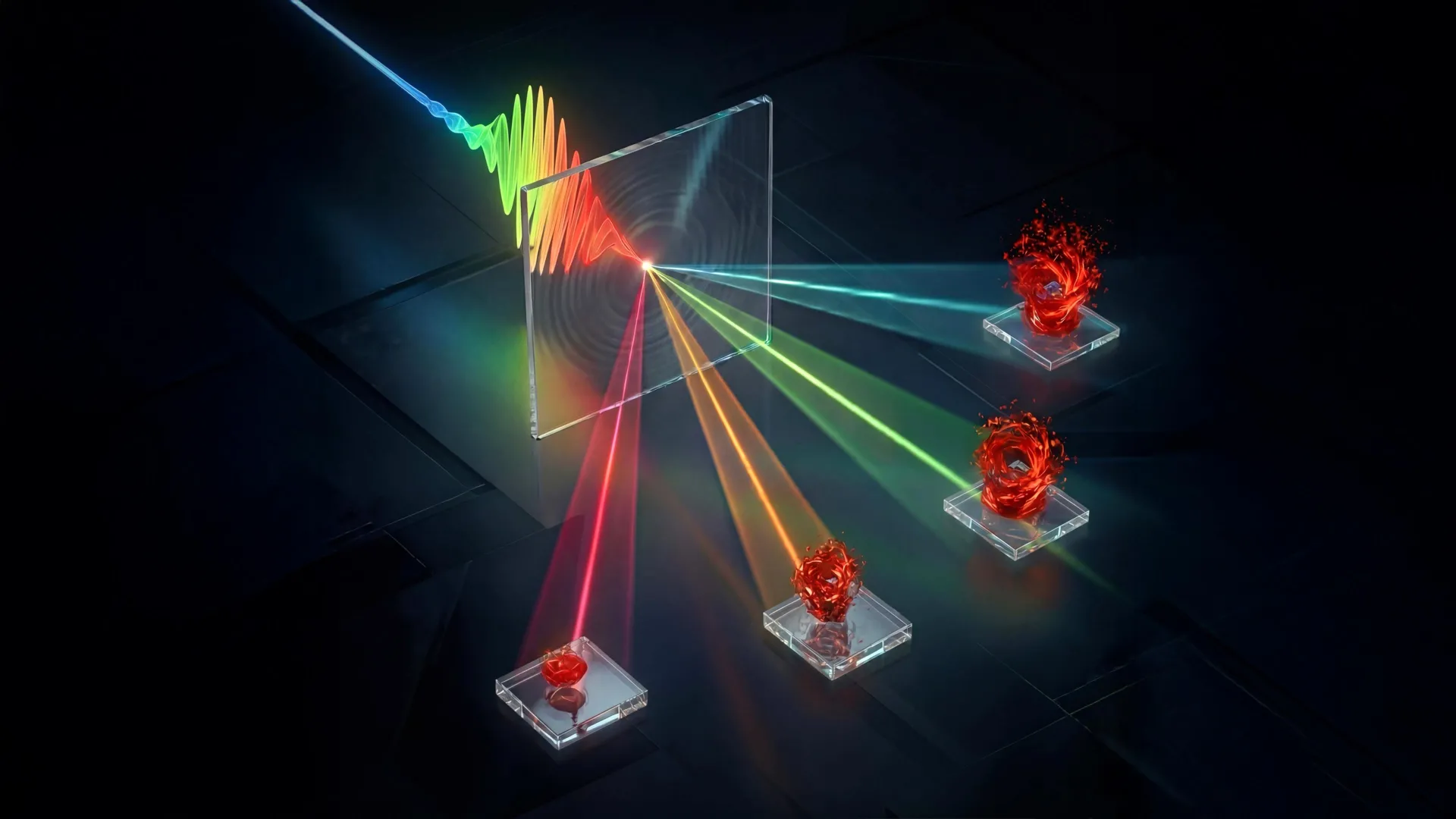
The pursuit of visualizing the invisible has reached a significant milestone as a research team at East China Normal University (ECNU) unveiled a sophisticated imaging system capable of recording the most fleeting moments in the physical world. This new technology, described in the journal Optica, allows scientists to observe ultrafast events—occurring within quadrillionths of a second—with a level of detail that includes both the brightness of the object and its intricate internal phase structure. By capturing these events in a single shot, the researchers have bypassed the limitations of traditional high-speed photography, opening new doors for discoveries in physics, chemistry, and materials science.
For decades, the study of ultrafast phenomena has been a cornerstone of modern science. Processes such as the vibration of atoms within a molecule, the movement of electrons in a semiconductor, or the chemical transitions during photosynthesis occur on the femtosecond (10^-15 seconds) timescale. To put this in perspective, a femtosecond is to a second what a second is to approximately 31.7 million years. Capturing these moments requires more than just a fast shutter; it requires an entirely new way of conceptualizing how light interacts with matter and how that data is retrieved.
The Evolution of Ultrafast Imaging and the Single-Shot Breakthrough
Historically, researchers relied on "pump-probe" techniques to study fast events. In this setup, a "pump" laser pulse triggers a reaction, and a subsequent "probe" pulse captures a snapshot of the state of the material at a specific delay. By repeating the experiment thousands of times with different delays, scientists could piece together a "movie" of the process. However, this method is only effective for phenomena that are perfectly repeatable. For stochastic or non-reversible events—such as the breakdown of a material under high pressure, a unique chemical explosion, or certain biological processes—the pump-probe method is insufficient.
The Extreme Optical Imaging Laboratory at ECNU, led by Professor Yunhua Yao, has focused on overcoming this hurdle through single-shot ultrafast optical imaging. The goal is to record the entire evolution of a transient event in one go, similar to a high-speed camera capturing a bullet in flight, but at speeds millions of times faster.
The team’s latest innovation, known as compressed spectral-temporal coherent modulation femtosecond imaging (CST-CMFI), represents a paradigm shift. While previous single-shot methods primarily recorded changes in light intensity (how bright or dark an object appears), CST-CMFI captures phase information. Phase refers to the way light waves are delayed or shifted as they pass through an object. Because the phase of light is highly sensitive to the refractive index and thickness of a material, capturing it allows researchers to see "invisible" structures and subtle changes that do not affect brightness but are critical to understanding the underlying physics.
Technical Architecture: CST-CMFI and the Power of Chirped Pulses
The CST-CMFI system operates on a complex integration of three distinct optical principles: time-spectrum mapping, compressive spectral imaging, and coherent modulation imaging.
The process begins with a "chirped" laser pulse. In a standard laser pulse, all wavelengths (colors) of light arrive simultaneously. In a chirped pulse, the wavelengths are stretched out so that different colors arrive at slightly different times. This effectively creates a "time-to-wavelength" map. When this stretched pulse passes through a rapidly changing object, each "color" of the pulse interacts with the object at a different stage of its evolution.
As the light scatters off the object, it carries a wealth of spatial, spectral, and phase data. The CST-CMFI system then employs dispersion-encoded coherent modulation to "compress" all this information into a single, two-dimensional image sensor. This is where the "compressed" part of the name comes in; the system crams a three-dimensional data cube (two spatial dimensions plus one time/wavelength dimension) into a single 2D frame.
To make sense of this compressed data, the researchers utilized a physics-informed neural network (PINN). Unlike standard AI that might guess at an image based on patterns, a physics-informed network is constrained by the laws of optics. It mathematically deconstructs the single image, separating the different wavelengths and reconstructing both the intensity and the phase for each time increment. The result is a high-fidelity "movie" of the event, where each frame represents a specific femtosecond interval.
Experimental Validation: From Plasma Channels to Charge Carriers
To demonstrate the versatility and power of the CST-CMFI technique, the ECNU team conducted two primary experiments involving very different types of ultrafast dynamics.
The first experiment focused on the formation of plasma in water. When a high-intensity femtosecond laser is fired into water, it strips electrons from molecules, creating a plasma channel. This process is of great interest to the medical community, particularly for laser surgeries and targeted therapies where precision is paramount. The CST-CMFI system allowed the researchers to observe the formation of the plasma channel in real-time. Crucially, they were able to measure the phase changes, which revealed the density of free electrons within the plasma. This data is vital for understanding how energy is deposited in the medium and how the laser beam propagates through biological tissues.
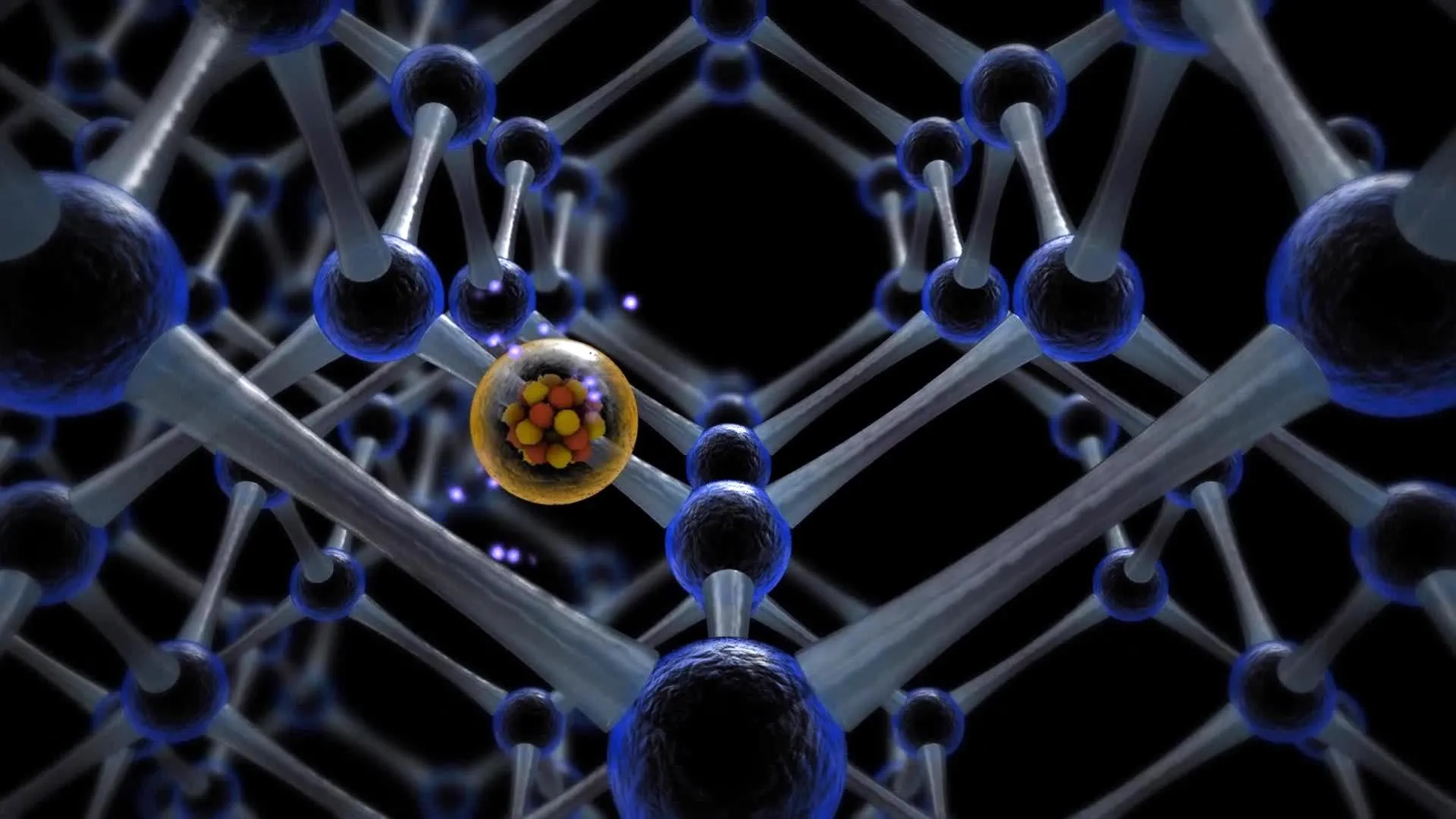
The second experiment investigated the behavior of excited charge carriers in Zinc Selenide (ZnSe), a semiconductor material used widely in infrared optics and electronic devices. When ZnSe is hit by light, its electrons are kicked into a higher energy state, changing the material’s optical properties. The researchers used CST-CMFI to track how these carriers moved and relaxed over time. Interestingly, they found that even when the intensity of the light passing through the ZnSe didn’t change significantly, the phase did. This proved that phase-sensitive imaging could detect subtle electronic shifts that would be completely missed by intensity-only cameras.
"Using CST-CMFI, we were able to see phase variations associated with the carrier dynamics, even when there were no significant changes in intensity," Yao noted. "This highlights a key advantage of our method: Phase measurements can be much more sensitive than intensity measurements in detecting subtle ultrafast processes."
Industrial and Scientific Implications
The implications of this breakthrough extend far beyond the laboratory. By providing a more complete picture of how matter behaves at extreme speeds, CST-CMFI could catalyze advancements in several high-tech sectors.
- Clean Energy and Fusion Research: High-power lasers are central to inertial confinement fusion, a potential source of nearly limitless clean energy. Understanding the ultrafast interactions between lasers and plasma is essential for stabilizing fusion reactions.
- Advanced Manufacturing: In precision laser machining, materials are modified at the micron scale in picoseconds. CST-CMFI could allow manufacturers to monitor these processes in real-time, leading to better quality control and the development of new manufacturing techniques for microchips and medical implants.
- Next-Generation Electronics: As transistors become smaller and faster, the speed at which charge carriers move becomes a limiting factor. The ability to visualize these movements in semiconductors like ZnSe will help engineers design faster processors and more efficient solar cells.
- Biological Discovery: Many biological processes, such as the initial steps of vision or the folding of proteins, happen at lightning speeds. Capturing the phase changes in biomolecules could reveal the mechanical forces at play during these vital functions, potentially leading to new drug delivery systems or a better understanding of cellular mechanics.
Future Outlook: Toward Multi-Spectral Ultrafast Photography
While CST-CMFI is a massive leap forward, the researchers are already looking at ways to refine the technology. One current limitation is the trade-off between spectral and temporal information. Because the system uses wavelength to represent time, it is difficult to study materials that undergo rapid changes in their own color or spectral absorption during an event.
To solve this, the team plans to merge CST-CMFI with another emerging field: compressive ultrafast photography (CUP). By combining these two approaches, they hope to create a system that can record spectral, temporal, and phase information independently. This would allow for the study of even more complex phenomena, such as multi-color chemical reactions or phase transitions in complex materials.
The work at the Extreme Optical Imaging Laboratory represents a broader trend in "computational imaging," where the hardware (the camera) and the software (the neural network) are designed in tandem. This synergy allows for the extraction of information that was previously thought to be lost or unmeasurable.
As the scientific community continues to push the boundaries of the "femtosecond frontier," tools like CST-CMFI will be indispensable. By turning a single shot into a detailed movie of the microscopic world, Yunhua Yao and his team have provided a new lens through which we can view the fundamental building blocks of reality. The transition from capturing simple shadows to capturing the full phase and intensity of light marks the beginning of a new era in optical science, where no event is too fast to be seen, and no structure is too subtle to be measured.













Leave a Reply