

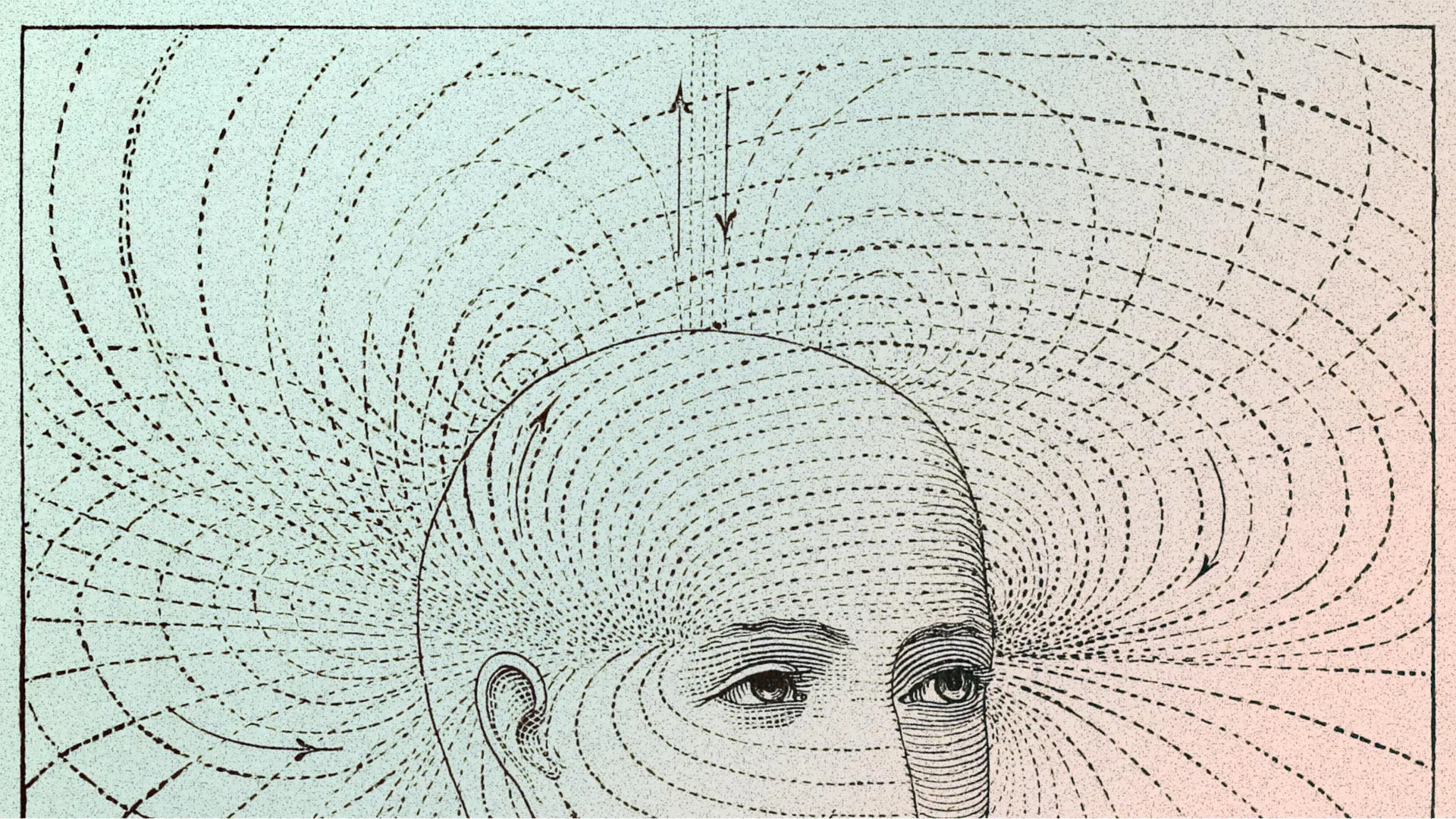
A collaborative study led by Santa Fe Institute (SFI) Professor David Wolpert, SFI Fractal Faculty member Carlo Rovelli, and physicist Jordan Scharnhorst has introduced a rigorous new framework for examining one of the most unsettling concepts in modern cosmology: the Boltzmann brain hypothesis. This theoretical construct suggests that our memories, observations, and the very perception of a coherent past may not be grounded in an objective historical reality. Instead, they could be the result of spontaneous, random fluctuations in a state of high entropy, creating a momentary illusion of a structured world. By re-evaluating the mathematical and logical underpinnings of statistical mechanics, the research team highlights a profound tension between the laws of physics and the reliability of human cognition.
The study, which delves into the intersection of thermodynamics and epistemology, addresses a problem that has haunted physics since the late 19th century. If the universe is governed by statistical laws that favor high-entropy states, the existence of a brain—complete with false memories of a life lived—becomes statistically more probable in some models than the existence of a vast, low-entropy universe that evolved over billions of years. The researchers do not argue that we are, in fact, "brains in a void," but rather that the current logical structures used to dismiss this possibility often rely on circular reasoning and unexamined assumptions regarding the direction of time.
Thermodynamic Foundations and the H-Theorem
To understand the scope of this new research, one must first look at the foundations of statistical mechanics established by Ludwig Boltzmann. At the heart of the debate is Boltzmann’s H-theorem, a mathematical proof intended to show how entropy—the measure of disorder in a system—increases over time. This theorem is the bedrock of the Second Law of Thermodynamics, which provides the "arrow of time" that distinguishes the past from the future. It explains why heat flows from hot to cold and why an egg, once broken, does not spontaneously reassemble.
However, the H-theorem possesses a fundamental symmetry: its underlying equations are time-reversible. This means that if one applies the theorem strictly, the logic that suggests entropy will increase in the future also suggests that entropy should have been higher in the past. This creates a paradox. If the present state of the universe is a rare, relatively low-entropy fluctuation, it is statistically more likely that the universe fluctuated into this state from a higher-entropy past than that it began in an even lower-entropy state (the Big Bang) and evolved to its current level of order.
This leads directly to the Boltzmann brain hypothesis. In a universe reaching thermal equilibrium—a "heat death" where everything is a random soup of energy—the random motion of particles will occasionally, over vast eons, form complex structures by pure chance. Statistically, it is far "cheaper" in terms of probability for a single brain with a set of memories to fluctuate into existence than for an entire galaxy to do so. This realization suggests that our observations of a 14-billion-year history could be nothing more than a momentary glitch in the cosmic void.
A Chronology of Entropy and Cosmological Thought
The intellectual history of this problem spans over a century, evolving from a niche concern in thermodynamics to a central question in modern string theory and multiverse cosmology.
- 1872: Ludwig Boltzmann publishes the H-theorem, attempting to derive the Second Law of Thermodynamics from the mechanics of molecular collisions.
- 1895: Critics like Ernst Zermelo and Johann Josef Loschmidt point out the "reversibility paradox," noting that time-symmetric laws cannot purely produce time-asymmetric results without additional assumptions.
- 1930s-1950s: The development of the Big Bang theory provides an empirical "Past Hypothesis," suggesting the universe began in an incredibly low-entropy state, though the reason for this initial state remains unknown.
- 2004: Cosmologists like Sean Carroll and Jennifer Chen revive the Boltzmann brain discussion in the context of eternal inflation, arguing that if the universe expands forever, the number of Boltzmann brains could eventually outnumber "ordinary" observers who evolved via natural selection.
- 2024: Wolpert, Rovelli, and Scharnhorst publish their framework, shifting the focus from the physical likelihood of Boltzmann brains to the logical validity of the arguments used to study them.
The Entropy Conjecture: Identifying Logical Circularity
The primary contribution of the new SFI-led study is the identification of what the authors term the "entropy conjecture." This concept describes a persistent pattern of circular reasoning found in scientific literature regarding the arrow of time and the reliability of memory.
The researchers argue that many physicists and philosophers attempt to prove that our memories are reliable by pointing to the Second Law of Thermodynamics. They reason that because entropy was lower in the past, our records of the past must be accurate. However, the evidence we have for the Second Law itself—and for the idea that the past had lower entropy—is based on our memories and our records of past experiments.
"We find that arguments about the direction of time often presuppose the very conclusion they aim to reach," the study notes. By creating a formal framework to map these assumptions, the team demonstrated that whether one concludes that the universe is "real" or a "fluctuation" depends entirely on which point in time is arbitrarily chosen as a "fixed" reference. If we fix the current state as the only known fact, the math points toward the Boltzmann brain. If we fix a low-entropy Big Bang as an axiom, the math supports a real history. The laws of physics themselves, however, do not dictate which of these starting points is "correct."
Statistical Data and Probability in the Infinite Universe
The sheer scale of the probabilities involved in the Boltzmann brain hypothesis is difficult to fathom, yet it remains a rigorous mathematical necessity in certain models. To enrich the analysis, the study considers the following data points derived from standard cosmological models:
- Entropy of the Observable Universe: The current entropy of the observable universe is estimated to be approximately $10^104$ $k_B$ (Boltzmann constants), dominated largely by supermassive black holes.
- Probability of a Fluctuating Brain: The probability of a human brain spontaneously forming from vacuum fluctuations is estimated at roughly $10^-10^50$.
- Probability of a Low-Entropy Big Bang: The probability that the universe began in the specific low-entropy state required for the Big Bang is estimated by Roger Penrose to be 1 in $10^10^123$.
Because $10^10^50$ is a vastly smaller number than $10^10^123$, the "cost" of a Boltzmann brain is much lower than the "cost" of a real universe. In a universe that exists for an infinite amount of time (as predicted by some versions of the de Sitter space model), these fluctuations are not just possible; they are inevitable. The new study by Wolpert, Rovelli, and Scharnhorst provides a meta-analysis of these probabilities, suggesting that our "belief" in the larger universe over the single brain is a choice of philosophical framework rather than a conclusion forced by raw data.
Official Responses and Scientific Context
While the study is theoretical, it has resonated within the foundational physics community. Carlo Rovelli, a pioneer in loop quantum gravity, has long advocated for a more nuanced understanding of time. "Time is not a fundamental ingredient of the world; it is an emergent property," Rovelli has stated in previous works, a sentiment that informs the current study’s focus on how we construct the "past."
David Wolpert’s background in information theory and the thermodynamics of computation adds a layer of technical rigor to the study’s critique of memory. By treating a "memory" as a physical state that must be correlated with a past event, Wolpert’s influence ensures the study remains grounded in the physical requirements of information processing.
The broader scientific community remains divided on the "Boltzmann brain" problem. Some, like cosmologist Sean Carroll, argue that any theory that predicts we are likely to be Boltzmann brains is "cognitively unstable"—meaning it undermines the very observations used to build the theory in the first place. The Wolpert-Rovelli-Scharnhorst paper acknowledges this instability but pushes further, demanding a more transparent accounting of the "Past Hypothesis" as a necessary, but currently unproven, assumption.
Broader Impact and Implications
The implications of this research extend far beyond the ivory towers of theoretical physics. At its core, the study touches upon the nature of human knowledge and the validity of our perception of reality. If the link between entropy and memory is as logically fragile as the authors suggest, it raises questions about how we verify any historical data.
In terms of the future of physics, the study provides a roadmap for more rigorous cosmological modeling. By identifying the circularity in current arguments, it encourages physicists to find new, non-circular ways to justify the Past Hypothesis. This could lead to a deeper understanding of the Big Bang or perhaps a total revision of the Second Law of Thermodynamics as it applies to the entire universe.
Furthermore, the work highlights the importance of interdisciplinary collaboration. By combining insights from statistical mechanics, information theory, and the philosophy of science, the SFI team has managed to clarify a problem that has remained muddled for over a century. Their framework provides a "transparency tool" for future researchers, allowing them to see exactly where their assumptions are doing the heavy lifting in their theories of time.
In conclusion, while the Boltzmann brain remains a haunting specter in the background of cosmology, this new research provides the intellectual clarity needed to confront it. By separating the role of physical laws from the interpretative assumptions we bring to them, Wolpert, Rovelli, and Scharnhorst have moved the conversation from a state of existential confusion toward a more structured and transparent scientific inquiry. The study serves as a reminder that in the quest to understand the universe, our most basic assumptions—even those about our own memories—must be subject to the same rigorous scrutiny as the stars themselves.




















Leave a Reply