

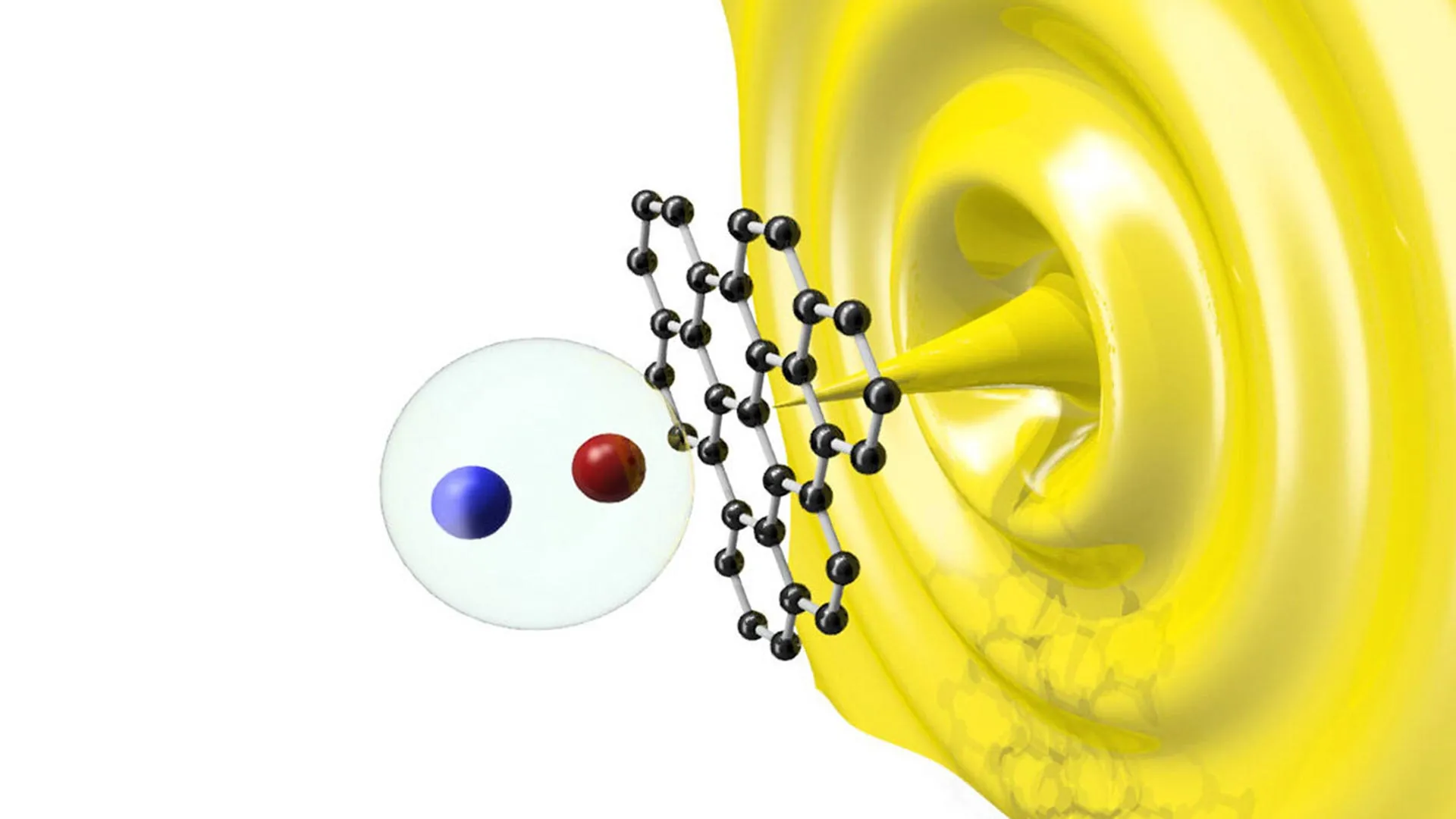
In a landmark achievement for the field of quantum mechanics, a research team from the Tokyo University of Science has successfully demonstrated the first-ever direct observation of matter-wave diffraction in a beam of positronium. This discovery, published in the prestigious journal Nature Communications, marks the culmination of decades of theoretical inquiry and experimental challenges, providing definitive proof that positronium—a short-lived, exotic atom-like system—exhibits the same wave-particle duality that governs more common forms of matter. Led by Professor Yasuyuki Nagashima, the study not only reinforces the foundational principles of quantum physics but also opens new avenues for exploring the mysteries of antimatter and the potential for non-destructive material analysis.
The realization that matter behaves differently at the subatomic scale than it does in the macroscopic world was one of the 20th century’s most profound shifts in scientific understanding. Central to this shift is the principle of wave-particle duality, which posits that every particle or quantum entity may be described as either a particle or a wave. While this behavior has been documented in electrons, neutrons, and even complex molecules, the observation of such behavior in positronium has remained elusive until now. Positronium is a unique "atom" composed of an electron and its antimatter counterpart, a positron. Because the two particles have identical mass but opposite charges, they orbit a shared center of mass before inevitably annihilating one another in a flash of gamma radiation.
The Evolution of Matter-Wave Theory and the Positronium Gap
The journey toward this discovery began in 1924 when French physicist Louis de Broglie proposed that all matter possesses wave-like properties, characterized by a wavelength inversely proportional to its momentum. This hypothesis was famously validated by the double-slit experiment, where particles fired at a barrier with two openings created an interference pattern on a detector—a hallmark of wave behavior. Over the following century, scientists scaled this experiment up, proving that larger and more complex structures, such as helium atoms and C60 "buckyball" molecules, also undergo diffraction.
However, positronium presented a unique set of challenges. Unlike stable atoms like hydrogen, positronium is highly unstable, with a lifespan often measured in mere nanoseconds. Furthermore, creating a beam of positronium that is sufficiently coherent—meaning the waves are "in step" with one another—and possesses the correct energy range for diffraction has been a technical bottleneck for the physics community. Most previous attempts to study positronium beams resulted in low-intensity or high-energy spreads that masked any potential interference patterns.
The team at Tokyo University of Science, including Associate Professor Yugo Nagata and Dr. Riki Mikami, addressed these hurdles by developing a sophisticated experimental apparatus designed to produce a high-quality, high-energy positronium beam. Their success represents a bridge between the study of ordinary matter and the more enigmatic realm of antimatter systems.
Chronology of the Experiment and Methodological Innovation
The breakthrough was the result of a multi-stage experimental process that required extreme precision in timing and vacuum technology. The timeline of the experiment can be broken down into three critical phases: the generation of ions, the laser-driven neutralisation, and the diffraction event.
First, the researchers generated a cloud of negatively charged positronium ions ($Ps^-$). These ions consist of one positron and two electrons. By working with charged ions initially, the team could use electromagnetic fields to accelerate and focus the particles into a tight, directed bunch. This allowed for much greater control over the beam’s trajectory and energy compared to traditional methods that attempt to create neutral positronium directly from a source.
Second, the team employed a technique known as photodetachment. As the bunch of $Ps^-$ ions traveled through the vacuum, they were struck by a precisely timed, high-intensity laser pulse. This pulse stripped away the extra electron from each ion, leaving behind a neutral positronium atom. Because the original ions were moving at high speeds, the resulting neutral atoms formed a fast-moving beam with a very narrow energy spread. This beam reached energies of up to 3.3 kiloelectron-volts (keV), a significant increase over previous experimental setups.
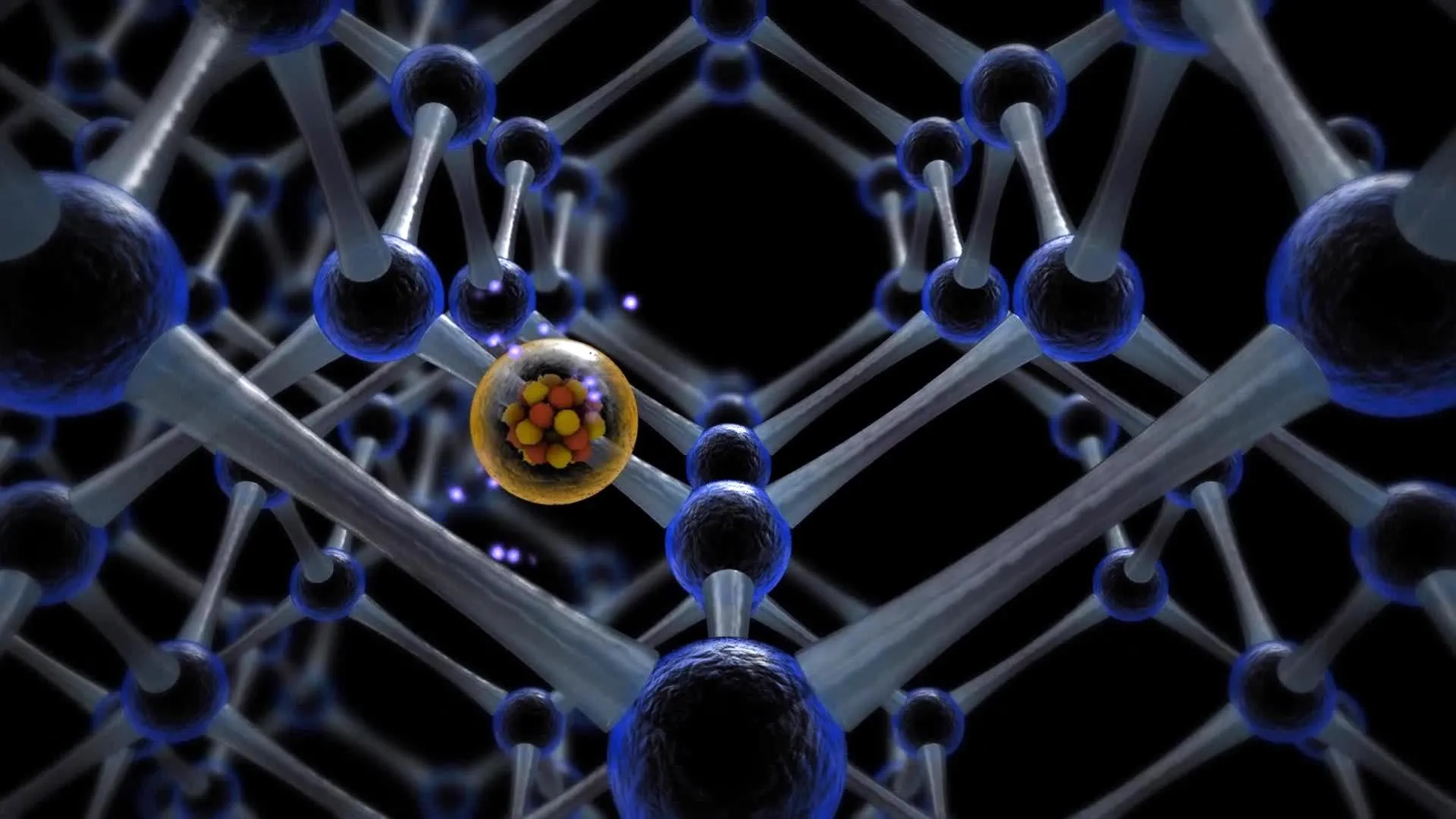
Third, the neutral positronium beam was directed toward a target consisting of a thin sheet of graphene. Graphene, a single layer of carbon atoms arranged in a hexagonal lattice, acts as a natural diffraction grating. The spacing between the carbon atoms in graphene is approximately 0.246 nanometers, which closely matched the de Broglie wavelength of the positronium atoms at the energies used in the experiment. As the beam passed through the two-to-three-layer graphene sheet, the waves associated with the positronium atoms interfered with one another, creating a distinct pattern of diffraction peaks on the detector.
Quantitative Analysis and Evidence of Unified Quantum Behavior
The data collected by the Tokyo University of Science team provided clear, unambiguous evidence of diffraction. The interference patterns observed were not the result of the electron and positron acting independently; rather, the results confirmed that the positronium atom behaves as a single, unified quantum object.
"Positronium is the simplest atom composed of equal-mass constituents, and until it self-annihilates, it behaves as a neutral atom in a vacuum," explained Professor Yasuyuki Nagashima. "Now, for the first time, we have observed quantum interference of a positronium beam, which can pave the way for new research in fundamental physics."
One of the most significant data points from the study was the angular distribution of the detected positronium. The researchers observed clear "Brillouin zone" effects, where the intensity of the detected atoms varied according to the angle of diffraction, matching theoretical predictions for wave interference. The use of an ultra-high vacuum environment was essential to this success, as it prevented the graphene surface from becoming contaminated with residual gas molecules, which would have scattered the beam and blurred the diffraction pattern.
Furthermore, the experiment demonstrated that the positronium atoms maintained their coherence over a distance sufficient to interact with the crystal lattice of the graphene. This high degree of coherence is what allowed the team to produce "sharp" results compared to earlier, less successful attempts by other international laboratories.
Official Responses and Scientific Significance
The announcement has been met with excitement across the global physics community. Dr. Yugo Nagata, a key contributor to the study, emphasized the broader implications for the study of leptons and antileptons. "This groundbreaking experimental milestone marks a major advance in fundamental physics," Nagata stated. "It not only demonstrates positronium’s wave nature as a bound lepton-antilepton system but also opens pathways for precision measurements involving positronium."
The success of the Tokyo University of Science team is seen as a validation of the techniques used to manipulate exotic particles. By proving that they can create and control a coherent beam of neutral antimatter-containing atoms, the researchers have provided a new "tool kit" for experimentalists.
Independent analysts suggest that this work could lead to a new era of "positronium spectroscopy," where the properties of this exotic atom are measured with unprecedented accuracy. Such measurements are vital for testing the predictions of Quantum Electrodynamics (QED), the theory that describes how light and matter interact. Any discrepancy between the observed behavior of positronium and QED predictions could signal "new physics" beyond the Standard Model.
Future Horizons: Gravity, Antimatter, and Materials Science
The implications of this research extend far beyond the confirmation of a century-old theory. One of the most tantalizing future applications lies in the study of gravity. One of the great remaining mysteries in physics is how antimatter responds to gravity—specifically, whether it falls at the same rate as ordinary matter. While experiments with antihydrogen have begun to address this, positronium offers a unique advantage. Because it is a purely leptonic system (made of electrons and positrons, rather than protons and antiprotons), it is free from the complexities of the strong nuclear force.
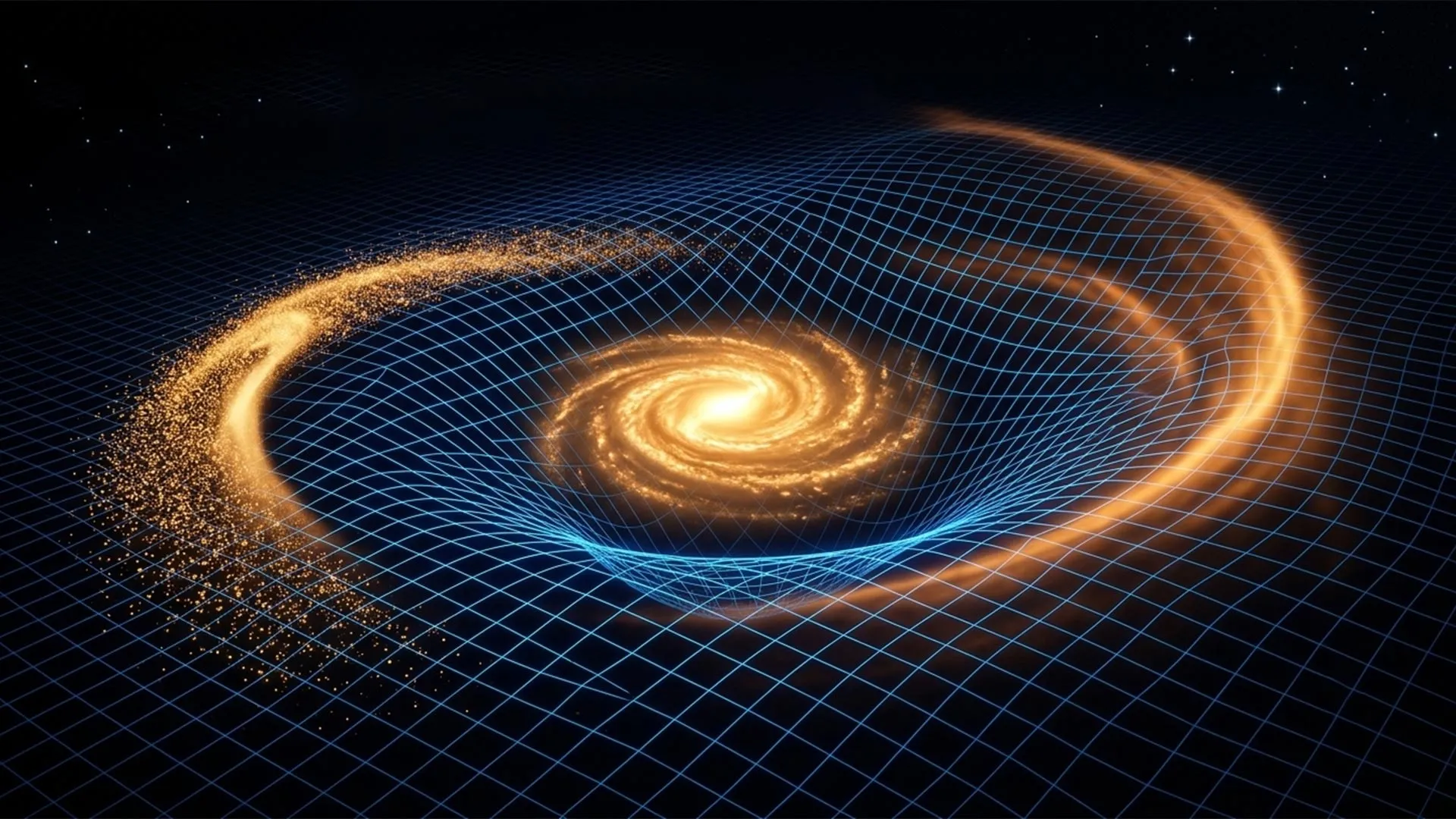
Using the diffraction techniques established in this study, scientists could potentially create a "positronium interferometer." By observing how the interference pattern shifts in the presence of a gravitational field, researchers could measure the gravitational acceleration of positronium. Since positronium is electrically neutral, it is not pushed around by stray electric fields as easily as individual positrons, making it an ideal candidate for high-precision gravity tests.
In the realm of applied physics, positronium diffraction holds promise for materials science. Because positronium is a neutral atom, it can penetrate the surface of materials without the electrostatic interference that plagues electron or ion beams. This makes it a potentially revolutionary tool for studying the surfaces of insulators, polymers, and magnetic materials.
"Because positronium carries no electric charge, it may be useful for analyzing material surfaces without causing damage," the researchers noted. This could lead to new ways of mapping the atomic structure of delicate semiconductors or biological membranes, providing data that current microscopy techniques cannot capture.
Conclusion and Institutional Support
The successful observation of positronium diffraction is a testament to the persistence of the Tokyo University of Science researchers and the advancement of laser and vacuum technologies. Professor Yasuyuki Nagashima, who has spent much of his career specializing in positron and positronium physics, has been recognized previously for his contributions to the field, including the Hiroshi Takuma Memorial Prize. This latest achievement cements his laboratory’s position at the forefront of exotic particle research.
The study was supported by JSPS KAKENHI grants, reflecting the Japanese government’s commitment to fundamental scientific research. As the team moves forward, they plan to refine their beam-generation techniques to achieve even higher resolutions.
In summary, the transition of positronium from a theoretical curiosity to a practical tool for diffraction represents a major leap in our ability to probe the quantum world. By proving that even a matter-antimatter pair behaves as a unified wave, the Tokyo University of Science has not only honored the legacy of pioneers like de Broglie but has also set the stage for the next century of quantum discovery. Whether it is solving the mystery of antimatter gravity or developing the next generation of material sensors, the ripples from this experiment will be felt across the scientific landscape for years to come.
















Leave a Reply