

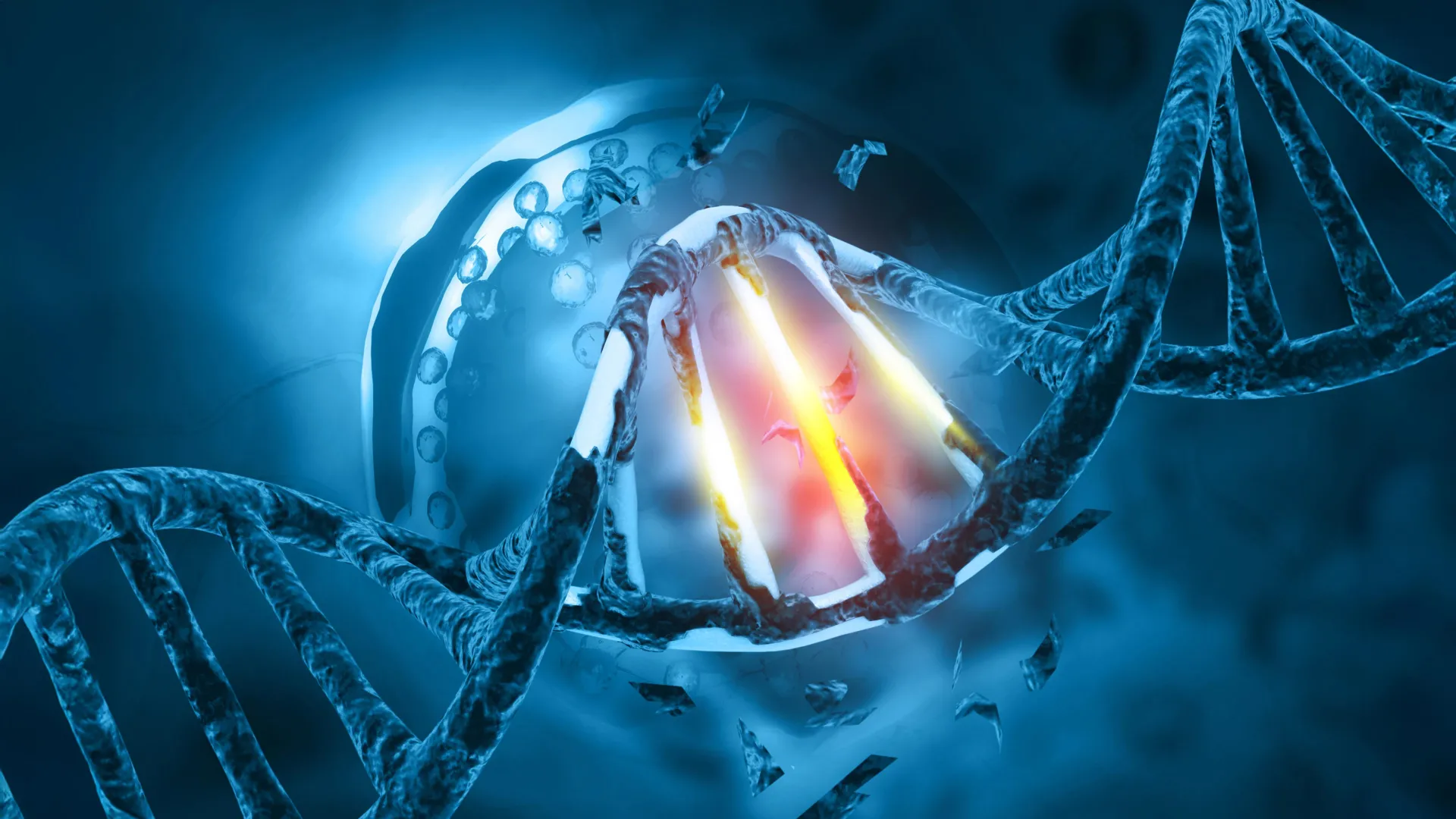
A groundbreaking pair of studies published in the journal Nature has fundamentally altered the scientific understanding of how genetic mutations accumulate in human sperm. Research led by the Wellcome Sanger Institute, King’s College London, and Harvard Medical School reveals that as men age, their sperm does not merely accumulate random genetic errors; rather, certain harmful mutations are actively favored by a process of natural selection occurring within the testes. This internal competition allows cells carrying specific mutations to multiply more rapidly than healthy cells, significantly increasing the risk that older fathers will pass on serious neurodevelopmental and oncogenic conditions to their offspring.
The findings challenge the long-held assumption that the male germline—the lineage of cells that produces sperm—is a highly protected environment with a consistently low mutation rate. Instead, the research depicts the testes as a dynamic and competitive landscape where "selfish" mutations can hijack the process of sperm production to ensure their own proliferation.
The Mechanism of Clonal Expansion in the Male Germline
To understand why paternal age impacts the genetic health of children, it is necessary to examine the biological process of spermatogenesis. Unlike women, who are born with a finite number of eggs, men produce sperm continuously throughout their lives. This requires a population of spermatogonial stem cells (SSCs) to divide incessantly. Each time a cell divides, there is a minute risk of a DNA replication error.
While most mutations are either neutral or detrimental to the cell’s survival, the researchers found that some mutations actually provide a "fitness advantage" to the stem cells themselves. These mutations often occur in genes responsible for regulating cell growth and division, such as those in the RAS-MAPK signaling pathway. When a stem cell acquires such a mutation, it may begin to divide more frequently or survive longer than its neighbors. Over decades, these mutant cells form "clones"—large clusters of identical cells that dominate the architecture of the testes. Consequently, a disproportionately high percentage of the sperm produced by an older man may carry these specific, often harmful, genetic changes.
This phenomenon, known as "selfish spermatogonial selection," explains why certain rare genetic disorders appear much more frequently in the children of older fathers than would be expected by random chance alone.
Breaking Down the Data: Age and Mutation Prevalence
The primary study utilized NanoSeq, an ultra-accurate DNA sequencing technology capable of detecting a single mutation among millions of healthy DNA bases. The team analyzed sperm samples from 81 healthy participants aged 24 to 75, drawn from the TwinsUK cohort at King’s College London. This cohort provided a unique opportunity to study genetic changes in a well-documented population over a broad age spectrum.
The data revealed a stark correlation between chronological age and the prevalence of disease-causing mutations. In men in their early 30s, approximately 2 percent of sperm carried mutations known to cause developmental or medical issues. However, in the cohort aged 43 to 74, this figure rose to between 3 and 5 percent. Among the 70-year-old participants, the average reached 4.5 percent.
While these percentages may seem small, the implications are significant. Because a single ejaculate contains millions of sperm, a 5 percent mutation rate means that millions of potentially "mutant" sperm are competing for fertilization. The study identified 40 specific genes that appear to benefit from this internal selection process. Many of these genes are associated with conditions such as Alagille syndrome, Costello syndrome, and various forms of dwarfism and craniosynostosis. Furthermore, the researchers noted an overlap with genes linked to inherited cancer risks and autism spectrum disorders.
Complementary Evidence from Parent-Child Trios
In a second, simultaneous study, researchers from Harvard Medical School and the Sanger Institute approached the problem from the opposite direction. Instead of looking at the sperm itself, they analyzed the "output" of the process: the DNA of children. By examining genomic data from more than 54,000 parent-child trios and a further 800,000 healthy individuals, the team looked for "de novo" mutations—genetic changes present in a child but not in either parent’s blood cells.
This massive data set confirmed the findings of the sperm study. The Harvard-led team identified more than 30 genes where mutations provided sperm cells with a competitive edge. Most notably, they found that in certain genes, the mutation rate was effectively boosted 500-fold due to the selection process within the testes.
One of the most intriguing findings of this secondary study involves the concept of "false-positive" disease associations. Because these "selfish" mutations become so common in the sperm of older men, they may appear in genetic databases more frequently than expected. This can lead researchers to mistakenly believe a specific gene variant is a common, benign population trait, when it is actually a rare, pathogenic mutation that has been artificially amplified by selection in the father’s testes.
Expert Reactions and Scientific Commentary
The scientific community has reacted to these findings with a mixture of fascination and caution. Dr. Matthew Neville, the lead author from the Wellcome Sanger Institute, expressed surprise at the sheer scale of the phenomenon. "We expected to find some evidence of selection shaping mutations in sperm," Dr. Neville stated. "What surprised us was just how much it drives up the number of sperm carrying mutations linked to serious diseases."
Professor Matt Hurles, Director of the Wellcome Sanger Institute and a co-author of the research, emphasized the clinical relevance for older fathers. "Our findings reveal a hidden genetic risk that increases with paternal age," Hurles said. "Some changes in DNA not only survive but thrive within the testes, meaning that fathers who conceive later in life may unknowingly have a higher risk of passing on a harmful mutation to their children."
Professor Kerrin Small, Scientific Director of the TwinsUK study, highlighted the importance of long-term population studies. "By working with the TwinsUK cohort, we could include valuable longitudinal samples linked to rich health and genetic information. This collaboration highlights the power of large, population-based cohorts for advancing our understanding of human development and inheritance."
Dr. Raheleh Rahbari, senior author and Group Leader at the Wellcome Sanger Institute, pointed out that the germline is not as invulnerable as previously thought. "There’s a common assumption that because the germline has a low mutation rate, it is well protected. But in reality, the male germline is a dynamic environment where natural selection can favor harmful mutations, sometimes with consequences for the next generation."
Historical Context and the Evolution of Paternal Age Research
The link between paternal age and genetic disorders is not a entirely new concept, but the mechanism has long remained elusive. As early as the 1950s, scientists noticed that conditions like achondroplasia (a common form of dwarfism) were more likely to occur in the children of older fathers. For decades, this was attributed to the simple accumulation of "wear and tear" in the DNA of aging stem cells.
In the early 2000s, the "selfish sperm" hypothesis was proposed to explain why certain mutations occurred at rates much higher than the baseline mutation rate. However, until the advent of NanoSeq and large-scale trio sequencing, researchers lacked the high-resolution tools to prove that selection was happening across the entire genome. These new studies provide the first comprehensive map of this process, moving the theory into the realm of proven biological fact.
Broader Implications for Reproductive Health and Society
The implications of this research are far-reaching, particularly in an era where the average age of fatherhood is steadily increasing in many developed nations. According to census data from various Western countries, the proportion of fathers over the age of 40 has risen significantly over the last three decades due to socioeconomic factors, career prioritization, and advancements in reproductive technology.
- Reproductive Risk Assessment: The findings may lead to the development of new screening tools. Currently, prenatal screening often focuses on maternal age-related risks, such as Down syndrome (trisomy 21). These studies suggest that paternal age-related risks—specifically for single-gene disorders—deserve similar clinical attention.
- Genetic Counseling: Prospective parents who are older may benefit from more nuanced genetic counseling. While the absolute risk for any individual pregnancy remains relatively low, the 3-5 percent mutation prevalence in older men is high enough to warrant discussion in a clinical setting.
- IVF and Sperm Banking: The research could influence the field of assisted reproduction. It raises questions about whether sperm from older donors or fathers should undergo more rigorous genomic screening before being used in IVF procedures.
- Understanding "Spontaneous" Disorders: This research provides a definitive answer as to why children are sometimes born with severe genetic disorders even when there is no family history. It turns out that the "spontaneous" mutation may have been "nurtured" and amplified within the father’s own body before conception.
Future Research Directions
While the Nature studies provide a clear link between age, selection, and mutation frequency, several questions remain. Researchers are now looking to investigate whether lifestyle factors—such as diet, smoking, obesity, or exposure to environmental toxins—can accelerate the process of clonal expansion in the testes. If certain environments favor the growth of mutant cells, it may be possible to develop interventions or lifestyle recommendations to mitigate the risk.
Additionally, scientists want to determine why some mutations that thrive in the testes lead to successful pregnancies, while others lead to miscarriage or infertility. Understanding the "filter" that exists between the production of mutant sperm and the birth of a child will be critical for accurately predicting reproductive outcomes.
As genomic technology continues to advance, the "hidden" world of the male germline is becoming increasingly visible. These studies mark a pivotal moment in genetics, proving that the journey from one generation to the next is not just a matter of inheritance, but a complex race where the fastest and most aggressive cells are not always the healthiest.












Leave a Reply