For decades, the quest to find life beyond our planet has hinged on a fundamental challenge: identifying the right molecular signatures on distant worlds. Scientists have meticulously cataloged the building blocks of life as we know it, focusing on specific molecules like amino acids and fatty acids, which are produced by biological processes on Earth. The assumption has been that if these molecules are detected on another planet or moon, it would be strong evidence for extant or extinct life. However, new research published in the prestigious journal Nature Astronomy offers a paradigm shift, suggesting that the answer may not lie in the molecules themselves, but in the statistical patterns that connect them. This groundbreaking work posits that life leaves a discernible organizational fingerprint, detectable through advanced statistical analysis, even when the individual chemical components can also be formed through nonbiological means.
This innovative approach moves beyond simply looking for the presence of specific molecules. Instead, it delves into the underlying principles of organization that life imposes on matter. "We’re showing that life does not only produce molecules," explained Fabian Klenner, an assistant professor of planetary sciences at UC Riverside and a co-author of the study. "Life also produces an organizational principle that we can see by applying statistics." This principle, the researchers argue, is a more robust and universal biosignature, less susceptible to the ambiguities that have plagued previous detection efforts.
Unveiling the Statistical Signature of Life
The core of the research lies in the discovery that biological systems exhibit distinct statistical patterns in the distribution and variety of certain organic molecules. Specifically, the study found that amino acids, the fundamental units of proteins, tend to be both more varied in type and more evenly distributed when produced by living organisms compared to those formed through abiotic (nonbiological) processes. This means that in a biological sample, you’d expect to find a wider range of different amino acids, and their abundances would be relatively similar. In contrast, nonbiological processes often result in a narrower range of amino acids, with one or two dominant types.
Conversely, the research observed an opposite trend with fatty acids, which are crucial components of cell membranes. In the case of fatty acids, nonliving chemical processes were found to produce more even distributions of various types than biological ones. This highlights the nuanced nature of life’s organizational principles, which can manifest differently depending on the molecular class.
A significant implication of this finding is that this underlying statistical signature of life can be detected using statistical methods alone, without the need for any single, highly specialized instrument. This is a critical advancement because it means the approach could potentially be applied to data already being collected by current and future space missions, such as NASA’s Mars rovers, the Europa Clipper mission, and the Cassini-Huygens probe’s findings from Saturn’s moon Enceladus. These missions are already generating increasingly detailed measurements of organic chemistry on other worlds, but interpreting these signals remains a formidable challenge.
The Challenge of Abiotic Mimicry
The persistent difficulty in confirming extraterrestrial life stems from the fact that many molecules considered hallmarks of life on Earth, including amino acids and fatty acids, can also form naturally without any biological intervention. These compounds have been found in meteorites that have fallen to Earth and have been successfully synthesized in laboratory experiments designed to mimic the harsh conditions of space and early planetary environments. The presence of these molecules, therefore, is not considered definitive proof of life.
This has led astrobiologists to liken their work to forensic science. "Astrobiology is fundamentally a forensic science," stated Gideon Yoffe, a postdoctoral researcher at the Weizmann Institute of Science in Israel and the first author of the study. "We’re trying to infer processes from incomplete clues, often with very limited data collected by missions that are extraordinarily expensive and infrequent." The cost and rarity of space missions mean that every piece of data is precious, and the ability to extract maximum information from it is paramount.
Borrowing a Tool from Ecology: The Diversity Metric Approach
To overcome the limitations of traditional molecular detection, the research team ingeniously adapted a statistical method widely used in the field of ecology. Ecologists employ concepts of "richness" and "evenness" to measure biodiversity. Richness refers to the number of different species present in an ecosystem, while evenness quantifies how uniformly those species are distributed. A highly diverse ecosystem typically has both high richness and high evenness.
Gideon Yoffe first encountered this powerful framework during his doctoral studies in statistics and data science, where these diversity metrics were applied to uncover intricate patterns within complex datasets, including research into ancient human cultures. Recognizing the potential for similar pattern detection in chemical data, the team applied the same statistical logic to the chemistry associated with potential extraterrestrial life.
The researchers compiled and analyzed approximately 100 existing datasets. These datasets encompassed a wide array of organic materials, including samples from microbes, soils, fossils, meteorites, asteroids, and synthetic laboratory samples. The goal was to compare the statistical profiles of molecules from known biological sources with those from known abiotic sources. The results were striking: biological materials consistently displayed distinct organizational patterns that clearly separated them from nonliving chemistry.
Fossils Still Carry Echoes of Ancient Life
One of the most compelling and surprising findings of the study was the remarkable effectiveness of this statistical method, even in its relative simplicity. By applying this statistical lens to the molecular composition of various samples, the researchers could reliably distinguish between biological and abiotic origins. More intriguingly, they also observed that biological materials formed a continuum that reflected their degree of preservation and alteration.
"That was genuinely surprising," Klenner remarked. "The method captured not only the distinction between life and nonlife, but also degrees of preservation and alteration." This suggests that the organizational patterns imprinted by life are remarkably resilient, persisting even when the original biological structures have significantly degraded.
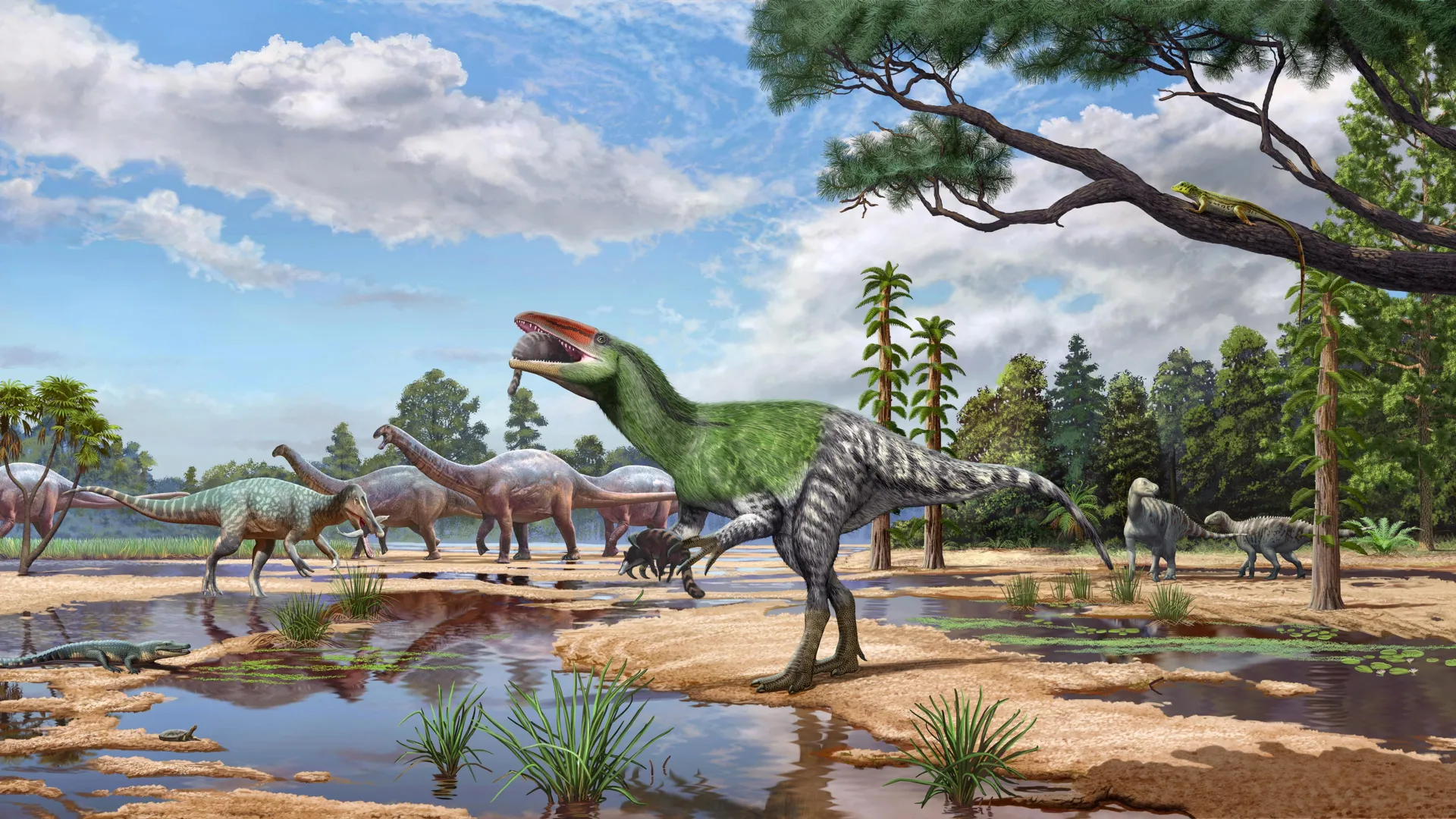
The study provided a particularly vivid example with fossilized dinosaur eggshells. Despite undergoing millions of years of geological processes and significant degradation of their original organic matter, these ancient samples still exhibited detectable statistical patterns that were linked to past biological activity. This implies that the subtle organizational principles of life can leave a lasting imprint, acting as a kind of chemical fossil that can be read with the right analytical tools. This finding significantly broadens the scope of potential biosignatures, suggesting that evidence of past life might be recoverable even from extremely old and altered samples.
A New Analytical Toolkit for Future Space Missions
While this new statistical framework represents a significant leap forward in the search for extraterrestrial life, the researchers are quick to emphasize that it is not a silver bullet. "Any future claim of having found life would require multiple independent lines of evidence, interpreted within the geological and chemical context of a planetary environment," Klenner cautioned. The scientific community has learned from past controversies, such as the interpretation of Martian meteorites like ALH84001, that extraordinary claims require extraordinary evidence.
Nonetheless, the team is optimistic about the potential of their approach to become a valuable addition to the arsenal of tools employed by future planetary exploration missions. By providing an independent, statistically driven method for assessing the likelihood of biological origin, this research can complement existing techniques.
The implications for future missions are substantial. Instruments aboard spacecraft and rovers could be programmed to perform these statistical analyses in situ, providing immediate insights into the nature of organic compounds discovered. This could help prioritize samples for return to Earth or guide further investigation. Moreover, the ability to analyze existing archival data from past missions through this new statistical lens could unlock new discoveries from previously collected samples.
Broader Impact and Implications for Astrobiology
The impact of this research extends beyond the immediate goal of finding alien life. It fundamentally alters our understanding of what constitutes a biosignature. Historically, biosignatures have been largely defined by the presence of specific molecules associated with life on Earth. This new paradigm shifts the focus to the underlying organizational principles that life imposes on matter, suggesting that life elsewhere, even if biochemically different from Earth life, might still leave similar statistical traces.
This opens up the possibility of detecting life that does not rely on DNA or proteins as we know them. If life on other planets evolved independently with different biochemical pathways, it might still adhere to universal principles of organization that can be statistically identified. This could expand the range of environments and the types of life we can search for.
The research also underscores the interdisciplinary nature of modern scientific discovery, drawing upon statistics, ecology, and planetary science. The adaptation of ecological metrics to chemical data exemplifies the power of cross-disciplinary innovation.
Looking Ahead: A Multi-Pronged Approach to Discovery
The scientific community’s response to this research is likely to be one of cautious optimism and vigorous exploration. The Nature Astronomy publication ensures that the findings will be scrutinized by leading experts in astrobiology and chemistry. Further independent verification and application of the statistical method to a wider range of diverse datasets will be crucial.
The long-term vision is to integrate this statistical approach with other biosignature detection methods. "Our approach is one more way to assess whether life may have been there," Klenner stated. "And if different techniques all point in the same direction, then that becomes very powerful." This multi-pronged strategy, combining molecular detection, isotopic analysis, imaging, and now statistical pattern recognition, offers the most robust pathway to answering one of humanity’s oldest questions: are we alone in the universe?
The timeline for this new approach to be fully integrated into mission planning is still unfolding. However, given the rapid advancements in computational power and data analysis techniques, it is plausible that future missions to Mars, the icy moons of Jupiter and Saturn, and potentially even exoplanets could incorporate these statistical biosignature detection capabilities. The implications are profound, potentially leading to a new era in the search for life beyond Earth, one where the subtle, statistical whispers of ancient or extant life can finally be heard across the vastness of space.