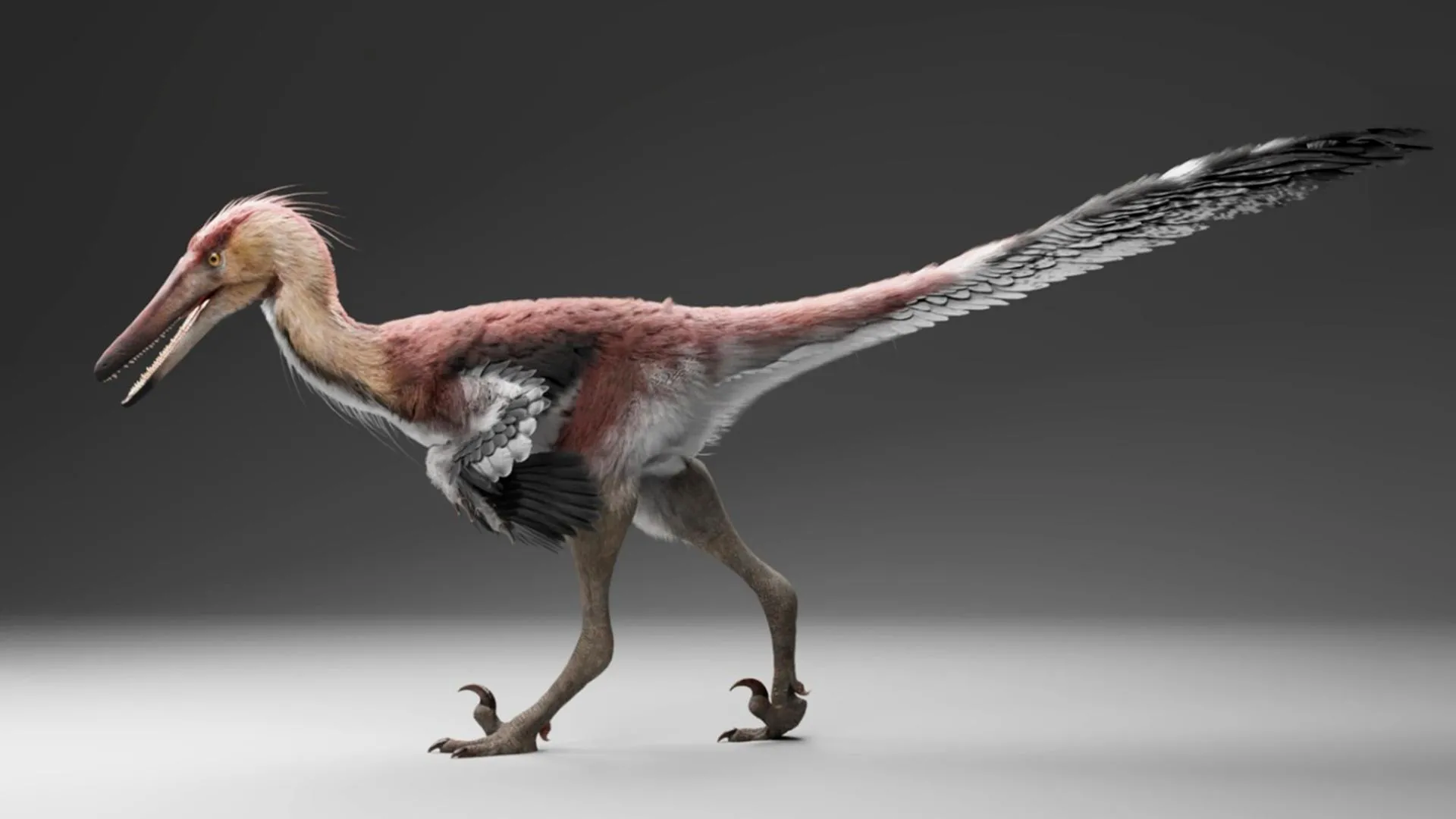
Paleontologists have unearthed a remarkable new species of raptor-like dinosaur, christened Kank australis, that roamed the southern reaches of Patagonia approximately 70 million years ago during the Late Cretaceous period. This fascinating discovery, detailed in a recent publication in the Journal of Vertebrate Paleontology, sheds new light on the diversity of theropod dinosaurs in South America and suggests a specialized ecological niche for this ancient predator, potentially resembling that of modern herons in its fishing habits. The identification is based on a collection of fossilized remains, including distinctive teeth, vertebrae, and toe bones, which have allowed researchers to place Kank australis within the unenlagiine family, a group of medium-sized theropods known from the Southern Hemisphere.
Unveiling a Patagonian Predator: The Discovery of Kank australis
The journey to identify Kank australis began in 2018 with initial fossil discoveries on La Anita farm, located near El Calafate in Argentina’s Santa Cruz Province. However, the early finds were too fragmentary to definitively classify as a new species. It was only through subsequent expeditions, culminating in the crucial discovery of a cervical vertebra in 2024, that paleontologists possessed sufficient material to recognize the unique characteristics of this previously unknown dinosaur.
Dr. Matías Motta, lead paleontologist at the Bernardino Rivadavia Natural Sciences Museum in Buenos Aires, spearheaded the research. His team’s meticulous analysis of the fossil evidence has allowed them to reconstruct aspects of Kank australis‘s anatomy, behavior, and habitat.
The unenlagiine group, to which Kank australis belongs, has a significant fossil record across Gondwanan continents, including South America, Antarctica, Australia, and Madagascar. This wide distribution underscores the ancient connections between these landmasses during the Cretaceous. By comparing the newly found fossils with those of Neuquenraptor argentinus, another well-documented unenlagiine from northern Patagonia that lived around 90 million years ago, researchers have been able to estimate the size of adult Kank australis. They project an average length of 2.5 to 3 meters (approximately 8 to 10 feet), placing it in the medium-sized category for theropods.
Life in the Ancient Patagonian Wetlands: A Temperate and Humid Past
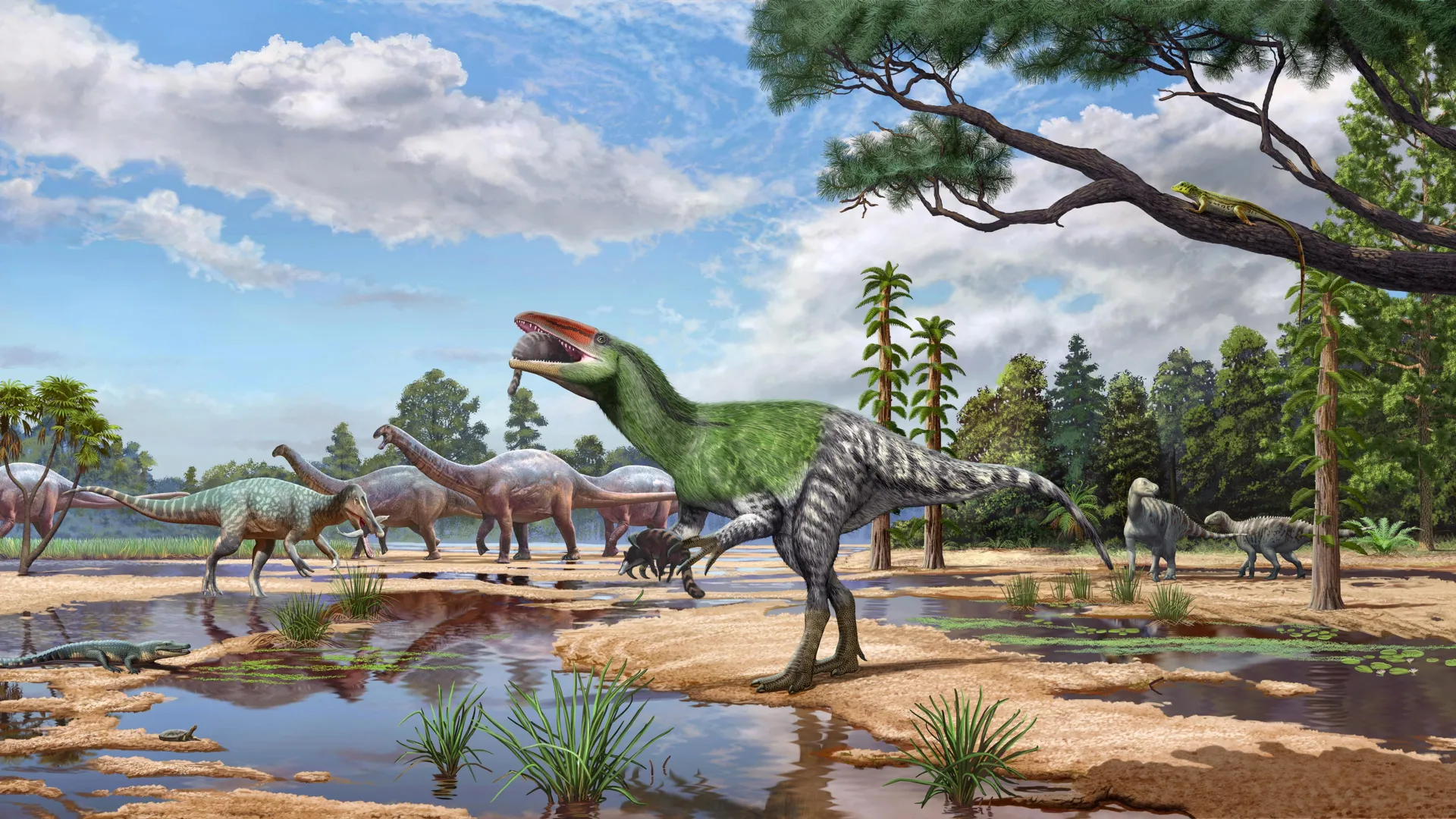
The paleontological site where Kank australis was discovered, the Chorrillo Formation, offers a vivid glimpse into the ancient Patagonian environment. Evidence from ancient soils and fossilized plant remains indicates that this region was dramatically different from the arid, windswept landscape of modern Patagonia. Seventy million years ago, the climate was temperate and humid, characterized by seasonal rainfall. This fostered a landscape rich in life, with meandering rivers, streams, and seasonal ponds teeming with aquatic flora, such as water lilies, and a diverse array of fauna including fish, insects, and various mollusks.
"Kank lived in a landscape of meandering rivers and streams with seasonal ponds, inhabited by aquatic plants such as water lilies and animals including fish, insects, and various mollusks," stated Dr. Motta in an interview. This description paints a picture of a vibrant ecosystem, a stark contrast to the current cold and relatively dry conditions that define much of Patagonia today. The presence of these ancient wetlands is crucial for understanding the evolutionary pressures that shaped Kank australis and its specialized adaptations.
A Dinosaur Adapted for Fishing: Unraveling Hunting Strategies
The fossilized skeletal remains of Kank australis provide compelling clues about its hunting strategies, suggesting a significant departure from the typical portrayal of raptors as agile terrestrial hunters. Researchers identified unusual features in the dinosaur’s cervical vertebrae—the bones forming the neck. These vertebrae exhibit specialized structures that served as attachment points for powerful muscles, essential for precise and flexible neck movements. Furthermore, these structures appear to have played a role in protecting vital blood vessels within the neck.
"The cervical vertebrae of Kank show special structures for muscle attachment and the protection of neck blood vessels, features particularly important in modern birds with complex neck movements, such as herons," explained Dr. Motta. This anatomical parallel is significant. Herons, renowned for their patience and lightning-fast strikes, utilize their long, flexible necks to snatch fish from the water. The adaptations observed in Kank australis strongly suggest a similar predatory behavior.
"This suggests Kank may have been an active fisher, contrasting with common portrayal of raptors as agile terrestrial predators, like Velociraptor from the Northern Hemisphere," Dr. Motta added. This finding aligns with a growing body of evidence indicating that unenlagiines occupied distinct ecological roles within their respective ecosystems, diverging from their more famous Northern Hemisphere counterparts like Velociraptor and Deinonychus.
Filling a Fossil Record Gap: The Significance of Southern Patagonian Discoveries
The discovery of Kank australis is of considerable importance for understanding the paleobiogeography of unenlagiids. Prior to this find, the fossil record for this dinosaur family in southern Patagonia was sparse and inconclusive. While seven unenlagiine species had been identified from northern Patagonia, the southern regions had yielded only isolated fossils that could not be confidently assigned to a specific taxon.
Kank australis now acts as a vital link, bridging a significant gap in the fossil record for the Late Cretaceous period in southern Patagonia. Its presence connects known unenlagiine records from northern Patagonia with those found further south, including specimens from Antarctica. This distribution suggests that the unenlagiine family was more widely dispersed across various latitudes of South America than previously understood.
"Kank helps bridge a distributional gap for the Late Cretaceous of southern Patagonia, connecting known records from northern Patagonia and Antarctica, and showing that this family was dispersed across different latitudes of South America," Dr. Motta commented. This broad distribution points to the ecological adaptability of unenlagiines and their success in diverse environments across the ancient continent.
Distinctive Features of Kank australis: Beyond the Raptor Archetype
While Kank australis shared some traits with other raptor dinosaurs, such as the characteristic enlarged claw on its second toe, it also possessed unique features. Like other unenlagiids, this claw was likely used for subduing prey or for climbing. However, Kank australis distinguished itself with teeth that featured sharp and pronounced longitudinal ridges, a morphology that may have aided in gripping slippery prey. Another notable characteristic was the presence of pneumatized cervical vertebrae—meaning these bones contained internal air chambers. This pneumaticity, common in many theropods and birds, likely contributed to a lighter skeletal structure, which could have enhanced agility.
"It differs in having teeth with sharp and pronounced longitudinal ridges and notably pneumatic cervical vertebrae (with internal air chambers)," Dr. Motta elaborated. Furthermore, Kank australis was relatively smaller and more gracile compared to some of its larger unenlagiine relatives. For instance, Austroraptor cabazai, another unenlagiine from northern Patagonia, reached an impressive length of around five meters, making Kank australis a more modestly sized predator. This size difference could reflect niche partitioning or adaptation to different prey availability.
Evidence for a Fish-Eating Lifestyle: Dietary Insights from Fossils
The anatomical evidence, particularly the neck vertebrae, coupled with the fossilized remains found in the same geological strata, strongly supports the hypothesis of a fish-eating lifestyle for Kank australis. The presence of fish fossils alongside the dinosaur remains at the La Anita farm site provides direct environmental context that reinforces this dietary interpretation.
"Their elongated snouts, numerous teeth and long, flexible necks suggest adaptations for fishing, similar to modern herons," Dr. Motta stated. "In the case of Kank, its remains were found alongside fish fossils, reinforcing this idea." This specialized diet would have allowed Kank australis to exploit a food resource that may have been less utilized by other terrestrial predators in the region.
While fish likely formed a significant part of its diet, it is probable that Kank australis was an opportunistic hunter. Its ecosystem was populated by a variety of other potential prey items, including frogs, lizards, turtles, and small mammals. The discovery of Patagorhynchus pascuali, a semi-aquatic monotreme related to modern echidnas and platypuses, further illustrates the rich diversity of life in these ancient Patagonian wetlands.
However, Kank australis did not exist in a vacuum. It shared its environment with much larger and more formidable predators. The presence of Maip macrothorax, a colossal megaraptorid dinosaur exceeding 10 meters in length, indicates a complex food web where smaller carnivores like Kank australis would have needed to be wary of larger threats. It is plausible that Maip or other large carnivores could have preyed upon Kank australis.
Inspired by Indigenous Patagonian Mythology: The Naming of Kank australis
The scientific name Kank australis is a tribute to the rich cultural heritage of the Aonikenk people, the southernmost group of the Indigenous Tehuelche peoples of Patagonia. The genus name, "Kank," is derived from a legend of an ancient, giant rhea (a large, flightless South American bird). According to the myth, the powerful strides of this mythical creature left imprints in the sky that formed the constellation known as Choiols.
"Kank refers to an old giant rhea whose powerful running steps left the imprint of its toes in the sky, forming the constellation known as Choiols," explained Dr. Motta. "In Latin, this constellation is called Crux, the Southern Cross, which points toward the southernmost region of the planet, where Kank was discovered." The species name, australis, is Latin for "from the south," directly referencing the geographical origin of the fossil discovery. This thoughtful naming highlights the deep connection between the land, its ancient inhabitants, and the natural history preserved within its geological layers.
Future Excavations and the Broader Implications for Paleontology
The discoveries at the La Anita farm site are far from over. Researchers plan to continue excavations in the Chorrillo Formation, a geological unit that has proven to be a treasure trove of information about the Late Cretaceous environment of southern Patagonia.
"The site where Kank was discovered has provided extensive information about the Late Cretaceous environment of southern Patagonia, so continuing excavations there is crucial," stated Dr. Motta. "Finding more Kank fossils will help us better understand its biology and ecological role." Further discoveries could provide more detailed insights into its growth patterns, reproductive strategies, and the full extent of its diet and interactions within its ecosystem.
Simultaneously, the research team is actively studying newly recovered fossils from four different sites in northern Patagonia. These ongoing investigations are expected to further illuminate the distribution and evolutionary history of unenlagiines across South America.
"These findings indicate that unenlagiids were widely distributed during the Late Cretaceous," Dr. Motta observed. "We are particularly interested in investigating the environments they colonized and speciated in, especially in ecosystems dominated by large apex predators such as abelisaurids and megaraptorans." By examining how unenlagiines adapted to different environments and coexisted with dominant predators, scientists can gain a more nuanced understanding of dinosaurian community dynamics and evolutionary processes during this pivotal period in Earth’s history. The ongoing work promises to continue expanding our knowledge of these fascinating South American dinosaurs and the ancient world they inhabited.