A research consortium led by Aalto University, in collaboration with the VTT Technical Research Centre of Finland and the quantum computing firm IQM, has announced a landmark achievement in the field of thermodynamics and quantum metrology. The team has successfully detected an electromagnetic pulse with an energy level of just 0.83 zeptojoules, marking the first time a calorimetric measurement has surpassed the sub-zeptojoule threshold. This level of sensitivity—representing less than a trillionth of a billionth of a joule—is poised to redefine the parameters of quantum computing, deep-space observation, and the ongoing search for dark matter.
The results, published in the peer-reviewed journal Nature Electronics, represent a significant leap forward from previous state-of-the-art sensors. By refining the architecture of a thermal detector known as a calorimeter, the researchers have moved closer to the "holy grail" of quantum sensing: the ability to count individual microwave photons with absolute certainty. This capability is essential for the next generation of quantum processors, which require non-invasive and highly efficient methods to read out information from qubits without introducing thermal noise or decoherence.
Defining the Scale of a Zeptojoule
To appreciate the magnitude of this breakthrough, one must understand the scale of the zeptojoule (zJ). In the International System of Units (SI), a zeptojoule is $10^-21$ joules. For perspective, the energy required to lift a single red blood cell by a distance of one nanometer—one billionth of a meter—within Earth’s gravitational field is approximately one zeptojoule.
In the context of modern electronics, a standard AA battery stores roughly 10,000 joules of energy. The energy detected by the Finnish team is approximately $10^25$ times smaller than that of a common battery. Even in the world of subatomic particles, this sensitivity is remarkable. A single photon of visible green light carries about 400 zeptojoules of energy. By detecting a pulse of 0.83 zeptojoules, the researchers have demonstrated a device capable of sensing energy levels significantly lower than those found in the visible spectrum, specifically targeting the low-energy microwave regime used in quantum information processing.
The Engineering of Fragile Superconductivity
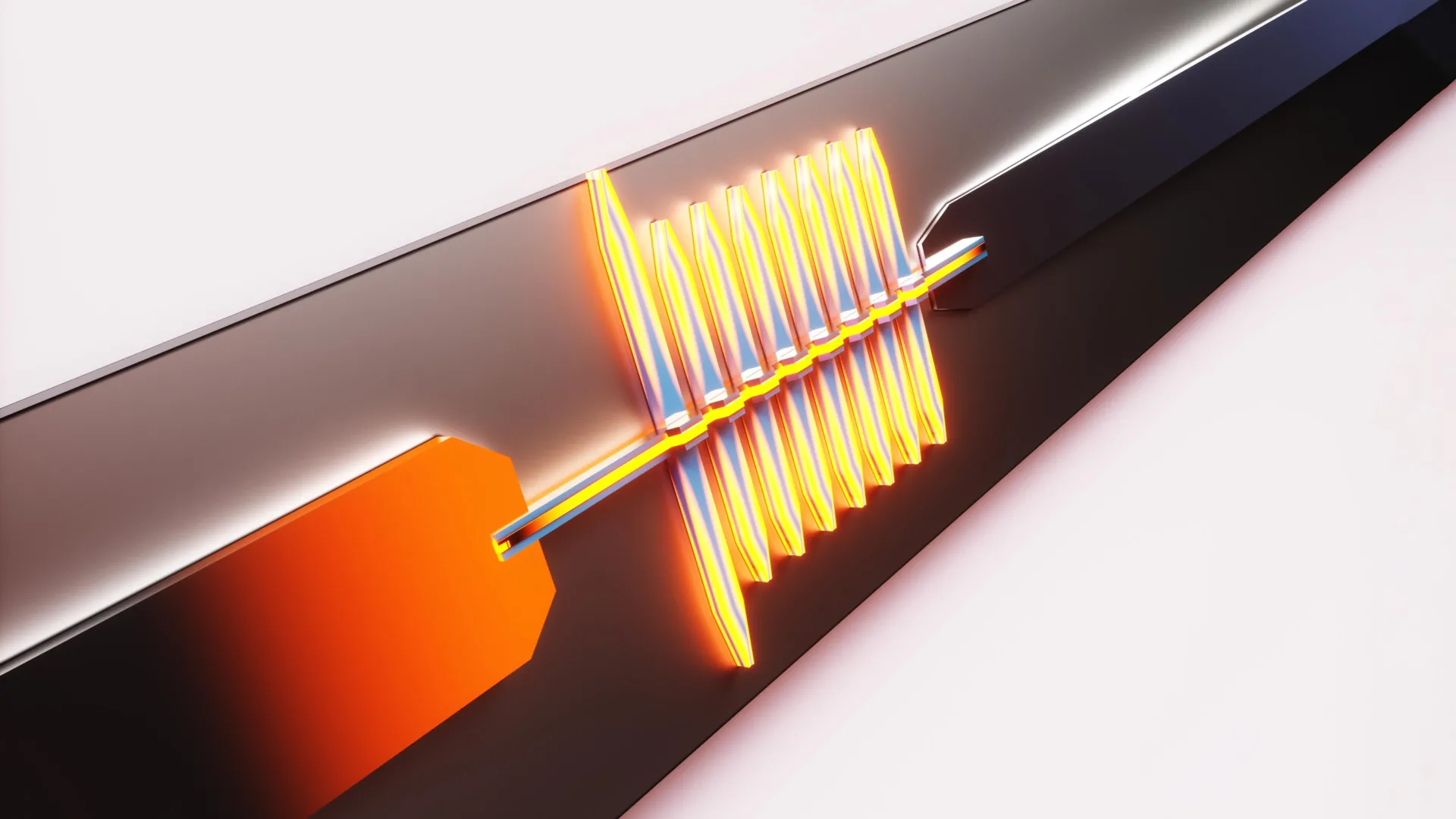
The technical foundation of this achievement lies in the innovative use of a hybrid metal sensor. Traditional energy detectors often rely on semiconductors or large-scale thermometers that lack the responsiveness required for quantum-scale events. The team at Aalto University, led by Academy Professor Mikko Möttönen, utilized a specialized calorimeter that exploits the delicate boundary between two different states of matter.
The sensor is constructed from a combination of superconductors—materials that exhibit zero electrical resistance at ultra-low temperatures—and normal conductors, which maintain a degree of resistance. By integrating these materials, the researchers created a system where superconductivity becomes a "fragile" phenomenon. In this state, even the most infinitesimal increase in temperature in the normal-conducting component causes a measurable collapse or weakening of the superconducting properties in the adjacent material.
"That combination of metals makes superconductivity such a fragile phenomenon that it weakens immediately if the temperature in the ultracold conductor rises even a little bit," explained Professor Möttönen. "This makes it such a sensitive setup."
The device operates within a dilution refrigerator at millikelvin temperatures, just a fraction of a degree above absolute zero. At these temperatures, thermal fluctuations are minimized, allowing the sensor to isolate the energy from the incoming microwave pulse. The researchers directed a controlled microwave signal into the sensor and, through a rigorous process of signal filtering and noise reduction, confirmed the detection of the 0.83 zeptojoule pulse.
Chronology of the Research and Development
The path to this discovery was built on nearly a decade of iterative research within the Finnish quantum ecosystem.
- 2016–2018: Early development of bolometers (devices that measure the power of incident electromagnetic radiation) at Aalto University. Initial designs focused on improving the speed of the sensors to match the requirements of quantum qubit readouts.
- 2019: The team successfully demonstrated a bolometer capable of reading out superconducting qubits, though the sensitivity remained above the zeptojoule level.
- 2020–2022: Collaboration intensified between Aalto University, VTT, and IQM Quantum Computers. The focus shifted from power measurement (bolometry) to energy measurement (calorimetry), requiring a fundamental redesign of the sensor’s thermal mass.
- 2023: The experimental phase was conducted at OtaNano, Finland’s national research infrastructure. Researchers utilized electron-beam lithography to fabricate the hybrid metal sensors with nanometer precision.
- 2024: Final data verification and publication in Nature Electronics, confirming the 0.83 zeptojoule milestone.
This timeline highlights the transition from theoretical quantum thermodynamics to practical, high-precision engineering. The involvement of IQM, a European leader in quantum hardware, underscores the commercial and industrial relevance of the project.
Implications for Quantum Computing Architecture
One of the most immediate applications for this ultra-sensitive calorimeter is the enhancement of quantum computer readouts. In current superconducting quantum computers, qubits are typically measured using parametric amplifiers. While effective, these amplifiers are often bulky, expensive, and introduce a degree of noise into the system. Furthermore, they often require the signal to be sent from the millikelvin environment of the qubit to a higher-temperature stage for amplification, which can introduce thermal disturbances.
The new calorimeter offers a "silent" alternative. Because it operates at the same millikelvin temperatures as the qubits themselves, it can be integrated directly onto the quantum chip.
"A calorimeter operates in the same millikelvin temperatures that qubits require," said Möttönen. "This introduces less disturbance into the system as we don’t have to bring the device to a high temperature or amplify the qubit measurement signal to get a result."
By eliminating the need for external amplification, quantum engineers can reduce the "thermal load" on the dilution refrigerators that house these systems. This could allow for the scaling of quantum computers from dozens of qubits to thousands or even millions, as the measurement infrastructure becomes more compact and energy-efficient.
The Search for Dark Matter and Axions
Beyond the confines of the laboratory, the breakthrough has profound implications for astrophysics and the search for dark matter. One of the leading candidates for dark matter is the axion—a hypothetical, extremely light particle that interacts very weakly with ordinary matter.
Theoretical models suggest that if axions exist, they could be converted into microwave photons in the presence of a strong magnetic field. However, because axions are so rare and their interactions so weak, the resulting microwave signal would be incredibly faint and occur at unpredictable intervals.
The Finnish team’s calorimeter is uniquely suited for this "needle in a haystack" search. Unlike many sensors that require a continuous stream of data to register a signal, a calorimeter measures the total energy of a single event.
"We want to make this setup capable of measuring input that has an arbitrary time of arrival," Möttönen noted. "This is important for things like detecting dark-matter axions in space when you have no idea when they might reach your system."
The ability to detect a sub-zeptojoule energy burst means that researchers could potentially identify the signature of a single axion-to-photon conversion, providing the first direct evidence of dark matter’s composition.
Supporting Data and Technical Specifications
The experiment utilized a "nanobolometer" based on a gold-palladium (AuPd) absorber. The following technical specifications were central to the achievement:
- Detection Threshold: 0.83 zeptojoules ($8.3 times 10^-22$ J).
- Operating Temperature: 10–30 millikelvin (mK).
- Absorber Material: A thin film of AuPd, chosen for its low heat capacity and compatibility with superconducting leads.
- Resolution: The energy resolution was found to be sufficient to distinguish between states that differ by only a few microwave photons.
- Signal Filtering: The team employed a series of cryogenic filters to prevent blackbody radiation from the warmer stages of the refrigerator from reaching the sensor, ensuring that the detected pulse was indeed from the intended microwave source.
The data indicates that the sensor’s thermal recovery time—the time it takes for the device to return to its base temperature after a detection—is fast enough to allow for high-repetition-rate measurements, a prerequisite for practical use in quantum computing.
Institutional Support and Global Context
The success of this research is a testament to the robust funding and infrastructure ecosystem in Finland. The work was carried out at OtaNano, a national facility that provides researchers with state-of-the-art tools for nanofabrication and ultra-low temperature physics.
The project received primary funding from the Future Makers initiative, a joint venture supported by the Jane and Aatos Erkko Foundation and the Technology Industries of Finland Centennial Foundation. These organizations have prioritized "high-risk, high-reward" research that positions Finland as a global hub for quantum technology.
The achievement places the Aalto-VTT-IQM team at the forefront of a global race. Groups at MIT, ETH Zurich, and various national laboratories in the United States are also pursuing ultra-sensitive bolometry. However, the detection of a 0.83 zeptojoule pulse sets a new benchmark for sensitivity in the microwave regime, demonstrating that calorimetric detection is a viable, and perhaps superior, alternative to traditional electronic amplification.
Future Outlook: Toward Single-Photon Counting
The ultimate goal for the research team is the realization of a true single-microwave-photon detector. While the current device can detect pulses of 0.83 zeptojoules, a single microwave photon at common quantum computing frequencies (around 5–10 GHz) carries even less energy—roughly 0.003 to 0.006 zeptojoules.
To reach this next level of sensitivity, the researchers plan to further reduce the volume of the absorber and improve the thermal isolation of the sensor. If successful, the ability to count individual microwave photons would provide a definitive tool for verifying quantum states and could lead to new types of "quantum radars" or secure communication networks that operate with unprecedented efficiency.
As quantum technology transitions from academic curiosity to industrial reality, the precision of measurement tools will be the deciding factor in the performance of these systems. By breaking the zeptojoule barrier, the Finnish research team has provided a glimpse into a future where the smallest units of energy in the universe are no longer beyond our reach.