The landscape of modern condensed matter physics is currently undergoing a paradigm shift as researchers at Aalto University have developed a groundbreaking quantum-inspired algorithm capable of simulating exotic quantum materials at an unprecedented scale. By utilizing advanced mathematical frameworks known as tensor networks, the research team has successfully modeled the behavior of non-periodic quantum materials—specifically topological quasicrystals—containing over 268 million atomic sites. This achievement addresses a long-standing bottleneck in material science: the "exponential wall" that prevents classical supercomputers from accurately predicting the properties of complex, large-scale quantum systems. The implications of this work extend far beyond theoretical physics, offering a potential roadmap for the development of dissipationless electronics and more stable quantum computing architectures.
For decades, the search for new materials has been the engine of technological progress. However, as the industry moves toward the quantum regime, the complexity of the materials being studied has outpaced the capabilities of traditional simulation tools. In materials like graphene, a single layer of carbon atoms arranged in a hexagonal lattice, the properties are well-understood. But when these layers are stacked and twisted at specific angles—a field known as "twistronics"—they form moiré patterns that give rise to entirely new phenomena, such as unconventional superconductivity and correlated insulating states. When these structures become even more complex, forming quasicrystals or "super-moiré" materials, the mathematical requirements for simulation grow exponentially, often involving more than a quadrillion variables.
The Challenge of Non-Periodicity in Quantum Materials
To understand the magnitude of the Aalto University breakthrough, one must first grasp the inherent difficulty of simulating quasicrystals. Traditional crystals are periodic; their atomic structure repeats in a predictable pattern across three-dimensional space. This periodicity allows physicists to use "Bloch’s Theorem," a mathematical shortcut that enables the simulation of a massive crystal by modeling only a small, repeating unit cell.
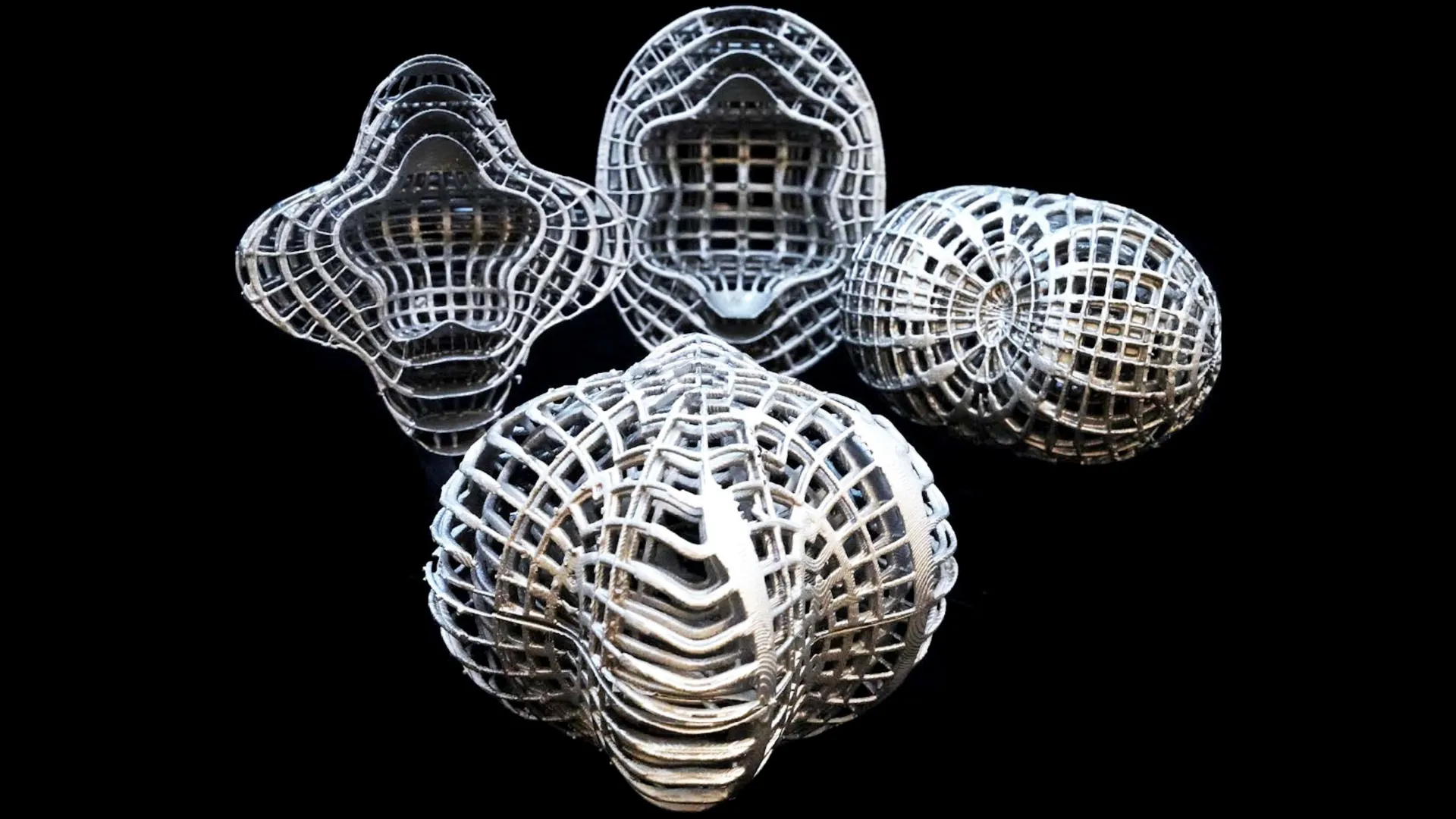
Quasicrystals, however, lack this translational symmetry. While they possess a long-range order and produce sharp diffraction patterns, they never truly repeat. This non-periodicity means that the "unit cell" shortcut cannot be applied. To understand the global properties of a quasicrystal, researchers must simulate the entire structure simultaneously. For a material large enough to be used in a practical electronic device, the number of interactions that must be calculated is staggering. In the past, this meant that scientists were limited to studying tiny fragments of these materials, which often failed to capture the emergent topological properties that appear only at larger scales.
The Aalto University team, led by Assistant Professor Jose Lado, recognized that the mathematical complexity of these materials mirrors the complexity found in quantum many-body systems. By treating the simulation of a quasicrystal as a quantum computation problem, they were able to apply techniques originally designed for quantum information theory to the field of material science.
Chronology of Discovery: From Magic Angles to Super-Moiré Structures
The journey toward this algorithmic breakthrough began in 2018, when researchers at the Massachusetts Institute of Technology (MIT) discovered "magic-angle" twisted bilayer graphene. By twisting two layers of graphene to exactly 1.1 degrees, the material suddenly became a superconductor. This discovery launched the field of twistronics, as scientists realized that the "twist" was a new degree of freedom for engineering material properties.
Between 2019 and 2022, the focus shifted from simple bilayers to more complex multi-layer stacks. Researchers began experimenting with "super-moiré" materials—structures formed by stacking three or more layers or by combining different two-dimensional materials with slightly mismatched lattices. These structures create interference patterns on top of interference patterns, leading to even more exotic states of matter.
In 2023, the research community identified topological quasicrystals as a primary frontier. These materials host "topological excitations"—quantum states that are remarkably stable against external noise and defects. However, the inability to simulate these materials at scale remained a significant hurdle. The Aalto University project, funded by the European Research Council (ERC) under the ULTRATWISTROICS grant and supported by the Center of Excellence in Quantum Materials (QMAT), was launched to bridge this gap between theoretical potential and computational reality.
The Technical Breakthrough: Tensor Networks and Exponential Speed-Up
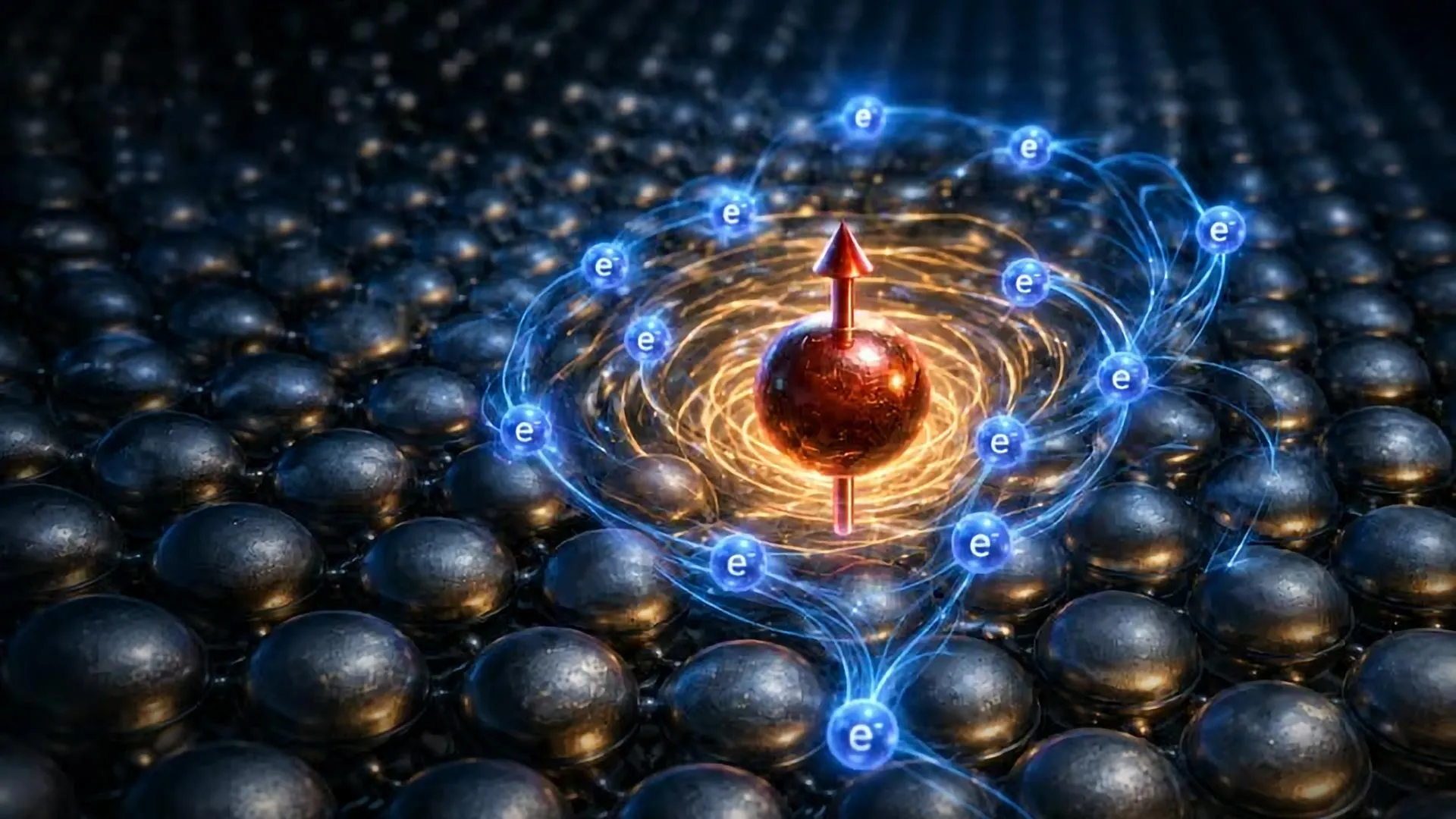
The core of the new discovery lies in the use of tensor networks. In the context of quantum physics, a tensor network is a way of representing a high-dimensional quantum state as a series of interconnected, lower-dimensional tensors. It is essentially a sophisticated form of data compression that retains the essential "entanglement" information of a system while discarding the redundant data that usually bogs down classical computers.
"Quantum computers work in exponentially large computational spaces," explained Tiago Antão, the paper’s lead author and a doctoral researcher at Aalto University. "We used a special family of algorithms to encode those spaces, known as tensor networks, to compute a quasicrystal with over 268 million sites. Our algorithm shows how colossal problems in quantum materials can be directly solved with the exponential speed-up that comes from encoding the problem as a quantum many-body system."
By reformulating the material’s structural problem into a quantum many-body problem, the team achieved what is essentially a "quantum-inspired" advantage. They were able to observe how topological excitations distribute themselves across a quasicrystal. Unlike periodic crystals, where these excitations might be uniform, in quasicrystals they are distributed unevenly, clinging to specific regions of the non-repeating pattern. Understanding this distribution is critical for designing "topological qubits"—the building blocks of a fault-tolerant quantum computer.
Official Responses and the Finnish Quantum Ecosystem
The research, recently published as an "Editor’s Suggestion" in the prestigious journal Physical Review Letters, has drawn significant attention from the international physics community. Within Finland, the work is seen as a flagship success for the nation’s growing quantum infrastructure.
Assistant Professor Jose Lado emphasized the symbiotic relationship between the algorithm and future hardware. "Crucially, these new quantum algorithms can enable the development of new quantum materials to build new paradigms of quantum computers, creating a productive two-way feedback loop," Lado stated. He further noted that while the current work is a simulation, the infrastructure for physical verification is already in place. "Our method can be adapted to run on real quantum computers, once they reach necessary scale and fidelity. In particular, the new AaltoQ20 and the Finnish Quantum Computing Infrastructure can play a significant role for future demonstrations."
The AaltoQ20 is part of a broader national effort that includes the VTT Technical Research Centre of Finland, which is currently working toward a 50-qubit and eventually a 300-qubit quantum computer. The ability to simulate 268 million sites on a classical system using quantum-inspired logic provides a vital bridge until these quantum computers are fully mature.
Broader Impact: Solving the Energy Crisis of the AI Era
While the immediate applications of this research are in the realm of quantum computing, the long-term implications for the global electronics industry are profound. We are currently entering an era where the energy demands of artificial intelligence (AI) and massive data centers are becoming unsustainable. Modern silicon-based electronics generate significant heat due to electrical resistance, a phenomenon known as dissipation. As transistors shrink and data processing speeds increase, managing this heat has become a multi-billion-dollar challenge.
The "topological quasicrystals" modeled by the Aalto team offer a potential solution: dissipationless electronics. These are materials that can conduct electricity with zero energy loss, even at relatively high temperatures or under conditions where traditional superconductors would fail. By using the topological protection inherent in these materials, engineers could theoretically design circuits that do not heat up, regardless of the workload.
Data from recent environmental impact reports suggest that data centers currently consume approximately 1% to 1.5% of global electricity use, a figure expected to rise sharply as AI model training becomes more prevalent. The transition to dissipationless quantum materials could reduce the energy footprint of global computing by orders of magnitude, making the "AI revolution" environmentally viable.
Future Outlook: Designing the Next Generation of Qubits
The next phase of the Aalto University team’s research will involve moving from theoretical simulation to experimental design. Using the insights gained from their 268-million-site simulation, the researchers intend to work with experimentalists to fabricate super-moiré quasicrystals using van der Waals heterostructures—stacks of ultra-thin materials held together by weak atomic forces.
The ultimate goal is the creation of a "topological qubit." Current qubits, such as those used by IBM or Google, are extremely fragile; the slightest vibration or temperature change can cause them to lose their quantum state (decoherence). Topological qubits, however, store information in the "braiding" of excitations within a material. Because these states are tied to the overall topology of the material rather than a single atom, they are naturally shielded from noise.
The Aalto team’s algorithm provides the "blueprint" for where these stable states exist within a complex quasicrystal. As Jose Lado concluded, "The quantum-inspired algorithm we demonstrated enables us to create super-moiré quasicrystals several orders of magnitude above the capabilities of conventional methods. That is an instrumental step towards designing topological qubits with super-moiré materials."
In the coming years, the integration of these materials into the Finnish Quantum Computing Infrastructure (FiQCI) will likely serve as a litmus test for the practical utility of super-moiré materials. If successful, the "two-way feedback loop" described by Lado could accelerate the arrival of the quantum age, turning what was once a mathematical impossibility into the foundation of 21st-century technology.