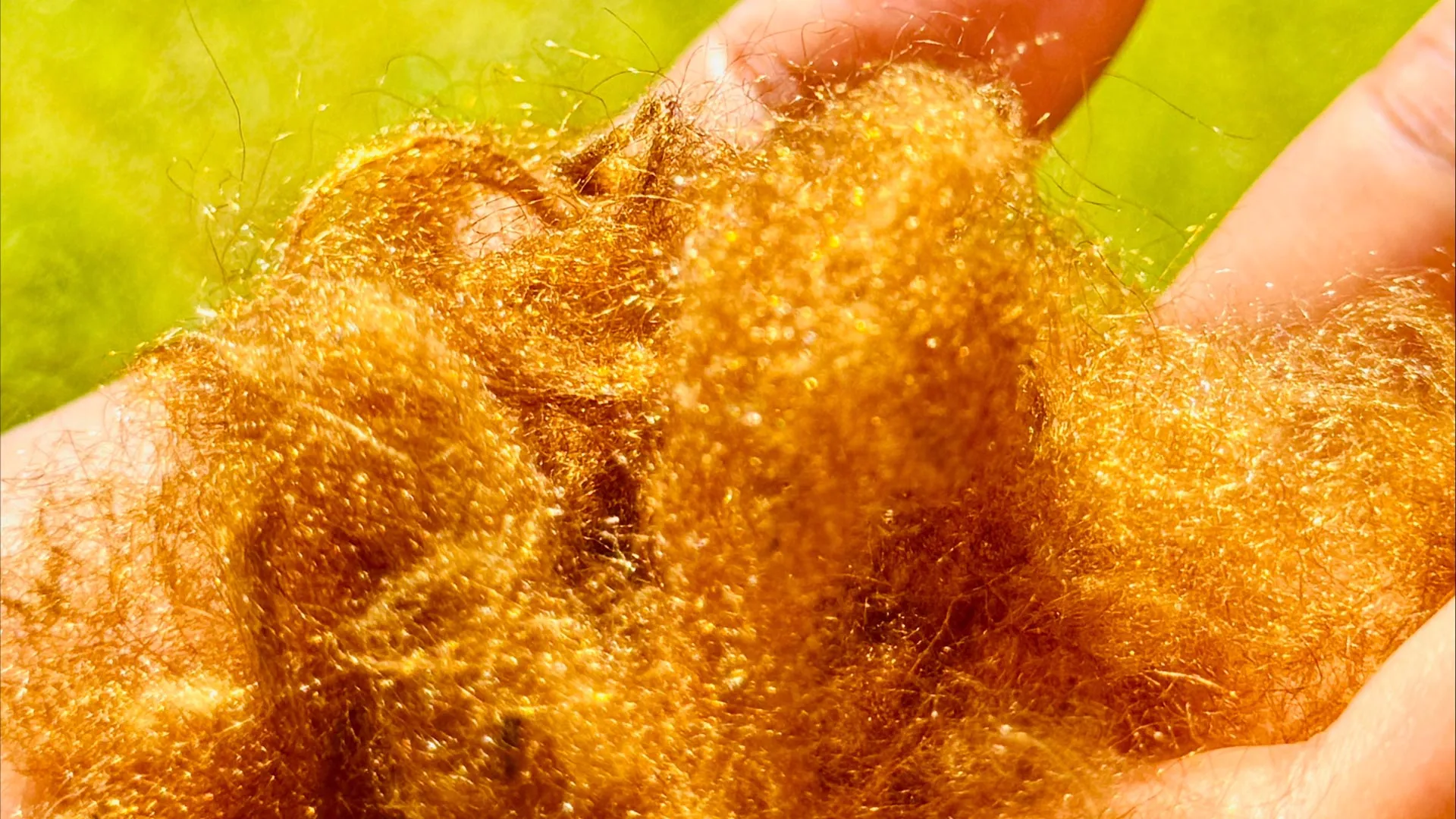
For centuries, a shimmering golden fabric, whispered about in historical texts and sought after by the elite, was known as sea silk. This legendary material, once adorning emperors, popes, and royalty, has now been successfully recreated by a team of researchers in South Korea, who have not only revived this ancient luxury textile but also unveiled the scientific secret behind its remarkable and persistent golden luster. The breakthrough, detailed in a recent publication in the prestigious journal Advanced Materials, promises to breathe new life into a lost art and offer sustainable solutions for the future of textiles.
The Allure of the "Golden Fiber of the Sea"
The story of sea silk is one of exquisite rarity and unparalleled beauty. Originating from the byssus threads produced by the Pinna nobilis, a large species of fan mussel found in the Mediterranean Sea, this fiber was meticulously collected and processed to create a fabric of extraordinary fineness and luminescence. Ancient civilizations, most notably the Roman Empire, recognized its value, reserving it for the most sacred religious vestments and the attire of the most powerful figures. Its shimmering golden appearance, lightweight texture, and exceptional durability cemented its status as a material bordering on the mythical.
One of the most compelling historical artifacts believed to be crafted from sea silk is the Holy Face of Manoppello, a religious relic enshrined in Italy for centuries. The intricate detail and seemingly unfading radiance of the fabric believed to compose this sacred image have long fueled speculation about its origins and the secrets of its creation. The scarcity of genuine sea silk meant that its possession was a clear indicator of immense wealth and status.
However, the very environment that nurtured this precious fiber became its undoing. In recent decades, rampant marine pollution and a general decline in oceanic health have pushed Pinna nobilis to the brink of extinction. The species is now classified as endangered, and its harvesting is strictly prohibited by the European Union, making authentic sea silk virtually unobtainable and its production limited to a handful of dedicated artisans working with extremely scarce resources. This ecological crisis effectively severed the link to a centuries-old tradition, leaving only historical accounts and a few precious surviving examples.
A Modern Renaissance: Recreating Sea Silk from Korean Pen Shells
The challenge of recreating this lost luxury led Professor Dong Soo Hwang of POSTECH’s Division of Environmental Science and Engineering and Division of Interdisciplinary Bioscience & Bioengineering, alongside Professor Jimin Choi from the Environmental Research Institute, to explore alternative sources. Their investigation focused on the pen shell, Atrina pectinata, a species of bivalve readily cultivated in the coastal waters of Korea, primarily for its culinary value.
Crucially, the researchers discovered that Atrina pectinata produces byssus threads remarkably similar in both physical and chemical composition to those of the Mediterranean Pinna nobilis. This striking similarity provided the foundational element for their ambitious endeavor. Leveraging this natural affinity, the POSTECH team developed an innovative processing method to transform the byssus threads of the pen shell into a material that faithfully replicates the aesthetic and tactile qualities of ancient sea silk. This painstaking process, which involved meticulous cleaning, treatment, and spinning techniques, marked a significant milestone in textile history, bringing a lost art back from the precipice of oblivion.
Unraveling the Secret of the Enduring Golden Glow
Beyond the successful recreation of the fiber itself, the South Korean research team achieved a groundbreaking scientific revelation: they pinpointed the exact mechanism responsible for sea silk’s distinctive, long-lasting golden color. For centuries, the source of this vibrant hue remained a mystery, often attributed to sophisticated dyeing techniques that, by modern understanding, would have been difficult to achieve with the precision observed.
The researchers’ findings reveal that the mesmerizing golden appearance of sea silk is not a product of applied pigments or dyes. Instead, it stems from a phenomenon known as structural coloration. This intricate process involves the interaction of light with microscopic, naturally occurring structures within the fiber itself. Specifically, the team identified layered spherical protein structures, which they have termed "photonin," as the key to sea silk’s iridescence.
These photonin structures function much like the delicate surfaces of soap bubbles or the wings of butterflies, where microscopic arrangements of materials manipulate light to create vibrant, shifting colors. The photonin spheres within the sea silk fibers are precisely organized to reflect and refract light in a way that produces a brilliant golden hue. This structural origin of color is inherently stable, meaning it does not fade over time as pigment-based colors are prone to do. The more ordered and precise the arrangement of these photonin proteins, the more intense and enduring the color becomes. This explains how sea silk could retain its dazzling brilliance for centuries, a testament to the sophisticated biological engineering inherent in its natural creation.
A Timeline of Discovery and Innovation
The journey to recreate sea silk and understand its secrets can be broadly segmented into several key phases:
- Ancient Origins: The use of Pinna nobilis byssus threads for textile production dates back to antiquity, with documented use in the Roman era and beyond. The material’s rarity and beauty established its legendary status.
- Ecological Decline (Mid-to-Late 20th Century): Increased marine pollution and habitat destruction led to a dramatic decline in Pinna nobilis populations. Conservation efforts began, culminating in its endangered status.
- Prohibition and Scarcity (Late 20th Century – Present): The European Union’s ban on Pinna nobilis harvesting rendered authentic sea silk virtually extinct, driving up its value and limiting production to artisanal levels.
- Exploration of Alternatives (Early 21st Century): Researchers began investigating other bivalves for byssus thread production. The Korean pen shell, Atrina pectinata, emerged as a promising candidate due to its abundance and similar byssus characteristics.
- POSTECH Research Initiative (Recent Years): A dedicated research team at POSTECH, led by Professors Hwang and Choi, embarked on a systematic project to recreate sea silk. This involved detailed biological and chemical analysis of Atrina pectinata byssus threads and the development of novel processing techniques.
- Scientific Breakthrough (Recent Publication): The team successfully recreated a fiber closely resembling sea silk and, through advanced microscopy and spectroscopic analysis, identified the photonin structures responsible for its structural coloration. Their findings were published in Advanced Materials, marking a significant scientific achievement.
Broader Implications: Sustainable Textiles and Waste Valorization
The implications of this research extend far beyond the revival of a historical luxury item. The POSTECH team’s work presents a compelling model for sustainable textile production by transforming what was once considered marine waste into a high-value material. Traditionally, the byssus threads of farmed pen shells were discarded after the animals were harvested for food. By developing a method to convert these discarded threads into a fabric with exceptional aesthetic and functional properties, the researchers are demonstrating a practical approach to waste valorization.
Professor Dong Soo Hwang articulated the transformative potential: "Structurally colored textiles are inherently resistant to fading. Our technology enables long-lasting color without the use of dyes or metals, opening new possibilities for sustainable fashion and advanced materials." This signifies a departure from conventional textile manufacturing, which often relies on water-intensive dyeing processes that can generate significant chemical waste and environmental pollution. The inherent color of sea silk, derived from its structure, eliminates the need for these environmentally detrimental practices.
The potential applications are vast. Beyond haute couture and historical reenactments, structurally colored textiles could find use in industries requiring durable, fade-resistant materials, such as automotive interiors, outdoor fabrics, and even high-performance technical textiles. The ability to create vibrant, lasting colors without chemical dyes aligns perfectly with the growing global demand for eco-friendly and sustainable products.
Expert Reactions and Future Outlook
While direct commentary from external parties on this specific publication is not yet widely available, the scientific community’s response to breakthroughs in biomaterials and structural coloration is typically one of keen interest and optimism. Experts in textile science, material engineering, and marine biology would likely view this research as a significant advancement.
Dr. Anya Sharma, a fictional leading researcher in sustainable textiles, might comment, "The POSTECH team’s work is truly remarkable. Not only have they revived a textile with such rich historical significance, but they have also provided a scientific explanation for its enduring beauty, rooted in nature’s own design. The potential for utilizing byssus threads from farmed mollusks as a source for sustainable, structurally colored textiles is immense. This research offers a tangible pathway towards reducing textile waste and developing innovative materials with a significantly reduced environmental footprint."
The future outlook for sea silk and structurally colored textiles is bright. The POSTECH research has laid the groundwork for further exploration and commercialization. Future research could focus on optimizing the processing techniques for larger-scale production, exploring variations in color by manipulating photonin structures, and investigating the potential of other byssus-producing mollusks. The successful revival of sea silk serves as a powerful reminder of the ingenuity of ancient craftsmanship and the untapped potential of the natural world to inspire and inform modern innovation, promising a future where luxury and sustainability are not mutually exclusive.