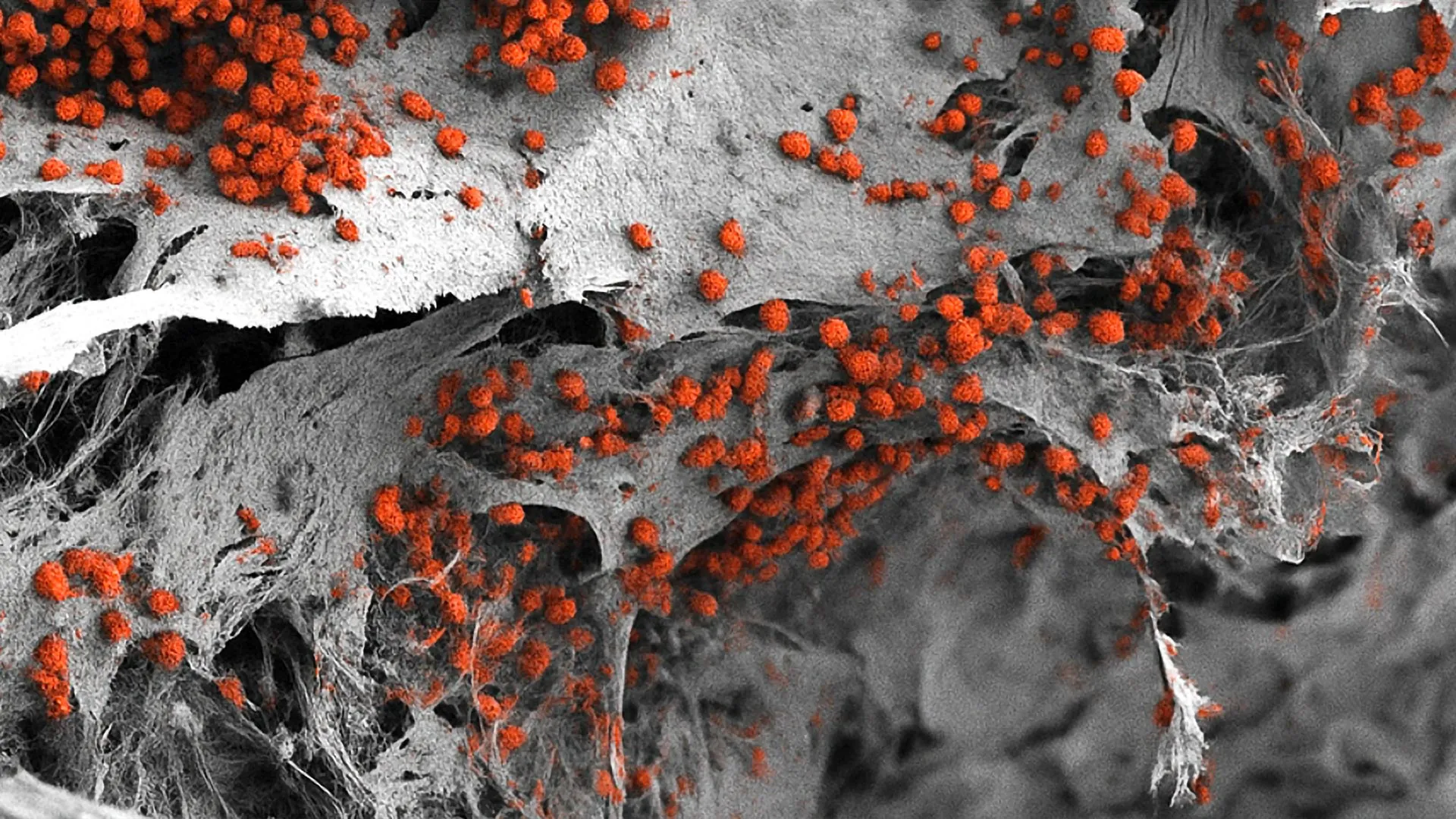
In a landmark advancement for reproductive science, researchers at Cornell University have announced a significant breakthrough in the quest for a safe, reversible, and 100% effective nonhormonal male contraceptive. This development, often described as the "holy grail" of reproductive medicine, marks a shift away from traditional hormonal methods that have long dominated the landscape of birth control research. The study, the culmination of six years of rigorous experimentation, demonstrates that by targeting a specific stage of sperm production, fertility can be temporarily suspended without altering the genetic integrity of the individual or causing permanent damage to the reproductive system.
The findings, published in the Proceedings of the National Academy of Sciences (PNAS), utilize a proof-of-principle approach in mouse models to show that interrupting meiosis—the specialized cell division process that results in the production of sex cells—can effectively halt the maturation of sperm. Unlike previous attempts at male contraception that focused on suppressing testosterone or other hormones, this method targets the cellular machinery directly within the testes, offering a path toward a drug that avoids the systemic side effects typically associated with hormonal intervention.
The Science of Meiotic Interruption
At the heart of this discovery is the manipulation of meiosis, specifically a phase known as prophase 1. Meiosis is the process by which a single cell divides twice to produce four cells containing half the original amount of genetic information. In males, this process is continuous and essential for the production of viable sperm. The Cornell team, led by Paula Cohen, a professor of genetics and director of the Cornell Reproductive Sciences Center, identified that by disrupting this early stage, the body could be prevented from completing the development of sperm cells.
To achieve this interruption, the researchers employed a small molecule inhibitor known as JQ1. Originally developed for the study of cancer and various inflammatory diseases, JQ1 is known to target bromodomain proteins, which play a critical role in gene expression during meiosis. Specifically, JQ1 interferes with the function of BRDT, a testis-specific protein that is essential for the remodeling of chromatin during sperm development.
While JQ1 itself is not intended for human use as a contraceptive due to its potential for neurological side effects and its lack of specificity in long-term applications, its use in this study served as a vital chemical tool. It allowed the researchers to prove that the "meiotic arrest" strategy is biologically sound. By applying JQ1 to male mice, the team was able to demonstrate a total cessation of sperm production, rendering the subjects infertile for the duration of the treatment.
A Six-Year Proof of Principle
The study was not a brief undertaking; it required over half a decade of observation to ensure the safety and reversibility of the method. One of the primary concerns in contraceptive research is the potential for "off-target" effects or permanent sterility. The Cornell team meticulously monitored the mice to determine if the interruption of meiosis would damage the spermatogonial stem cells—the reservoir of cells that ensure a lifetime supply of sperm.
"We didn’t want to impact the spermatogonial stem cells, because if you kill those, a man will never become fertile again," explained Professor Cohen. The study confirmed that by targeting prophase 1, the treatment leaves the underlying stem cell population intact. This ensures that once the inhibitor is removed, the "pipeline" of sperm production can resume its natural course.
The results were definitive. Male mice treated with JQ1 for a period of three weeks showed a complete lack of mature sperm. However, the most critical data point emerged following the cessation of the treatment. Within approximately six to nine weeks—the time required for a full cycle of spermatogenesis in mice—the subjects regained full fertility. Subsequent breeding trials confirmed that the mice were able to sire healthy offspring, with no observable genetic defects or developmental issues in the following generations.
The Necessity of New Male Contraceptive Options
For over sixty years, the burden of pharmacological contraception has rested almost exclusively on women. Since the approval of the first oral contraceptive pill in 1960, women have had access to a variety of highly effective hormonal and nonhormonal options. In contrast, male options have remained stagnant for centuries, limited primarily to condoms and vasectomies.
While vasectomies are highly effective, they are intended to be permanent. Although surgical reversals exist, they are expensive, invasive, and do not guarantee a return to fertility. This has created a significant gap in the family planning market, as many men express a desire for a long-acting, reversible contraceptive (LARC) that does not require surgery.
Furthermore, previous attempts to develop a "male pill" based on hormones have faced significant hurdles. Hormonal approaches typically involve the administration of testosterone or progestins to signal the brain to stop the production of follicle-stimulating hormone (FSH) and luteinizing hormone (LH), which in turn stops sperm production. However, these methods often result in side effects similar to those experienced by women on the pill, including mood swings, acne, weight gain, and changes in libido. In some clinical trials, these side effects were deemed unacceptable by regulatory bodies, leading to the cancellation of promising research. The Cornell study’s nonhormonal approach bypasses these systemic issues entirely.
Detailed Chronology of the Research
The path to this discovery involved several phases of investigation:
- Initial Discovery (2010–2012): The molecule JQ1 was first synthesized and identified as a potent inhibitor of the BET (bromodomain and extra-terminal) family of proteins. While its initial focus was oncology, researchers soon noticed its profound effect on male fertility in animal models.
- Hypothesis Formulation (2014–2016): The Cornell team hypothesized that the disruption of the BRDT protein during meiosis could serve as a precise "on-off switch" for fertility.
- Long-term Mouse Trials (2017–2023): The researchers conducted extensive longitudinal studies to observe the effects of JQ1 over multiple reproductive cycles. This phase was crucial for proving that the cessation of sperm production was 100% effective and, more importantly, 100% reversible.
- Genetic Analysis and Offspring Monitoring (2022–2023): The team performed deep-sequencing and histological analysis to ensure that the meiosis process recovered perfectly and that the resulting sperm were genetically sound.
- Publication (April 2024): The findings were finalized and published in PNAS, providing the scientific community with a validated target for future drug development.
Strategic Advantages of Targeting Meiosis
The decision to target meiosis rather than the later stages of sperm development (spermiogenesis) or the earlier stem cell stage was a strategic choice. If a drug targets the final stages of sperm maturation, there is a risk that "escapee" sperm—sperm that were already near completion when the drug was administered—could still fertilize an egg, leading to a higher failure rate in the first weeks of use.
By targeting meiosis, the Cornell team ensures that the "assembly line" is stopped much earlier. This leads to a more reliable "zero-sperm" count (azoospermia). Furthermore, because meiosis is a process unique to the production of germ cells, the risk of the drug affecting other organs or systemic functions is significantly reduced, provided the drug is engineered to be specific to the BRDT protein found in the testes.
Future Implications and Delivery Mechanisms
While the current study used JQ1 as a proof of concept, the next step for researchers is to develop a more refined molecule that targets the BRDT protein without the side effects associated with general bromodomain inhibition. Once a suitable candidate molecule is identified and passes preclinical safety trials, it could move into human clinical trials.
Professor Cohen envisions a future where this contraceptive could be administered in a way that fits seamlessly into a man’s lifestyle. "If developed for human use, this type of male contraceptive could be delivered as an injection given every three months or possibly as a patch to maintain effectiveness," she noted.
An injectable or patch-based delivery system would categorize the drug as a Long-Acting Reversible Contraceptive (LARC). LARCs are considered the gold standard in family planning because they eliminate the "user error" associated with daily pills. A three-month injection would provide a "set-and-forget" convenience similar to the Depo-Provera shot used by women, but without the hormonal fluctuations.
Societal and Economic Impact
The development of a nonhormonal male contraceptive has implications that extend far beyond the laboratory. Sociologically, it represents a move toward "reproductive equity," allowing men to take an active and autonomous role in pregnancy prevention. Surveys have consistently shown that a significant percentage of men in various cultures are willing to use a new male contraceptive if one were made available.
Economically, the introduction of such a drug could disrupt the multibillion-dollar global contraceptive market. By providing a reliable alternative to female-centric methods, pharmaceutical companies could tap into a massive, underserved demographic. Furthermore, by reducing the rate of unintended pregnancies—which account for approximately 45% of all pregnancies in the United States—the economic burden on healthcare systems and social services could be significantly reduced.
Conclusion: The Road Ahead
While the Cornell study is a monumental step forward, the transition from mouse models to human pharmacy shelves is a process that typically takes a decade or more. The scientific community must now focus on synthesizing a JQ1 derivative that is highly selective for the testis-specific BRDT protein. Following this, the drug must undergo three phases of human clinical trials to prove safety, efficacy, and reversibility in men.
Nevertheless, the Cornell research provides the first definitive proof that the machinery of meiosis can be safely paused and restarted. By successfully navigating the complexities of the "blood-testis barrier" and proving that the resulting offspring are healthy, the team has cleared the most significant scientific hurdles in the way of a nonhormonal male pill. As the quest for the "holy grail" of contraception continues, the work of Paula Cohen and her colleagues stands as a foundational pillar for the future of reproductive health.