Amazon Web Services (AWS) has announced the launch of Amazon Bio Discovery, a groundbreaking application poised to revolutionize drug discovery by drastically accelerating the antibody design process. This innovative platform seamlessly integrates artificial intelligence (AI)-driven design with rapid experimental validation, exemplified by its demonstrated ability to compress Memorial Sloan Kettering Cancer Center’s (MSK) antibody design timelines from a year to mere weeks. The launch marks a significant milestone in the convergence of cloud computing, AI, and biotechnology, promising to bring novel therapies to patients faster than ever before.
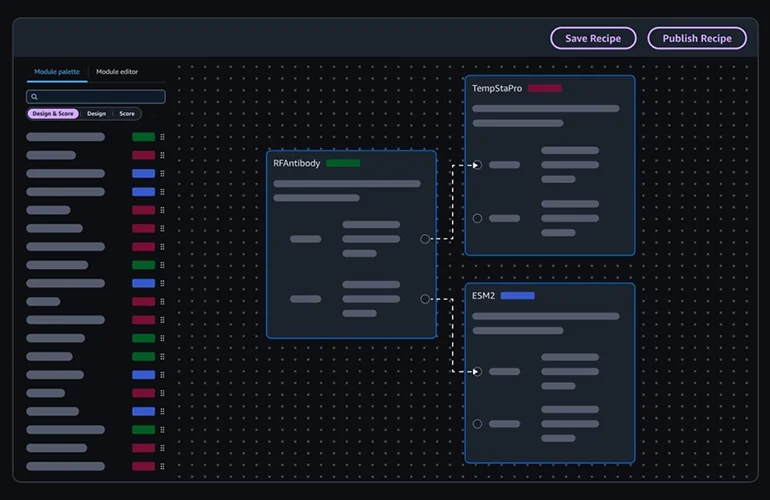
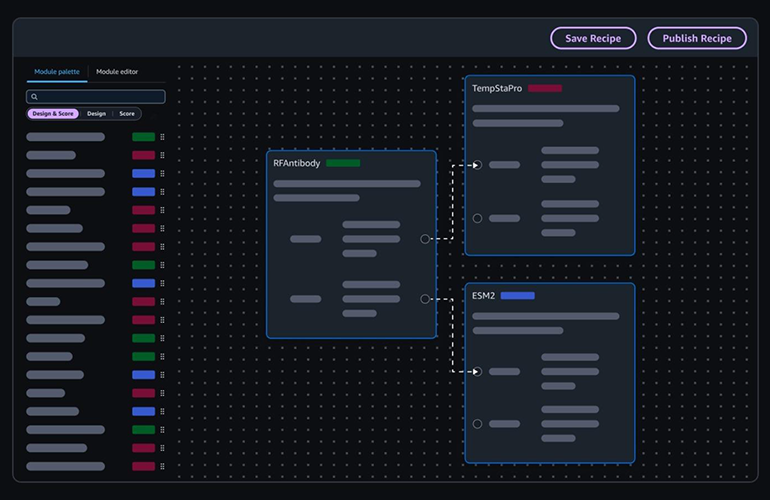
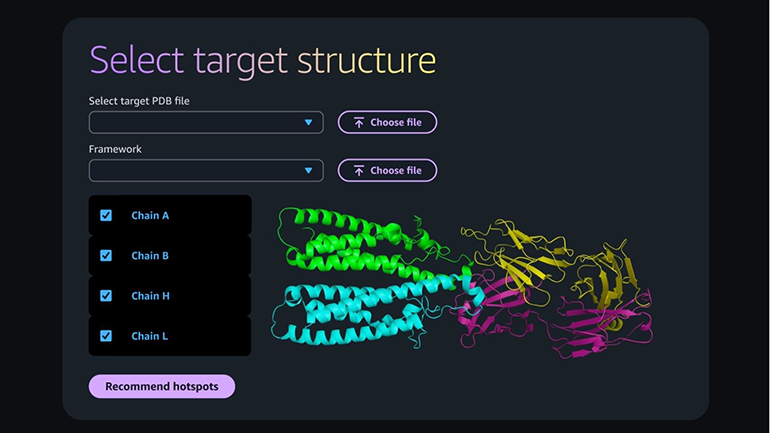
The core functionality of Amazon Bio Discovery lies in its sophisticated orchestration of AI-designed antibody candidates. These candidates are generated by advanced biological foundation models (bioFMs) – large AI models extensively trained on vast biological datasets – which are capable of generating and evaluating potential drug molecules. Once designed, these candidates are not merely theoretical constructs; the application directly routes them to leading DNA synthesis firms like Twist Bioscience and techbio company Ginkgo Bioworks for immediate synthesis and rigorous experimental testing. Crucially, the results from these "wet lab" experiments are then fed back into the same interface that generated the candidates, creating a powerful, iterative design-test-learn loop. This closed-loop system allows researchers to refine their AI models and designs based on real-world data, accelerating the optimization process significantly.
Beyond its integrated wet-lab handoff, Amazon Bio Discovery offers a comprehensive suite of tools designed to empower researchers. It features a catalog of these biological foundation models, enabling scientists to leverage pre-trained AI for various molecular design tasks. Furthermore, a natural-language agent facilitates experiment design, allowing researchers to interact with the system using plain language, making complex computational biology more accessible. This agent can also be fine-tuned on proprietary lab data, ensuring that the AI models become increasingly specialized and effective for specific research programs.
Accelerating Cancer Research: The MSK Case Study
One of the most compelling early success stories for Amazon Bio Discovery comes from its collaboration with Memorial Sloan Kettering Cancer Center. Researchers at MSK, under the guidance of Dr. Nai-Kong Cheung, M.D., Ph.D., Enid A. Haupt Chair in Pediatric Oncology, utilized the platform to spearhead an ambitious antibody design project. Dr. Cheung’s work often involves the development of highly specific antibodies to target pediatric cancers, where time is of the essence. The traditional process for identifying, optimizing, and validating antibody candidates is notoriously long and resource-intensive, often stretching over many months, if not a year.
Using Amazon Bio Discovery, Dr. Cheung’s team was able to orchestrate multiple AI models to generate an astounding nearly 300,000 novel antibody molecules. From this vast pool, the top 100,000 candidates, identified through AI-driven evaluation, were then swiftly sent to Twist Bioscience for physical synthesis and testing. This end-to-end integration of AI design and rapid experimental validation dramatically compressed the timeline for this critical phase of drug development. AWS reports that a process that typically consumes up to a year was completed in a matter of weeks. Dr. Cheung underscored the urgency of such advancements, stating, "Patients come here with a clock. We need results sooner." This project highlights the direct impact of such technological innovation on patient care, particularly in fields like pediatric oncology where rapid therapeutic development is paramount.
This specific antibody design initiative with MSK is an outgrowth of a broader strategic collaboration between AWS and Memorial Sloan Kettering Cancer Center, initially announced in February 2025. This earlier partnership aimed to accelerate AI-driven cancer innovation across various fronts, laying the groundwork for specialized applications like Amazon Bio Discovery. The success of this initial project with MSK serves as a powerful validation of AWS’s commitment to transforming healthcare through advanced cloud and AI technologies, demonstrating tangible, impactful results.
AWS’s Expanding Vision for Healthcare and Life Sciences
The launch of Amazon Bio Discovery is part of a larger, strategic push by AWS to embed its cloud and AI capabilities deeply within the life sciences sector. The company’s symposium materials shared with media outlined several other significant initiatives demonstrating its commitment to accelerating medical research and development.
One major collaboration involves Labcorp and Datavant, focused on developing an AI-powered real-world data (RWD) platform for Alzheimer’s disease research. This platform leverages Labcorp’s extensive blood-based biomarker testing data – which the company claims is the broadest such portfolio for Alzheimer’s and dementia globally – combined with AWS’s robust analytics and AI capabilities. Specifically, AWS provides its Bedrock agents and SageMaker analytics tools, enabling sophisticated analysis of complex biological and clinical data. Datavant, a leader in health data linkage, plays a crucial role in ensuring privacy-preserving linkage, connecting lab results to medical claims data while maintaining patient confidentiality. This comprehensive approach allows Labcorp to provide a longitudinal diagnostic record, a critical asset for understanding disease progression and treatment efficacy.
The primary use cases for this Alzheimer’s platform center on identifying precise patient cohorts for clinical trial recruitment, a persistent and often debilitating bottleneck in the development of new therapies for neurodegenerative diseases. By streamlining patient identification and recruitment, the platform aims to significantly shorten clinical trial timelines and improve success rates. Initial validation for the Alzheimer’s version of this platform is expected to complete this spring, with ambitious plans for expansion in 2026 into other therapeutic areas, including inflammatory diseases, cardiometabolic conditions, women’s health, and oncology. Labcorp, a key player in clinical development, reported supporting over 85% of FDA drug approvals in 2025, underscoring its pivotal role in the pharmaceutical ecosystem and the potential reach of this new RWD platform.
Further expanding its healthcare portfolio, AWS also highlighted collaborations with Merck and BCG on AI-enabled clinical trial site selection. Optimizing trial site selection is crucial for improving trial efficiency, reducing costs, and accelerating patient enrollment. By using AI to analyze vast datasets related to patient demographics, disease prevalence, investigator expertise, and site performance, this initiative aims to make clinical trials more agile and effective. Additionally, AWS announced the general availability of Verily Workbench for AWS users, providing researchers with broader access to Verily’s suite of data analytics and collaboration tools for life sciences.
The Rise of AI Agents in Drug Discovery: A Competitive Landscape
The strategy adopted by AWS with Amazon Bio Discovery – focusing on integrated AI agents and platforms that bridge "dry lab" (computational) and "wet lab" (experimental) work – mirrors a growing trend across the pharmaceutical and biotech industries. AI agents are rapidly becoming the preferred framework for sophisticated drug discovery initiatives, moving beyond mere data analysis to active, generative design and hypothesis testing.
The competitive landscape in this burgeoning field is vibrant and rapidly evolving. Google DeepMind’s spinout, Isomorphic Labs, has made significant strides, signing drug-design partnerships with pharmaceutical giants like Eli Lilly, Novartis, and Johnson & Johnson. These deals, with a potential cumulative value exceeding $3 billion in 2024, underscore the immense confidence and investment flowing into AI-driven drug discovery platforms. Isomorphic Labs, much like AWS, is positioning its AI as a "co-scientist" that can accelerate the identification of novel therapeutic candidates.
Another notable player is Insilico Medicine, whose Pharma.AI platform has demonstrated remarkable efficiency. Their lead candidate, Rentosertib, reached the preclinical candidate stage in just 18 months – a fraction of the traditional timeline. The compound has since completed a Phase IIa trial in idiopathic pulmonary fibrosis, with promising results published in Nature Medicine in 2025, providing strong validation for their AI-driven approach.
NVIDIA, a dominant force in AI hardware, is also actively pitching a similar "co-scientist" architecture through its BioNeMo platform, aiming to provide the computational backbone for drug discovery. In a testament to the rapid consolidation and investment in this space, Anthropic, a prominent AI research company, reportedly acquired Coefficient Bio in early April for $400 million in stock. Coefficient Bio, an eight-month-old drug design startup, was founded by computational biologists with experience from leading organizations like Evozyne, Genentech, and Prescient Design, signaling a deep push into the specialized field of AI-driven drug discovery by general AI powerhouses.
Implications and Future Outlook
The introduction of Amazon Bio Discovery and the concurrent advancements by other tech and biotech firms signal a transformative era for drug discovery and development.
-
Accelerated Timelines and Reduced Costs: The most immediate and tangible impact is the dramatic reduction in the time and cost associated with identifying and optimizing drug candidates. By compressing a year-long antibody design process into weeks, Amazon Bio Discovery can significantly shorten the overall drug development lifecycle, potentially bringing life-saving medications to patients years earlier. This efficiency gain also has the potential to lower R&D costs, making drug development more sustainable.
-
Expanded Therapeutic Possibilities: The ability to rapidly generate and test hundreds of thousands of novel molecules opens new avenues for exploring therapeutic targets and disease mechanisms that were previously too complex or time-consuming to pursue. This could lead to breakthroughs in treating challenging diseases for which current therapies are inadequate or non-existent.
-
Democratization of Advanced Research: Cloud-based platforms like Amazon Bio Discovery make sophisticated AI tools and high-throughput experimental capabilities accessible to a broader range of researchers, from large pharmaceutical companies to smaller biotech startups and academic institutions. This democratization could foster greater innovation and collaboration across the scientific community.
-
Strategic Positioning of Cloud Providers: For AWS, this launch solidifies its strategic position as a critical infrastructure provider for the burgeoning "techbio" sector. By offering specialized, integrated solutions like Bio Discovery, AWS is not just providing computing power but is becoming an active enabler of scientific innovation, deepening its ties with pharmaceutical and biotech clients. This also intensifies the competition among cloud providers (AWS, Microsoft Azure, Google Cloud) to capture market share in the lucrative healthcare and life sciences verticals.
-
Impact on Patient Outcomes: Ultimately, the overarching implication is the potential for improved patient outcomes. Faster drug discovery means quicker access to novel treatments for diseases like cancer, Alzheimer’s, and rare conditions, directly addressing the urgent needs articulated by researchers like Dr. Cheung.
-
Challenges and Ethical Considerations: While the benefits are profound, the rapid advancement of AI in drug discovery also brings forth important considerations. These include ensuring data privacy and security, especially when dealing with sensitive real-world patient data; developing robust validation frameworks for AI-generated candidates; navigating complex regulatory pathways for AI-designed drugs; and addressing the ethical implications of AI in medicine.
In conclusion, Amazon Bio Discovery represents a significant leap forward in the application of artificial intelligence to life sciences. By seamlessly integrating computational design with experimental validation and feedback, it offers a powerful new paradigm for drug discovery. As AWS continues to expand its offerings and forge new collaborations, it is clear that AI-powered platforms are not just augmenting human research but are actively transforming the entire drug development pipeline, ushering in an era of unprecedented speed and innovation in the quest for new medicines.