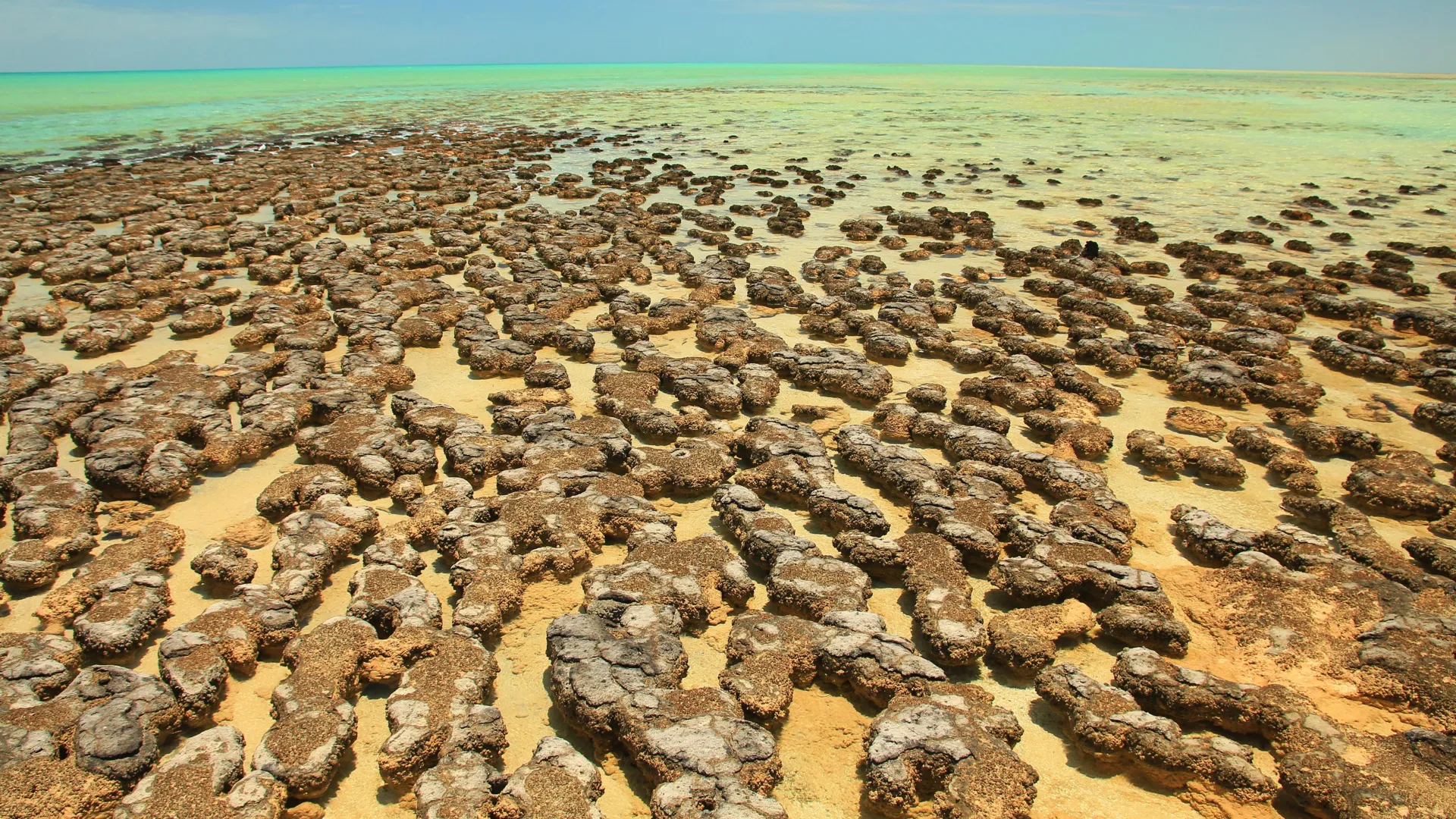
Stromatolites and their microbial mat counterparts have long been dismissed by the casual observer as inert, geologic relics—dark, unassuming rocks scattered across the tidal zones of the world. However, beneath this stoic exterior lies a sophisticated, densely layered architecture constructed by colonies of microorganisms that have thrived for billions of years. A breakthrough study recently published in the journal Current Biology now suggests that these "living fossils" may serve as the most vital repository of clues yet discovered regarding the most significant evolutionary transition in planetary history: the emergence of complex, eukaryotic life.
An interdisciplinary research team, spearheaded by Associate Professor Brendan Burns of the University of New South Wales (UNSW) Sydney, in collaboration with the University of Technology Sydney and The University of Melbourne, has identified a previously unknown archaeon living in a symbiotic relationship within these structures. This discovery offers a tangible look at the "Asgard" lineage, a group of microbes long hypothesized by evolutionary biologists to be the direct ancestors of the cells that comprise all complex plants, animals, and human beings.
The Evolutionary Context: The Asgard Hypothesis
To understand the magnitude of this discovery, one must look back to the prevailing theory of endosymbiosis. For decades, the "eukaryotic revolution"—the shift from simple, single-celled prokaryotic organisms to complex cells containing nuclei and mitochondria—remained a black box of evolutionary biology. The prevailing model suggests that a pivotal, intimate partnership between an ancient archaeon and a bacterium occurred billions of years ago. In this scenario, one organism was engulfed by the other, eventually evolving into the mitochondria, the power plants of modern complex cells.
Until now, this theory was supported primarily by genomic sequencing. Scientists lacked physical, visual evidence of what such a primordial partnership looked like in practice. The team’s discovery of the archaeon, formally named Nerearchaeum marumarumayae, provides that missing link. By utilizing electron cryotomography—a high-resolution 3D imaging technique capable of capturing structures at the scale of a millionth of a millimeter—researchers observed the Nerearchaeum archaeon and a partner bacterium physically tethered by thin, tube-like appendages known as nanotubes.
A Chronology of Discovery and Laboratory Persistence
The journey to this discovery was neither swift nor straightforward. The research began with samples collected from the World Heritage-listed Shark Bay in Western Australia, an environment that acts as a modern-day proxy for the chemical and environmental conditions of the early Earth.
The project timeline spanned several years of painstaking laboratory work:
- Initial Collection (Circa 2018-2019): Researchers secured samples from the Shark Bay microbial mats to begin genomic profiling.
- The Genomic Hurdle (2020-2021): While DNA sequencing confirmed the presence of the Asgard archaea, the organisms proved notoriously resistant to cultivation. Standard laboratory conditions failed to coax the microbes into independent growth.
- The Breakthrough (2022-2023): The realization that these organisms could not survive in isolation shifted the research focus toward their ecological dependencies. The team hypothesized that the microbes’ survival was inextricably linked to their bacterial neighbors.
- Imaging and Analysis (2024): Applying electron cryotomography and deep-learning protein structure prediction, the team successfully visualized the symbiotic interaction between the two distinct life forms.
"It took four or five years in the lab," says Associate Professor Burns. "A lot of time was spent optimizing and chasing shadows." The inability to grow these microbes in pure culture—a standard requirement for most microbiological studies—provided the key insight: they are obligate partners, chemically reliant on one another for survival.
Data-Driven Insights: Chemical Cooperation
The investigation revealed that Nerearchaeum marumarumayae and its bacterial companion do not merely coexist; they actively participate in a metabolic trade-off. The electron cryotomography images showed the archaeon producing budded vesicles and complex tube-like structures. These findings suggest a highly efficient transfer of resources, with the microbes trading vitamins, nutrients, and hydrogen.
The inclusion of deep learning, led by Associate Professor Kate Mitchie of UNSW, allowed the team to predict the architecture of the proteins involved in these interactions. By mapping these protein structures, the researchers identified ancient cellular machinery that would eventually evolve into the complex transport and communication systems found in modern eukaryotes. This provides a direct, data-backed bridge between the simple, ancient microbial world and the sophisticated biological systems observed in higher-order life.
Collaborative Science and Cultural Heritage
The scientific significance of the study is matched by its cultural and ethical importance. The naming of Nerearchaeum marumarumayae was a deliberate process involving deep collaboration with the Malgana people, the Traditional Owners of the Shark Bay region.
"Nereus" pays homage to the ancient Greek deity of the sea, while "marumarumayae" is derived from the Malgana language, translating to "ancient home." This naming convention was the result of extensive consultations with Kymberly Oakley, a leading expert in the Malgana language, and the Malgana elders. By weaving indigenous terminology into the scientific nomenclature, the researchers acknowledged the deep history of human stewardship in the region, which dates back approximately 30,000 years.
"It is not just about the organisms," says Associate Professor Burns. "It is about people as well. A huge collaborative effort across disciplines with many graduate students being instrumental in building this story."
Broader Implications for Earth’s Future
The implications of this study extend beyond the history of cellular evolution. By studying these microbial mats, researchers are gaining a better understanding of how life survives in extreme or resource-limited environments. This knowledge is particularly critical as these fragile ecosystems face mounting pressures from climate change, ocean acidification, and human industrial activity.
Associate Professor Iain Duggin of the University of Technology Sydney noted the profound existential scale of the work, stating, "It is as if we have slowly arisen from the bottom of the sea." The study reinforces the concept that the complexity of modern life is not an isolated development but the result of billions of years of cooperation.
Looking forward, the research team aims to expand their investigation to other microbial communities within the "primordial soup" of Shark Bay. By identifying additional symbiotic partnerships, they hope to construct a more comprehensive map of the evolutionary steps that led to the development of complex life.
Conclusion: A Legacy of Cooperation
The discovery of Nerearchaeum marumarumayae does more than just fill a gap in the scientific literature; it provides a narrative of endurance. It highlights that the history of life on Earth is not solely defined by competition, but by the necessity of cooperation. As Associate Professor Burns concludes, "These microbes remind us that even the smallest partners can leave the deepest mark on our history."
As the scientific community continues to grapple with the complexities of early life, the Shark Bay site remains a beacon for interdisciplinary inquiry. Through the synthesis of genomic sequencing, high-resolution imaging, machine learning, and deep respect for traditional knowledge, this research team has provided a definitive look into the origins of complexity. The study serves as a poignant reminder that while ecosystems are fragile and susceptible to modern-day environmental shifts, the biological foundations they preserve are among the most resilient and significant features of the natural world.