In the fundamental world of chemistry, every reaction must surmount a specific energy threshold, known as activation energy, before it can proceed. Much like the initial spark required to ignite a match, substances require a precise input of energy to break existing molecular bonds and form new ones. While some of these barriers are negligible in daily life, the energy requirements for large-scale industrial processes are often immense. These high energy demands translate directly into increased operational costs and significant environmental footprints. To navigate these challenges, the global chemical industry relies heavily on catalysts—substances that facilitate reactions by lowering the required energy without being consumed in the process. Historically, the most effective of these "reaction helpers" have utilized precious or rare metals, often at great expense. However, a research team at ETH Zurich has recently unveiled a breakthrough in catalyst design that promises to redefine the efficiency of producing methanol, a cornerstone of modern industrial chemistry, from captured carbon dioxide and hydrogen.
The Evolution of Catalytic Efficiency: From Nanoparticles to Single Atoms
For decades, the standard for metallic catalysts involved the use of nanoparticles—clusters of hundreds or thousands of metal atoms grouped together on a support structure. While effective, this traditional architecture is inherently inefficient. In a nanoparticle, only the atoms on the outer surface are exposed to the reactants; the vast majority of the metal atoms remain buried within the core of the particle, contributing to the cost and weight of the material without participating in the chemical transformation.
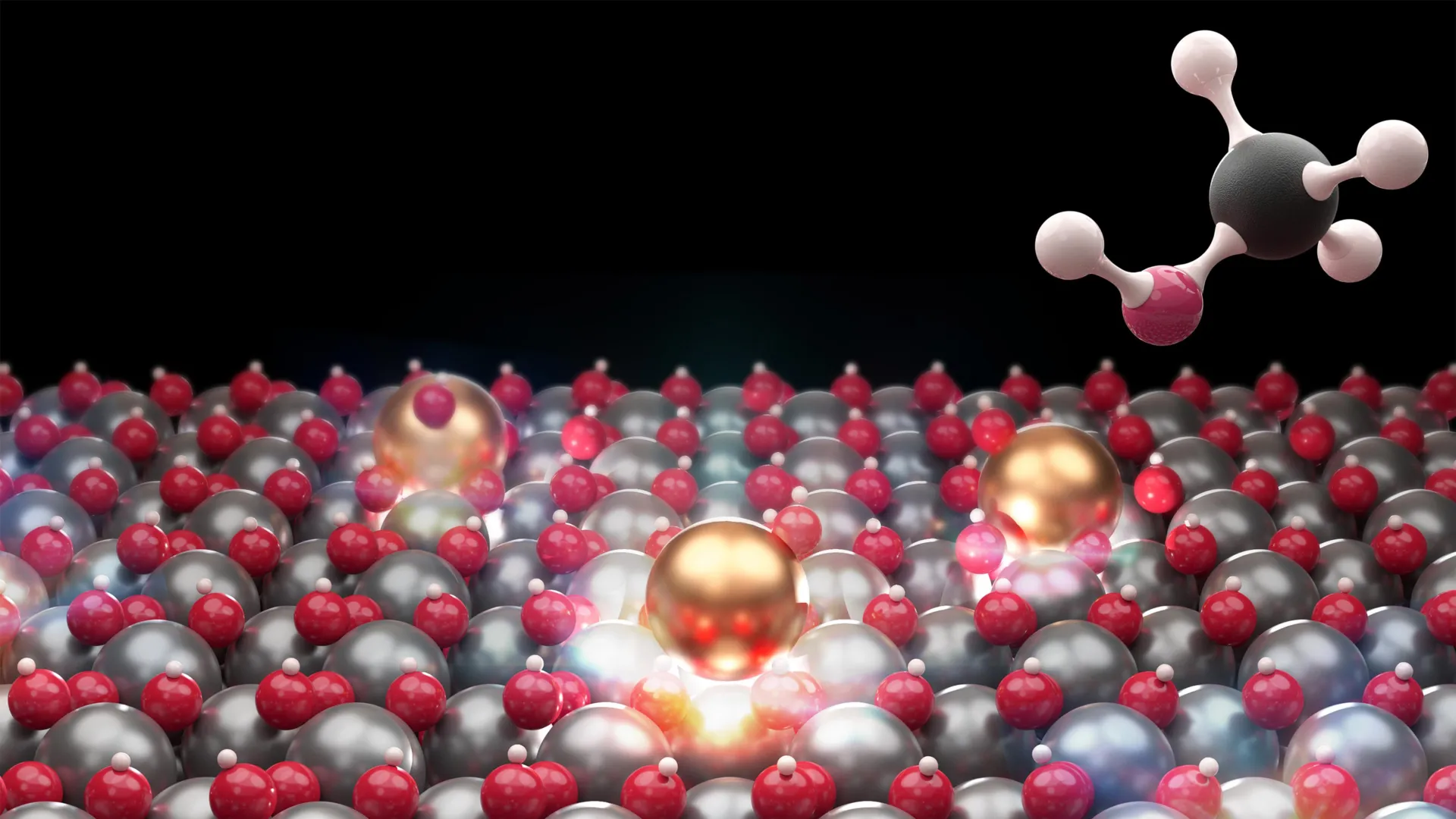
The ETH Zurich team, led by Javier Pérez-Ramírez, Professor of Catalysis Engineering, has successfully transitioned from this "bulk" approach to a "single-atom" architecture. In this innovative system, each individual atom of the active metal—in this case, indium—is isolated and anchored onto the surface of a support material. This ensures that every single atom of the expensive metal serves as an active site for the reaction. This shift represents a paradigm move in materials science, maximizing the theoretical efficiency of the metal used. By utilizing indium at the level of individual atoms, the researchers have demonstrated that they can achieve superior results with a fraction of the material required by conventional methods.
The Significance of Methanol in a Green Economy
The focus on methanol (CH3OH) is not incidental. Often described by Professor Pérez-Ramírez as the "Swiss army knife of chemistry," methanol serves as a universal precursor for a staggering array of products. It is the starting point for the production of formaldehyde, acetic acid, and various plastics, as well as a range of fuels and fuel additives. Beyond its role in manufacturing, methanol is increasingly viewed as a critical vector for the "Methanol Economy"—a concept where liquid methanol serves as a stable, high-density energy carrier for storing and transporting renewable energy.
Currently, the vast majority of the world’s methanol—exceeding 110 million metric tons annually—is produced from syngas derived from fossil fuels like natural gas and coal. This process is a significant source of global CO2 emissions. The ETH Zurich breakthrough offers a path toward climate neutrality. By capturing carbon dioxide from industrial waste streams or directly from the atmosphere and combining it with hydrogen produced via electrolysis using renewable electricity, the production of methanol can become a carbon-neutral cycle. The new catalyst significantly lowers the energy hurdles of this specific reaction (CO2 + 3H2 → CH3OH + H2O), making the transition to sustainable methanol more economically viable.
A Decade of Research: The Chronology of Discovery
The development of this single-atom catalyst is the culmination of over a decade of dedicated research. Professor Pérez-Ramírez has been investigating the potential of indium-based catalysts for CO2-to-methanol synthesis since 2010.
- 2010–2015: Initial studies focused on the use of indium oxide (In2O3) in the form of nanoparticles. These studies confirmed that indium was a viable and more selective alternative to traditional copper-based catalysts for CO2 hydrogenation, although the efficiency was limited by the nanoparticle structure.
- 2016–2020: The research pivoted toward understanding the "active sites" of the catalyst. The team discovered that the reaction primarily occurred at specific oxygen vacancies on the indium surface. This led to the hypothesis that isolating atoms could potentially enhance this effect.
- 2021–2023: In collaboration with other Swiss research groups, the team focused on "rational design"—moving away from the trial-and-error methods that have historically dominated catalyst development. They sought a support material that could stabilize single indium atoms without allowing them to clump together (sinter) under industrial conditions.
- 2024: The team successfully synthesized and tested the indium-on-hafnium-oxide (In/HfO2) single-atom catalyst, publishing their findings and demonstrating its superior performance over previous nanoparticle iterations.
Engineering the Impossible: Flame Spray Pyrolysis
One of the primary challenges in creating single-atom catalysts is preventing the atoms from migrating and aggregating into particles, especially when exposed to heat. To overcome this, the ETH Zurich team utilized a sophisticated synthesis method known as flame spray pyrolysis.
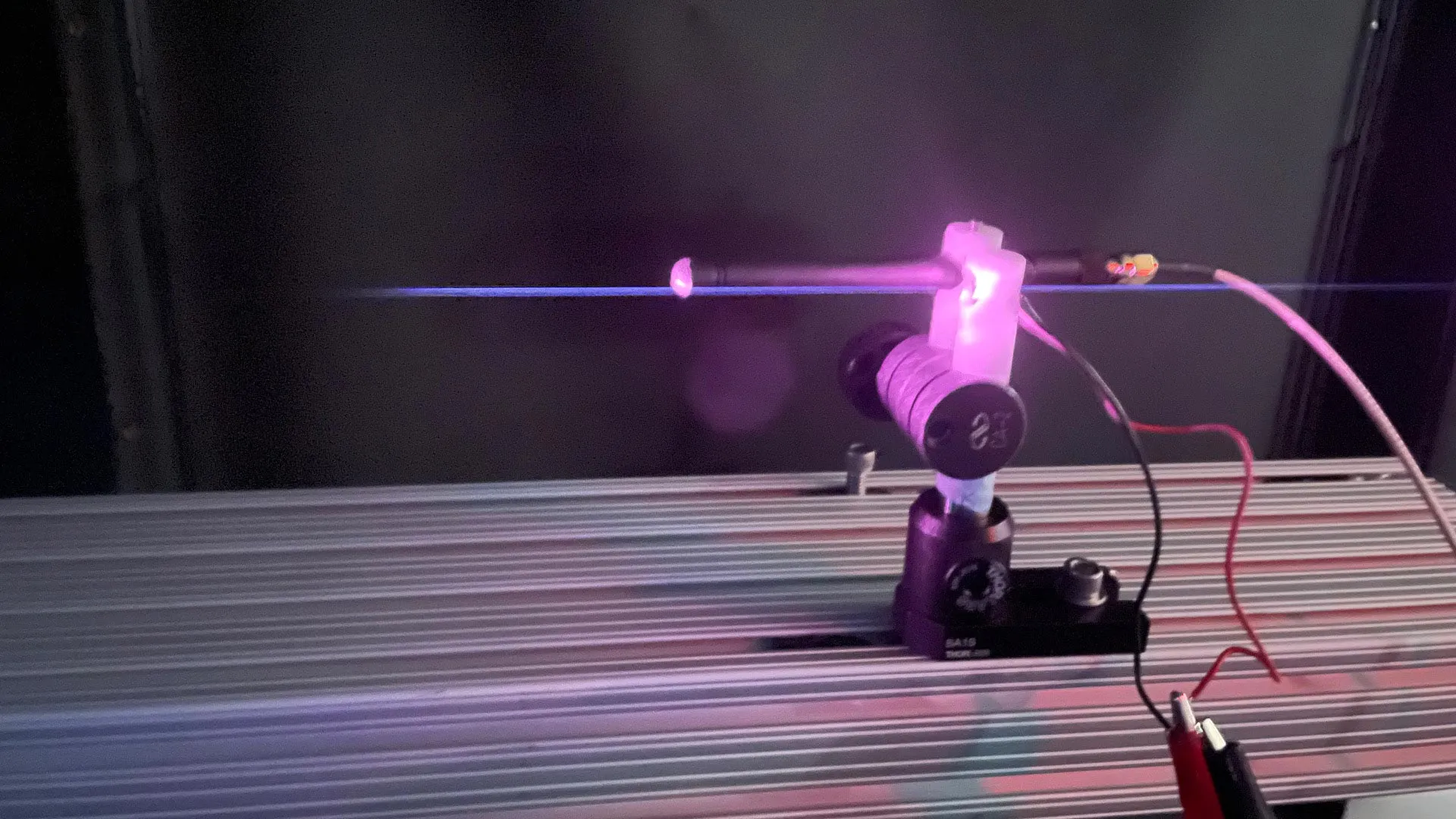
In this process, the precursor materials are injected into a high-temperature flame, reaching between 2,000 and 3,000 degrees Celsius. In this volatile environment, the indium and hafnium atoms are thoroughly mixed in a vapor phase. The mixture is then subjected to rapid cooling. This "quenching" happens so quickly that the indium atoms do not have time to find one another and form clusters. Instead, they become firmly embedded and isolated within the lattice of the forming hafnium oxide support.
This resulting structure is remarkably durable. Industrial methanol synthesis typically requires temperatures of up to 300°C and pressures 50 times higher than normal atmospheric levels (50 bar). While many experimental catalysts degrade or lose their structure under such stress, the ETH Zurich catalyst remained stable and active, proving its potential for long-term industrial application.
Precision and Insight: Beyond Trial and Error
Beyond its efficiency, the single-atom catalyst provides a scientific advantage: clarity. In traditional nanoparticle catalysts, the chemical signals picked up during laboratory analysis are often "noisy." Because the particles vary in size and most atoms are hidden inside, it is difficult for scientists to determine exactly what is happening at the interface where the reaction occurs.
With isolated atoms, the environment is uniform. "Because only isolated atoms are present, we can analyze reaction mechanisms with far less interference," the researchers noted. This level of precision allows for a deeper understanding of how CO2 molecules interact with the metal. This shift from empirical observation to fundamental understanding allows for the "deliberate optimization" of future catalysts, potentially leading to even more efficient systems for other chemical processes beyond methanol production.
Collaborative Success and Industry Implications
The success of the ETH Zurich project underscores the importance of interdisciplinary collaboration within the Swiss research ecosystem. The development involved experts in material synthesis, advanced microscopy, and computational modeling. This synergy allowed the team to not only build the catalyst but to prove exactly how and why it works at the atomic level.
The industrial implications are significant. Professor Pérez-Ramírez, who holds several patents in the field, has worked closely with industrial partners to ensure that the research aligns with the practical needs of the chemical sector. The ability to use scarce metals more efficiently and the potential to utilize hafnium oxide—a robust material already used in the semiconductor industry—makes this technology a prime candidate for scaling.
Analysis of Broader Impacts
The move toward single-atom catalysis represents a broader trend in "green chemistry," which seeks to minimize waste and maximize the use of raw materials. If adopted at scale, this technology could facilitate the decentralization of chemical production. Small-scale "power-to-liquid" plants could be situated near renewable energy sources and CO2 emitters, converting waste into wealth locally.
Furthermore, the stability of the indium-on-hafnium-oxide system addresses one of the primary hurdles in carbon capture and utilization (CCU): the "deactivation" of catalysts over time. By providing a catalyst that can withstand the rigors of continuous industrial operation, the ETH Zurich team has moved the needle on the economic feasibility of the circular carbon economy. As global regulations on carbon emissions tighten and the demand for sustainable materials grows, such breakthroughs in atomic-level engineering will be essential in bridging the gap between environmental necessity and industrial reality.
In the words of Professor Pérez-Ramírez, the development of this methanol catalyst is not just a laboratory success but a testament to what is possible when precision engineering meets sustainable goals. By turning a greenhouse gas into a "Swiss army knife" of chemical building blocks, science is providing the tools necessary to dismantle the fossil fuel dependency of the modern world, one atom at a time.