

The fundamental question of why matter possesses mass remains one of the most profound mysteries in modern physics, transcending the simple identification of particles to touch upon the very fabric of the vacuum that constitutes our universe. While the Higgs boson explains the mass of elementary particles like electrons and quarks, it accounts for only a tiny fraction of the mass of the visible universe; the remainder is generated through the complex dynamics of the strong nuclear force and the structure of the vacuum itself. In a landmark study published in Physical Review Letters, an international collaboration of researchers has reported the first significant evidence of a rare and exotic state of matter known as an η′-mesic nucleus. This discovery, achieved through high-precision experiments at the GSI Helmholtzzentrum für Schwerionenforschung in Germany, provides a new window into how the properties of particles are fundamentally altered when they are embedded within dense nuclear matter, offering crucial clues into the origin of mass.
The Mystery of Mass and the QCD Vacuum
To understand the significance of this discovery, one must first look beyond the traditional concept of a vacuum as "empty space." In the framework of Quantum Chromodynamics (QCD), the theory describing the strong interaction, the vacuum is a turbulent, dynamic environment filled with fluctuating fields and condensates. The most significant of these is the chiral condensate, a "background" that permeates all of space. When quarks—the building blocks of protons and neutrons—interact with this condensate, they acquire the majority of their effective mass. This process, known as spontaneous chiral symmetry breaking, is responsible for approximately 99% of the mass of the visible universe.
However, the properties of this vacuum are not static. Theoretical models suggest that in environments of extreme density, such as the interior of an atomic nucleus or the core of a neutron star, the vacuum structure changes. This shift is expected to cause a "partial restoration" of chiral symmetry, which in turn should change the mass of particles existing within that environment. Until now, observing these changes has proven exceptionally difficult due to the fleeting nature of the particles involved and the extreme precision required to measure their properties inside a nucleus.
The Unique Role of the Eta-Prime Meson
The focus of the recent breakthrough is the η′ (eta-prime) meson. Mesons are subatomic particles composed of one quark and one anti-quark. The η′ meson is of particular interest to physicists because it is significantly heavier than other mesons in its class, such as the pion or the kaon. This "unusual" heaviness is attributed to the U(1) anomaly, a complex quantum mechanical effect related to the symmetry of the QCD vacuum.
"One particle of particular interest is the η′ meson," noted senior author Kenta Itahashi. "It is unusually heavy compared with related particles, and physicists expect that its mass changes when it exists inside nuclear matter. Observing this phenomenon would provide valuable information about how particle masses are generated in the universe."
Because the η′ meson’s mass is so closely tied to the vacuum’s properties, it serves as a perfect "probe." If a meson can be trapped inside a nucleus—forming a mesic nucleus—scientists can measure how its mass shifts in response to the surrounding dense nuclear environment.
The Experimental Framework: FRS and WASA at GSI
The search for the η′-mesic nucleus took place at the GSI Helmholtzzentrum für Schwerionenforschung in Darmstadt, Germany, a world-leading facility for heavy-ion research. The experiment utilized a sophisticated combination of high-energy particle beams and ultra-sensitive detection equipment to create and identify this exotic state.
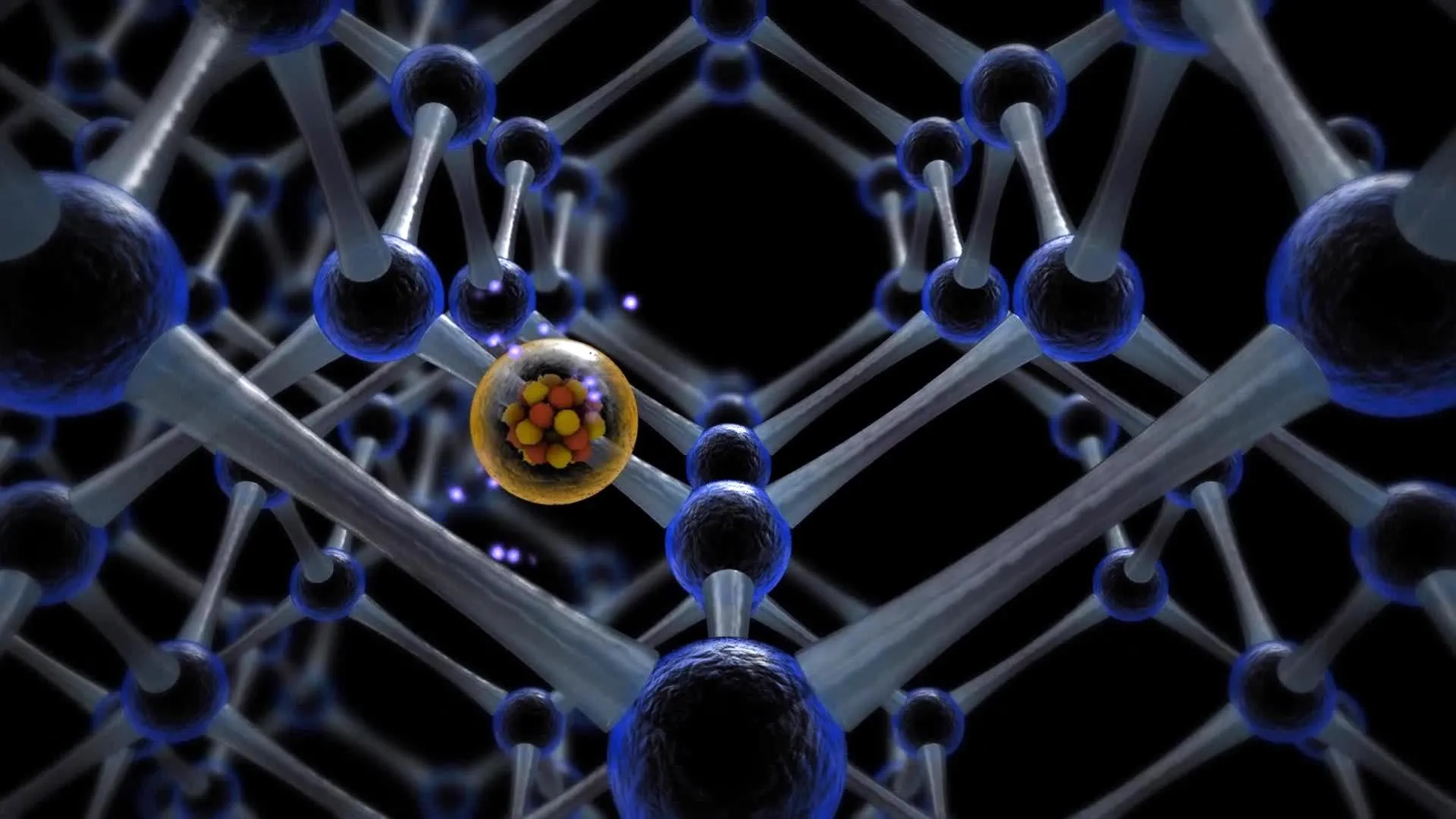
The researchers employed a technique known as the (p, d) reaction. They accelerated a beam of protons to high energies and directed them at a target made of carbon-12. When a proton collided with a carbon nucleus, the interaction occasionally resulted in the creation of an η′ meson and the emission of a deuteron (a nucleus consisting of one proton and one neutron). Under specific conditions, the newly created η′ meson would not fly away but would instead become "bound" to the remaining nucleus via the strong force, creating an η′-mesic nucleus.
To capture the data necessary to prove this occurred, the team used the Fragment Separator (FRS), a high-resolution magnetic spectrometer. The FRS allowed the team to measure the momentum of the emitted deuterons with extreme precision. By calculating the "missing mass" or the excitation energy of the carbon nucleus from the deuteron’s movement, the researchers could infer whether an η′ meson had been captured.
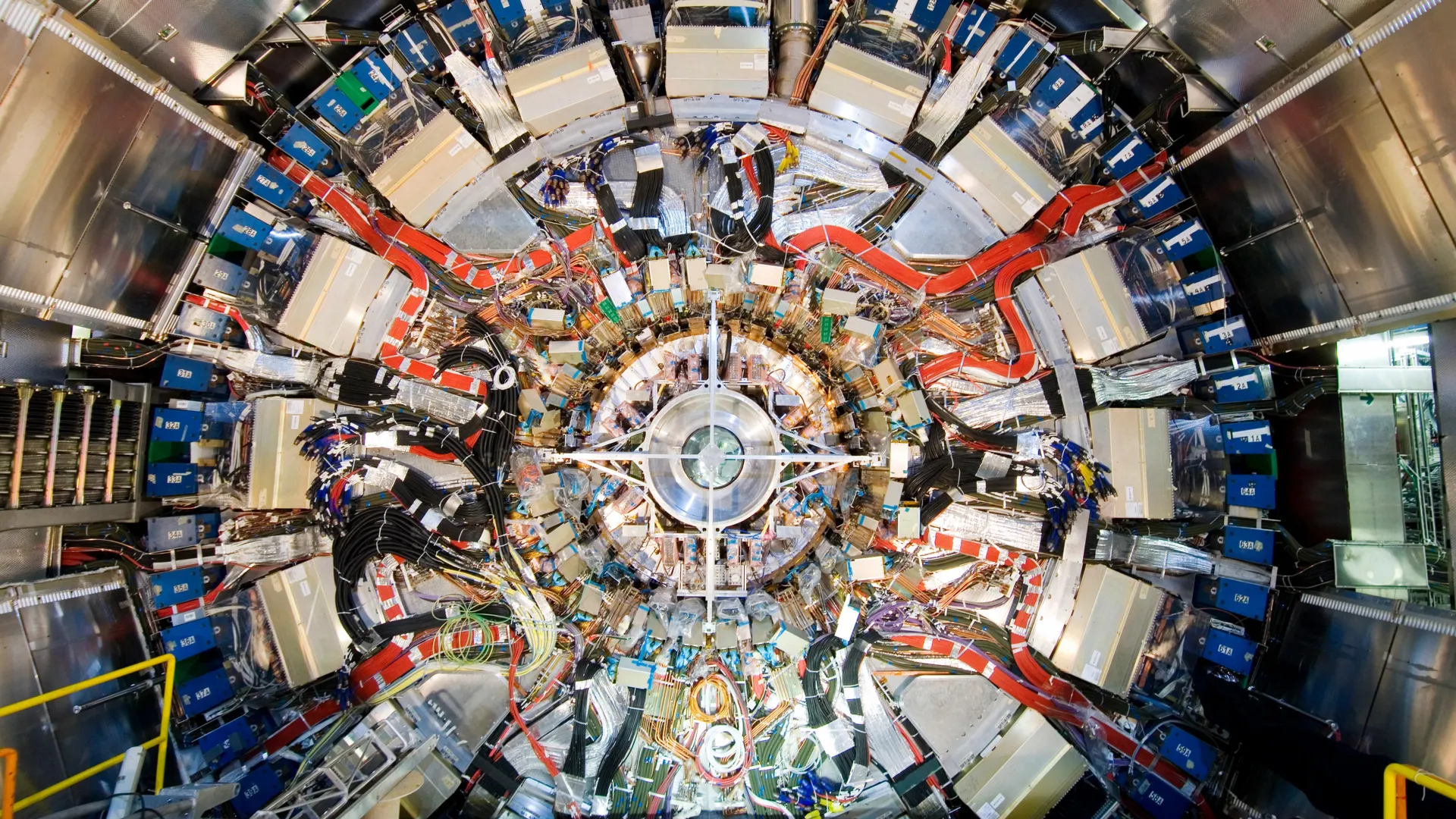
Complementing the FRS was the WASA (Wide Angle Shower Apparatus) detector. Originally developed at the CELSIUS storage ring in Uppsala, Sweden, and later used at the COSY facility in Jülich, the WASA detector was integrated into the GSI setup to detect the decay products of the mesic nucleus. Because mesic nuclei are highly unstable and exist for less than a ten-millionth of a second, identifying the specific "decay signatures"—such as high-energy protons emitted when the meson is absorbed by the nucleus—is essential for confirming the state’s formation.
Chronology of the Discovery
The road to this discovery has spanned decades of theoretical work and experimental refinement. The theoretical possibility of mesic nuclei was first proposed in the 1980s, but early experiments focused on lighter mesons, such as the eta (η) meson. While evidence for η-mesic nuclei has been found in recent years, the η′ meson remained the "holy grail" due to its stronger connection to the vacuum’s topological structure.
The specific experiment at GSI was the culmination of years of international collaboration. Following the development of the experimental proposal, the WASA detector was transported and integrated with the FRS in a complex engineering feat. The data collection phase involved months of high-intensity runs, followed by an exhaustive period of data analysis.
"With our new experimental setup combining the FRS and the WASA, we can identify structures in the data that match theoretical signatures of η′-mesic nuclei," explained lead author Ryohei Sekiya. "Our analysis suggests that these bound states were indeed formed."
Analyzing the Results: Evidence of Mass Reduction
The findings, as detailed in the published paper, reveal a distinct pattern in the excitation spectrum of the carbon nucleus. The data shows a signal that is consistent with the formation of a bound η′ state. Perhaps more significantly, the results provide evidence that the mass of the η′ meson is reduced when it is inside the carbon nucleus.
Theoretical models, such as those based on the Nambu–Jona-Lasinio model, predicted that the η′ mass could drop by as much as 100 to 150 MeV/c² in the nuclear medium. The experimental data from GSI aligns with these predictions, suggesting that the dense environment of the nucleus effectively "melts" some of the vacuum condensates that give the meson its mass in a vacuum. This is a rare experimental confirmation of the partial restoration of chiral symmetry.
The statistical significance of the signals observed provides the strongest evidence to date for the existence of η′-mesic nuclei. While the researchers stop short of claiming a "5-sigma" discovery—the gold standard in particle physics—the consistency between the observed decay signatures and the missing-mass spectra makes a compelling case for the existence of these exotic states.
Broader Implications for Physics and Astrophysics
The implications of this research extend far beyond the laboratory. Understanding how the vacuum changes in dense environments is critical for several fields of science:
- Neutron Star Dynamics: The cores of neutron stars are the densest environments in the universe. If mesons like the η′ change their properties or form condensates at high densities, it could significantly alter the equation of state for neutron star matter, affecting their size, cooling rates, and the way they merge—events that are now being detected via gravitational waves.
- The Evolution of the Early Universe: In the microseconds following the Big Bang, the universe underwent a phase transition where chiral symmetry was broken. Studying mesic nuclei allows scientists to effectively "reverse" this process in a controlled environment, providing insight into how the universe transitioned from a hot plasma to the matter-dominated state we see today.
- Fundamental Constants: This research touches on the fundamental constants of nature. By proving that mass is a dynamic property determined by the environment, it reinforces the modern view of the universe as a collection of interacting fields rather than a collection of static objects.
Future Research and the FAIR Facility
The international team is already planning the next phase of their investigation. Future experiments aim to increase the statistical precision of the measurements and to search for mesic nuclei in different isotopes. This will allow physicists to see how the binding energy and mass shift change as the density and composition of the nucleus vary.
The upcoming Facility for Antiproton and Ion Research (FAIR), currently under construction at GSI, will play a pivotal role in this future. With even higher beam intensities and more advanced detection systems like the Super-FRS, FAIR will allow researchers to explore the η′-mesic state with unprecedented clarity.
"Our measurements provide important new clues about how mesons behave in nuclear matter," Itahashi concluded. "This brings us closer to answering deep, fundamental questions about how matter acquires mass, as well as how the vacuum structure changes inside atomic nuclei."
The study, "Excitation Spectra of the 12C(p,d) Reaction near the η′-Meson Emission Threshold Measured in Coincidence with High-Momentum Protons," represents a milestone in nuclear physics. It marks the transition from theoretical speculation to experimental reality in the study of mesic nuclei, setting the stage for a new era of research into the hidden framework of our universe.











Leave a Reply