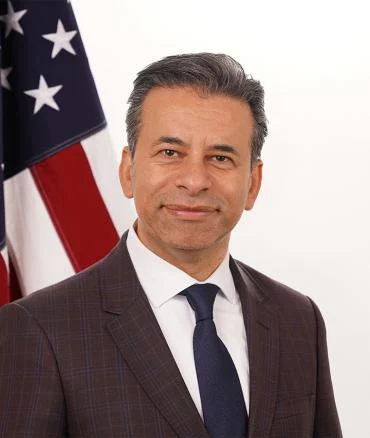
Marty Makary resigned on Tuesday as commissioner of the Food and Drug Administration, a departure precipitated by intense administrative pressure and swirling rumors that President Donald Trump was preparing to terminate his tenure. The sudden exit of the nation’s top drug regulator casts a shadow of uncertainty over critical public health policies and amplifies concerns about the independence of federal agencies. His resignation marks another chapter in a period of unprecedented volatility for the FDA, an agency central to the health and safety of American citizens.
The immediate catalyst for Makary’s departure appears to be a profound disagreement with the White House over the regulation of fruit-flavored vaping products. According to reports, President Trump had exerted considerable pressure on Makary to authorize specific flavored products manufactured by Glas Inc. Makary, a physician and public health advocate, reportedly opposed such authorizations, citing significant concerns about the appeal of these products to young people and the potential for increased rates of youth nicotine addiction. This internal conflict reached a boiling point following the recent approval of two fruit-flavored vapes earlier this month. Further escalating the situation, just last Friday, the FDA issued a new policy that effectively broadened the marketing opportunities for unauthorized electronic nicotine delivery systems (ENDS) and nicotine pouch products, a move seen by many as directly contradicting the agency’s historical stance on youth protection.
When questioned about Makary’s resignation, President Trump offered a terse comment to reporters on Tuesday afternoon, stating, "He’s a great doctor, and he was having some difficulty." This statement, while seemingly benign, hinted at the underlying tensions and philosophical clashes that characterized Makary’s brief but tumultuous leadership. The incident underscores a broader pattern within the Trump administration of seeking to influence the regulatory decisions of independent agencies, often leading to clashes with career officials and appointed leaders who prioritize public health mandates over political directives.
The Evolving Landscape of Vape Regulation and Public Health
The controversy surrounding flavored vapes is a microcosm of a larger national debate concerning public health, individual freedoms, and corporate interests. Public health organizations, including the American Lung Association and the Campaign for Tobacco-Free Kids, have consistently called for a comprehensive ban on all flavored e-cigarettes, arguing that they serve as "addiction on-ramps" for teenagers. Data from the National Youth Tobacco Survey (NYTS) has repeatedly shown a concerning rise in youth e-cigarette use, with millions of middle and high school students reporting current use of these products. Flavored varieties, particularly fruit and candy flavors, are overwhelmingly cited as the primary reason for initial and continued use among adolescents.
Conversely, the vaping industry and some advocacy groups contend that flavored products are crucial for adult smokers seeking to transition away from traditional cigarettes. They argue that strict bans could inadvertently push former smokers back to more harmful combustible tobacco. Glas Inc., a prominent player in the e-cigarette market, along with other manufacturers, has lobbied extensively for the approval and wider marketing of their products, emphasizing their potential as harm reduction tools for adults. The FDA’s role in navigating this complex landscape involves balancing the potential benefits for adult smokers with the imperative to protect youth from nicotine addiction, a task made exponentially more challenging when political pressure enters the equation.
A Commissioner Under Fire: Diverse Criticisms from Across the Spectrum
Makary’s tenure was characterized by a barrage of criticism from a diverse array of advocacy groups, highlighting the deeply politicized nature of public health and regulatory policy in contemporary America. These criticisms came from both ends of the political spectrum, demonstrating the complex tightrope Makary attempted to walk.
One significant source of opposition stemmed from anti-abortion groups, most notably Susan B. Anthony Pro-Life America. These organizations vociferously campaigned for Makary’s removal, accusing him of "slow-walking" a crucial safety review of mifepristone, the medication commonly known as the abortion pill. Furthermore, critics alleged that Makary allowed new generic versions of mifepristone to enter the market without adequate scrutiny, potentially compromising patient safety and access controls. Mifepristone’s regulation has been a perennial battleground in the broader debate over reproductive rights, with its accessibility and prescribed use frequently challenged in courts and legislatures. The FDA’s role in its approval and oversight is therefore subject to intense scrutiny from all stakeholders. For anti-abortion advocates, any perceived leniency in its regulation is seen as a betrayal of their cause.
On the other side, Makary faced considerable backlash from the "Make America Healthy Again" (MAHA) movement, a coalition often associated with vaccine skepticism and opposition to COVID-19 public health measures. These groups criticized Makary for what they perceived as his failure to remove mRNA vaccines from the market, despite their claims of widespread adverse effects. Paradoxically, they also accused him of restricting access to certain COVID-19 vaccines and blocking the publication of "safety manuscripts" which they believed would expose vaccine harms. This criticism underscored the deep divisions and mistrust that emerged during the COVID-19 pandemic regarding vaccine safety, efficacy, and governmental oversight. The FDA, as the primary arbiter of drug and vaccine safety, became a focal point for these grievances, often caught between scientific consensus and politically charged demands.
Adding to the complexity, a group of former FDA commissioners publicly denounced a controversial plan proposed by Makary and Vinay Prasad, a prominent academic and critic of certain public health policies, to overhaul the agency’s approach to approving vaccines. The specifics of this plan, while not fully detailed publicly, were understood to suggest a potential streamlining or re-evaluation of the rigorous approval processes currently in place. Former commissioners, often seen as guardians of the FDA’s scientific integrity, voiced strong concerns that such changes could undermine public trust in vaccines, compromise safety standards, and potentially open the door to politically motivated approvals. Their collective statement served as a significant rebuke, signaling deep internal and external anxieties about the direction of the agency under Makary’s leadership.
An Agency in Flux: A Chronology of Leadership Instability
Makary’s resignation is not an isolated incident but rather the latest development in a troubling pattern of leadership instability within the FDA, particularly during the second term of the Trump administration. In the first year alone, nearly all of the agency’s senior career officials either resigned or were reportedly forced out, signaling a profound cultural and operational upheaval. This exodus of experienced personnel was exacerbated by a broader initiative from the Department of Government Efficiency (DOGE), which was reported to have eliminated thousands of positions across various government agencies, including critical roles within the FDA. Such rapid turnover and staff reductions can severely impede an agency’s ability to carry out its complex mission, particularly in an era demanding swift responses to public health crises and increasingly intricate regulatory challenges.
The Center for Drug Evaluation and Research (CDER), a cornerstone of the FDA responsible for evaluating new drugs before they can be sold, epitomized this instability. In a single year, CDER cycled through an unprecedented six different leaders. Makary’s own appointments to this critical division faced significant hurdles. He appointed George Tidmarsh, who was subsequently forced to resign following serious allegations that he used his position for personal vendettas, a scandal that further eroded confidence in the agency’s ethical standards. Tidmarsh’s successor, Rick Pazdur, a highly respected figure in oncology drug development, lasted only three weeks before resigning due to irreconcilable clashes with Makary. This rapid succession of leadership, particularly within a division as vital as CDER, inevitably raises questions about the continuity of regulatory policy, the efficiency of drug review processes, and the morale of the career scientists and regulators who perform the agency’s daily work. Observers suggest that such instability can create an environment where long-term strategic planning becomes impossible, and the agency struggles to maintain its reputation for scientific rigor and independence.
Uncertainty Looms: The Fate of Makary’s Initiatives and Broader Implications
Makary’s abrupt departure leaves a significant vacuum and places the fate of several programs he introduced into question. Many of these initiatives, designed to streamline processes or introduce new regulatory approaches, had not yet undergone the rigorous federal rulemaking process required to solidify them into law. Without this formalization, they remain vulnerable to reversal or abandonment by the incoming leadership, potentially leading to policy inconsistencies and wasted resources. The federal rulemaking process is a deliberate and transparent mechanism designed to ensure that new regulations are well-considered, publicly vetted, and legally sound. Bypassing or prematurely ending this process can create legal challenges and undermine the predictability essential for both regulated industries and public health advocates.
The FDA’s leadership crisis also exacerbates a wider leadership vacuum across critical public health institutions. The Centers for Disease Control and Prevention (CDC) currently lacks a permanent director, a surgeon general, and a vaccine chief. This constellation of leadership gaps across the FDA and CDC presents a formidable challenge to national public health infrastructure, especially at a time when the nation continues to grapple with the lingering effects of a pandemic, the rise of new infectious diseases, and persistent health disparities. The absence of stable, confirmed leadership at these agencies can hinder coordinated responses to public health emergencies, delay critical policy decisions, and erode public confidence in the government’s ability to safeguard health.
Interim Leadership and the Road Ahead
In the immediate aftermath of Makary’s resignation, Kyle Diamantas has been appointed as the acting FDA commissioner. Diamantas, an attorney with reported personal ties to Donald Trump Jr., steps into this challenging role at a critical juncture. His appointment has immediately drawn scrutiny from political analysts and ethics watchdogs, who will closely monitor his decisions for any perceived political influence. Diamantas is expected to testify in Makary’s place at a congressional budget hearing scheduled for May 13, where he will likely face probing questions not only about the agency’s financial needs but also about its stability, independence, and future direction.
The process for appointing a permanent replacement for Makary will be extensive. President Trump will need to nominate a candidate, who will then be subjected to a confirmation process by the Senate. This process is often highly politicized, particularly for an agency as influential and frequently controversial as the FDA. The confirmation hearings will provide a platform for senators to scrutinize the nominee’s qualifications, policy stances, and commitment to scientific independence, offering a glimpse into the future trajectory of the agency.
Makary’s resignation underscores the profound challenges facing federal regulatory agencies in an era of heightened political polarization and administrative pressure. The FDA’s mission to protect and promote public health through the regulation of drugs, medical devices, food, and tobacco products demands unwavering scientific integrity and independence. The continued instability at its helm, coupled with broader leadership gaps in public health, raises serious questions about the nation’s capacity to navigate future health crises and maintain public trust in its most vital health institutions. The coming months will be crucial in determining whether the FDA can regain its footing and reassert its role as a beacon of scientific authority and public protection.