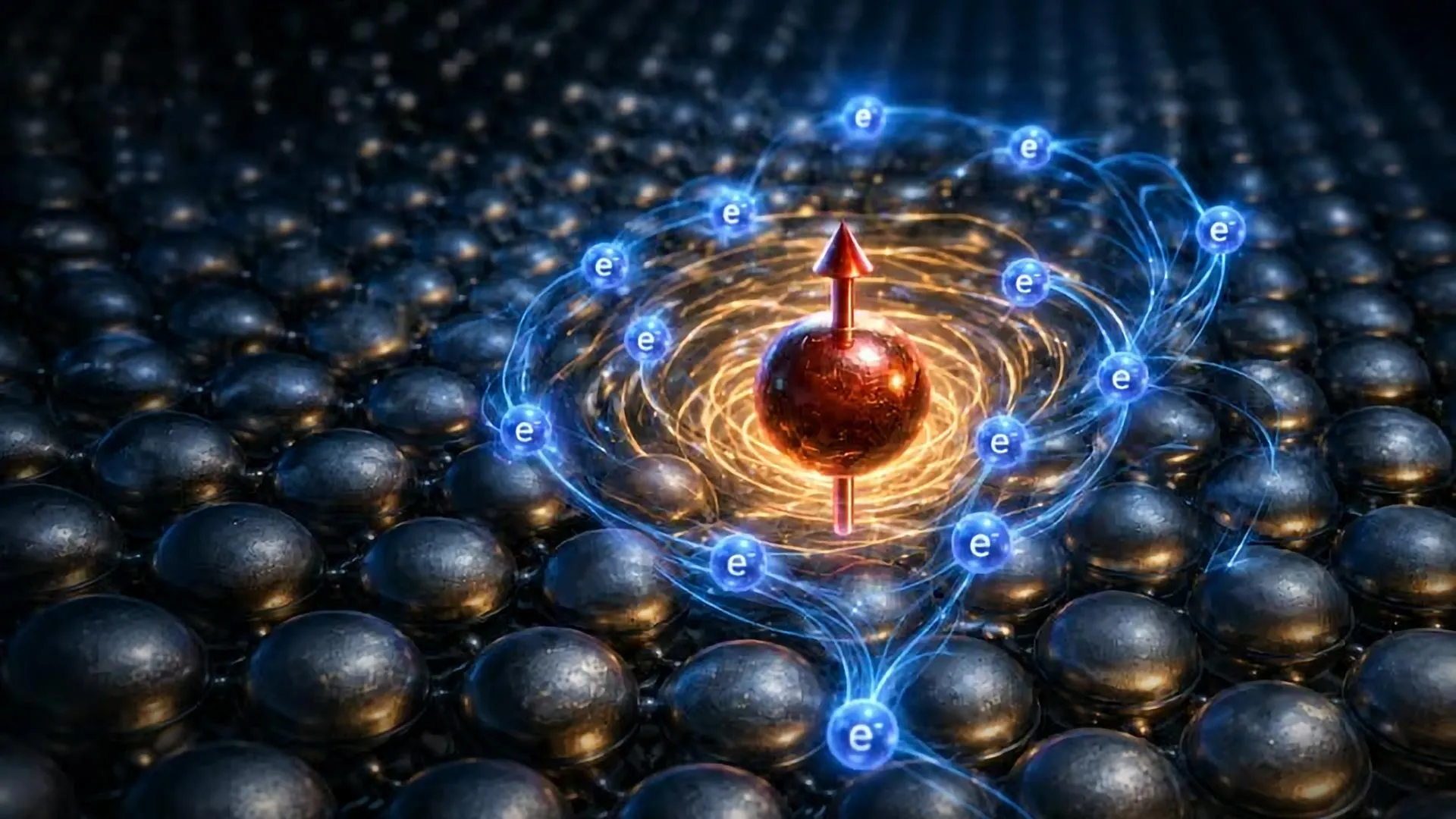
The history of theoretical physics is often characterized by sudden leaps of intuition, yet many of the most profound breakthroughs in the 20th century were built upon mathematical foundations laid a century earlier. At the heart of this intellectual evolution is the work of William Rowan Hamilton, an Irish mathematician whose 19th-century theories on light and motion provided the essential framework for the quantum revolution. While Hamilton could not have foreseen the strange, probabilistic world of subatomic particles, his ability to unify optics and mechanics through a single mathematical language became the key that unlocked the mysteries of the quantum realm. Today, nearly two centuries after his initial discoveries, Hamilton’s name remains synonymous with the "Hamiltonian," a fundamental operator used in almost every calculation in modern quantum mechanics.
The Mathematical Genesis of William Rowan Hamilton
In the 1820s and early 1830s, while serving as the Andrews Professor of Astronomy at Trinity College Dublin and residing at the Dunsink Observatory, William Rowan Hamilton embarked on a project that would redefine the relationship between light and matter. Still in his twenties, Hamilton sought to create a universal mathematical method that could describe the behavior of light rays—a field known as geometric optics. At the time, the scientific community was divided on the nature of light, but Hamilton’s approach was unique because it was largely indifferent to the physical composition of light. Whether light was a particle or a wave, Hamilton realized that its path could be calculated using a principle of "varying action."
Hamilton’s breakthrough came when he realized that the equations he developed for light rays could be applied with equal precision to the motion of physical objects, such as planets or projectiles. This unification, often referred to as the "optical-mechanical analogy," suggested that the trajectory of a particle in a gravitational or potential field followed the same mathematical logic as a light ray passing through a medium with a varying refractive index. For decades, this connection was viewed by many as a beautiful mathematical curiosity rather than a physical reality. However, Hamilton’s "Hamiltonian mechanics" offered a more flexible and powerful alternative to the classical laws established by Isaac Newton in 1687. By focusing on the total energy of a system—the sum of its kinetic and potential energies—Hamilton provided a framework that allowed scientists to analyze complex systems with unprecedented ease.
The Century-Long Debate Over the Nature of Light
To understand why Hamilton’s work eventually became the cornerstone of quantum theory, it is necessary to examine the long-standing debate regarding the nature of light. In the late 17th century, Isaac Newton proposed the corpuscular theory, arguing that light consisted of discrete particles. This view dominated for over a hundred years, supported by Newton’s immense prestige. However, the early 19th century brought a shift in perspective. In 1801, British polymath Thomas Young conducted his landmark double-slit experiment, demonstrating that light passing through two narrow slits created an interference pattern—a phenomenon characteristic of waves, not particles.
The wave theory gained further momentum in the 1860s when James Clerk Maxwell published his equations for electromagnetism. Maxwell showed that light was an electromagnetic wave traveling through a field. By the end of the 19th century, the "wave vs. particle" debate seemed settled in favor of waves. Yet, Hamilton’s earlier mathematical framework, which treated light rays and particle paths as analogous, remained an outlier. If light were a wave, why did the mathematics governing its path look so much like the mathematics governing a solid particle? This question remained largely unaddressed until the dawn of the 1900s.
The Einsteinian Revolution and the Duality Crisis
The transition from classical to quantum physics began in earnest in 1900 when Max Planck investigated blackbody radiation. Planck found that he could only explain the observed data if he assumed that energy was emitted and absorbed in discrete "packets" or "quanta," rather than as a continuous flow. This was the first hint that the classical view of energy was incomplete.
In 1905, Albert Einstein took Planck’s idea a step further to explain the photoelectric effect, a phenomenon where light shining on a metal surface ejects electrons. Einstein proposed that light itself was composed of discrete packets of energy, later called photons. He introduced the formula $E = hnu$, where energy ($E$) is proportional to the frequency of the wave ($nu$), linked by Planck’s constant ($h$). Simultaneously, Einstein’s work on relativity produced the famous $E = mc^2$, relating energy to mass ($m$).
These two equations created a conceptual crisis. One tied energy to frequency (a wave property), while the other tied energy to mass (a particle property). The scientific community was forced to confront "wave-particle duality"—the reality that light exhibits both wave-like and particle-like characteristics depending on how it is measured. It was at this juncture that Hamilton’s 19th-century analogy began to look less like a coincidence and more like a profound insight into the fabric of reality.
The 1920s: The Birth of Wave Mechanics
In 1924, French physicist Louis de Broglie proposed a radical hypothesis: if light, which was thought to be a wave, could behave like a particle, then matter, which was thought to be a particle, must behave like a wave. De Broglie suggested that every moving particle, such as an electron, has an associated "matter wave." Experimental confirmation followed shortly thereafter when researchers observed electrons undergoing diffraction and interference, just as Thomas Young had observed with light a century earlier.
With the wave-like nature of matter established, the race was on to find a definitive "wave equation" for matter. In 1925, Werner Heisenberg developed "matrix mechanics," a highly abstract mathematical approach that focused on observable quantities. While successful, many physicists found Heisenberg’s matrices difficult to visualize.
In early 1926, Austrian physicist Erwin Schrödinger introduced a different approach known as "wave mechanics." Schrödinger’s inspiration came directly from William Rowan Hamilton. Schrödinger realized that if particles have wave properties, then the classical mechanics of Hamilton was essentially a "short-wavelength limit" of a more fundamental wave theory. Just as geometric optics (the study of light rays) is a simplified version of wave optics (the study of actual waves), classical mechanics was a simplified version of a deeper "quantum mechanics." By applying Hamilton’s equations to de Broglie’s matter waves, Schrödinger derived his famous wave equation.
The Hamiltonian as the Universal Language
Schrödinger’s wave equation describes how the "wave function" ($Psi$) of a system evolves over time. In this equation, the central term is the "Hamiltonian operator" ($hatH$). In classical physics, the Hamiltonian represents the total energy of the system. In quantum mechanics, the Hamiltonian operator acts on the wave function to extract the energy states of the particle.
The significance of this cannot be overstated. Heisenberg’s matrix mechanics and Schrödinger’s wave mechanics were soon proven to be mathematically equivalent, and both relied on the Hamiltonian framework. Even today, when a physicist begins to study a new quantum system—whether it is a single atom, a superconducting crystal, or a black hole—the first step is almost always to "write down the Hamiltonian."
This mathematical continuity allowed for a relatively smooth transition from classical to quantum theory. While the interpretation of the math changed—moving from the certain trajectories of Newton to the probabilistic wave functions of Schrödinger—the underlying mathematical structure provided by Hamilton remained robust.
Technological Implications and the Modern World
The move from the theoretical elegance of Hamilton’s equations to the practical realities of modern technology has been transformative. Quantum mechanics, rooted in Hamiltonian and Schrödingerian logic, is the foundation of the modern digital and industrial age.
The development of the transistor, the building block of all modern computer chips, required a quantum mechanical understanding of how electrons move through semiconductors. Lasers, which power everything from fiber-optic internet to surgical tools, rely on the quantization of energy levels within atoms—a phenomenon first explained by Schrödinger’s equation.
Furthermore, the atomic clocks that enable Global Positioning Systems (GPS) to function with nanosecond precision are based on the transitions between quantum states in cesium or rubidium atoms. Without the ability to calculate these states using Hamiltonian operators, modern navigation would be impossible. In medicine, Magnetic Resonance Imaging (MRI) scanners utilize the quantum property of "spin" in hydrogen nuclei, a concept that emerged from the expansion of Hamilton’s framework into the relativistic quantum realm by Paul Dirac.
Chronology of the Quantum Evolution
The journey from Hamilton’s observatory to the quantum computer can be summarized through several pivotal moments:
- 1687: Isaac Newton publishes Principia, establishing the laws of motion and the corpuscular theory of light.
- 1801: Thomas Young’s double-slit experiment provides evidence for the wave nature of light.
- 1833: William Rowan Hamilton completes his work on the unification of optics and mechanics, creating Hamiltonian mechanics.
- 1865: James Clerk Maxwell publishes his equations, proving light is an electromagnetic wave.
- 1900: Max Planck introduces the concept of energy quanta ($E = hnu$).
- 1905: Albert Einstein explains the photoelectric effect and introduces $E = mc^2$.
- 1924: Louis de Broglie proposes that matter has wave-like properties.
- 1925: Werner Heisenberg develops matrix mechanics; Erwin Schrödinger develops wave mechanics based on Hamilton’s work.
- 1927: The Solvay Conference marks the general acceptance of the new quantum theory.
Analysis: The Enduring Power of Mathematical Abstraction
The story of William Rowan Hamilton is a testament to the power of mathematical abstraction. Hamilton did not have the tools to observe an electron, nor did he know about the existence of photons. However, by seeking the most fundamental and elegant mathematical description of the natural world, he discovered a structure that was more "true" than the physical theories of his time.
Critics in the 19th century might have argued that Hamilton’s comparison of a light ray to a cannonball was a mere mathematical trick. Yet, as the 20th century revealed, the universe does not distinguish between the two as clearly as our senses do. At the microscopic level, the "particle" and the "wave" are two sides of the same coin, and the mathematics of Hamilton was the first to bridge that gap.
Today, as physicists venture into the realms of quantum computing and string theory, the Hamiltonian remains the starting point for exploration. The Irish mathematician’s legacy is not just a set of equations, but a demonstration that the language of mathematics often anticipates the discoveries of the future. Hamilton hoped his work would be "broadly useful," but even his vast imagination likely fell short of the reality: that his equations would eventually describe the very fabric of existence.