For decades, the pharmaceutical industry has grappled with the inherent inefficiencies of drug discovery, a process often likened to searching for a needle in a haystack while blindfolded. A critical bottleneck in this arduous journey has been the comprehensive assessment of Absorption, Distribution, Metabolism, and Excretion (ADME) properties of potential drug candidates. Traditionally, these complex and resource-intensive evaluations were deferred until a promising "lead series" of compounds had already emerged from initial screening, a strategy that, while seemingly cost-conscious at the outset, frequently led to costly failures in later stages of development. Now, a powerful consortium comprising Ginkgo Datapoints, Tangible Scientific, and Inductive Bio is poised to revolutionize this paradigm with the launch of their ADME-One platform, leveraging the cutting edge of artificial intelligence (AI), laboratory automation, and refined compound logistics to integrate ADME decision-making much earlier into the drug discovery pipeline – specifically, at the crucial hit identification phase.
A Foundational Shift in Drug Discovery Strategy
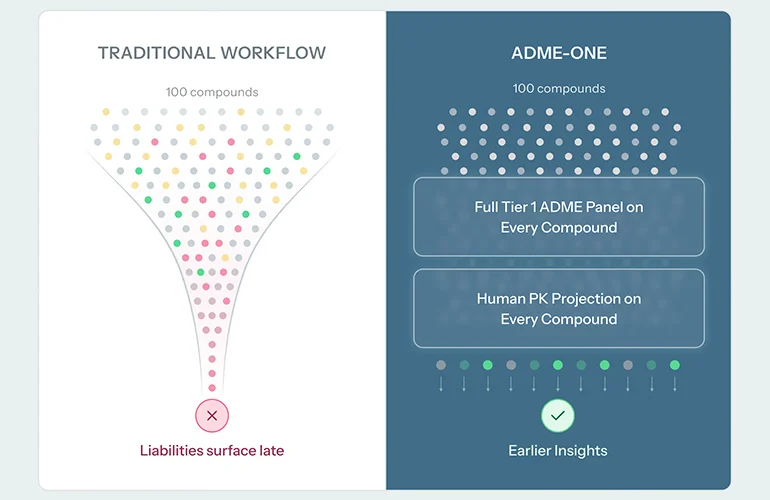
The conventional wisdom in small-molecule drug discovery dictated a sequential, funnel-like approach. Thousands, sometimes millions, of compounds would undergo initial screening for target potency. Those exhibiting promising activity would then proceed to lead optimization, where medicinal chemists would synthesize numerous analogs to improve efficacy and, eventually, evaluate their ADME properties. This deferred ADME profiling was a strategic choice rooted in the high cost and labor intensity of these assays. The underlying assumption was that it was more efficient to "fail fast" on target engagement before investing heavily in ADME characterization. However, this often resulted in the agonizing realization that highly potent compounds, after months or even years of optimization, possessed unfavorable ADME profiles that rendered them unsuitable for human use, leading to substantial financial losses and wasted scientific effort.
The ADME-One platform represents a fundamental departure from this established practice. By bringing sophisticated ADME profiling to the hit identification stage, the consortium aims to provide medicinal chemists with an unprecedented early read on a compound’s holistic potential. This includes not only potency but also crucial ADME parameters, projected human pharmacokinetics (PK), and even an initial estimate of the therapeutic dose. The vision is clear: to identify and discard compounds with inherent liabilities much earlier, thereby preventing the misdirection of resources towards candidates that are ultimately destined for failure. Alex Taylor, Ph.D., head of medicinal chemistry at Inductive Bio, articulated the driving question behind this innovation: "Could we pull together all the assays needed to get your first projection of human PK at a price point where you’d now be doing this on most, if not all, of the compounds coming through?" This ambition underscores a commitment to democratizing advanced ADME insights, making them accessible even in the earliest, broadest stages of discovery.
Deconstructing the ADME-One Platform: A Synergy of Expertise
The ADME-One platform is a testament to collaborative innovation, seamlessly integrating the specialized strengths of three distinct entities.
Ginkgo Datapoints and Automated Tier 1 Assays: At the core of the platform’s experimental capabilities lies Ginkgo Datapoints, a subsidiary of Ginkgo Bioworks known for its massive automated biological foundries. Operating from its state-of-the-art laboratory in Boston, Ginkgo Datapoints conducts five critical Tier 1 ADME assays end-to-end:
- Microsomal Stability: Measures how quickly a compound is metabolized by liver enzymes (cytochrome P450s), a key indicator of its in vivo half-life. Poor microsomal stability often leads to rapid clearance and requires higher dosing.
- Cell Permeability: Assesses a compound’s ability to cross biological membranes, a prerequisite for oral bioavailability and reaching intracellular targets.
- Kinetic Solubility: Determines how much of a compound can dissolve in a physiological solution over time, crucial for absorption and formulation. Low solubility can severely limit bioavailability.
- CYP Inhibition: Identifies if a compound inhibits key cytochrome P450 enzymes, which could lead to dangerous drug-drug interactions when co-administered with other medications.
- Plasma Protein Binding: Quantifies the extent to which a compound binds to proteins in the blood plasma. Only the unbound fraction is pharmacologically active and available to exert its effect or be metabolized.
The automation deployed by Ginkgo ensures high-throughput, reproducibility, and precision, drastically reducing the time and cost associated with these fundamental assays. This robust data generation forms the empirical bedrock upon which the platform builds its predictive power.
Tangible Scientific and Streamlined Compound Management: Handling thousands of unique compounds with varying physicochemical properties requires an exceptionally precise and efficient logistics infrastructure. Tangible Scientific addresses this challenge with its specialized compound-management workflow. From the moment samples are received, Tangible assumes custody, meticulously managing intake, precise plating for assays, and real-time tracking of each order. This meticulous approach minimizes errors, ensures sample integrity, and accelerates the turnaround time, directly contributing to the platform’s ability to deliver rapid results. The synergy between high-throughput assays and streamlined sample handling is vital for maintaining the pace required for early-stage screening.
Inductive Bio and AI-Driven Human PK Projection: The individual readouts from Ginkgo’s assays are powerful, but their true utility is unlocked when integrated and interpreted holistically. This is where Inductive Bio’s Compass platform comes into play. Leveraging advanced machine learning algorithms, Compass takes the discrete ADME data points (microsomal stability, permeability, solubility, CYP inhibition, and plasma protein binding) and rolls them into a single, comprehensive projection of human pharmacokinetics. This AI-driven synthesis allows medicinal chemists to rank compounds not merely by isolated properties but by their predicted behavior within the complex physiological environment of a human body. As Dr. Taylor noted, "Can you get your potency plus the ADME you need, and put those together to get your initial estimate of human PK, and even dose?" This integrated projection enables a more informed decision-making process at a stage where such comprehensive insights were previously unattainable. The consortium emphasizes that extensive validation efforts were undertaken "behind the scenes to make sure we’re still getting really high-quality data," ensuring the reliability of these critical projections.
The Strategic Imperative of Early Pharmacokinetic Insights
The push for earlier ADME and PK context is not merely a technical advancement; it’s a strategic imperative driven by decades of lessons learned in drug development. One of the most significant insights in medicinal chemistry is the paramount importance of the human dose. "Experienced medicinal chemists will tell you up front that dose is ultimately the thing you want to optimize for," Dr. Taylor highlighted.
Optimizing for Dose and Safety: High daily doses are frequently associated with increased risks of adverse events. For instance, a seminal Hepatology analysis, spearheaded by FDA-affiliated researchers, identified a correlation between high daily dose, particularly when combined with high lipophilicity (fat-solubility), and a significantly elevated risk of drug-induced liver injury (DILI). This "rule-of-two" serves as a crucial risk signal, guiding chemists away from potentially problematic compounds. Another registry study reinforced this, finding that drugs dosed at 50 mg per day or more carried higher rates of liver failure, transplant, and death compared to those below 10 mg. DILI remains a leading cause of drug withdrawal from the market, underscoring the critical need to identify and mitigate this risk early.
Patient Adherence and Commercial Viability: Beyond safety, lower doses offer numerous advantages. They are generally easier and less expensive to formulate, requiring less active pharmaceutical ingredient (API) per unit. Crucially, simpler dosing regimens (ee.g., once daily vs. multiple times a day, or smaller pill size) are strongly associated with improved patient adherence, which directly translates to better therapeutic outcomes and market success. Historically, obtaining all the necessary data to accurately project a human dose at an early stage was a formidable challenge due to the data integration complexity and the sheer volume of assays required. The ADME-One platform seeks to bridge this gap.
Navigating Complex ADME Landscapes: Drug discovery routinely uncovers compounds that exhibit potent activity against their target but falter on individual ADME assays, particularly metabolic stability. This often leads to their premature abandonment. However, a holistic view can reveal unexpected potential. The comparison between triazole antifungals, fluconazole and itraconazole, serves as an illuminating example. Fluconazole is a small, polar molecule, minimally plasma protein-bound, and largely excreted unchanged by the kidneys. In stark contrast, itraconazole is highly lipophilic, over 99% protein-bound, extensively distributed into tissues, and predominantly cleared by hepatic metabolism. On an individual assay scorecard, their profiles appear irreconcilable. Yet, both became widely used, orally administered antifungals. This illustrates Dr. Taylor’s point: "sometimes compounds you think aren’t good enough to go forward, because they don’t meet your criteria for potency or metabolic stability, actually have a balance of all the properties such that they could go forward." The ADME-One platform aims to provide this balanced, integrated perspective, preventing the unwarranted dismissal of potentially valuable drug candidates.
Economic Imperatives and Geopolitical Shifts
The pharmaceutical industry operates under immense financial pressure. The average cost of bringing a new drug to market is estimated to be between $2.6 billion and $4 billion, with clinical trial failure rates hovering around 90%. A significant portion of these failures can be attributed to unfavorable ADME/PK properties discovered late in development. This relentless economic reality has intensified the industry’s mantra: "stay lean, be cost-competitive, be cost-conscious." This pressure historically justified the "screening-funnel" approach, limiting early ADME data acquisition. However, the advent of highly automated laboratory systems has dramatically altered the economics. As Dr. Taylor explained, "The ability to run many compounds, a whole plate full, using the robotics on a weekly basis and turn that around in an automated way, that’s what’s made the difference."
Beyond internal cost efficiencies, external geopolitical factors are reshaping the landscape of preclinical research. The BIOSECURE Act in the United States, alongside a broader demand for data sovereignty, is prompting U.S. and European developers to reconsider their reliance on offshore Contract Research Organizations (CROs) for preclinical work. This legislative and strategic shift is driving a resurgence of demand for onshore solutions that offer robust data security and transparent operations. The ADME-One platform directly addresses this trend by offering a workflow that runs entirely within the U.S., ensuring data security and adherence to regulatory standards. Furthermore, its pricing strategy is designed to be competitive, positioning it below industry standards and directly challenging offshore CROs, while delivering results in days rather than weeks. This combination of speed, cost-effectiveness, and data security offers a compelling value proposition for drug developers seeking reliable and compliant preclinical services.
The Consortium Model: A Secure Engine for AI Enhancement
A central innovation underpinning Inductive Bio’s contribution to ADME-One is its unique consortium model for data management and AI development. This model addresses a critical challenge in leveraging machine learning for drug discovery: how to pool diverse chemical data to improve predictive models without compromising the proprietary nature of individual customers’ intellectual property.
Inductive Bio’s founders established a robust legal and technical framework that allows partner companies to securely pool their data. Crucially, "no partner can see anyone else’s data," Dr. Taylor affirmed. This anonymized and aggregated dataset is then used to train Inductive Bio’s global machine learning models, which continuously improve their predictive accuracy as more diverse chemical matter is fed into the system. When a customer contributes its own experimental results through the ADME-One platform, Inductive Bio then fine-tunes a "local model" on top of the global one, tailored to that specific customer’s chemistry. This approach typically delivers a significant performance gain, allowing the predictions to be even more accurate for that particular research program.
The engineering efforts dedicated to data security are substantial. Dr. Taylor emphasized that the system is designed to make it "impossible to reverse-engineer," preventing any participant from inferring the chemical structures or data of other consortium members. This rigorous commitment to data confidentiality is vital for fostering trust and encouraging participation in a data-sharing model that ultimately benefits all members through enhanced predictive capabilities.
Toward a Virtuous Cycle in Drug Discovery
The ultimate payoff of the ADME-One platform, as described by Dr. Taylor, is the creation of a "virtuous cycle" or "flywheel" effect. The more data that participates in the consortium, the broader and more robust the chemical matter becomes behind the global models, which in turn enhances the predictive power for everyone.
This flywheel is fueled by the day-to-day operations within each drug discovery program. Medicinal chemists begin by designing new molecules on Inductive Bio’s platform, where they can immediately visualize predicted ADME parameters and understand how these predictions coalesce into a human PK curve. This early feedback loop allows for intelligent design choices, prioritizing compounds with favorable predicted profiles. Selected compounds then move through synthesis and into the ADME-One platform, where Ginkgo’s automated assays and Tangible’s compound management generate experimental results. These empirical data points are then fed back into Inductive Bio’s models, providing real-world validation and refinement. "That helps train the models, makes them better the next time people are designing compounds, and it improves from there," Dr. Taylor elaborated.
This iterative process of prediction, experimentation, and model refinement is a cornerstone of modern AI-driven science. However, Dr. Taylor prudently framed AI’s role not as a replacement for scientific inquiry but as a powerful prioritization tool. "Drug discovery is science at the end of the day, and science is not engineering," he asserted. "There’s still so much that needs to happen empirically. You can give your best guess of what a compound is going to do, but at the end of the day you need to reduce it to practice, synthesize it, and test it."
In essence, AI helps answer the crucial question: which expensive, time-consuming compounds are most deserving of synthesis and testing? The ability to predict key parameters guiding these decisions is "incredibly useful," as every compound takes longer and costs more than desired, and research teams operate under finite budgets. By intelligently filtering out less promising candidates earlier, the ADME-One platform promises to accelerate discovery timelines, reduce overall costs, and ultimately increase the probability of bringing safer and more effective medicines to patients. This integrated approach marks a significant step towards a more efficient, data-driven future for pharmaceutical innovation.