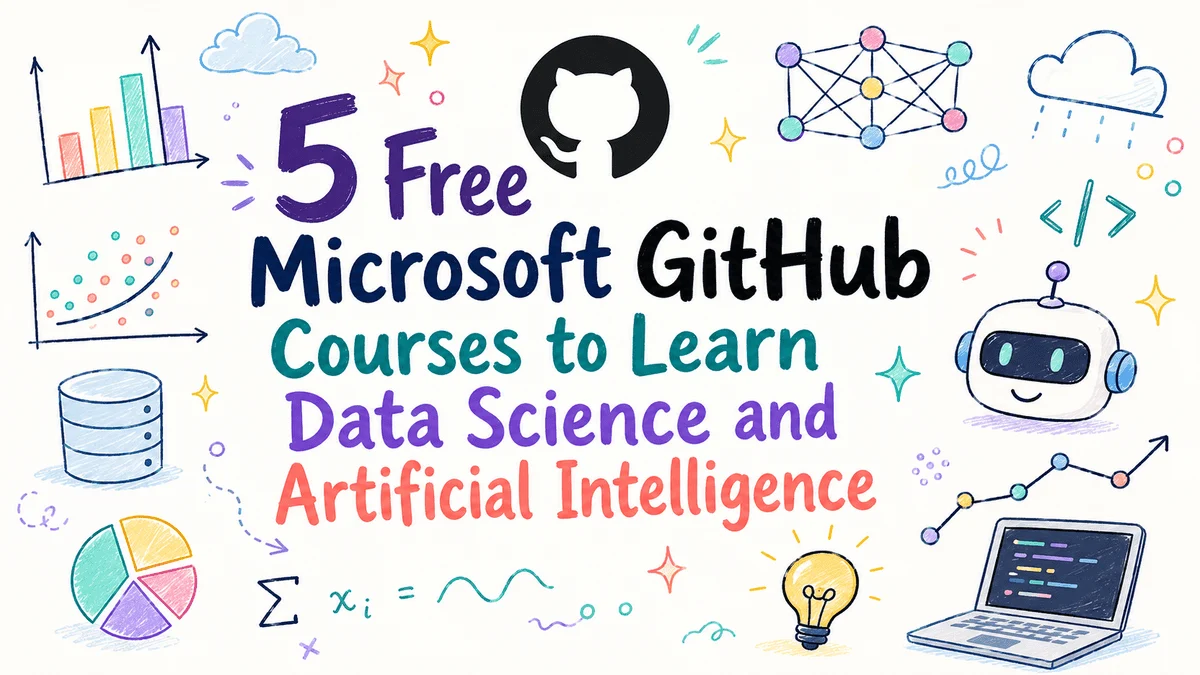
The global landscape of technical education is undergoing a profound decentralization, shifting away from costly university bootcamps and expensive proprietary certifications toward accessible, community-driven, and open-source learning frameworks. In alignment with this paradigm shift, technology titan Microsoft has released a comprehensive suite of structured educational curricula hosted entirely on GitHub. Designed to eliminate financial barriers to entry, these five distinct learning pathways take students from foundational data literacy to advanced generative artificial intelligence and autonomous agentic systems without charging a single tuition fee.
As the demand for artificial intelligence literacy permeates nearly every economic sector, the requirement for practical, hands-on technical training has never been more acute. Industry analysts note that while theoretical knowledge is widely available across the internet, structured pathways that combine theoretical mathematics, practical coding exercises, quizzes, and real-world project portfolios are exceptionally rare in free formats. Microsoft’s repository-based curricula address this gap by offering transparent, regularly updated instructional modules that utilize industry-standard tools, frameworks, and programming languages.
Chronology and Evolution of Open-Source AI Education
The genesis of Microsoft’s GitHub educational repositories reflects the broader evolution of the artificial intelligence boom over the past half-decade. In the early phases of the modern data science resurgence around 2018 and 2019, educational initiatives focused heavily on basic tabular data analysis, SQL databases, and classical statistical regression. As machine learning matured into enterprise software pipelines between 2020 and 2022, curricula expanded to encompass neural network architectures, computer vision, and natural language processing using frameworks like PyTorch and TensorFlow.
The tipping point occurred in late 2022 and throughout 2023 with the mainstream proliferation of large language models (LLMs) and generative artificial intelligence. Recognizing that the technical workforce faced an unprecedented skills gap, Microsoft’s developer advocacy and engineering teams systematically expanded their open-source educational catalog. By releasing modules dedicated to prompt engineering, retrieval-augmented generation (RAG), vector databases, and finally, autonomous AI agents in 2024 and 2025, the organization has created an end-to-end educational continuum that mirrors the rapid velocity of technological advancement in the tech industry.
Pathway 1: Laying the Groundwork with Data Science for Beginners
The foundational entry point into Microsoft’s educational ecosystem is the Data Science for Beginners curriculum. Spanning a structured 10-week timeline, the repository comprises 20 comprehensive lessons designed specifically for individuals with zero prior programming or statistical experience.
The syllabus is meticulously engineered to demystify the entire data lifecycle. Rather than immediately immersing learners in complex code libraries, the curriculum begins with data ethics—a critical component in modern corporate governance—before progressing into descriptive and inferential statistics, probability distributions, and the management of both relational and non-relational databases. Students are subsequently guided through rigorous exercises in data cleaning, preprocessing, exploratory data analysis, and advanced data visualization using real-world datasets.
Pedagogical experts praise this approach because it emphasizes problem formulation over mere tool proficiency. By understanding how to frame business and scientific questions into quantifiable data metrics, learners develop the analytical intuition necessary to succeed in subsequent, more technically demanding machine learning modules.
Pathway 2: Classical Machine Learning for Beginners
Once foundational data competencies are established, students transition to the Machine Learning for Beginners curriculum. This 12-week, 26-lesson program shifts the focus from static analysis to predictive modeling, utilizing Python and the widely adopted Scikit-learn library.
The curriculum deliberately bypasses the immediate temptation to jump straight into generative AI, focusing instead on classical machine learning paradigms that underpin all modern statistical software. Lessons cover foundational techniques including linear and logistic regression, multi-class classification, k-means clustering, time-series forecasting, and an introduction to reinforcement learning.
Industry data indicates that classical machine learning algorithms remain the operational workhorse for the vast majority of enterprise applications, including credit scoring, predictive maintenance, customer churn prediction, and fraud detection. By mastering concepts such as feature engineering, overfitting, cross-validation, hyperparameter tuning, and model evaluation metrics, learners acquire a rigorous engineering mindset. This structural grounding ensures that students do not view advanced AI models as opaque "black boxes," but rather as complex mathematical systems governed by identifiable parameters.
Pathway 3: Artificial Intelligence for Beginners
Expanding outward from classical predictive modeling, the Artificial Intelligence for Beginners curriculum bridges the gap between traditional machine learning and deep neural architectures. Spanning 12 weeks and 24 lessons, this repository introduces learners to the mechanics of deep learning, computer vision, and natural language processing.
Students engage directly with industry-standard frameworks such as PyTorch and TensorFlow. The curriculum explores advanced mathematical and computational concepts, including convolutional neural networks (CNNs) for image recognition, recurrent neural networks (RNNs) for sequential data, word embeddings, transformer architectures, transfer learning, autoencoders, and generative adversarial networks (GANs).
This course is specifically targeted at individuals who wish to understand the underlying mathematics and architecture of neural networks rather than merely interacting with pre-built APIs. As enterprise systems increasingly require custom model training, optimization, and deployment on specialized cloud infrastructure or edge devices, the deep technical competencies acquired in this module provide a significant competitive advantage in the job market.
Pathway 4: Generative AI and Modern Application Architecture
Arguably the most commercially relevant module in the entire Microsoft portfolio is the Generative AI for Beginners curriculum. Tailored specifically for the contemporary software engineering landscape, this 21-lesson repository equips developers and technical professionals with the skills required to build production-ready applications powered by large language models.
The curriculum explores a comprehensive array of modern generative AI topics, including advanced prompt engineering strategies, model selection criteria, responsible AI deployment, function calling, retrieval-augmented generation (RAG) pipelines, vector database integration, small language models (SLMs), fine-tuning methodologies, and security guardrails against prompt injection and data leakage. Practical coding examples are provided in both Python and TypeScript, reflecting the diverse technology stacks used in modern web and enterprise development.
While the learning materials and repositories are entirely free, utilizing the course to its fullest potential may require access to external AI APIs or specialized development environments such as Microsoft Foundry and Foundry Local, which allows developers to run open-source models directly on local hardware. Educational analysts note that this course effectively democratizes access to enterprise-grade AI architecture patterns, which were previously restricted to engineers working inside well-funded Silicon Valley research laboratories.
Pathway 5: The Frontier of Automation with AI Agents for Beginners
Representing the bleeding edge of the curriculum catalog, the AI Agents for Beginners course addresses the rapidly accelerating industry shift toward autonomous, multi-step computational workflows. Consisting of 18 lessons, this advanced repository focuses on the architectural design and deployment of agentic AI systems.
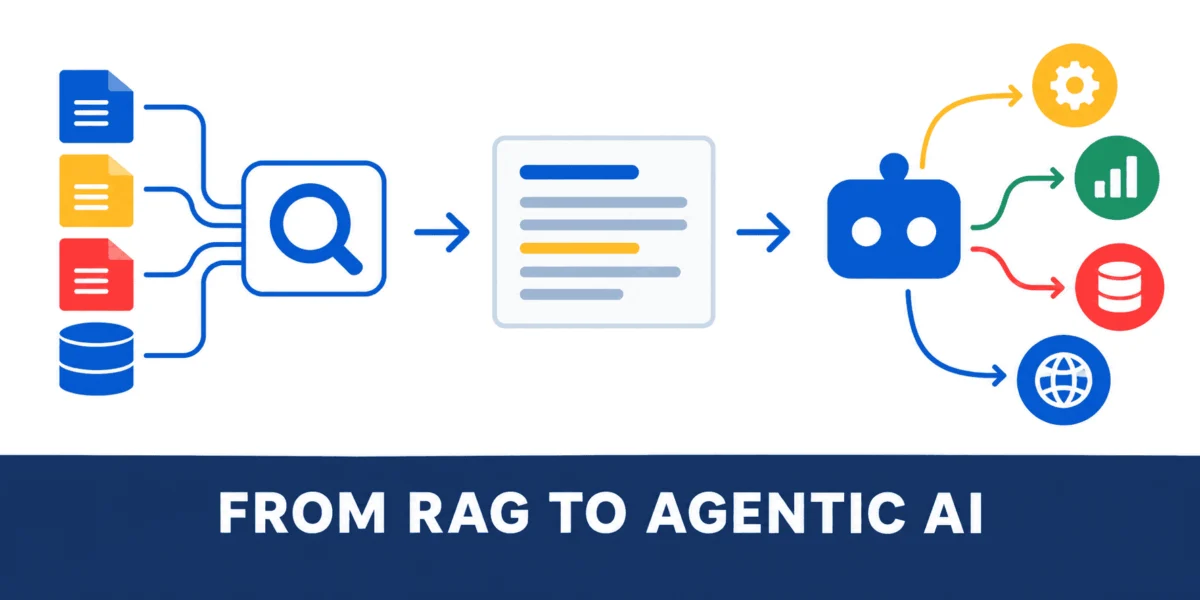
As artificial intelligence transitions from passive conversational interfaces to active problem-solving agents, understanding concepts such as tool use, agentic RAG, dynamic planning, short- and long-term memory management, context engineering, and multi-agent collaboration has become essential. The curriculum incorporates cutting-edge standards like the Model Context Protocol (MCP), computer-use agents, production security protocols, and integration with the Microsoft Agent Framework and Microsoft Foundry Agent Service.
Industry observers note that agentic systems represent the next major wave of enterprise software automation, capable of executing complex workflows across multiple software tools without continuous human intervention. Completing the foundational generative AI curriculum is strongly advised prior to undertaking this module, as a firm grasp of underlying LLM behavior, token management, and API integration is prerequisite to managing autonomous agent loops safely and effectively.
Economic Implications and the Democratization of Technical Skills
The release and ongoing maintenance of these open-source curricula by a major technology enterprise signal a broader structural shift in the global economy. Historically, advanced technical training in artificial intelligence was sequestered behind expensive graduate degree programs, elite corporate training budgets, or costly private bootcamps. By open-sourcing comprehensive educational content on GitHub, Microsoft and other technology leaders are actively lowering the barrier to entry for global talent.
Economic data consistently demonstrates a persistent mismatch between the supply of qualified artificial intelligence engineers and the surging demand from enterprise organizations across healthcare, finance, logistics, legal services, and manufacturing. By providing a standardized, high-quality, and free educational pathway, initiatives of this scale help mitigate geographic and socioeconomic disparities in technical education, enabling self-taught developers from emerging economies to compete on the global stage.
Furthermore, industry analysts emphasize that artificial intelligence literacy is no longer the exclusive domain of software engineers and data scientists. Professionals across diverse disciplines—ranging from medical researchers and financial analysts to legal counsels and marketing executives—are increasingly required to understand how automated systems process information, evaluate probabilities, and generate outputs. Familiarity with the operational mechanics of machine learning and generative models enables professionals to critically assess algorithmic outputs, identify potential biases, and securely integrate automated workflows into their daily operations.
Conclusion and Future Outlook
Microsoft’s suite of open-source GitHub curricula demonstrates that acquiring world-class technical education in data science and artificial intelligence is no longer constrained by financial resources. Through structured, community-supported repositories covering everything from foundational statistics to autonomous agentic systems, learners have direct access to the exact methodologies utilized by modern technology practitioners.
As artificial intelligence continues to reshape the contours of global industry, the imperative to understand these transformative technologies extends far beyond the technology sector. Whether an individual aspires to build cutting-edge neural network architectures, deploy enterprise-grade generative applications, or simply navigate an increasingly automated workplace with confidence, the tools for mastery are now freely accessible to anyone with an internet connection and the dedication to learn.