In a landmark advancement for synthetic biology, researchers at the Massachusetts Institute of Technology (MIT) have successfully transformed bacterial cells into functional, modular electronic components. By repurposing the biological machinery of Pantoea agglomerans, a common plant-associated bacterium, the team has created a living architecture that mirrors the logic and structure of traditional silicon-based computer processors. Published in the journal Nature Chemical Biology, this study marks a departure from conventional synthetic biology methods, moving away from packing complex logic into a single cell and toward a distributed, interconnected network of biological units.
The Evolution of Biological Computing
For decades, the field of synthetic biology has sought to program cells to perform specific tasks—such as detecting pathogens or producing biofuels—by manipulating genetic circuits. Traditionally, this involved inserting complex sets of transcription factors and genetic switches into the genome of a single host organism. However, this approach faces a significant "scaling ceiling."
The protein production machinery within a single cell is finite. When scientists attempt to cram too many logic gates into one cell, they inevitably face cellular fatigue, metabolic overload, and signal interference. Furthermore, the limited library of orthogonal transcription factors—proteins that act as switches without cross-talking—has long constrained the depth and complexity of biological circuits.
By contrast, the MIT approach treats individual colonies as distinct "transistors." By modularizing the system, the researchers have bypassed the bottleneck of single-cell capacity, allowing for the construction of increasingly large and sophisticated circuits by simply adding more bacterial units to the growth medium.
Anatomy of a Biological Transistor
The core of the research lies in the two types of engineered bacterial transistors. These transistors function analogously to electrical switches: they regulate the flow of signaling molecules rather than electrons.
The system relies on chemical communication. The transistors respond to two specific signaling molecules, known as OC 6 and OC 12. Depending on the concentration and presence of these molecules, the bacterial cells produce an output signal, OHC 14.
- One type of transistor acts as an "on" switch in the presence of OC 6.
- The other acts as an "off" switch when exposed to the same molecule.
By layering these responses with the sensing of OC 12, the researchers created a high-fidelity control system. The third component of this ecosystem, the relay strains, acts as a bridge. These relays convert the output signal (OHC 14) into a form that the next transistor in the sequence can recognize. This precise chemical handoff allows for the construction of logic gates—such as "OR," "AND," and "IMPLY" gates—that are the fundamental building blocks of all digital computation.
Chronology of the Development
The development of this technology did not happen in isolation. The project was the culmination of years of work under the leadership of Christopher Voigt, head of the MIT Department of Biological Engineering.
- Phase I (Concept and Design): The team focused on identifying a robust bacterial host capable of surviving in non-lab environments, ultimately settling on Pantoea agglomerans.
- Phase II (Component Engineering): Researchers engineered the five specific strains—two transistors and three relays—required to provide a modular toolkit for circuit construction.
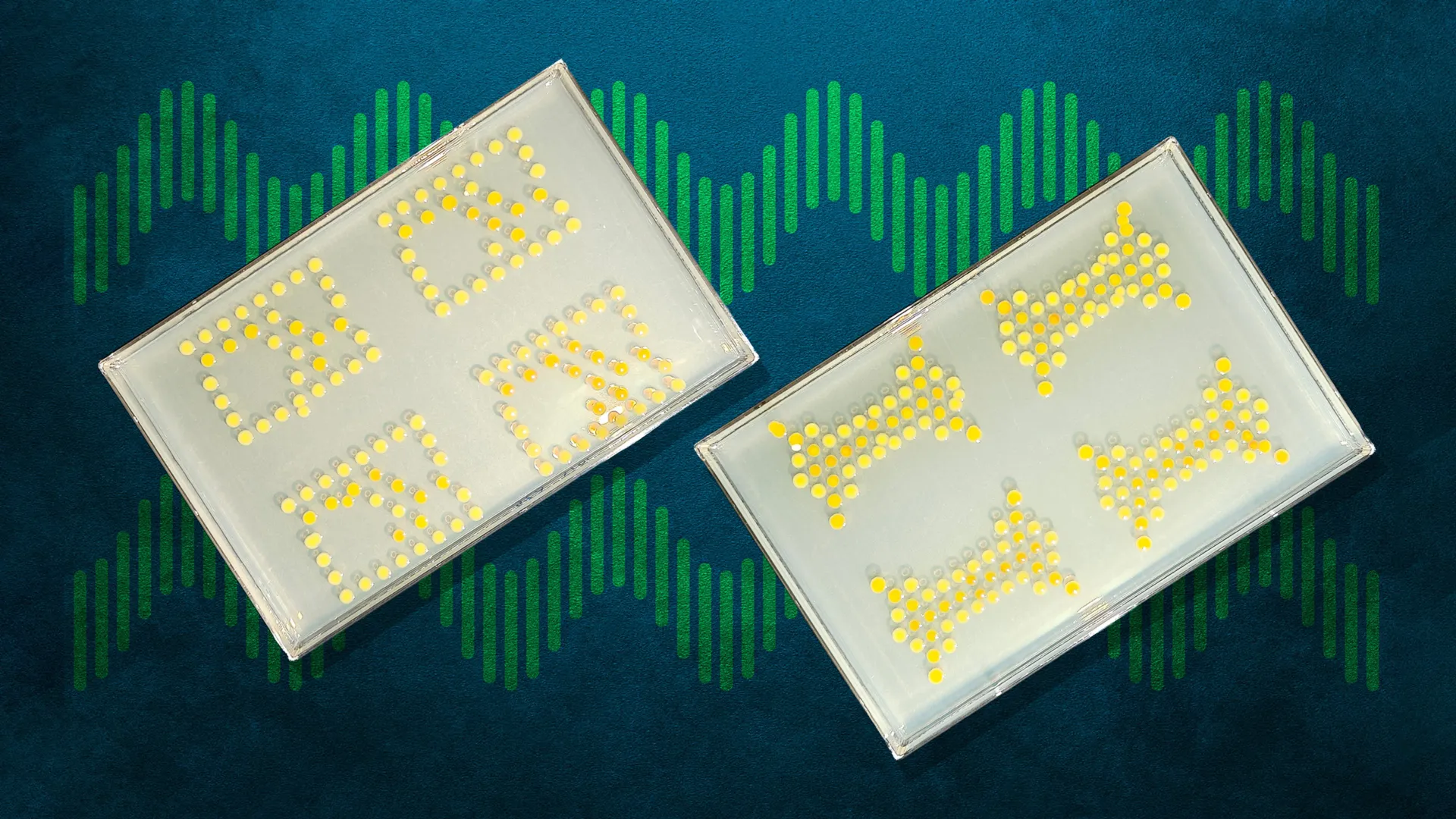
- Phase III (Spatial Printing): The team developed a protocol to print these colonies onto agar plates. By maintaining a precise distance of 5 millimeters between colonies, they ensured that chemical signaling remained directional and contained, preventing cross-talk between unintended neighbors.
- Phase IV (Proof of Concept): The team successfully demonstrated a 24-colony circuit capable of performing multi-input addition, marking the largest, most complex biological circuit of this architecture ever reported.
Scaling and Practical Performance
While the conceptual framework of this biological processor is revolutionary, it operates on a vastly different timescale than the silicon chips powering modern smartphones. A single logical operation within these bacterial circuits takes approximately eight hours to complete.
From an engineering perspective, this latency might appear prohibitive for real-time computing. However, as lead author Hamid Doosthosseini, PhD ’25, and senior author Christopher Voigt argue, the value proposition of biological computing is not to replace the CPU in one’s pocket, but to provide "computational control" within biological environments where silicon cannot function.
"Computationally, there’s nothing that your iPhone can do that these circuits couldn’t do," Voigt remarked. The potential is not for speed, but for integration. In the context of a plant’s growing season—which lasts months—an eight-hour response time for a plant to detect a pathogen or a drought condition is effectively instantaneous.
Future Implications in Agriculture and Environmental Monitoring
The most promising applications for these living circuits are found in agriculture. Modern farming faces increasing pressure from climate change, soil depletion, and pest resistance. By printing these circuits onto the roots of plants, researchers envision a "smart crop" system.
In this scenario, the bacteria on the roots would serve as an onboard computer. If the circuit detects a specific environmental stressor—such as a lack of nitrogen or the presence of a specific fungus—it could process this information locally and trigger a response. The bacteria could be engineered to secrete a fungicide or a growth-promoting hormone exactly when and where it is needed, potentially reducing the need for broad-spectrum chemical sprays and fertilizers.
Furthermore, the technology holds promise for bioremediation. Living circuits could be deployed in contaminated soils, where they would "calculate" the presence of heavy metals or pollutants and trigger the production of enzymes to neutralize the toxicity.
A New Era of Biotechnology
The funding for this research, provided in part by the Defense Advanced Research Projects Agency (DARPA) and the Intelligence Advanced Research Projects Activity (IARPA), underscores the strategic interest in programmable biology. These agencies have long explored synthetic biology as a means to create "living sensors" that are durable, self-replicating, and capable of operating in environments that would destroy traditional electronics.
The transition from "programming a cell" to "building a circuit with cells" represents a paradigm shift. By modularizing biological functions, the MIT team has introduced a level of abstraction that was previously unavailable in the field. Just as the invention of the integrated circuit allowed for the explosive growth of the computer age, the ability to assemble biological circuits from a standardized library of "living components" could catalyze a new era of biotechnology.
The researchers emphasize that this is only the beginning. As the library of available relay and transistor strains grows, so too will the complexity of the tasks these living computers can perform. Future iterations could involve larger arrays of cells, faster signaling molecules, or even the integration of these circuits into synthetic materials that could bridge the gap between organic biology and human-made infrastructure.
While challenges remain—specifically regarding the stability of these circuits in wild, non-sterile environments—the ability to print logic gates in a Petri dish provides a scalable, repeatable, and highly controllable platform for further innovation. The integration of logic and biology is no longer a theoretical exercise; with this work, it has become a demonstrable, physical reality that promises to reshape our interaction with the natural world.